President Trump doesn't much care if Republicans lose the House and/or the Senate in the midterms this fall.
Yes, he'd prefer a big win, but he seems indifferent to the election and the possibility of endless Democratic investigations of his family, wealth and policies, his closest advisers tell us.
A big reason: Trump knows he'll emerge just as strong, or even stronger, heading into his final two years, at least among Republicans.
Why it matters: Trump will enjoy a more pro-Trump Republican Congress, win or lose; gleefully play '28 kingmaker and further test the boundaries of presidential power beyond legislating, his preferred method anyway. He'll use pardons to protect his people, the advisers say.
The advertising landscape has dramatically shifted in the AI era as brands and marketers adopt new systems and operate at previously unimaginable scale.
Why it matters: The rapid adoption has upended formats, shifted priorities and created new opportunities across the entire ad-driven economy.
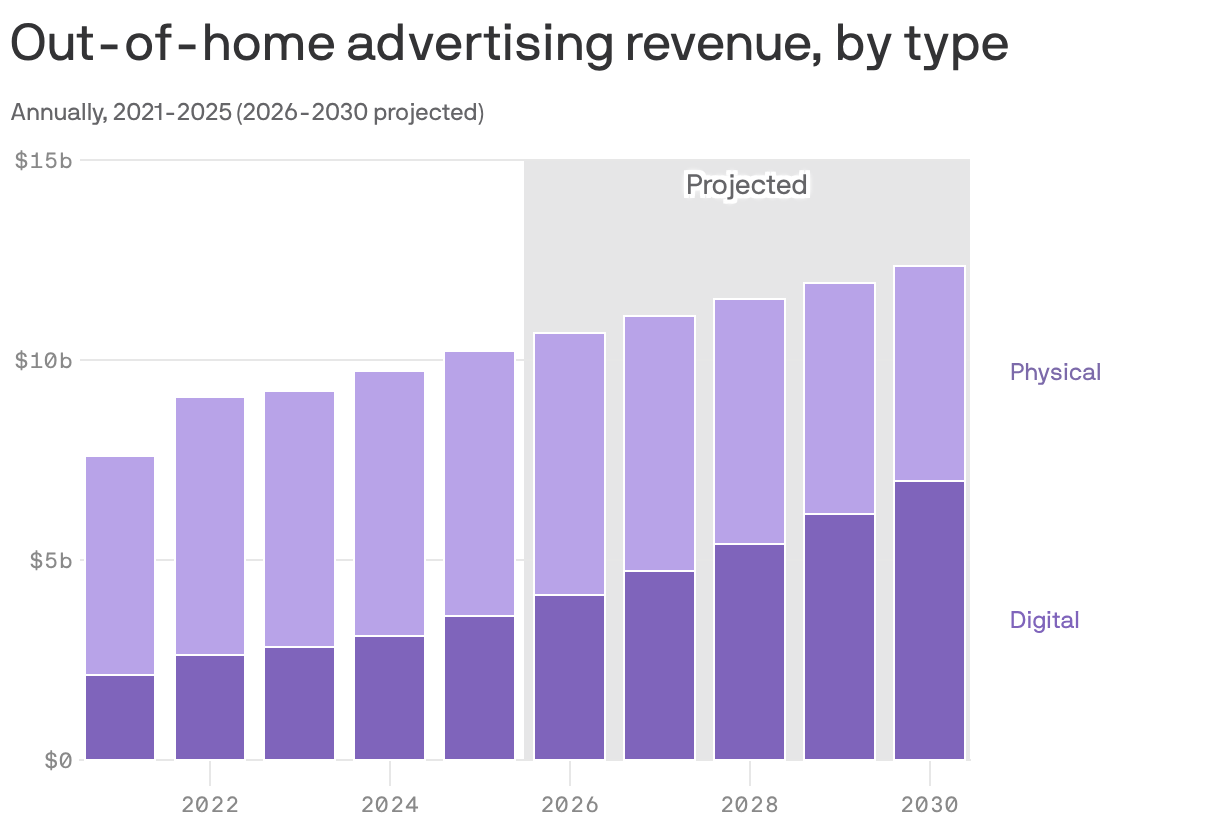
Digital out-of-home ads are expected to surpass physical out-of-home ads by 2029, according to data from PwC.
Why it matters: Unlike television or radio, the transition from physical to digital inventory for out-of-home advertising is largely reliant on enterprise capital investment, not consumer adoption.
Accenture agreeing to acquire Whalar signals that the creator economy has become a C-suite priority, Whalar Group co-founder and co-CEO Neil Waller told Axios.
Why it matters: Creator marketing has matured from one-off influencer campaigns into critical infrastructure for businesses.
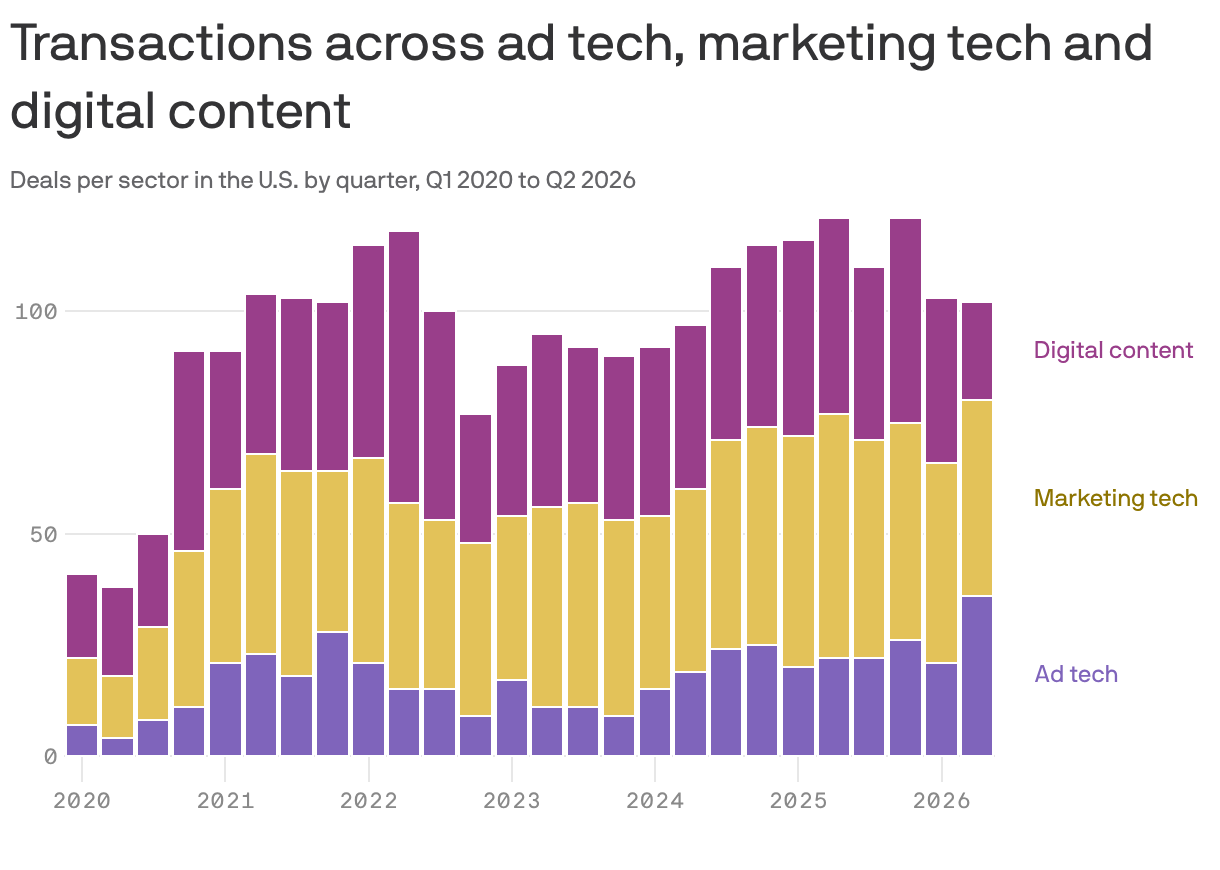
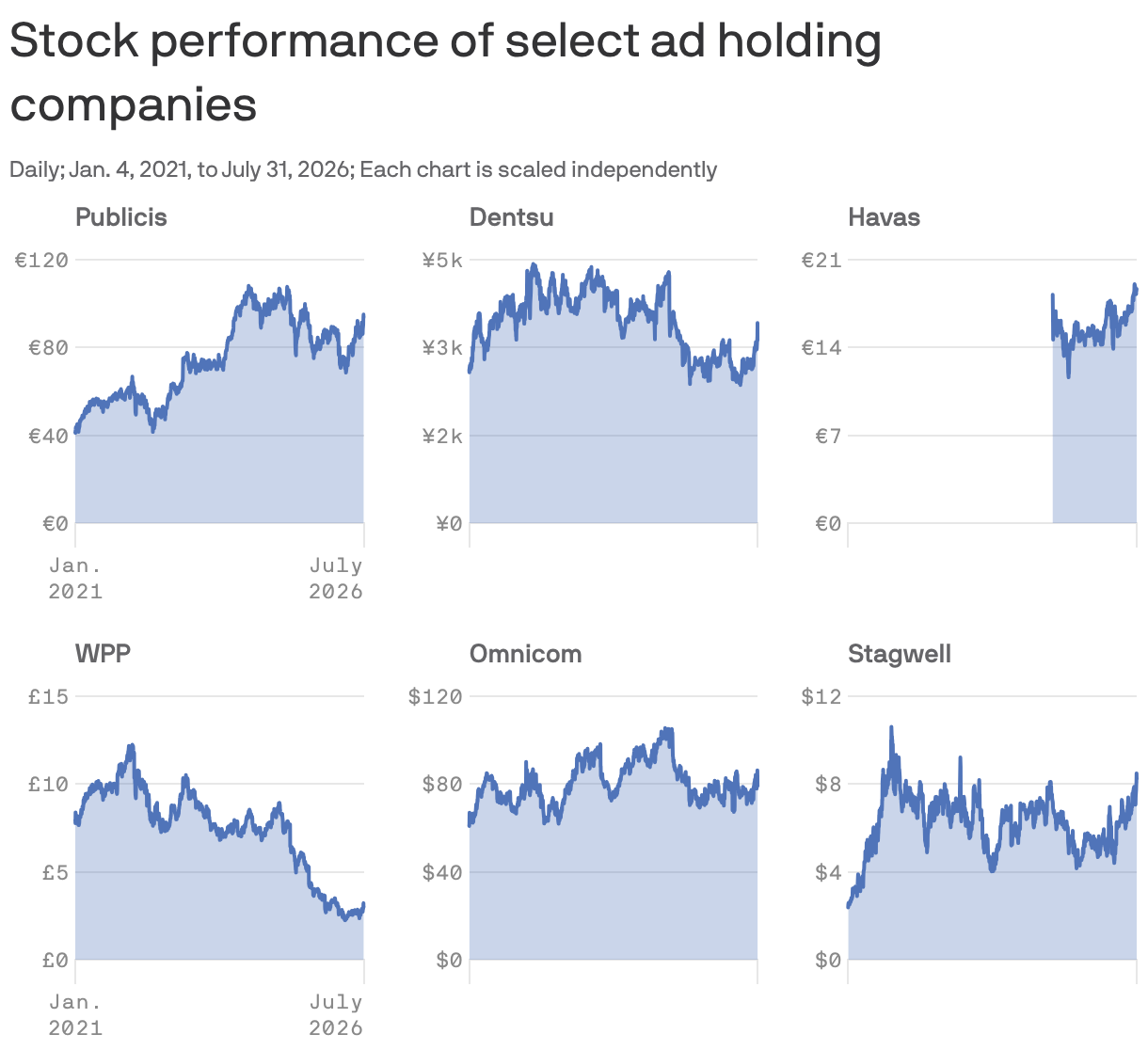
Holding companies are remaking themselves in the AI era, with Omnicom and WPP consolidating their structures, Publicis making big strategic bets and Havas pursuing a steady stream of bolt-ons.
Why it matters: Clients are demanding more specialized work without the high costs and complexities that have traditionally come with it.
Live events are attracting even bigger brand investments because of their unique ability to attract huge audiences around a single moment in a media world that's increasingly fragmented.
Why it matters: Live events also drive urgency, which increases the likelihood that viewers will engage with ads.
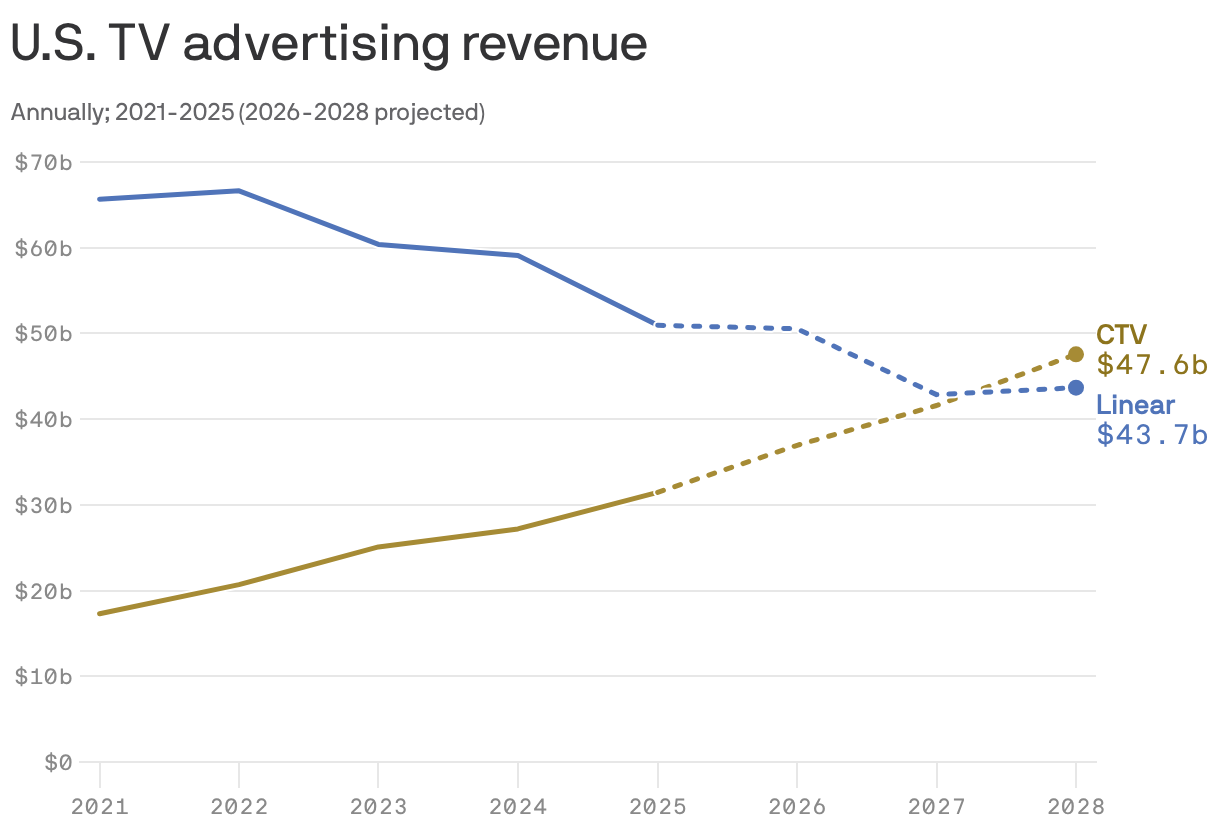
Connected TV is becoming a stronger performance advertising channel as streamers, smart TV makers and retailers make improvements to creative, targeting and measurement.
Why it matters: CTV ad spend is expected to surpass linear in 2028, per eMarketer, providing more incentive to prove those ads can drive sales.
The television ad ecosystem is becoming more vertically integrated as more streamers look to own customer data and distribution, in addition to content.
Why it matters: A streamlined platform allows TV companies to make more ad dollars.
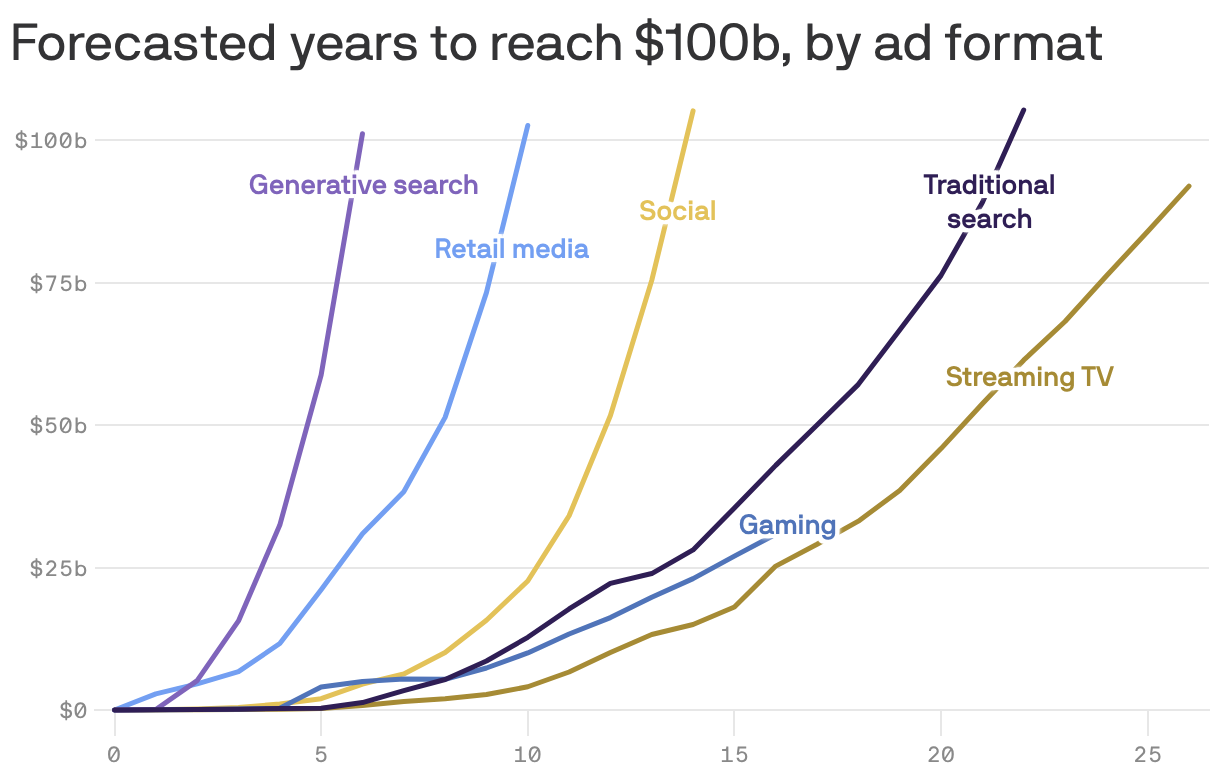
Generative AI search ad revenue is expected to reach $100 billion globally by 2030, according to WPP Media, representing the fastest-growing ad medium in history.
Why it matters: Users ask longer and more complex queries using generative AI search compared with traditional search, per Google, often revealing stronger context and purchase intent for advertisers.
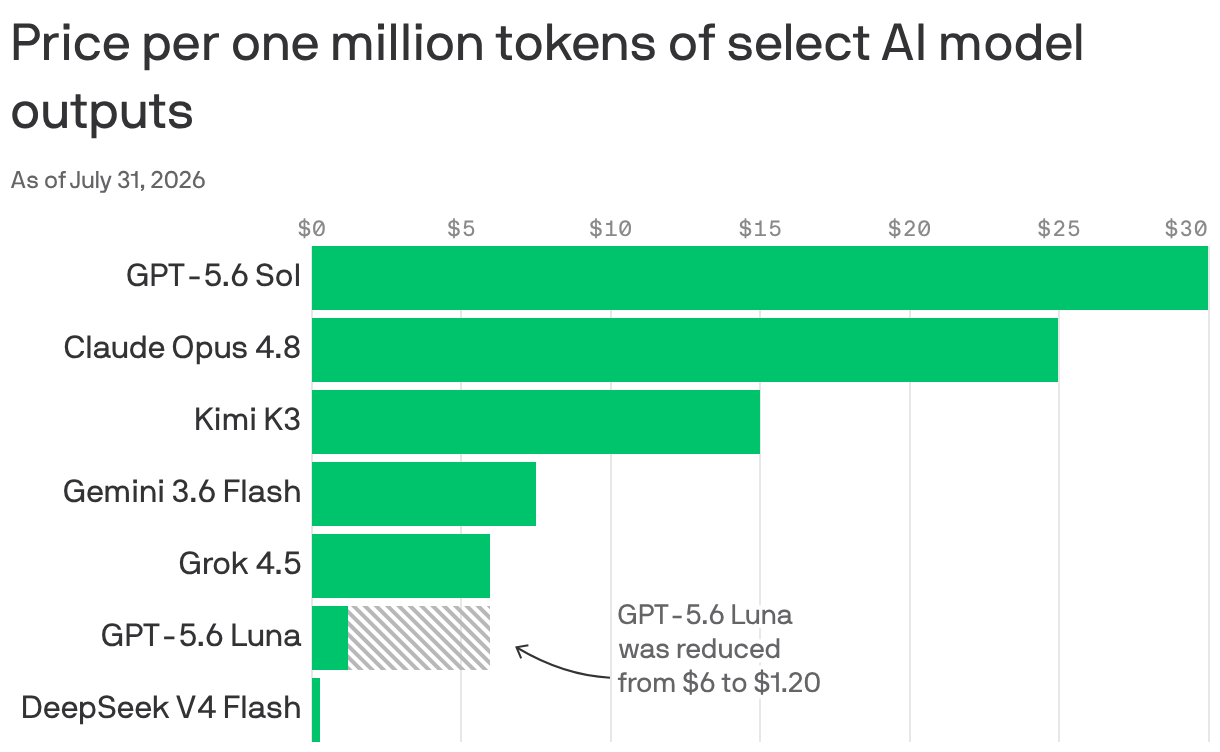
Chinese AI lab DeepSeek released a powerful new coding model Friday that charges pennies for vast amounts of code — the latest sign that some of the smartest software on Earth is rapidly becoming a commodity.
Why it matters: Tech giants are pouring hundreds of billions of dollars into the computing infrastructure powering the AI revolution. Yet the intelligence that infrastructure produces is getting cheaper by the week.
U.S. families expect to spend nearly $1,000 on average on back-to-school shopping this year, according to a PwC survey.
Nearly half expect to spend more than they did last year.
State of play: Families in the Northeast, West and Midwest plan to outspend the national average of $922 — which includes clothes, tech, equipment for after-school activities, books, school supplies and other one-time purchases.