Chinese AI startup DeepSeek has rattled Silicon Valley, potentially disrupting the nascent industry with an inexpensive and accessible alternative to the technology U.S. giants have poured hundreds of billions of dollars into already.
Why it matters: Nvidia's stock closed almost 17% lower Monday, wiping out more than $600 billion in market capitalization, as investors worldwide grapple with the prospect that the market-sustaining AI spending boom might have been overdone.
Nvidia Monday complimented a new Chinese AI model whose emergence is prompting investors to question the boom narrative surrounding the darling of American AI.
Why it matters: Nvidia's heliocentric position in the AI universe has been taken as gospel truth until now, delivering immense stock gains and serving as a bellwether stock for the AI economy.
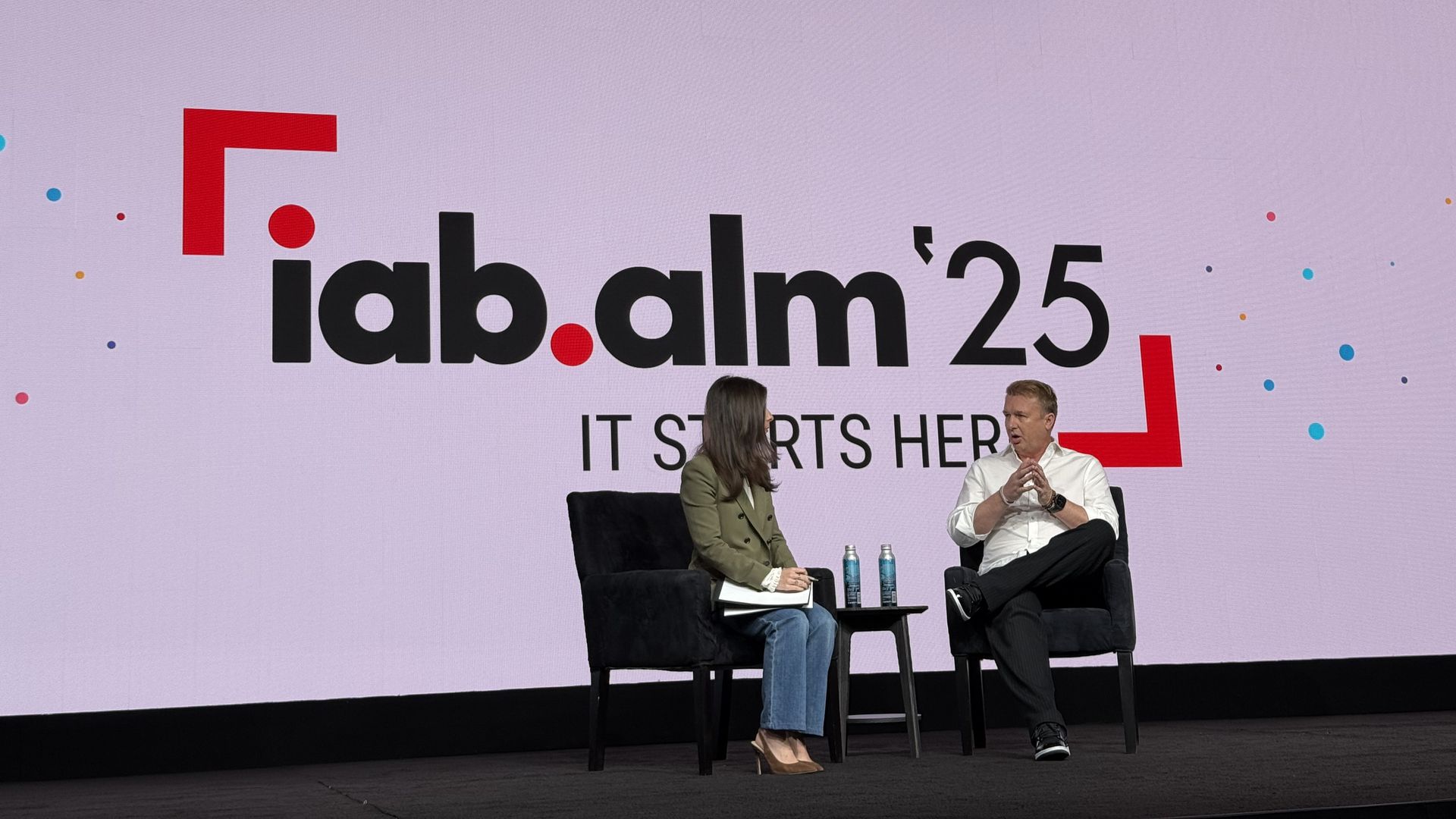
Google exiting the open internet could be the remedy for the antitrust ruling and make business sense, The Trade Desk CEO Jeff Green told Axios' Sara Fischer during an event on Monday.
Davos consensus last week was that the U.S. had a giant lead in the AI race, with the only real question being if there would be enough general contractors to build all of the needed data centers.
When lots of people are worried about bubble valuations in stocks or a specific sector, all it takes is a small poke to make the whole thing wobble precariously.
Why it matters: That can cost investors $1 trillion or more in a single day, as happened Monday with the global AI rout.
DAVOS, Switzerland – Today's CEOs will be the last to lead an all-human workforce as businesses look to integrate AI agents, Salesforce CEO Marc Benioff predicted.
Why it matters: The use of AI agents, also known as the digital labor force, has slowly been on the rise as companies look for ways to increase productivity and solve issues, like labor shortages.
Axios' Ina Fried and Dan Primack moderated conversations with Benioff, IBM vice chairman Gary Cohn, The Carlyle Group co-founder & co-chairman David Rubenstein and Snowflake CEO Sridhar Ramaswamy in Davos. The Jan. 22 discussions were sponsored by Lightspeed Venture Partners.
What they're saying: "We are really moving into a world now of managing humans and [AI] agents together," Benioff said.
Salesforce gets 36,000 support inquiries every week, Benioff said. By implementing AI agents – or what he calls "Agent Force" – they were able to resolve 5,000 more inquiries than normal. "I just have that much more productivity."
Ramaswamy said separately that no one knows what agentic AI's capabilities will be over the next 12 months, calling this a "time of a lot of change."
Private equity will also be impacted by AI by helping investors make "core decisions" that are "quicker" and "hopefully better," Rubenstein said
Regulating AI and all its capabilities have been a focal point of many governments and critics, but Cohn warns against overregulation that could harm competitiveness.
Cohn hopes President Trump's AI czar, David Sacks, continues "to allow the U.S. to be the dominant creative force in AI."
"Our competitive and comparative advantages in the United States is we've got capital and we've got creativity, and we've got entrepreneurial spirit. We want to continue to thrive with that. … We want to continue to have all of our smart minds contribute to the AI world. We don't want to let someone else win," Cohn added.
Yes, but: Industries or activities that are regulated should also have their AI regulated too, Cohn said.
"If you used a mapping program to get here today … and the map took me five steps out of my way, I don't think that needs to be regulated," Cohn said.
"If some doctor is putting your symptoms into an AI machine and they're diagnosing your illness, I think we should regulate that because that's a regulated industry," Cohn added.
Sponsored content:
In a View From the Top sponsored segment, Lightspeed Venture Partners partner and global leader Bejul Somaia said people have to change their mindset when they approach AI and rethink how businesses operate.
"There's going to be this massive market expansion because technology is no longer just going to automate workflows, it's gonna automate work," Somaia said.
IAB CEO David Cohen is calling on the advertising industry to support the open web in part by investing in quality journalism, he said during his keynote for the trade organization's annual leadership meeting.
Well-off Americans are more likely to steal from online merchants than the poor, and they do it in enormous numbers: In a new survey, 55% of Gen Z and 49% of Millennials earning more than $100,000 a year said they have done so in the past year, per antifraud tech company Socure.
Why it matters: First-party fraud, as it is known in the trade, is so socially acceptable, especially within younger generations, that its perpetrators are happy to admit to it even when a stranger asks them about it in a poll.
Markets are very far from being perfectly efficient, and a prime example can be seen in the performance of "Trump trade" stocks since Election Day.
Why it matters: What goes up often keeps going up. It's impossible to know when or whether a certain piece of news has already been fully incorporated into share prices.
Investors worldwide stand to lose more than $1 trillion on Monday because of the sudden fear that the market-sustaining AI spending boom might have been for nothing.
Why it matters: The so-called Magnificent 7 stocks are heavily leveraged to hundreds of billions of dollars in planned AI investment — and the entire market, in turn, hangs on their performance.
Why it matters: The coffee giant has been trying to reverse a decline in foot traffic and go back to its roots under a plan Starbucks CEO Brian Niccol outlined in September.
President Trump won't impose tariffs on Colombia after the government agreed to accept all of his terms — including receiving Colombians deported from the U.S., White House press secretary Karoline Leavitt announced Sunday night.
Why it matters: It's a dramatic turnaround given Colombian President Gustavo Petro announced retaliatory tariffs hours after Trump said earlier Sunday he'd impose 25% tariffs on all goods imported from Colombia, which is a leading supplier of coffee and flowers in the U.S.