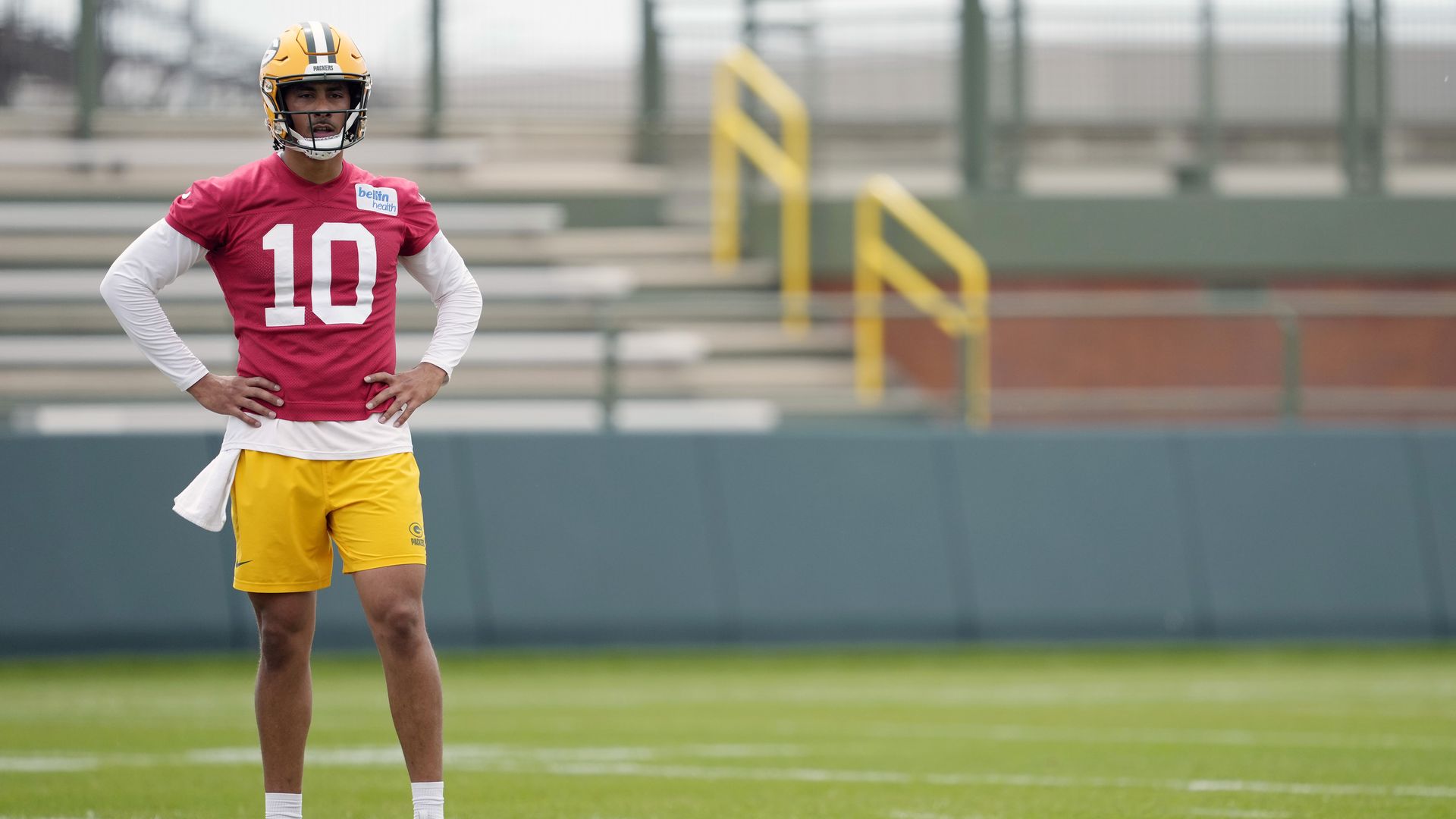
Why it matters: Quarterback salaries have been on an upward trajectory in recent years. The NFL increased its salary cap from $224.8 million last season to $255.4 million for the upcoming season.
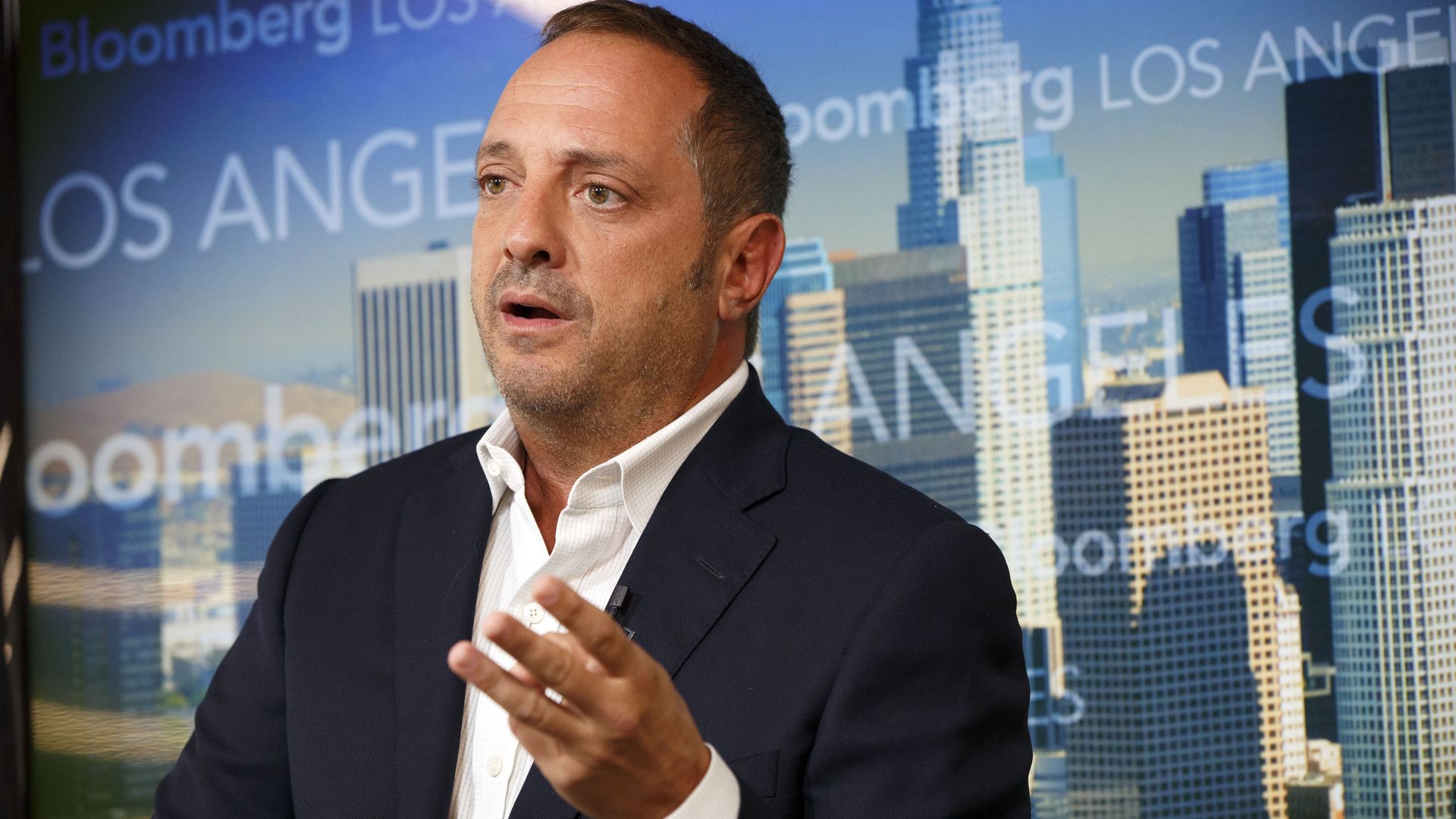
Famed activist short-seller Andrew Left is facing criminal charges and civil complaints alleging that, for years, he manipulated stock prices and lied to investors about his positions.
Why it matters: The DOJ and SEC cases filed late Thursday and on Friday, respectively, are a result of long-standing investigations into traders that profit from betting a company's share price to fall — a practice that received renewed scrutiny following the meme stock frenzy.
NASHVILLE, Tenn. — Donald Trump will deliver a keynote speech at a Bitcoin conference in Nashville Saturday.
Why it matters: His appearance at the United States' largest gathering of bitcoiners comes amid cryptocurrency's emergence as a wedge issue in the 2024 election. It's already caused some notable tech executives to pledge support — and donations — to the former president.
KKR, with participation from Dragoneer, will acquire Instructure Holdings for $4.8 billion, or $23.60 per share, in an all-cash transaction including Thoma Bravo's stake.
Why it matters: It's another chapter in Instructure's journey in and out of the public market. Thoma Bravo took the company private in 2020, and listed it back on the stock market a year later.
A key trade group is out with best practices for private equity firms that want to turn to NAV-based loans for early liquidity amid a dearth of exit opportunities.
Why it matters: PE firms are getting creative and increasingly turning to these credit facilities, which help them return money to limited partners or provide additional support to portfolio companies, as exits remain challenging.
T-Mobile will spend about $4.9 billion on a 50% stake in a joint venture with KKR to buy Metronet, an Evansville, Ind.-based fiber-optic internet company, from Oak Hill Capital, which will remain a minority shareholder.
Why it matters: This is the latest deal for T-Mobile, which in April said it would invest $950 million in a joint venture with EQT to buy another fiber-optic network, Lumos.
On Thursday Sen. Ed Markey (D-Mass.) and Rep. Pramila Jayapal (D-Wash.) introduced an updated version of the Health Over Wealth Act, legislation that would take aim at private equity firms and for-profit companies that own health care businesses.
Why it matters: Private equity ownership of health care companies is under the spotlight, especially the firms' practices around worker treatment and cost-cutting.
India saw $25 billion in private capital-backed exits in 2023 and $11.5 billion in the first half of 2024, according to new data from the Global Private Capital Association.
Why it matters: While the rest of the world — including the U.S. — has been struggling with a dearth of exits, deal value in India increased by 46% and deal count by 51%, year-over-year.
Clio, a Canadian legaltech company, has raised $900 million in Series F funding at $3 billion valuation led by NEA, with Goldman Sachs, Sixth Street, CapitalG, and Tidemark also participating.
Why it matters: Companies have been throwing AI at every business category, but legal applications seem to have really convinced investors to cut big checks.
The Democrats haven't officially chosen their new presidential candidate, but if they go with Kamala Harris, the business and tech world could get a slightly friendlier face than Joe Biden.
Why it matters: The Republican ticket is a bit of a mixed bag — while Donald Trump has taken somenew pro-tech positions lately, he's also chosen a former venture capitalist as his running mate in J.D. Vance, who supports FTC chair Lina Khan's aggressive antitrust moves.
Warner Bros. Discovery made good on its legal threat against the NBA, filing a lawsuit on Friday over the league's decision to reject its matching rights in its new TV deal.
Why it matters: The dispute between the two longtime partners will now be settled in a courtroom, which could force the league and TNT to remain in business.
Catch up quick: The NBA announced new TV deals with Disney, Comcast and Amazon worth $77 billion on Wednesday afternoon, after rejecting WBD's attempt to match Amazon's deal.
Zoom in: The lawsuit was filed in the New York State Supreme Court.
In the court filing, Warner said the NBA "breached" its "rights to match any third party offer," which it claims it did when it submitted a proposal to match Amazon's deal.
WBD claimed that it would suffer "irreparable harm" if it loses the NBA rights.
"Given the NBA's unjustified rejection of our matching of a third-party offer, we have taken legal action to enforce our rights. We strongly believe this is not just our contractual right, but also in the best interest of fans," TNT Sports said in a corresponding statement.
The other side: "Warner Bros. Discovery's claims are without merit and our lawyers will address them," NBA spokesperson Mike Bass said in a statement.
Between the lines: Amazon's deal is a streaming-only agreement, while WBD's matching proposal included both its Max streaming service and cable network TNT.
The league argued that the matching rights only work if the distribution mechanism is the same, a source with knowledge of the situation tells Axios. Essentially, WBD would have to agree to put all of its games on Max, which has a smaller subscriber base than Amazon.
WBD and CEO David Zaslav believe its matching rights extend to any new deal including games that were part of its existing agreement, regardless of platform, a separate source previously told Axios.
General Motors might be betting big on EVs, but it's also not holding back on old-fashioned, gas-fueled horsepower — at least if the new Chevrolet Corvette ZR1 is any indication.
Why it matters: The 2025 Corvette ZR1 boasts the most powerful 8-cylinder engine ever produced by an automaker, GM brags.
The Federal Reserve's preferred inflation index showed prices increased at a moderate pace last month — the latest indication that America's inflation crisis is nearing its end.
Why it matters: The data also showed that consumers spent at a healthy clip in June as income gains outpaced that of inflation, signs of a still-solid economy.
The narrative of the stock market over the past couple of weeks is clear: Magnificent Seven are imploding, while small caps are on a tear. The big picture, however, remains unchanged.
Why it matters: The so-called Great Rotation is the phenomenon whereby megacap tech stocks are sold with the proceeds plowed into small caps.
Unconditional cash transfers can be transformative in very poor countries. Is the same true for poor Americans? Two recent studies have attempted to find out — with mixed results.
Why it matters: Cash benefits are the relatively affordable first step toward the dream of a universal basic income where every American is given enough to live on. Until now, however, there has been relatively little hard data on how effective they are in the domestic context.
Dallas-based Southwest Airlines is adopting assigned seating and will offer some premium seating with extra legroom in a fundamental change to how the company does business.
Why it matters: Southwest has had an open seating policy for its 50-year history, with passengers boarding in a certain order and choosing any available seat on the plane.
Premium seating has not been part of its revenue stream until now.
Driving the news: Southwest will also start offering redeye flights in five initial nonstop markets: Las Vegas to Baltimore and Orlando; Los Angeles to Baltimore and Nashville; and Phoenix to Baltimore.
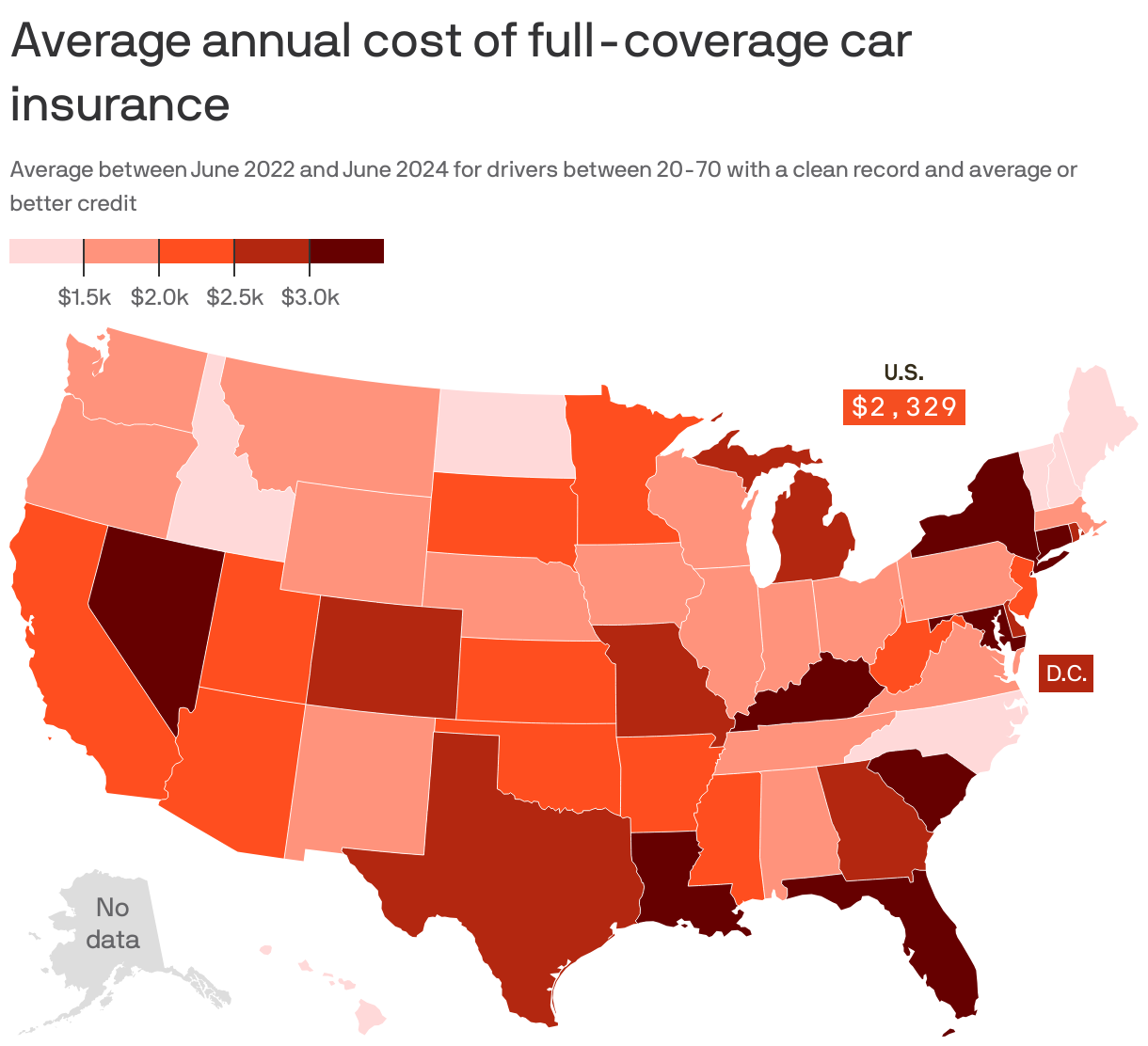
The cost of car insurance is hitting high water marks nationwide, though drivers in some states are feeling the pain more than others.
Why it matters: Fast-rising insurance rates are contributing to a transportation affordability crisis, especially in the many parts of the country where people have few alternatives to car ownership.






/2024/07/26/1722019698485.gif?w=3840)