Source: The Numbers, IMDBPro; Note: Films with unavailable production budgets have been omitted (<2%); Chart: Deena Zaidi and Erin Davis/Axios Visuals
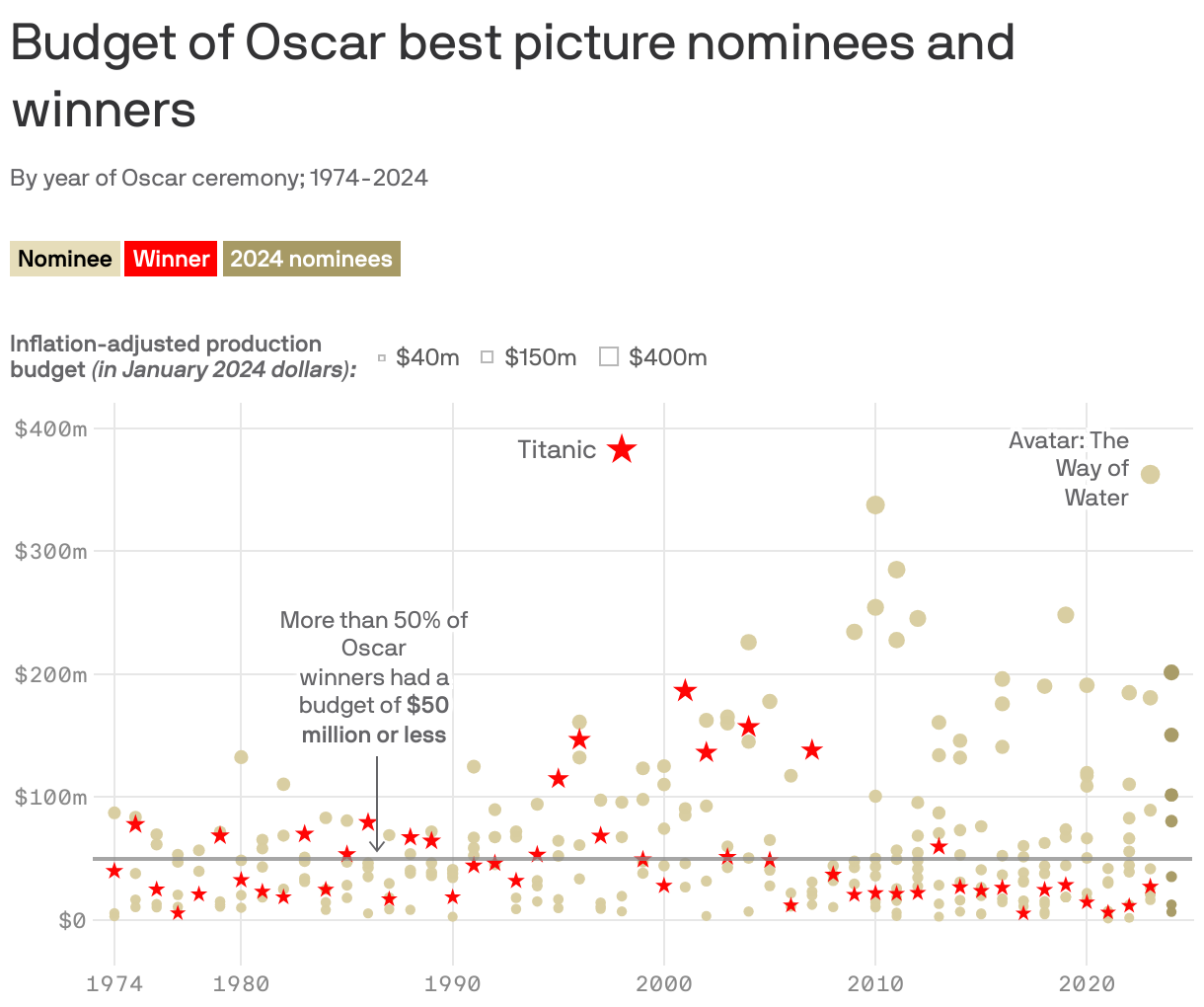
More than half of "Best Picture" contenders at the Oscars are small-budget films.
By the numbers: In the past 50 years, over 60% of Best Picture films reported a production budget of $50 million or less, according to data from The Numbers and IMDB, a movie database.
The trend to nominate films with modest budgets continues this year with nominees like Anatomy of a Fall ($6.2 million) and Past Lives ($12 million); they're competing against big budget movies like Killers of the Flower Moon ($200 million), and Barbie ($145 million).
Since 2013, all Oscar winners have been low- to-medium- budget films: the most recent winners include CODA (2021) and Nomadland (2020).
Only 10 percent of nominees with budgets over $200 million have won an Oscar, including Titanic (1997).
The big picture: While inflation blurs budget distinctions, major studio film costs typically hover around $65 million, Investopedia notes.
Small to medium budget films can span below $5 million to $50 million, with higher figures marking high-budget range.
What's next: Future "Best Picture" nominees will require longer theatrical runs in more U.S. cities, according to updated criteria the Academy laid out last year. That may leave smaller indie films at a disadvantage.
Silicon Valley Bank says it's still serving 81% of its old customers, but the events a year ago undoubtedly resulted in client defections that benefited the competition.
State of play: Many customers switched to other established banks, and a number of businesses shifted to startup-focused neo-banks. Here's how two of them fared.
Pastry chefs finish last — in a meal, and often when it comes to their share of awards, media coverage, and diner's attention. But that's changing.
Why it matters: A new generation of pastry talents — historically a women-dominated profession — are pushing boundaries, making headlines with their thought-provoking desserts, and getting the recognition they've long deserved.
Former President Trump stunned Republican China hawks this week when he appeared to argue against banning TikTok, the juggernaut video app owned by Beijing-based Bytedance and beloved by young Americans.
Why it matters: Trump spearheaded the original U.S. threat to ban TikTok over national security concerns. Four years later, President Biden and Congress have picked up the mantle — with a bipartisan bill targeting Bytedance set to hit the House floor next week.