Why Americans' financial pain could get worse

Add Axios as your preferred source to
see more of our stories on Google.
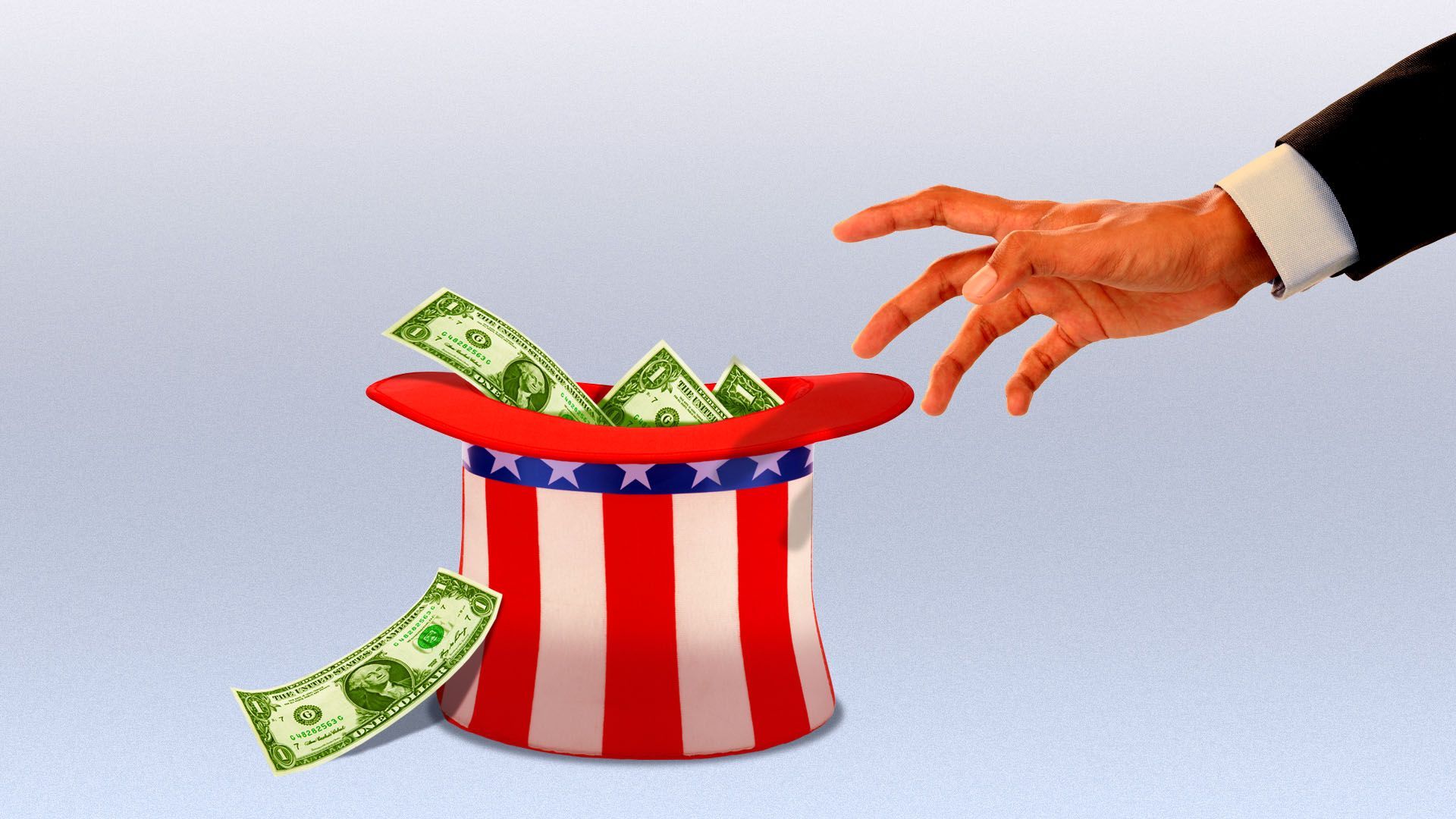
Illustration: Sarah Grillo/Axios
Split-screen crises on Capitol Hill and Wall Street are threatening to create more financial pain for a rising number of Americans.
Why it matters: Washington's feuding — combined with inflation — is making it costlier for the government to borrow. That will trickle down to cash-strapped consumers in ways both obvious and invisible.
- Some think the dysfunction is ripening conditions for "bond vigilantes," a group of Wall Street hawks who prey on struggling governments and try to force them to spend less.
Driving the news: In Congress, Kevin McCarthy's ouster as House speaker left unanswered governance questions — primarily a looming government shutdown over spending priorities — up in the air.
- At the same time, benchmark interest rates — used to set mortgage and credit card rates — briefly touched their highest levels in 16 years, a by-product of the Federal Reserve's fight against inflation.
Zoom in: Those two events are more related than they might seem at first.
- Trouble in Washington will likely push another credit rating firm to downgrade the world's largest economy. Fitch lowered America's rating after the debt ceiling standoff earlier this year.
- A downgrade could make borrowing costs even more expensive. Some on Wall Street see a potential replay of the events that toppled the United Kingdom's government last year.
That's where the vigilantes come in. Volatile global markets suggest bond vigilantes — who would sell debt to pressure governments into fiscal austerity — are making a comeback.
- Rate hikes, combined with a Fed that's no longer in the debt-buying business, are removing barriers that once kept this class of activist investors in check and held down rates.
- "The bond vigilantes are alive and well, and we saw that last year in the U.K.," Rich Nuzum, Mercer's executive director for investments and global chief investment strategist, tells Axios.
The big picture: Treasury rates — what the U.S. government pays to borrow money — influence a range of consumer borrowing costs.
- Auto loans are high and rising, mortgages are zeroing in on 8% and credit card annual percentage rates sit at record highs with balances now north of $1 trillion.
Between the lines: Wall Street economists are fond of saying that markets normally like government gridlock, which preempts extreme (and costly) policy decisions.
- But these are far from normal times. Inflationary pressures have pushed the Fed to suggest rates will stay higher for longer and made voters deeply unhappy about the economy.
Soaring borrowing costs, along with restive credit ratings agencies gatekeeping America's credit rating, have upped the ante for the extreme partisanship dividing D.C.
- The stakes are higher, given that entitlements like Medicare and Social Security are rapidly running out of money.
What they're saying: "The quantity we have to sell is a lot, and the buyers are less inclined to buy the debt," hedge fund legend Ray Dalio told an audience at the Greenwich Economic Forum on Tuesday.
- "There are deep concerns about the finances we're looking at," given "irreconcilable gaps" between Washington's warring parties, he added.
