Crude oil prices dropped about $5 per barrel Sunday evening in the first major trading since the emergence of rough and tentative outlines of a deal to end the U.S.-Iran conflict.
Why it matters: The throttling of the Strait of Hormuz is raising energy costs and weighing down economies worldwide — including the U.S., where average pump prices are about $1.50-per-gallon above pre-war levels.
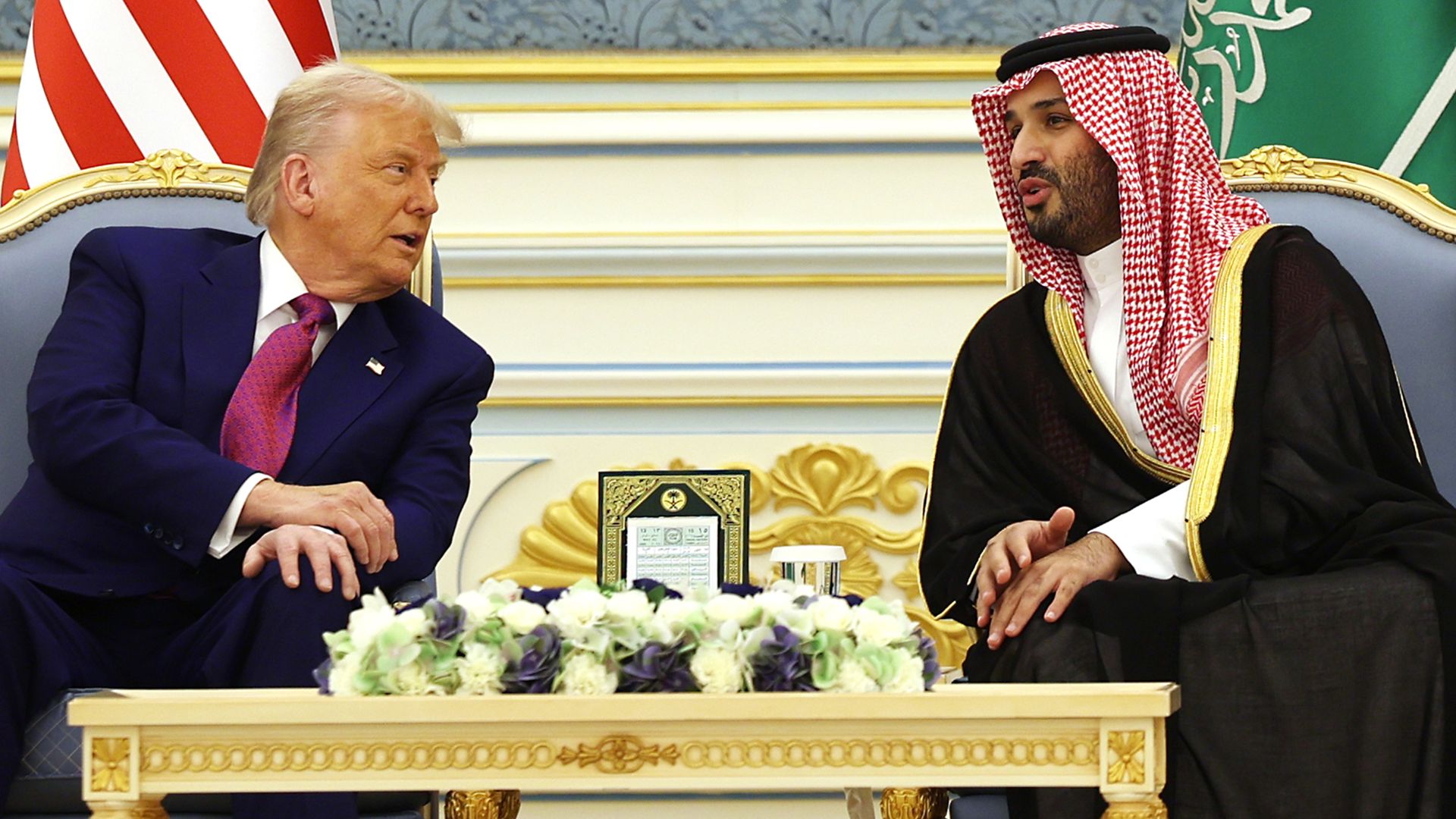
President Trump told leaders of several Arab and other Muslim countries during a Saturday conference call that if a deal to end the Iran war is achieved, then he wants their nations to sign peace agreements with Israel, per two U.S. officials with direct knowledge of the call.
Why it matters: Trump's remarks on Israel during the call signal the next big step he wants to take in the Middle East after the war.
Trump is aiming mostly at a historic Saudi-Israeli peace agreement, but the current political climate in the region and the upcoming Israeli election make any near-term breakthrough extremely difficult.
The White House doesn't expect an agreement to end the war with Iran Sunday and thinks it could take several days for the deal's approval by Iran's leadership, including Supreme Leader Mojtaba Khamenei, a senior U.S. official said in a briefing with reporters.
Why it matters: While U.S. officials are optimistic that a deal will be signed within days, they also acknowledge it has not been finalized and could still fall apart. "We are in a very good place — but there are ways in which the deal can be undermined," a senior U.S. official said.
The agreement the U.S. and Iran are close to signing involves a 60-day ceasefire extension during which the Strait of Hormuz would be reopened, Iran would be able to freely sell oil, and negotiations would be held on curbing Iran's nuclear program, according to a U.S. official.
Why it matters: The deal would avoid an escalation of the war and decrease the pressure on the global oil supply. However, it's unclear whether it will lead to a lasting peace agreement that also addresses President Trump's nuclear demands.
President Trump said Saturday that a deal to end the war with Iran would be announced "shortly" and that the "final aspects" are currently being negotiated.
The big picture: Trump's comments came after separate calls with Arab and Muslim leaders and with Israeli Prime Minister Benjamin Netanyahu. This is the firmest statement the president has made that he is prepared to agree to the memorandum of understanding being negotiated with Iran.
President Trump told Axios on Saturday that he would be meeting with his negotiators later in the day to discuss Iran's latest offer, and would likely decide by Sunday whether to resume the war.
Why it matters: Trump said it was a "solid 50/50" as to whether he would be able to make a "good" deal or else "blow them to kingdom come."
America's classic neighborhood watch programs are fading as AI-powered apps turn neighborhoods into digital watch zones.
Why it matters: The automation of neighborhood safety with tools like Amazon's Ring and the Nextdoor app is quietly dismantling one of the country's most basic forms of civic life: neighbors who actually know each other.