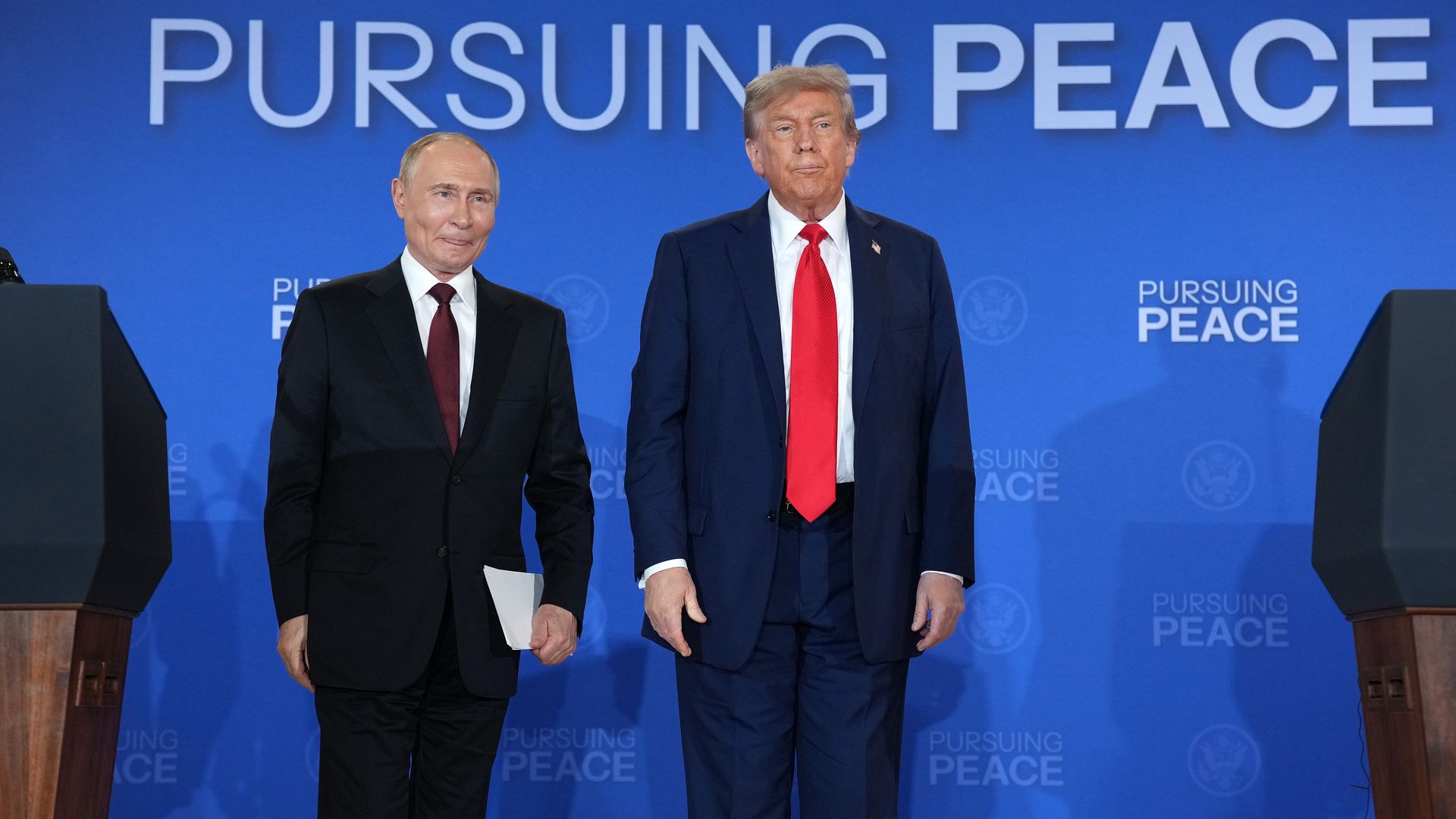
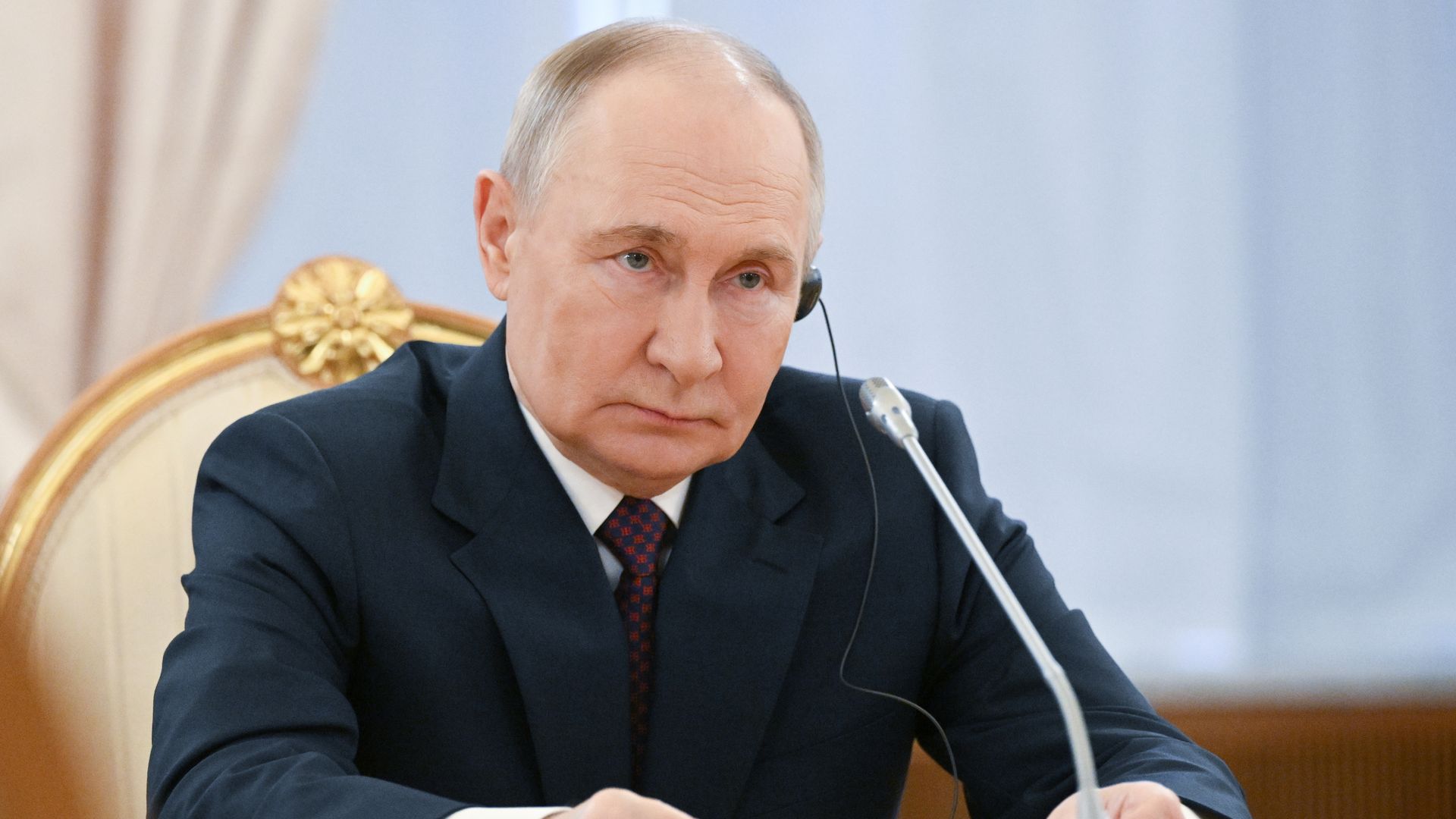
The peace terms that Russian President Vladimir Putin laid out in his summit with President Trump included that Ukraine withdraw entirely from two of its eastern regions, two sources briefed on the call told Axios.
Why it matters: Trump will meet Ukrainian President Volodymyr Zelensky on Monday in Washington. He also told European leaders in a post-summit call that he wants to arrange a trilateral summit with Putin and Zelensky as soon as next Friday, the sources said. But based on Putin's conditions, a major breakthrough appears unlikely.
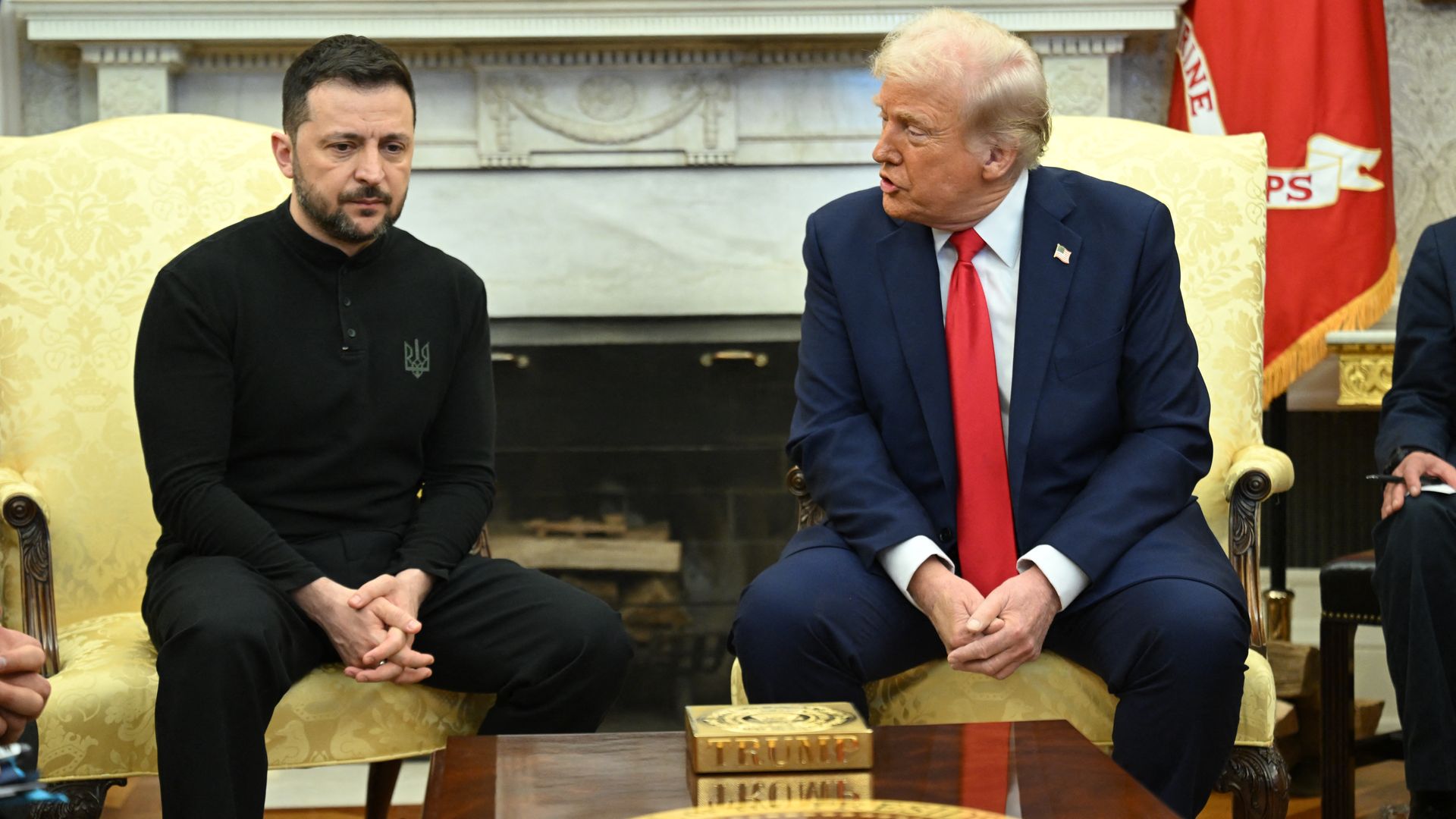
After his summit with Russian President Putin in Alaska on Friday, President Trump will meet Ukrainian President Zelensky for what could be a difficult meeting at the White House on Monday afternoon.
Why it matters: Trump's positions coming out of the meeting — that he no longer supports a ceasefire, and it's "up to President Zelensky" to make peace — appear highly unfavorable to Ukraine.
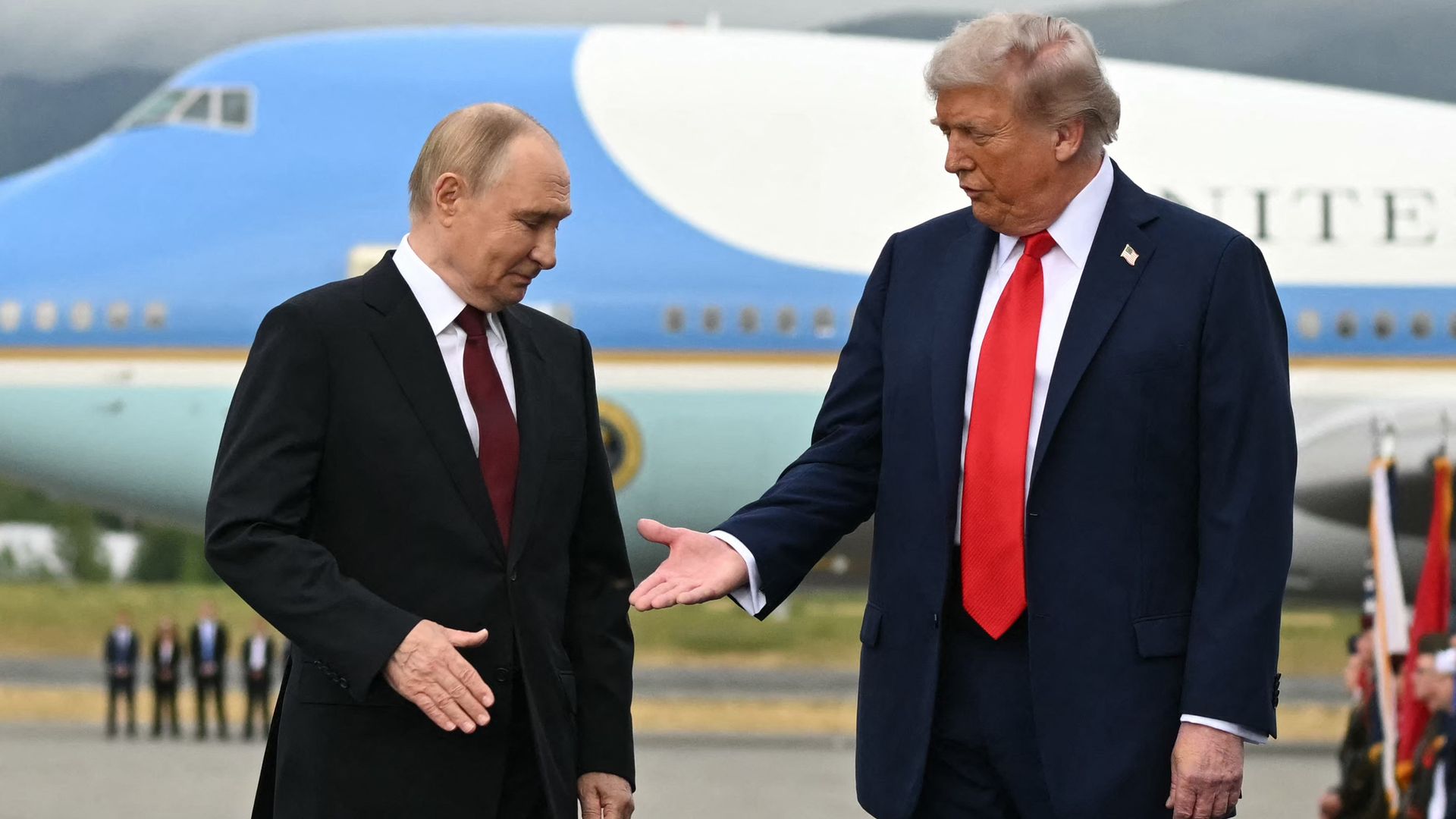
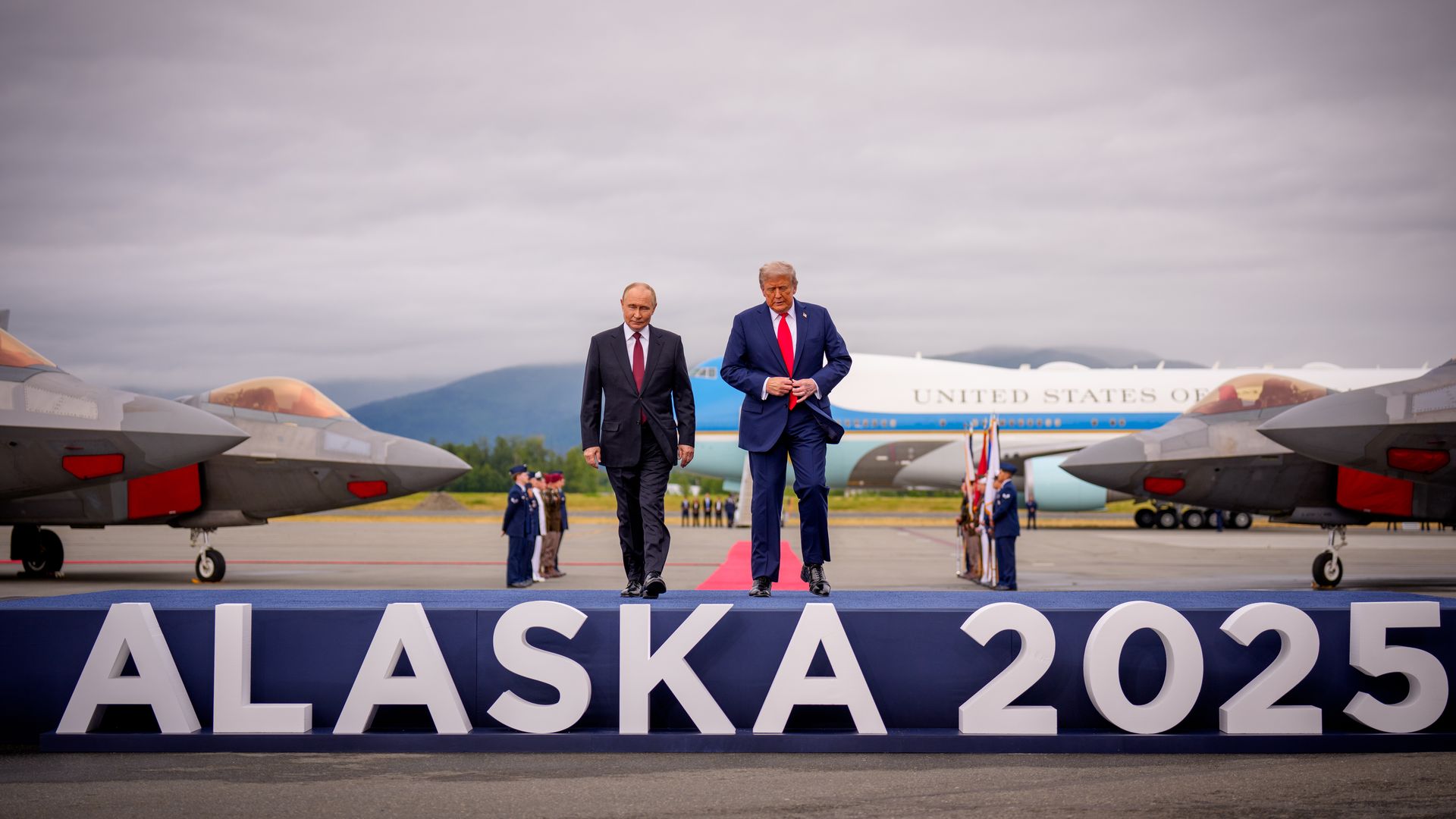
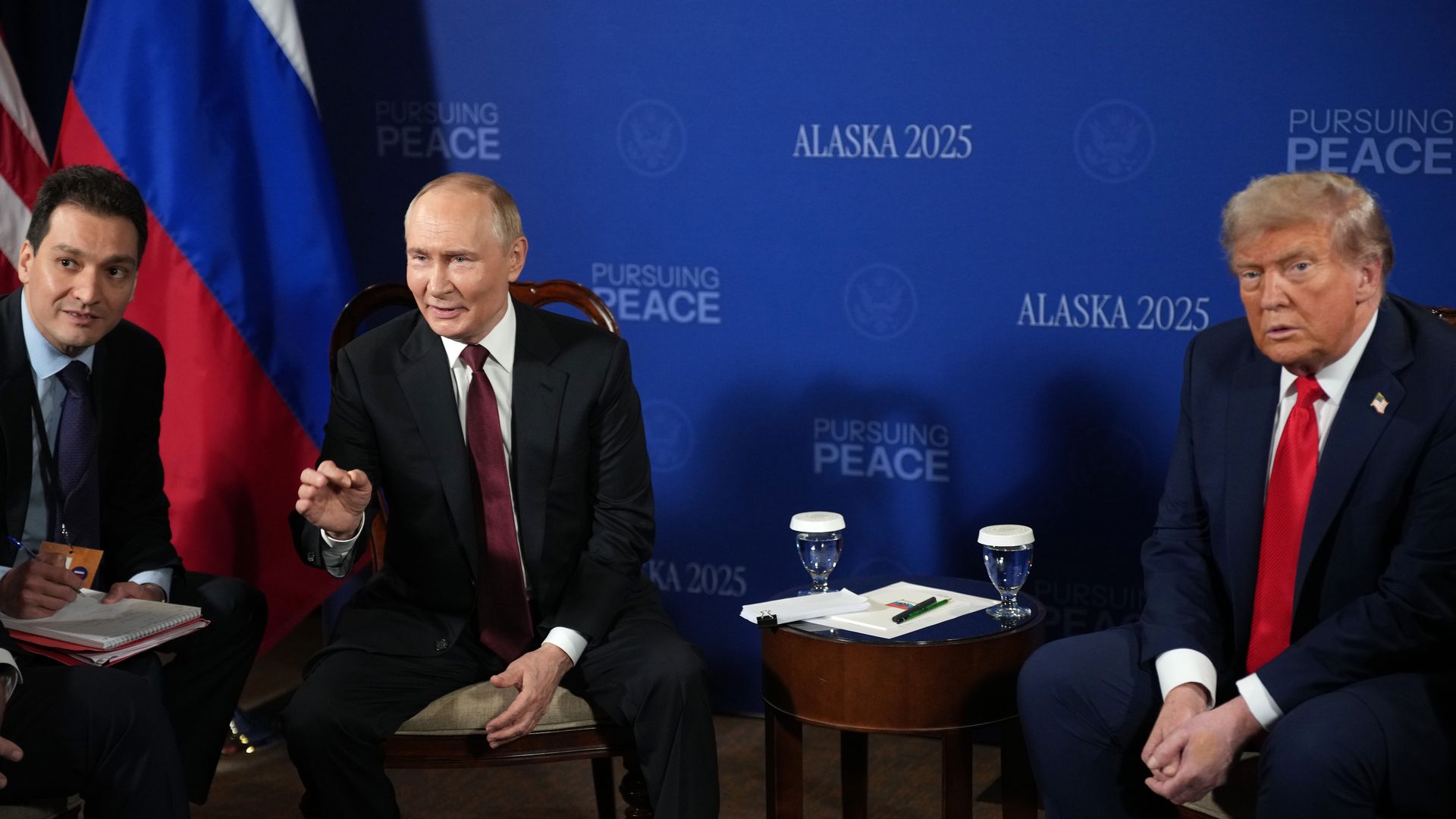
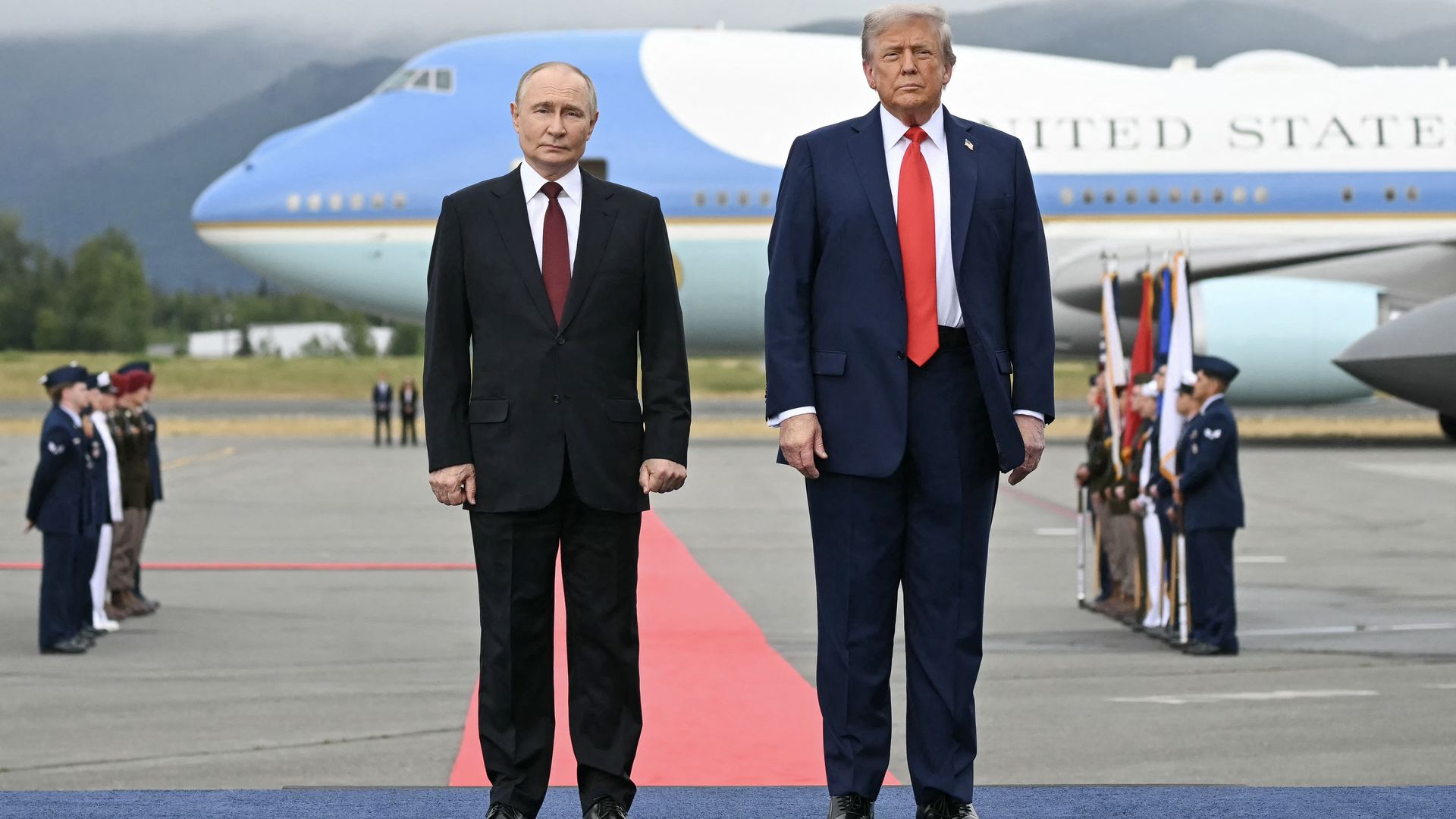
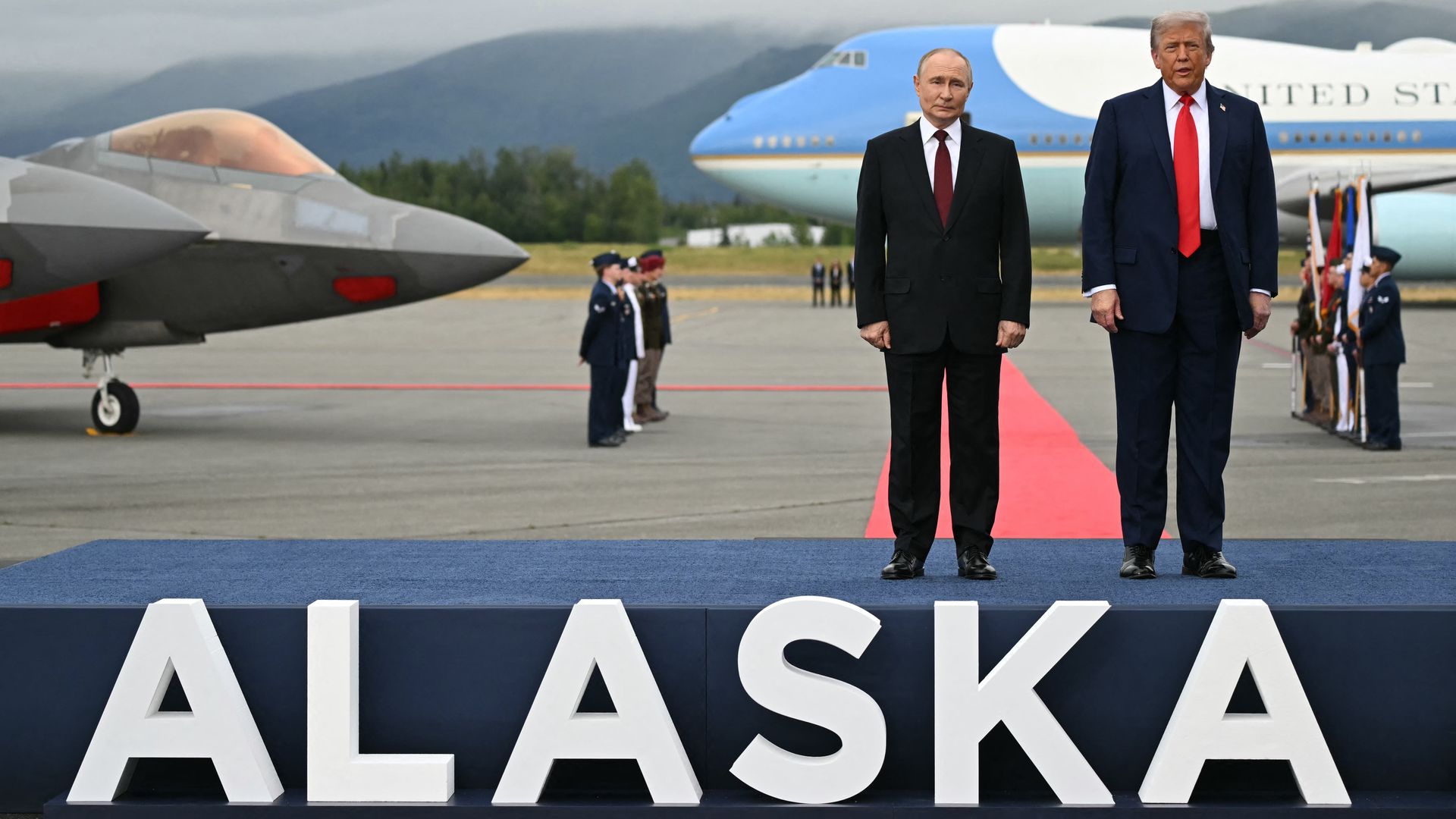
Friday's summit in Alaska began as a superpower spectacle, then abruptly ended without any indication of what was achieved or where things go from here.
Why it matters: President Trump didn't get the ceasefire he came for, or the public commitment he wanted from Vladimir Putin to meet next with Volodymyr Zelensky. The leaders scrapped a planned lunch and departed early — but not before both declared the meeting a success.
At the conclusion of Friday's "productive" but inconclusive summit, Russian President Vladimir Putin quipped to President Trump: "Next time in Moscow."
The intrigue: Putin made the remark in English, a language he rarely speaks in public. The suggestion drew a surprised chuckle from Trump, who didn't rule it out but said he'd "get a little heat for that one."
President Trump said he and Russian President Vladimir Putin held a constructive summit on Friday but "we didn't get there" on a ceasefire or peace deal for Ukraine.
Why it matters: Trump set a ceasefire as the target for this summit, but said that while he and Putin agreed on most of the relevant issues they did not come to an agreement on "the biggest one." He added: "There's no deal until there's a deal."
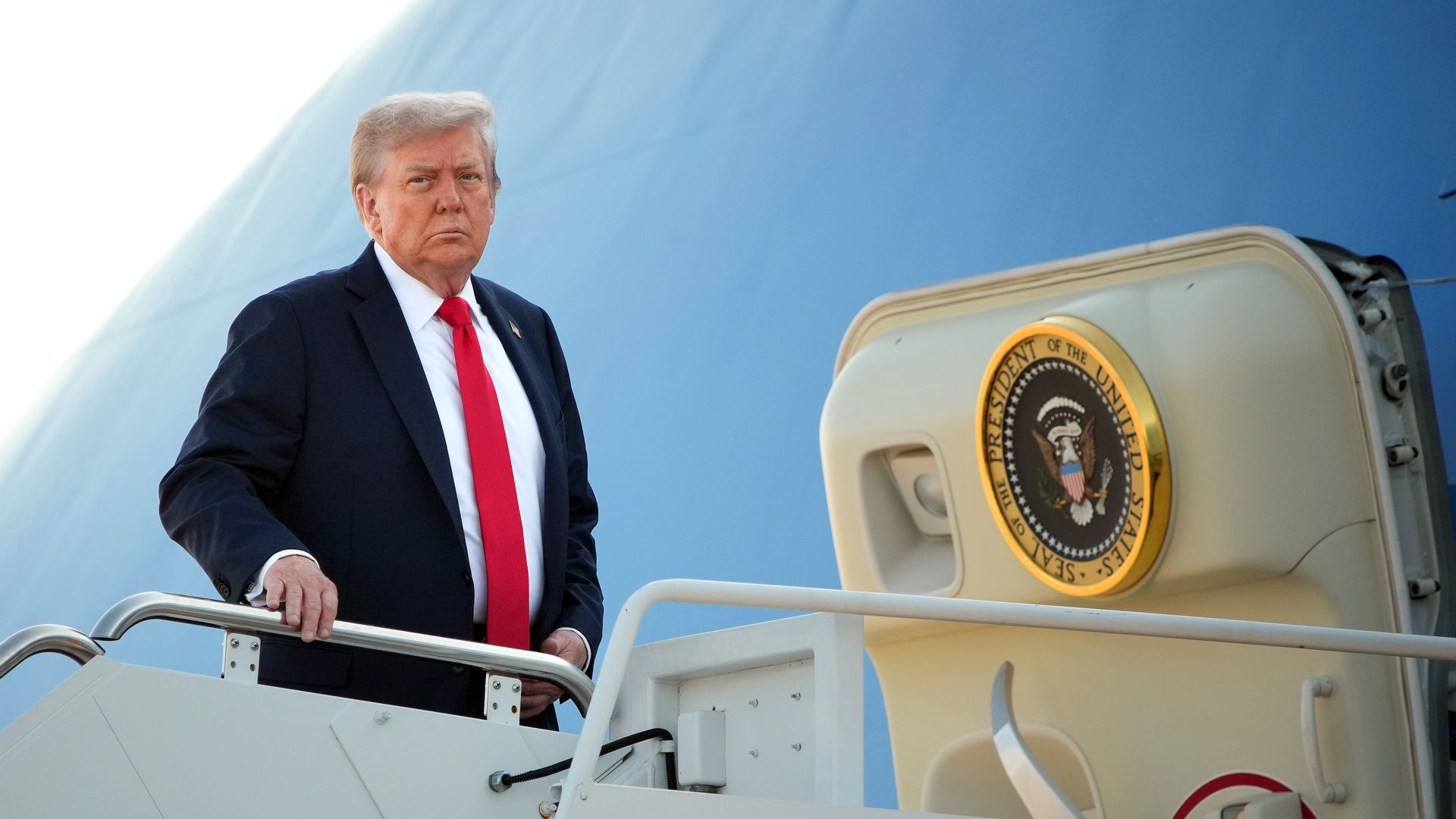
President Trump and Russian President Vladimir Putin have been meeting behind closed doors for more than two hours following a dramatic arrival ceremony at Joint Base Elmendorf-Richardson in Anchorage, Alaska.
Why it matters: Trump has set a ceasefire in Ukraine as his goal for the summit and said ahead of his arrival that he's "not going to be happy" if no truce is agreed. He's also promised "severe consequences" if Putin doesn't demonstrate he's serious about peace.
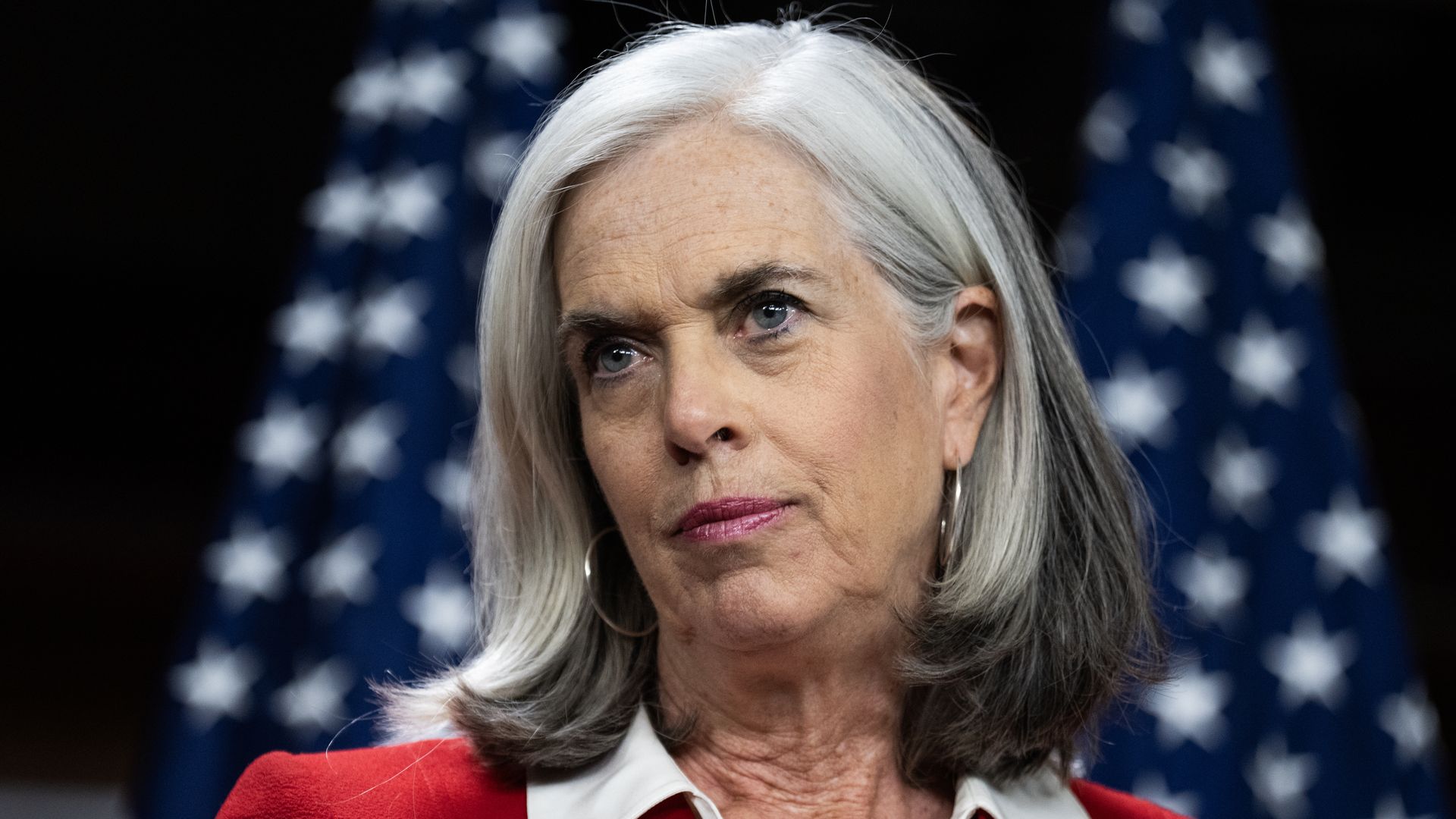
House Minority Whip Katherine Clark (D-Mass.) referred to Israel's war in Gaza as a "genocide" during an event in her district on Thursday, according to a video clip obtained by Axios.
Why it matters: Clark's comment makes her one of just over a dozen House members to have used that word to describe the situation in Gaza, and easily the highest ranking member of Congress to have done so.
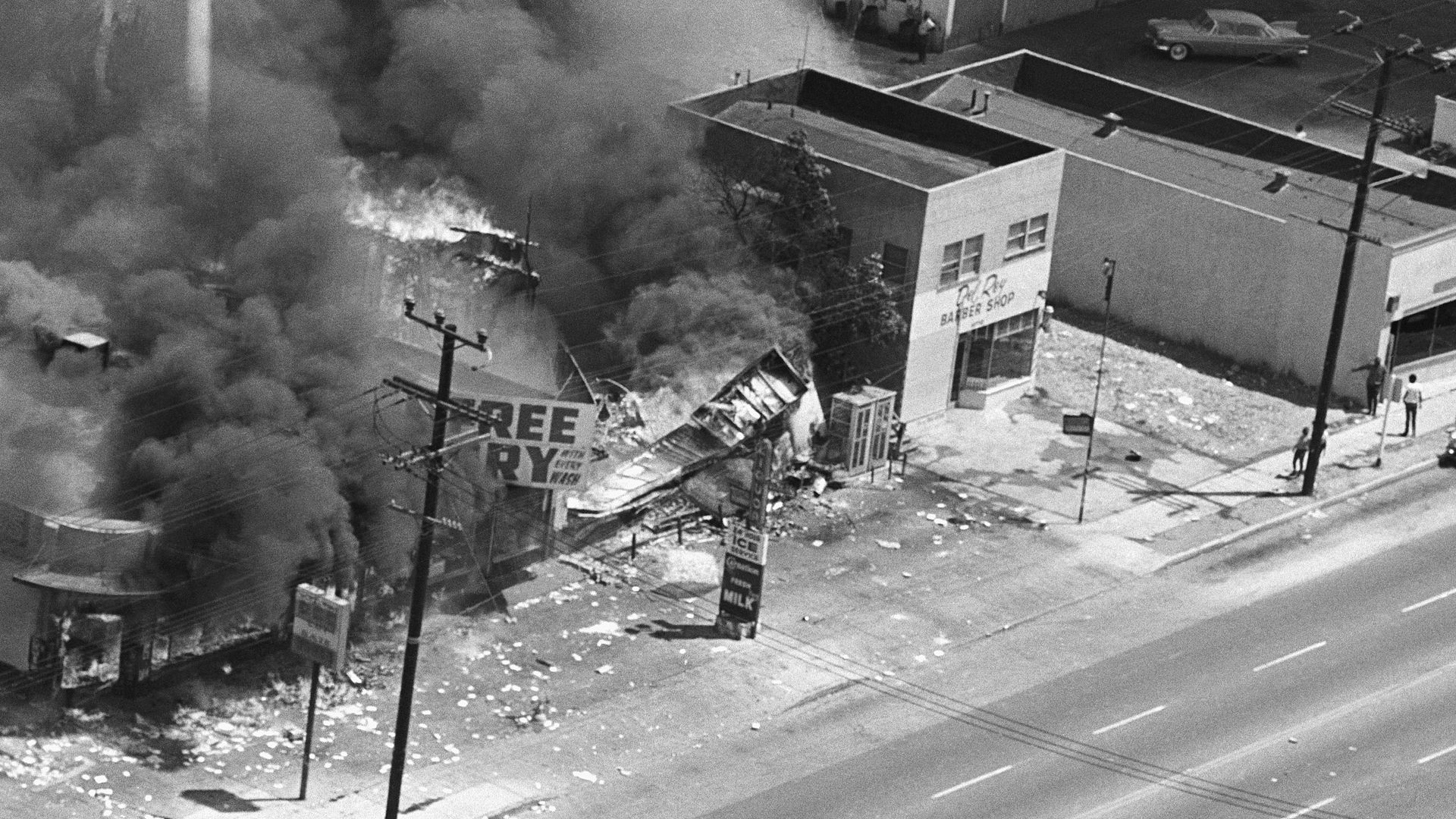
This week is the 60th anniversary of a shocking uprising in the Watts area of Los Angeles, which foretold similar unrest in cities throughout the 1960s and 1970s over poverty, police abuse and discrimination.
Six days of unrest in August 1965 resulted in 34 deaths, over 1,000 injuries, nearly 4,000 arrests and the destruction of property valued at $40 million in the predominantly Black neighborhood.
Through the lens: Here are some images from that tense week that captivated the nation and prompted Dr. Martin Luther King Jr. to call for more focus on economic inequality.
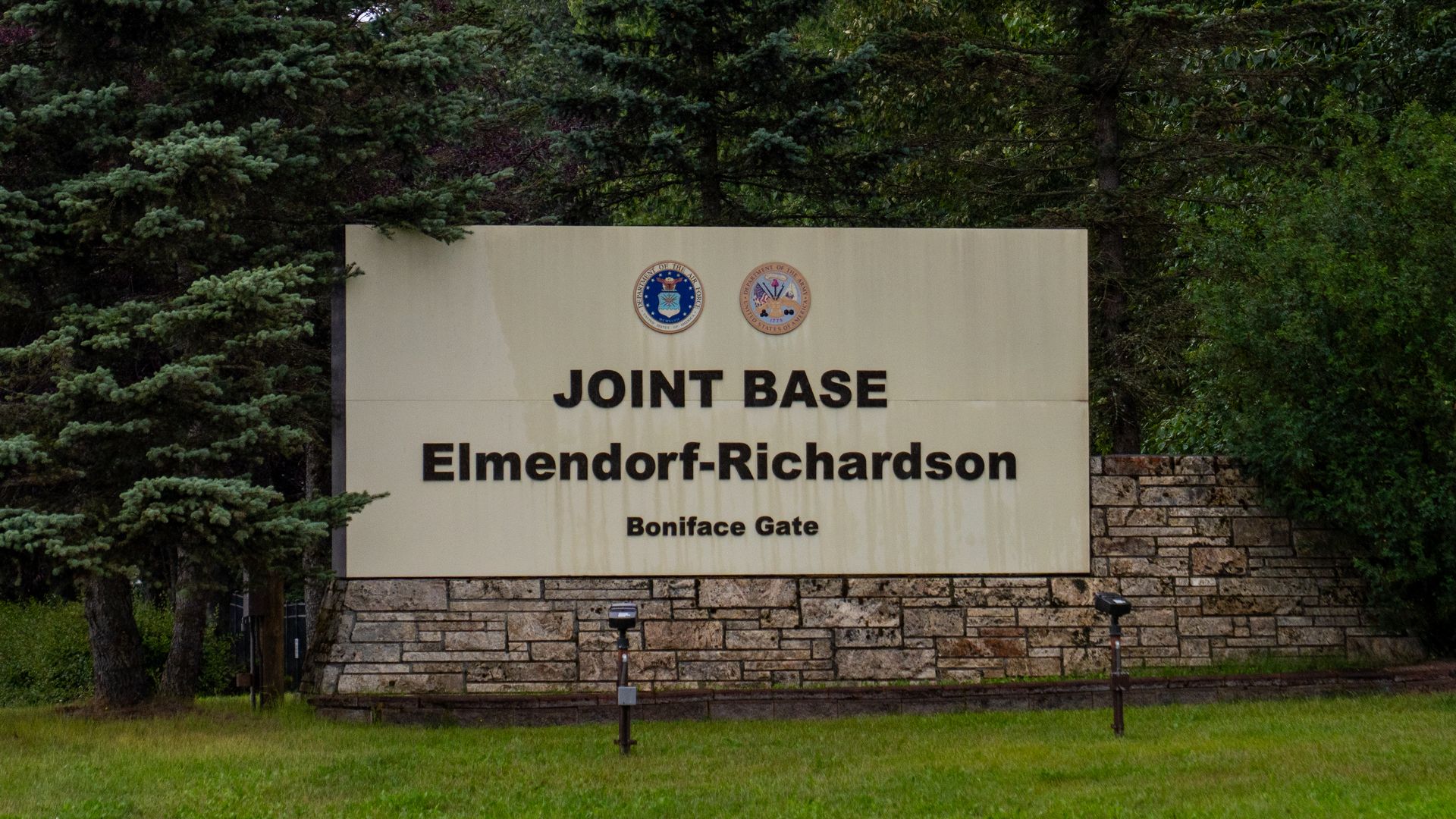
Friday's summit between President Donald Trump and Russian President Vladimir Putin is expected to take place at Joint Base Elmendorf-Richardson in Anchorage, Alaska.
Why it matters: The military base played a crucial role in the U.S. monitoring of the Soviet Union during the Cold War. But it's rarely been visited by non-military leaders in recent years, let alone two presidents.
President Trump and Russian President Vladimir Putin aren't heading to Alaska alone.
The big picture: Trump's entourage for the bilateral meeting features some of his closest allies as he looks to broker a potential ceasefire with Putin, who is bringing a small retinue of his own.
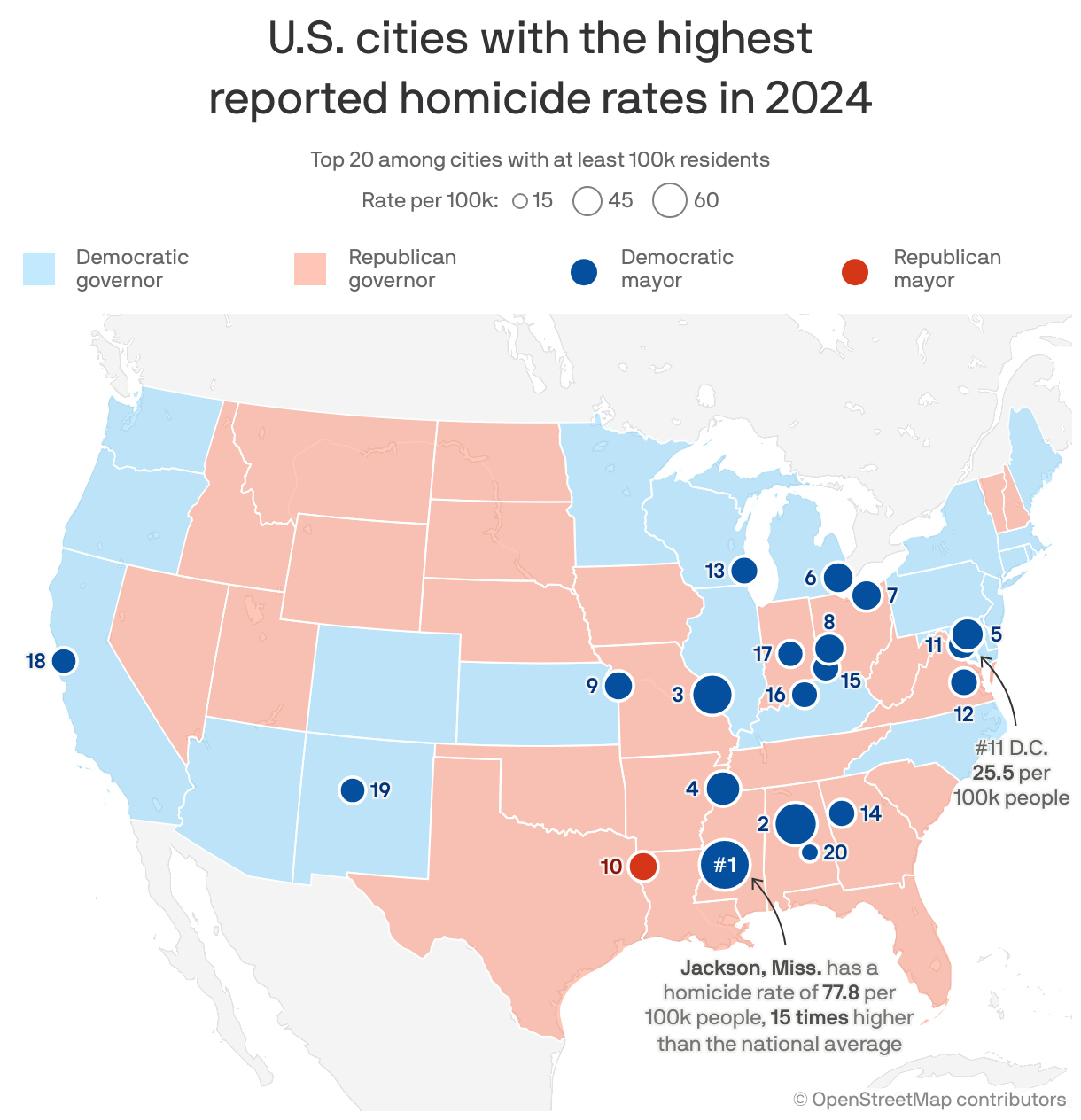
To hear President Trump tell it, the nation's murder problem is particularly bad in New York City, Chicago, Baltimore, Los Angeles and Washington, D.C. — Democratic-run cities in Democratic-led states (or district, in D.C.'s case).
New FBI crime figures from 2024 tell a different story.
The big picture: 13 of the 20 U.S. cities with the highest murder rates were in Republican-run states. Many of those cities were run by Democrats who often are at odds with state officials, an Axios analysis of FBI data finds.
For President Trump, today's summit in Alaska is all about "the first couple of minutes" — that's how long it'll take to know whether Vladimir Putin is serious about peace.
Putin, by contrast, seems to be taking a longer view.
Why it matters: For the Russian leader, this summit is about more than a ceasefire — more even than Ukraine. He'll visit the U.S. as a peer, not a pariah, with an opportunity to nudge superpower relations onto a more favorable course.