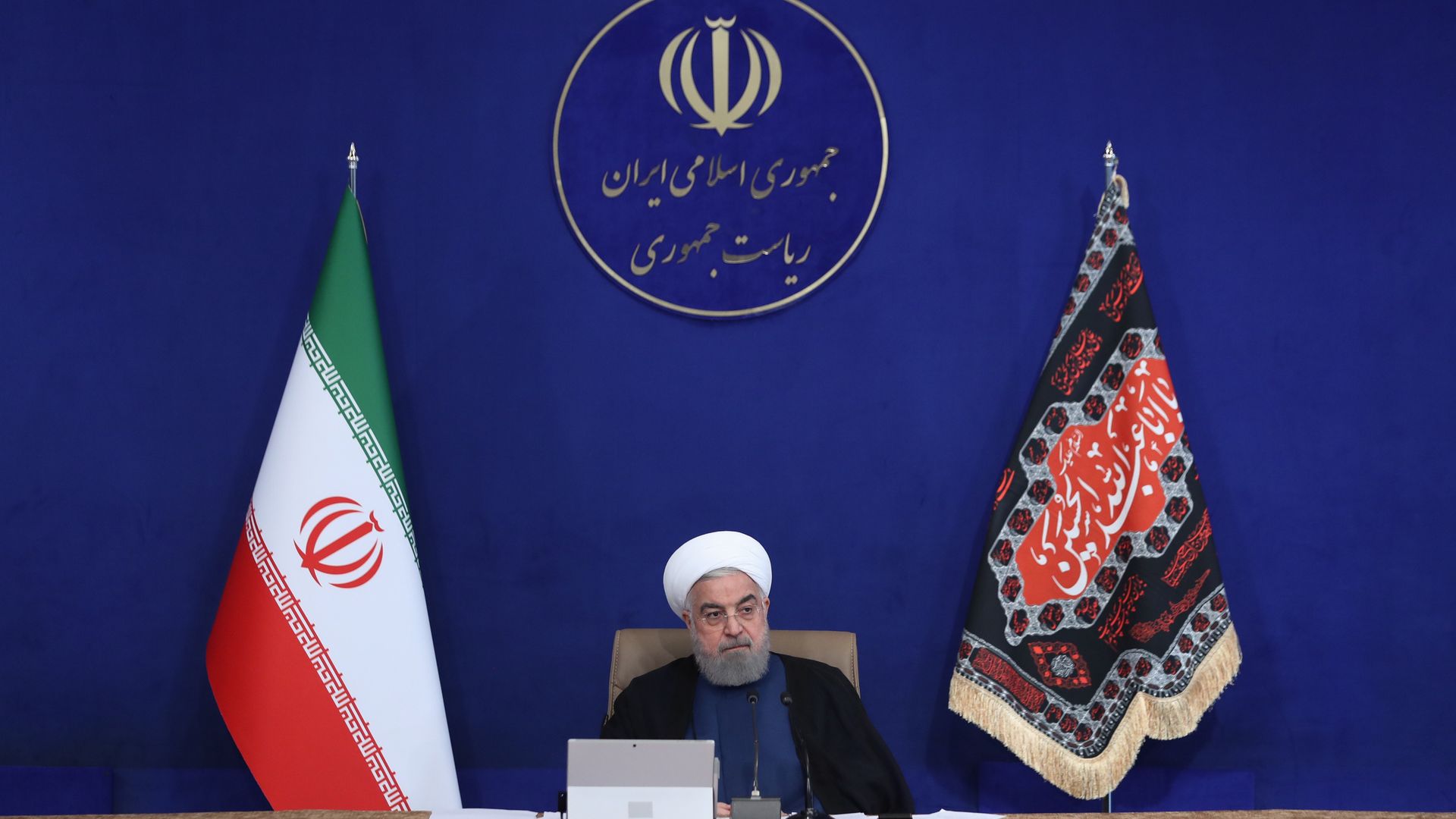
Iranian President Hassan Rouhani is calling for “stability” and an “end” to the current fighting between Armenia and Azerbaijan — but should the conflict between its northern neighbors escalate, Tehran may well deepen its involvement.
What to watch: Iran's recent history — specifically the Iran-Iraq War (1980-1988) — provides a model of how that escalation might happen.
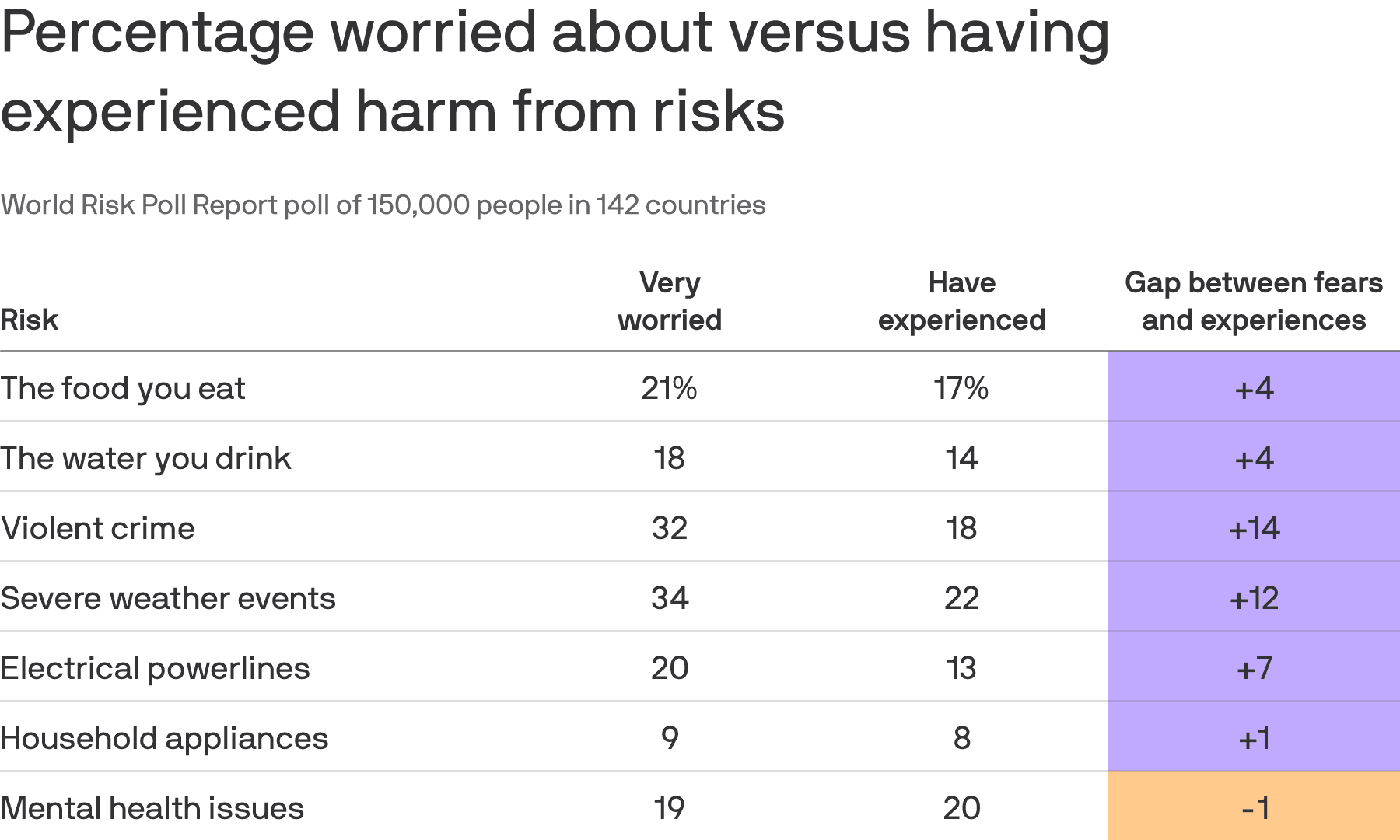
Data: The Lloyd’s Register Foundation World Risk Poll Report; Chart: Sara Wise/Axios
A new global risk poll surveyed tens of thousands of people in 142 countries to determine what people worry about when it comes to risk and safety.
Why it matters: The poll offers a telling snapshot of how people around the world perceive the risks they face, which often turn out to be different than the risks they are actually experiencing.
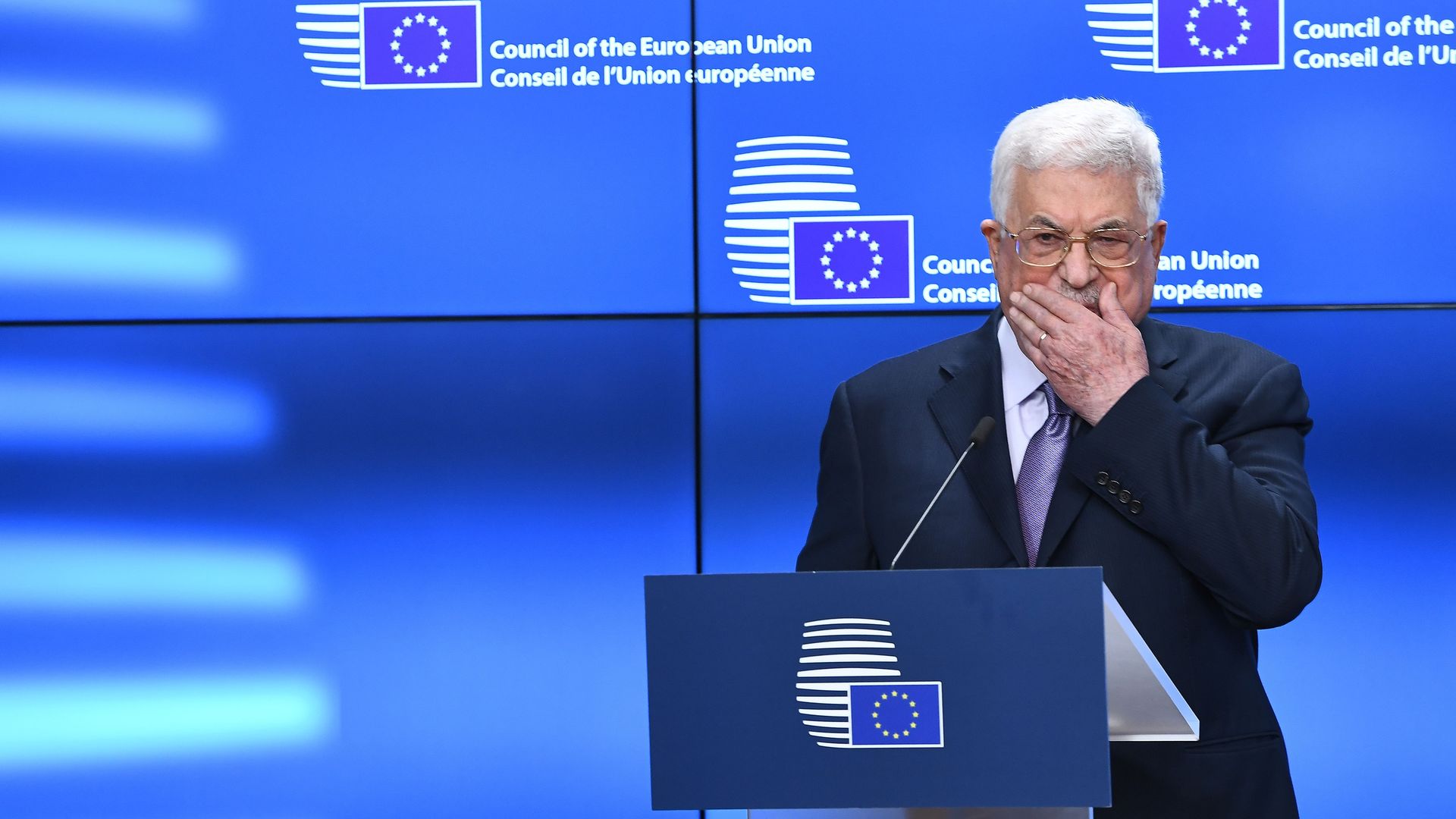
European Union leaders have told the Palestinian Authority they will refuse to provide any additional financial aid as long as the Palestinians refuse to accept tax revenues collected by Israel, European diplomats and Israeli officials tell me.
Why it matters: The unprecedented ultimatum is another indication that frustration with leaders in Ramallah is growing, even among staunch supporters of the Palestinians.
Insurers are pointing to clauses that exempt war-related damage from being covered in order to reject claims related to state-backed cyberattacks, notes a new report from the Carnegie Endowment for International Peace.
Why it matters: This “war exclusion” raises “doubts about whether adequate or reliable coverage exists for state-sponsored cyber incidents,” the report says.
Victims of ransomware attacks who pay criminals to release their data may be held liable for violating U.S. sanctions — even if they don’t know the true identity of their tormentors, advised the Treasury Department in a bulletin last week.
Why it matters: The move could doubly punish the victims of ransomware attacks.
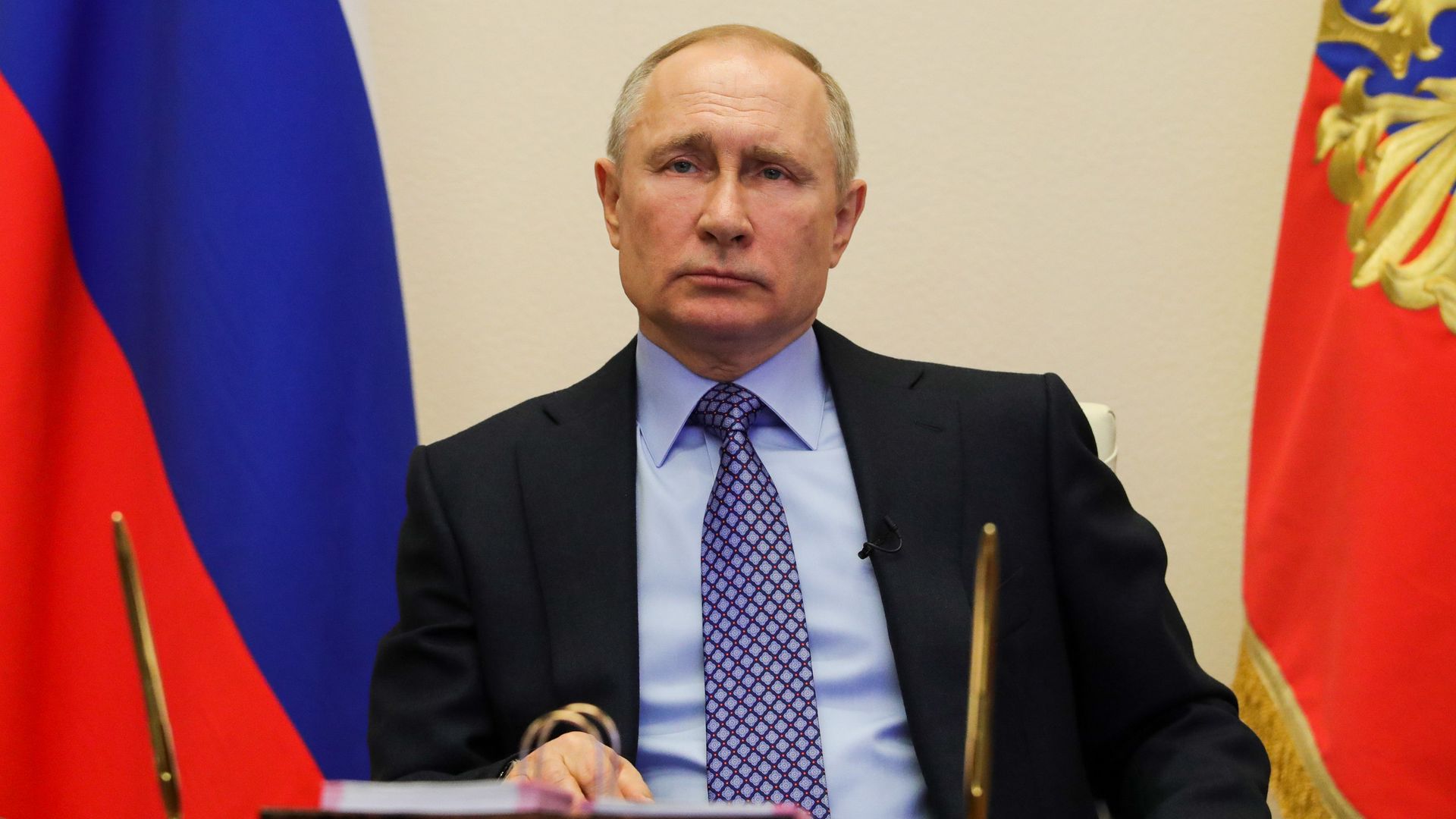
The Russian troll farm central to Moscow's 2016 U.S. election interference campaign appears to be behind a new operation targeting U.S. voters on Gab and Parler, social media platforms favored by the far right.
Why it matters: The shift by Russia's Internet Research Agency to more marginal platforms may signal that the techniques and strategies that paid off for Russia in 2016 are seeing declining returns. If Moscow is trying to influence a broad swath of U.S. voters, being relegated to platforms unknown to 99% of Americans simply won’t get the job done.
Russia is the "primary covert influence actor and purveyor of disinformation and misinformation" in the U.S., a Department of Homeland Security report out Tuesday has concluded.
The big picture: The findings echo previous statements from various U.S. intelligence officials about the Kremlin's activities in the U.S. The efforts have focused on U.S. foreign and domestic policy, the COVID-19 pandemic and the 2020 presidential election, among other issues.
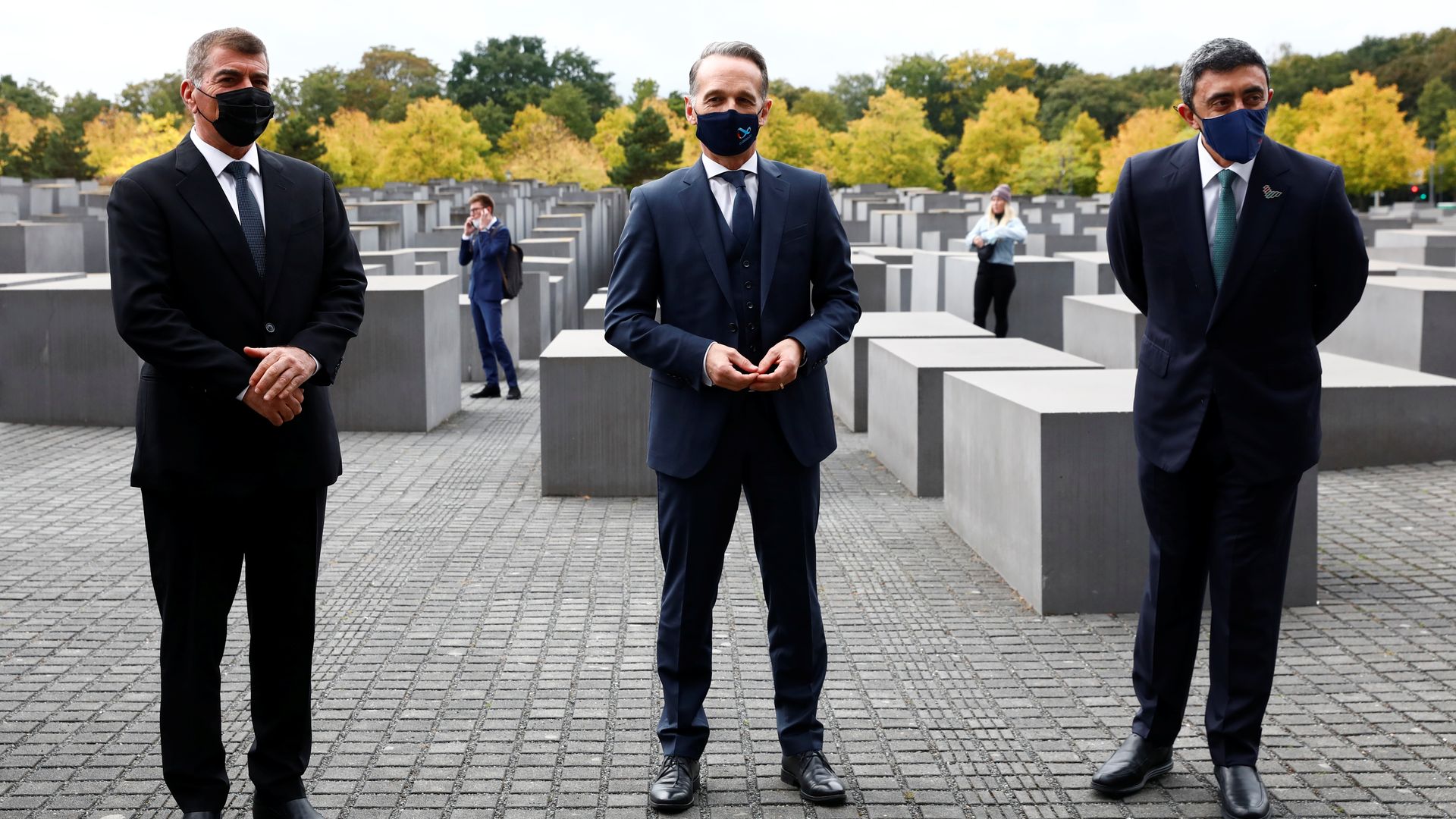
UAE Foreign Minister Abdullah bin Zayed visited the Holocaust memorial in Berlin on Tuesday with his German and Israeli counterparts, a significant public gesture that comes two weeks after the signing of a normalization deal with Israel.
Why it matters: Bin Zayed is one of the first senior Arab officials to ever visit a Holocaust memorial.
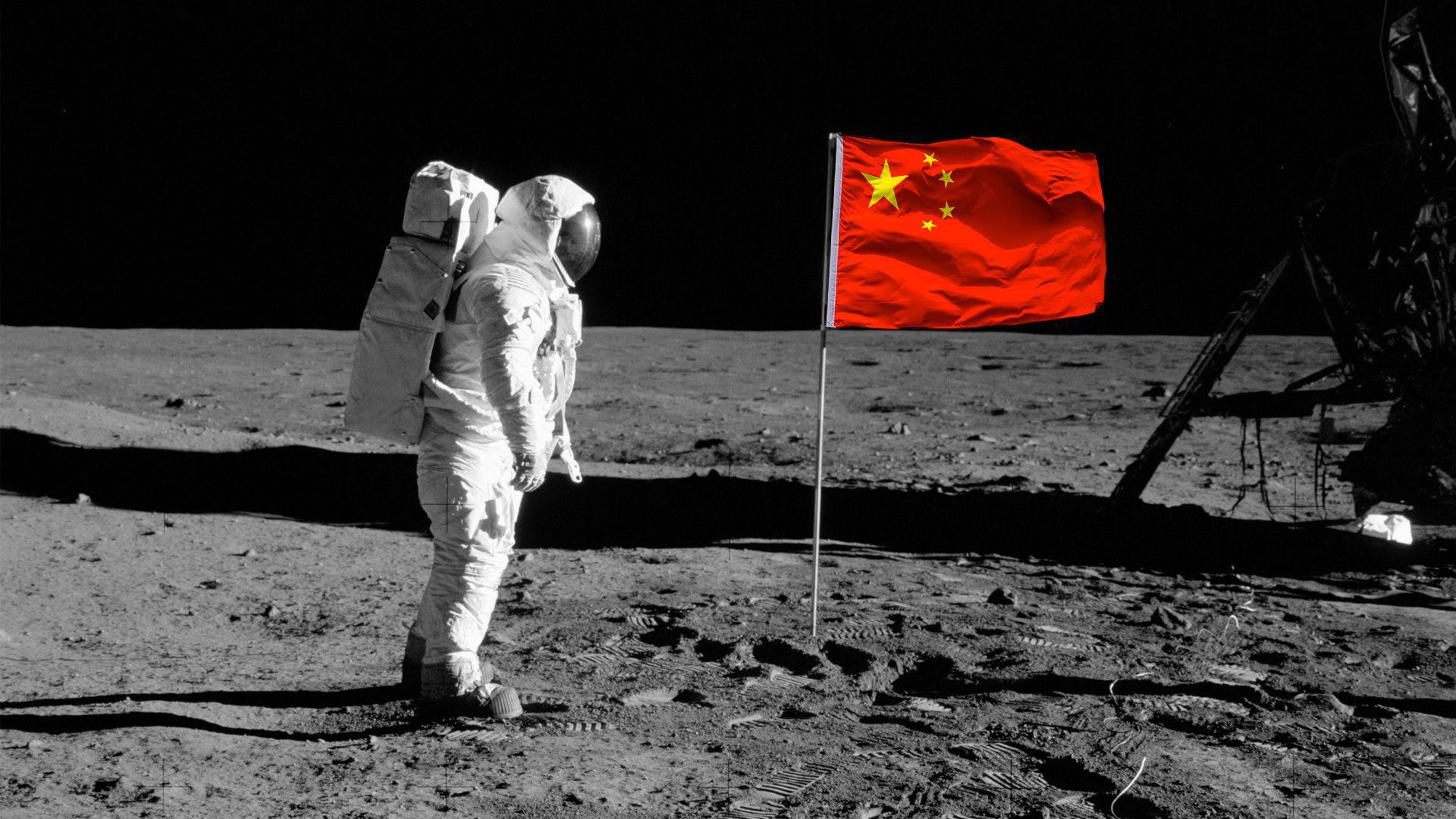
China has chosen a new class of 18 astronauts, another step along its methodical path to explore space in the coming decades.
Why it matters: The nation has plans to build a new space station in orbit and eventually send people to the Moon, making some in the U.S. concerned about the geopolitical implications of China's space ambitions.
A new report from the U.S. Department of Labor ranks China as the top country of origin for goods produced through forced labor.
The big picture: China has long utilized prison labor, but new coerced labor schemes targeting Uighurs and other ethnic minorities now taint numerous industries in China.
Views of China in many countries have become more negative, with unfavorable views spiking in the past year as survey respondents disapproved of China's coronavirus response, according to a new Pew Research Center survey.
Why it matters: Beijing's global propaganda campaign earlier this year to deflect blame for the pandemic seems to have failed.
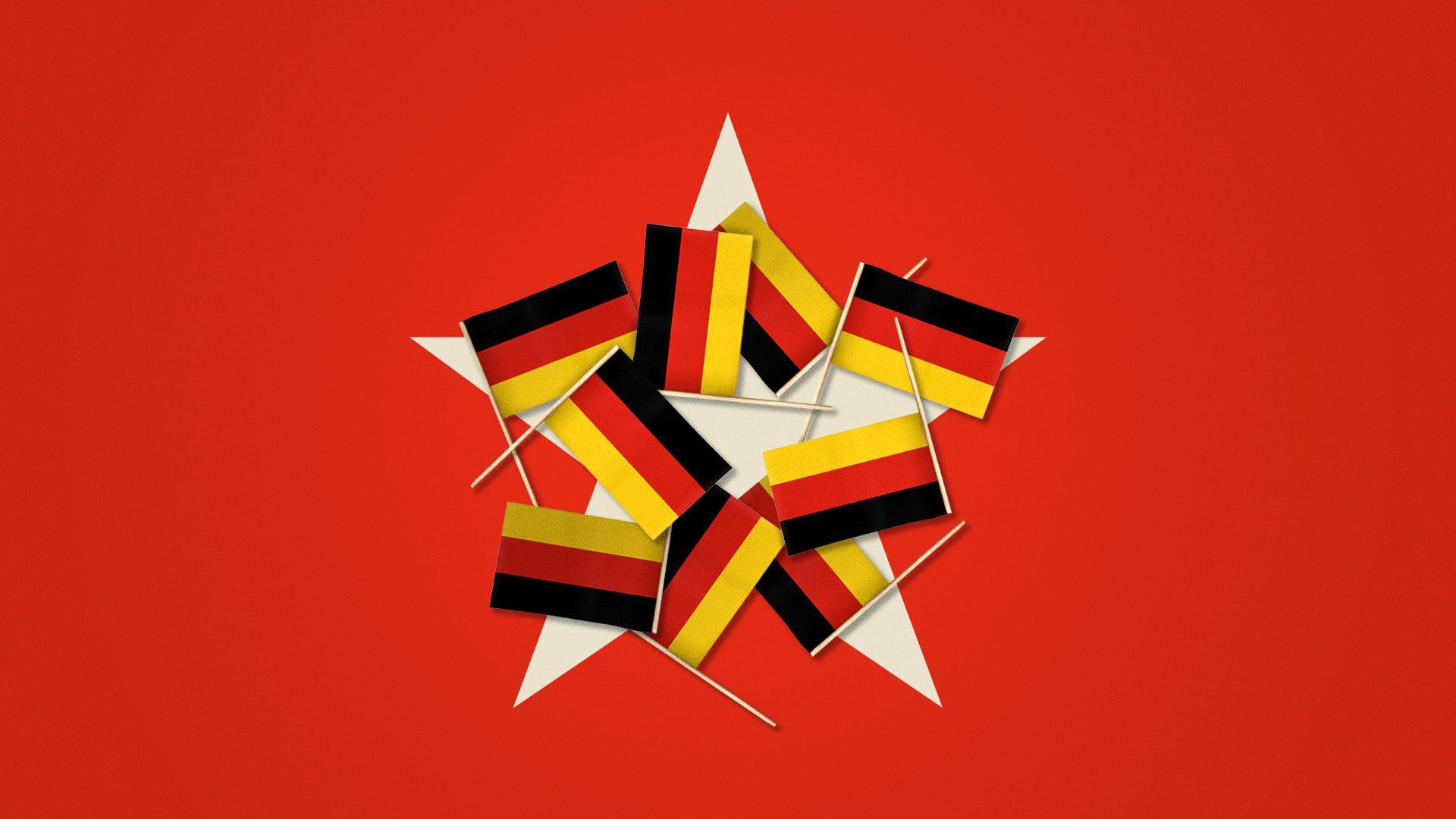
A high-ranking German official suppressed a sensitive intelligence report in 2018 on China’s growing influence in Germany out of fear it would damage business ties with China, Axios has learned.
Why it matters: Business interests have long shaped Germany’s relationship with China, to the detriment of human rights concerns and even national security.
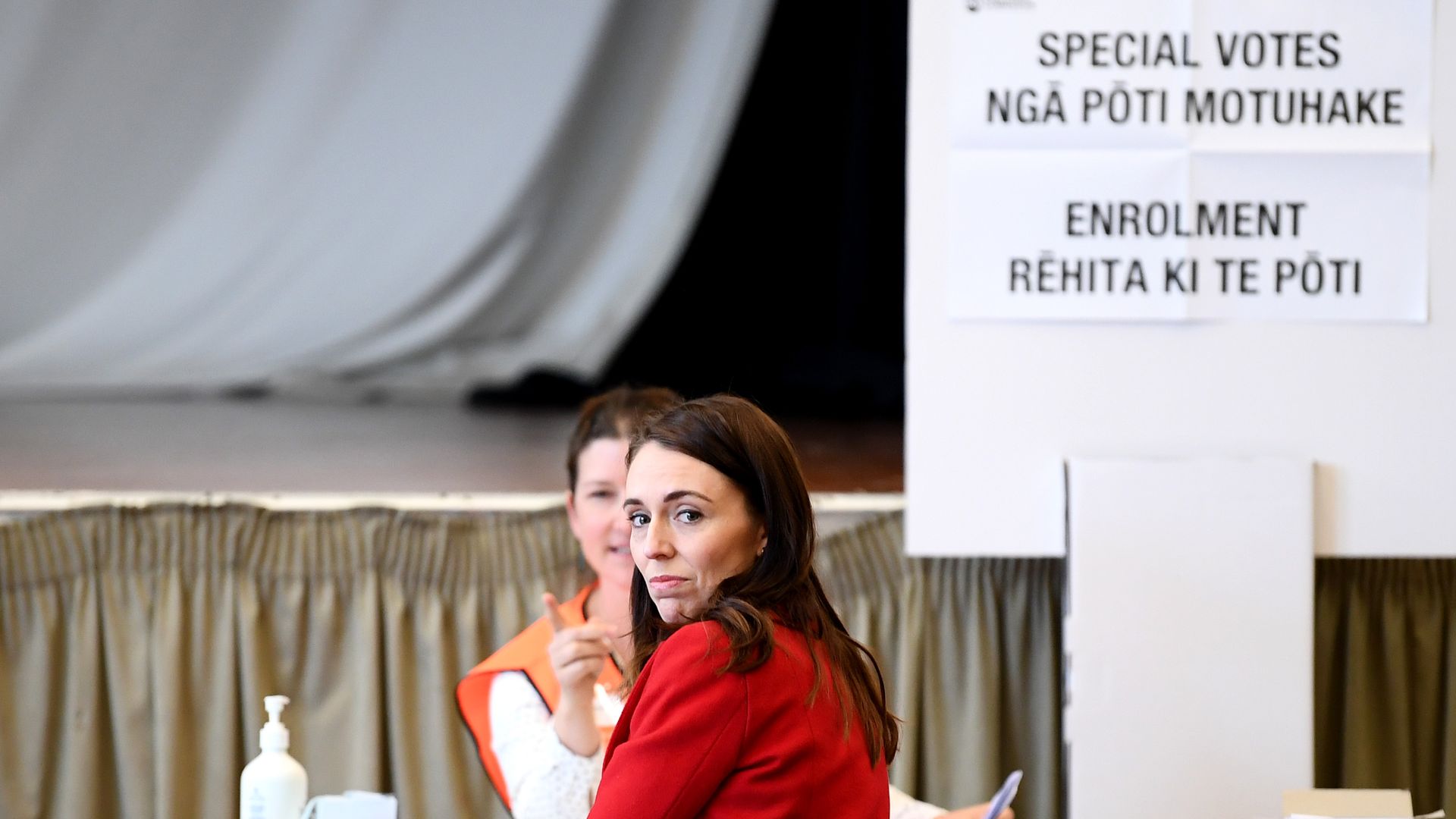
We are at the onset of a very busy month for global democracy.
The big picture: By the time Americans go to the polls on Nov. 3, the world will have seen 12 national elections and three high-stakes referenda over the course of one month. Earlier pandemic-related delays are partially responsible for the electoral cluster.