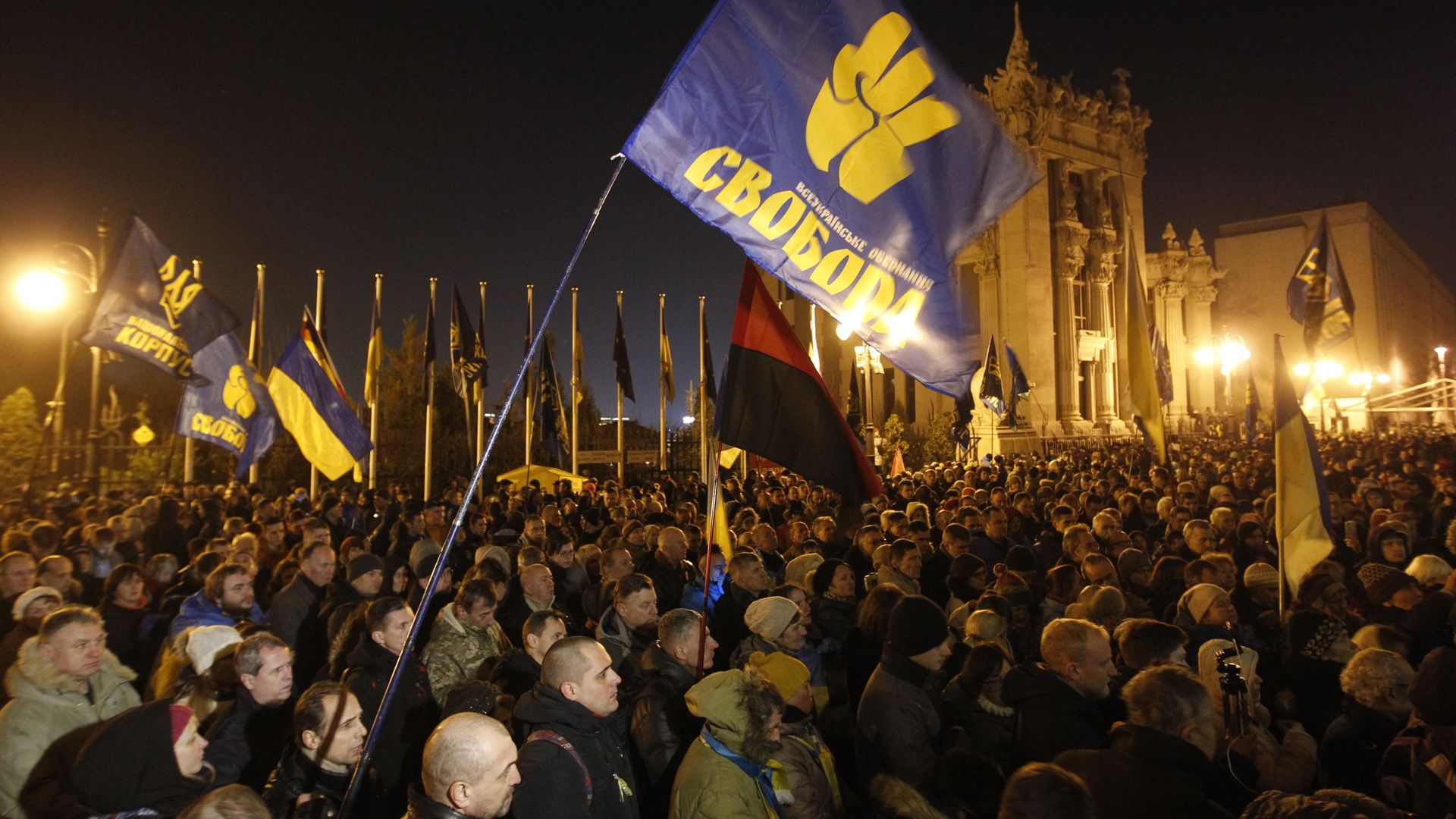
A group of European leaders meeting in Paris on Monday aims to revive progress on terms for peace in eastern Ukraine, an effort that has largely stalled since the second Minsk agreement was signed in February 2015.
Why it matters: It’s the first such meeting in more than three years among France, Germany, Ukraine and Russia — the so-called Normandy Four. Russian President Vladimir Putin enters the talks with his greatest leverage yet, which does not bode well for Ukraine.
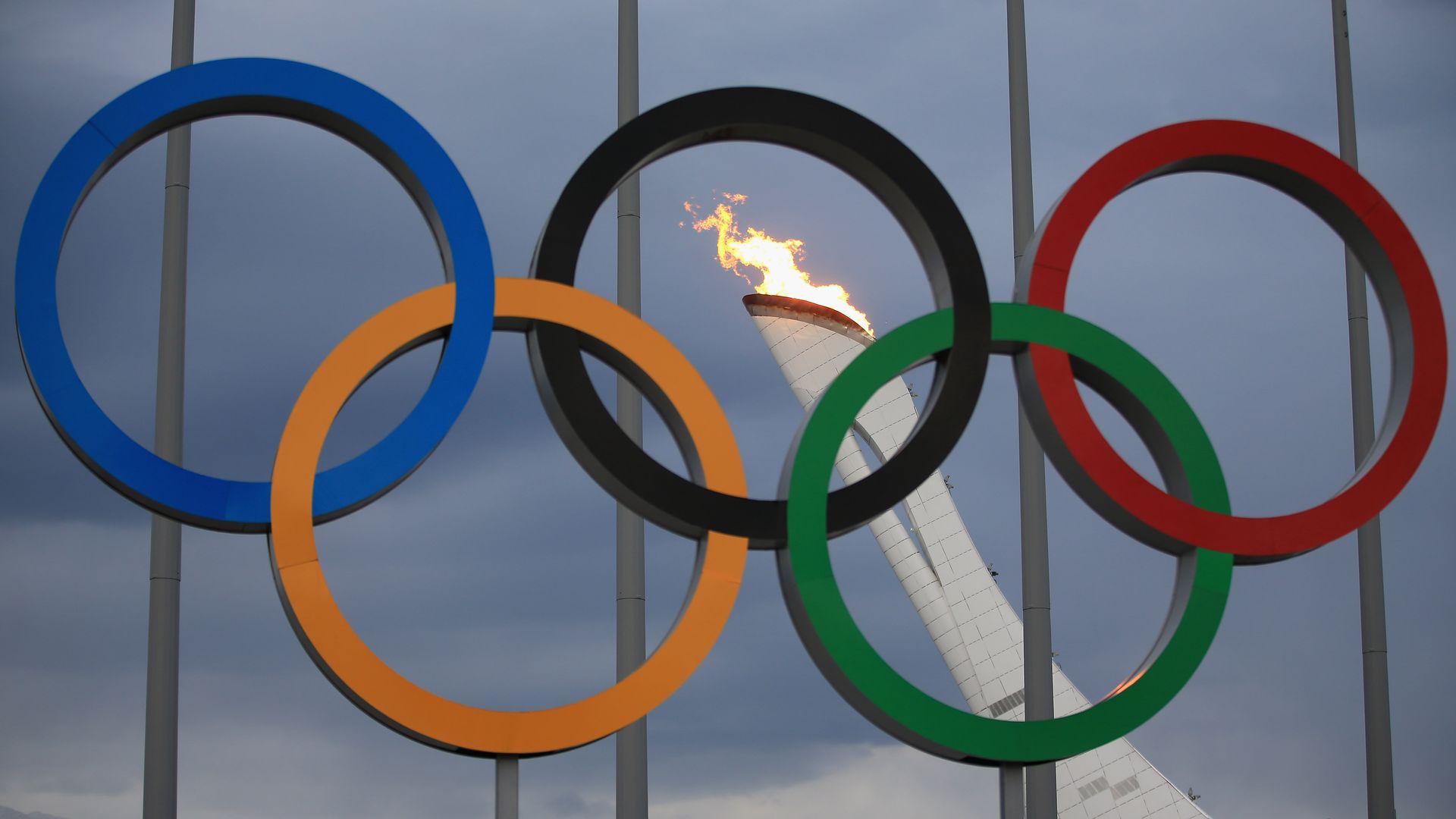
The World Anti-Doping Agency on Monday banned Russia's flag and national anthem from international sporting competitions — including the 2020 Summer Olympics in Tokyo — for four years after state authorities tampered with a doping laboratory's database, AP reports.
The big picture: Russian athletes not implicated in the scheme will be allowed to compete in neutral uniforms, but will not be able to display their flag or anthem. Some officials were frustrated that the ban, which will almost certainly face an appeal, couldn't go farther, as it still allows Russian athletes to take part in international competition.
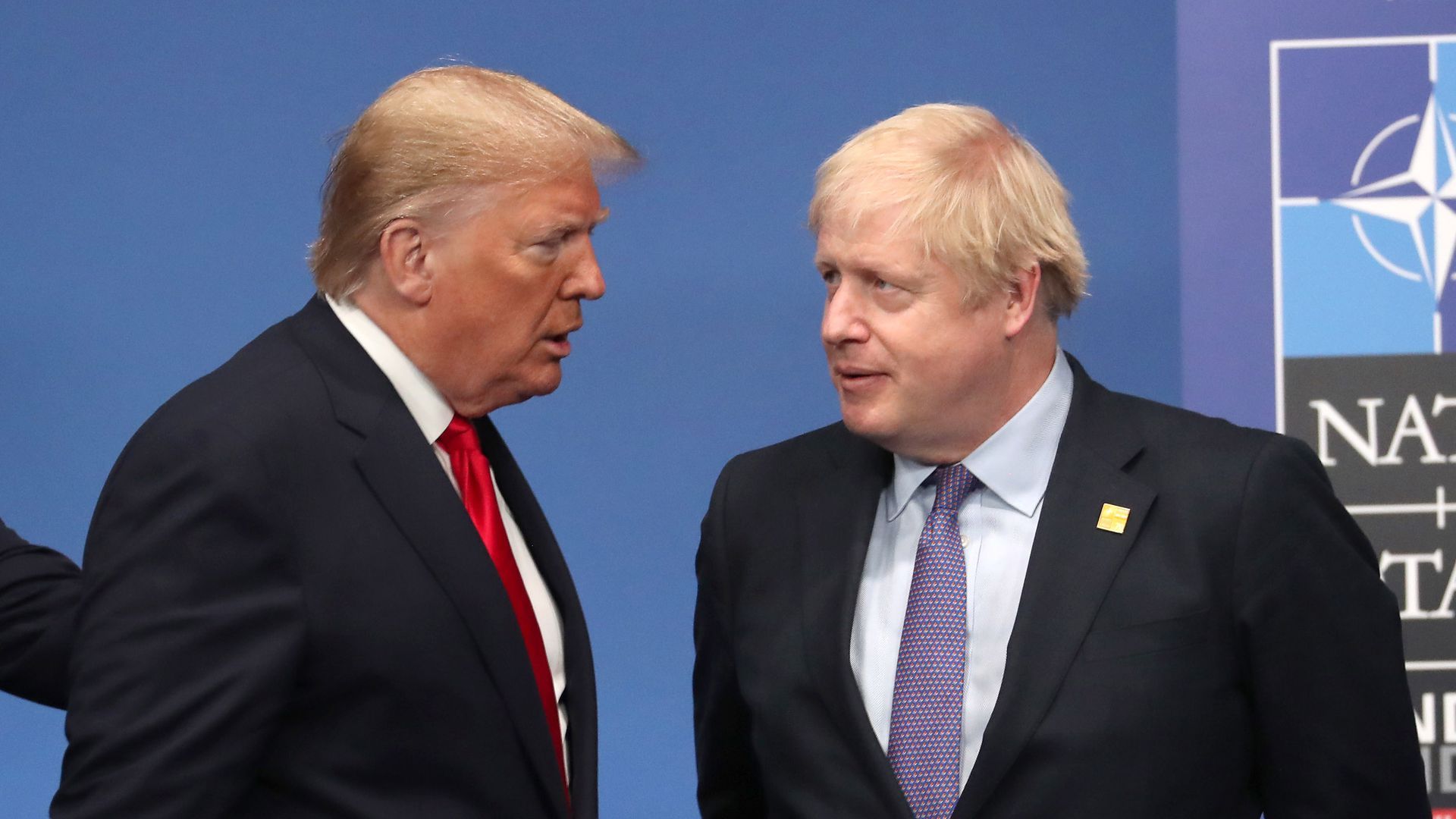
President Trump will be watching another political contest this week: The U.K.'s Dec. 12 general election will decide what happens to Brexit and if Prime Minister Boris Johnson — aka "Britain Trump" — remains in charge.
Why it matters: If Johnson's Conservatives win the majority in Parliament, Brexit clears the way for the bilateral U.S.-U.K. trade relationship that Trump favors over negotiating with the European Union.
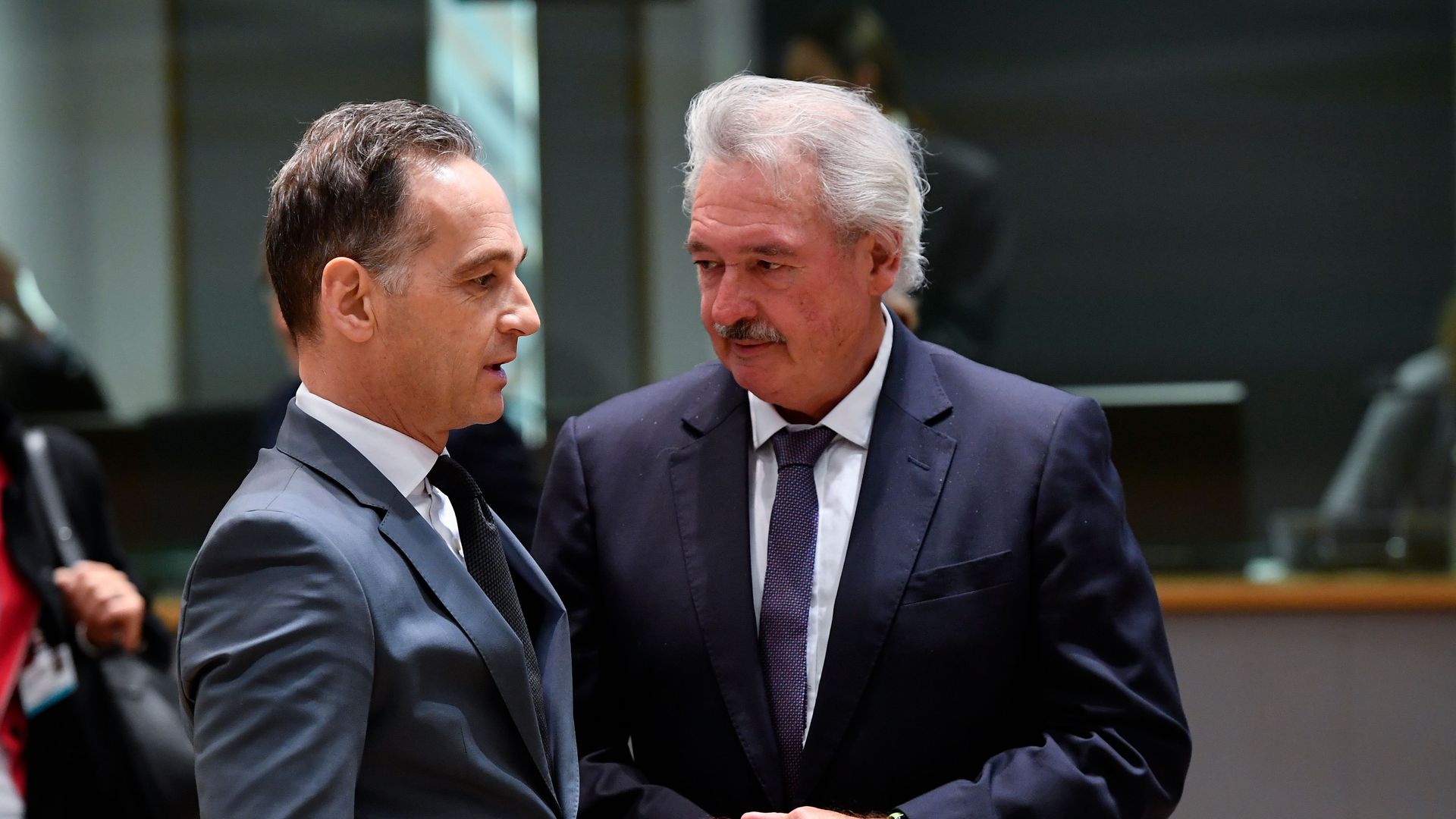
Luxembourg Foreign Minister Jean Asselborn is pushing for all member states of the European Union to recognize Palestine, a reaction to Secretary of State Mike Pompeo’s announcement that the U.S. doesn’t see the Israeli settlements in the West Bank as illegal, European officials tell me.
Why it matters: Luxemburg is one of the smallest countries in the EU, but Asselborn — who has served in his position for 15 years — has significant standing and influence among Europe's foreign ministers.
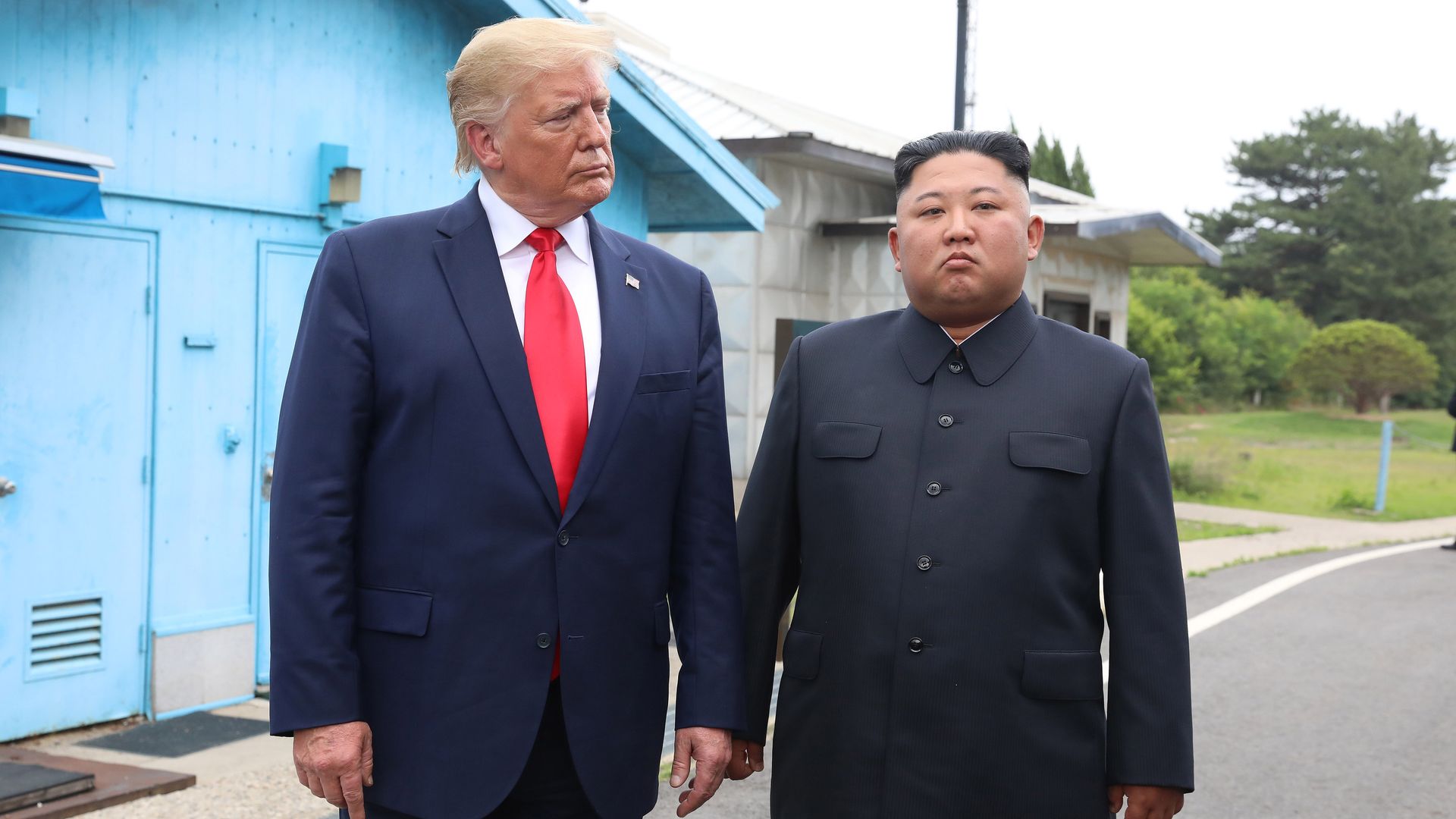
In a Sunday tweet, President Trump doubled down on an argument that North Korea should not take denuclearization talks off the table — as the country stated it would on Saturday — because it could be seen as interfering in the upcoming presidential election.
What he's saying: "Kim Jong Un is too smart and has far too much to lose, everything actually, if he acts in a hostile way," Trump tweeted. "He signed a strong Denuclearization Agreement with me in Singapore. He does not want to void his special relationship with the President of the United States or interfere with the U.S. Presidential Election in November."
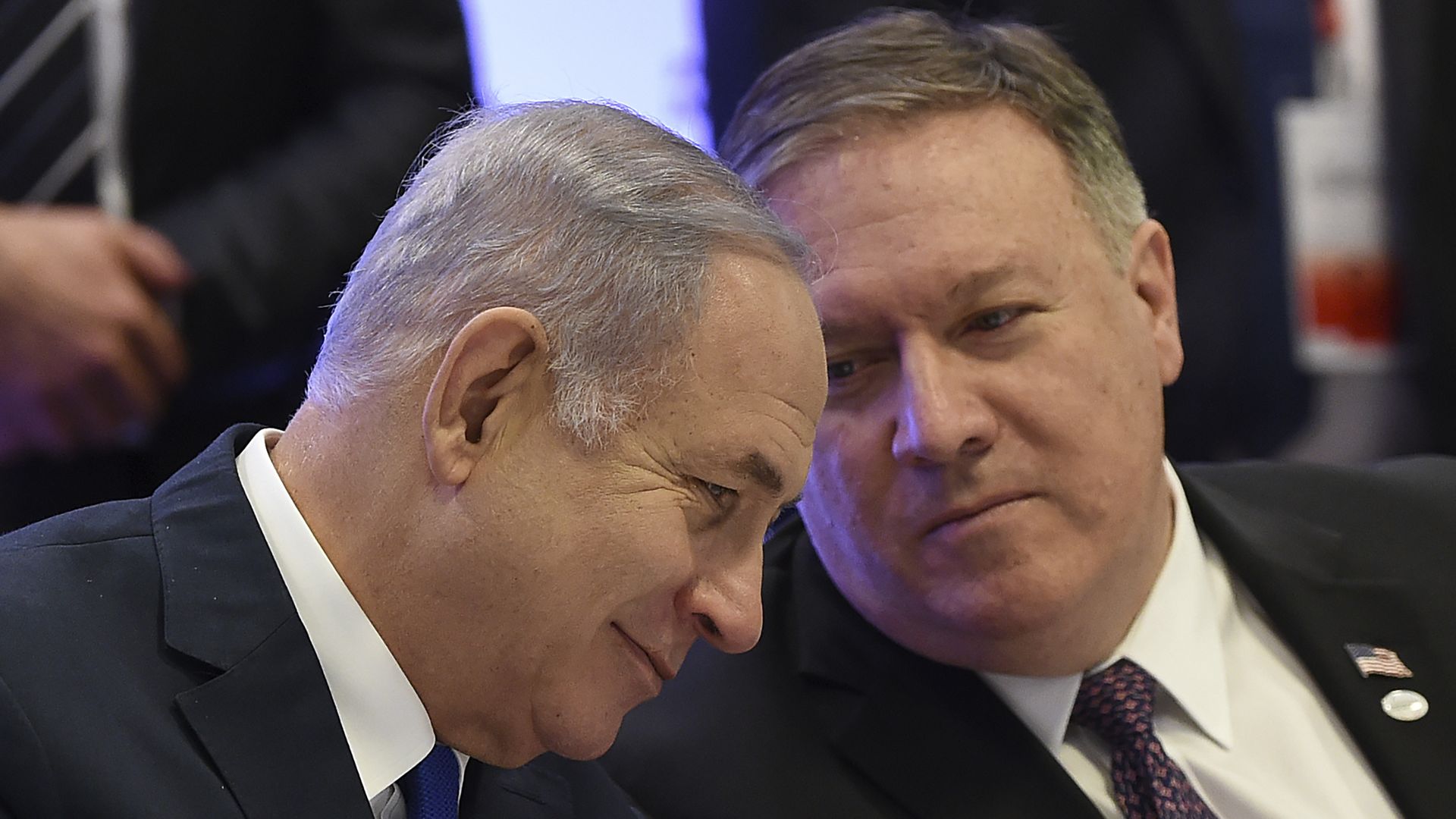
Israeli Prime Minister Benjamin Netanyahu has found himself in a battle of narratives with the Trump administration over whether he and Secretary of State Mike Pompeo discussed Israeli annexation of the West Bank's Jordan Valley during a meeting on Wednesday in Lisbon, Portugal.
Why it matters: There has been virtually no daylight between the Trump administration and Netanyahu's government for three years. This back-and-forth comes with Israel likely headed for its third election campaign in less than a year, in which annexation of the Jordan Valley will again be a prominent talking point for Netanyahu.
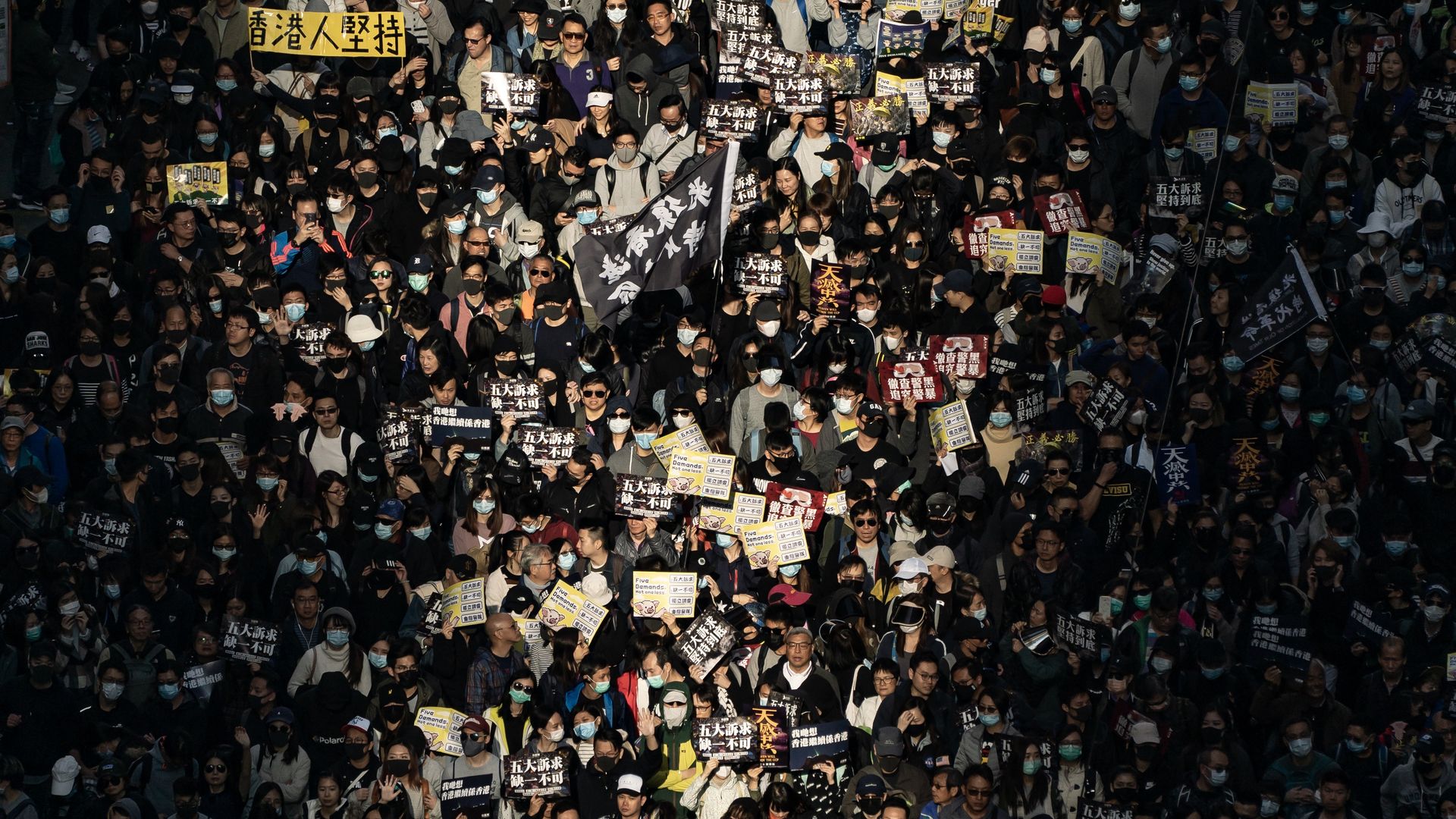
Tens of thousands of people gathered in Hong Kong on Sunday for some of the largest anti-government demonstrations in weeks, timed to coincide with international Human Rights Day on Dec. 10, the New York Times reports.
Why it matters: The marches, which continue to be aimed at pressuring Chief Executive Carrie Lam into accepting democratic election reforms and an amnesty for arrested protesters, mark the sixth month of pro-democracy demonstrations. The notably peaceful protest was organized by Civil Human Rights Front, the first time the group has received police authorization to hold a march since August.