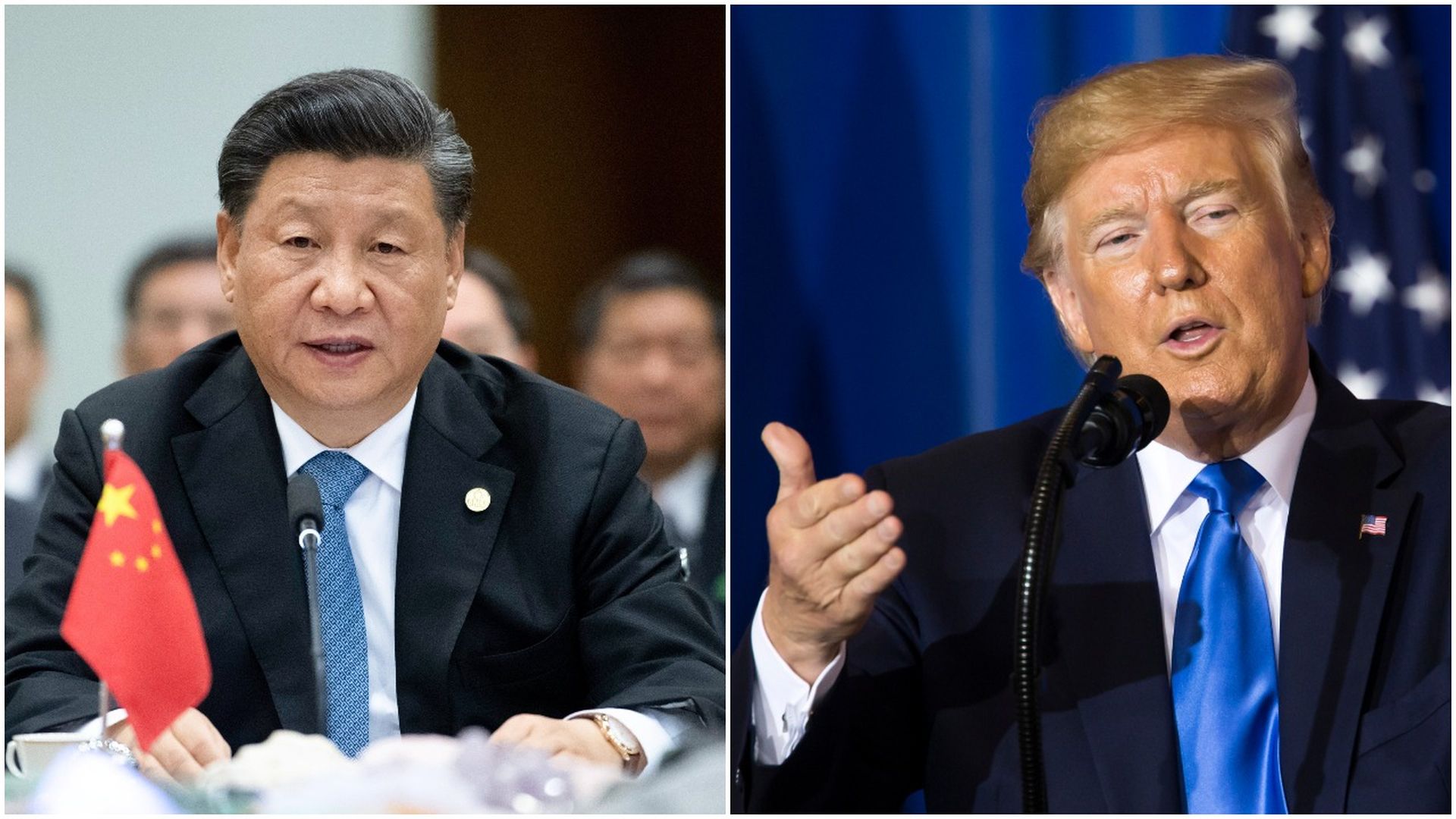
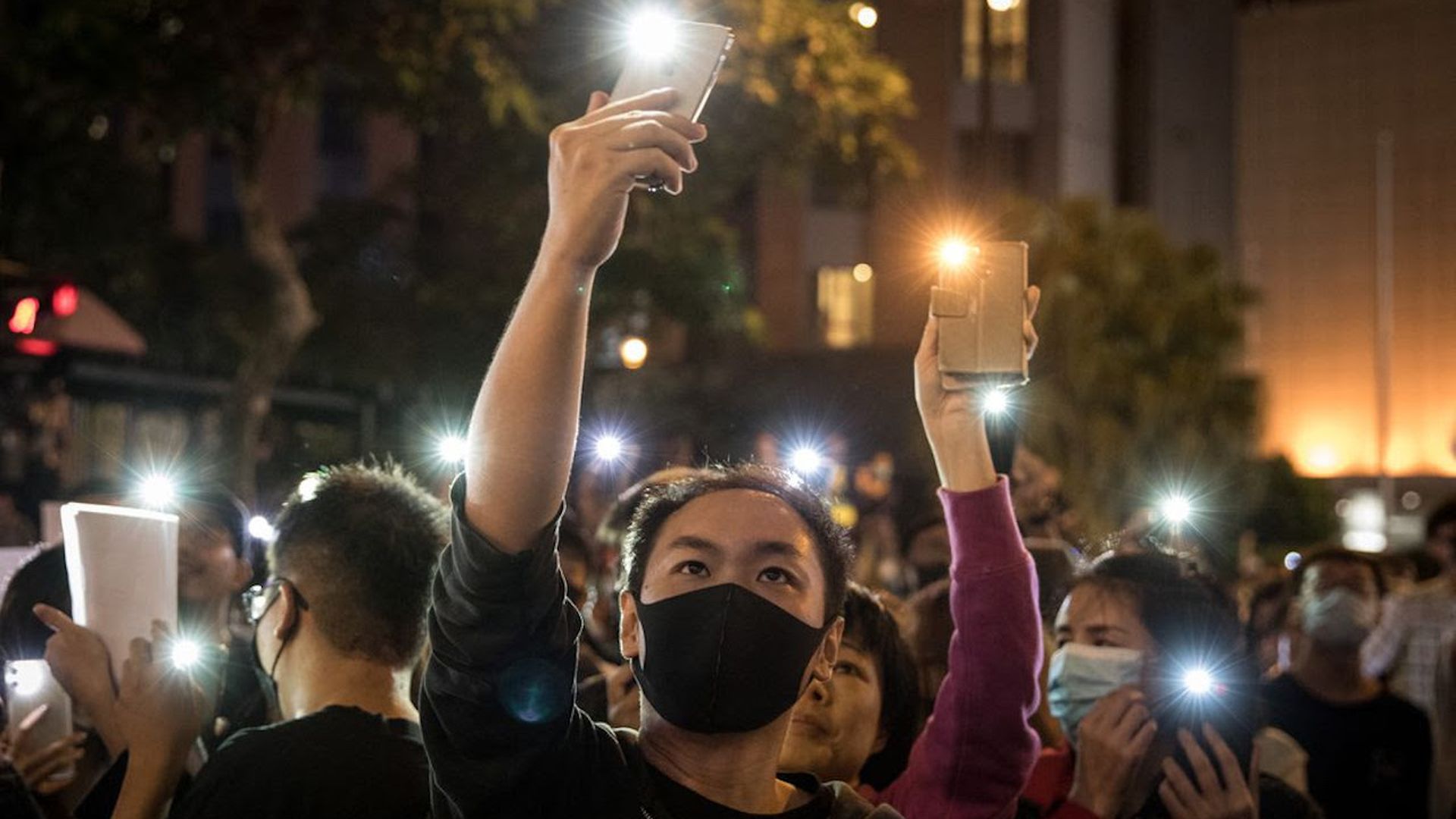
President Trump signed the Hong Kong Human Rights and Democracy Act on Wednesday, reaffirming U.S. support for the city's autonomy after months of pro-democracy protests.
Why it matters: The bill, which was passed with overwhelming bipartisan support in both the Senate and the House, serves as a major rebuke of China at a time when Washington and Beijing are engaged in critical trade talks. China has warned that it will take retaliatory measures if the bill becomes law.
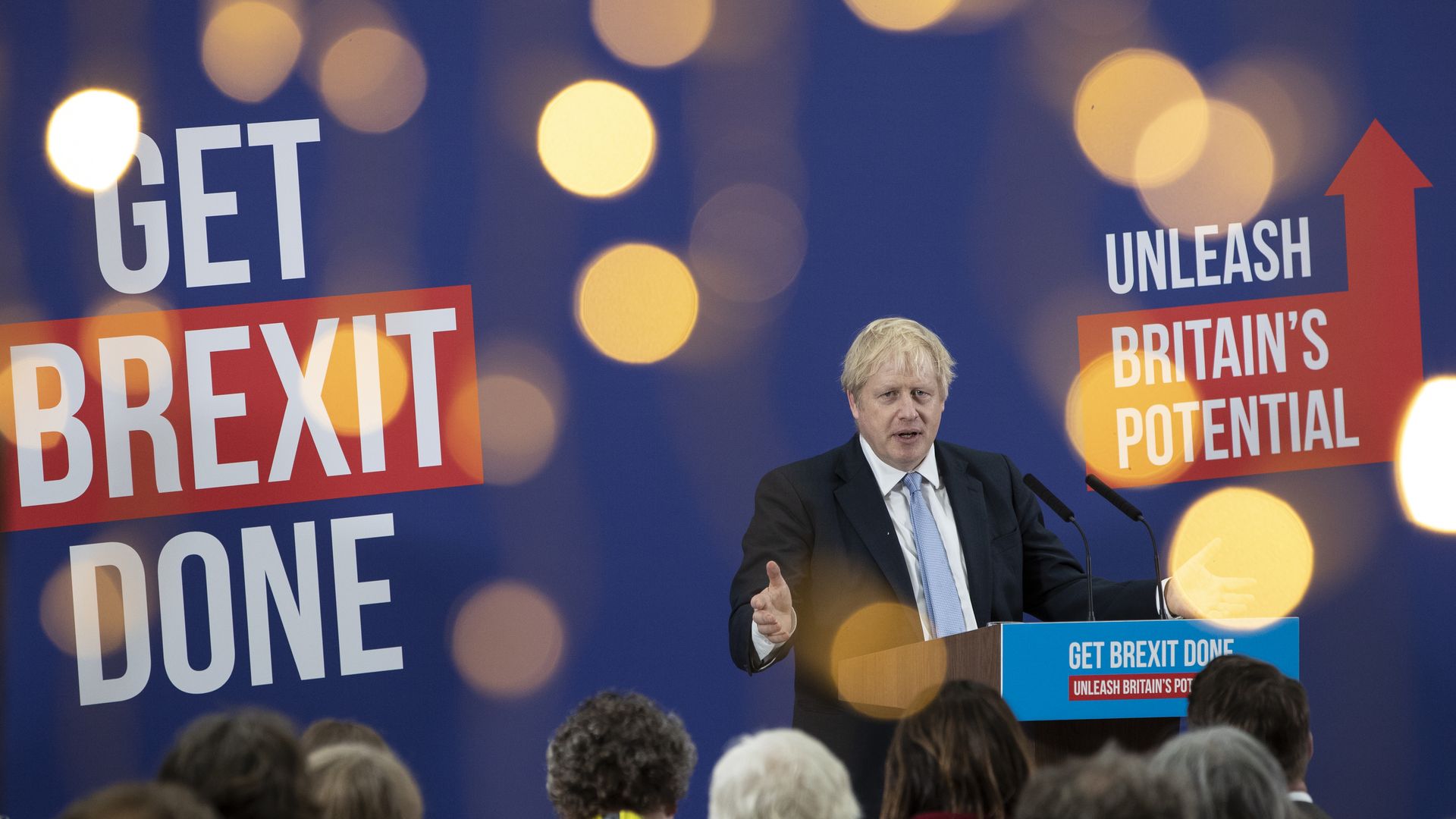
Prime Minister Boris Johnson's Conservative Party is on pace to win a significant majority in the U.K.'s high-stakes election on Dec. 12, according to a major poll of 100,000 voters conducted by YouGov.
Why it matters: The so-called MRP poll, which takes local factors into account to provide a highly detailed prediction, was the only one to accurately predict that Theresa May would lose her majority in the shock 2017 election. If Johnson does indeed earn a majority of 68 seats, as the poll projects, he would finally be able to pass his Brexit deal and take the U.K. out of the European Union — 3.5 years after the 2016 referendum.
Breitbart News Middle East bureau chief Aaron Klein has been advising Benjamin Netanyahu while the Israeli prime minister is preparing his public campaign against the attorney general's decision to indict him, two Netanyahu aides told me.
Why it matters: Klein is a prominent right-wing journalist and is known to be very close to former White House chief strategist Steve Bannon. In the last three months, and especially since last Thursday's indictments, Netanyahu has been working hard to rally his political base in America, which he gives great importance to.
Britain’s Chief Rabbi Ephraim Mirvis on Monday called Labour Party leader Jeremy Corbyn unfit to be prime minister for failing to remove anti-Semitism from his party.
Why it matters: Such interventions from religious leaders are unusual, according to Reuters. Mirvis's opinion article in The Times of London came just weeks before the Dec. 12 general elections.
Top Chinese leaders, including Hong Kong leader Carrie Lam, "have been managing their response" to the violent protests in Hong Kong from a villa in Shenzhen instead of using the formal bureaucratic system that's been in place for two decades, Reuters scoops.
Why it matters: Under normal circumstances, Beijing and Hong Kong communicate through the Liaison Office, "housed in a Hong Kong skyscraper stacked with surveillance cameras, ringed by steel barricades," Reuters writes. This change shows the central government isn't happy with how the Liaison Office has been handling the protests.