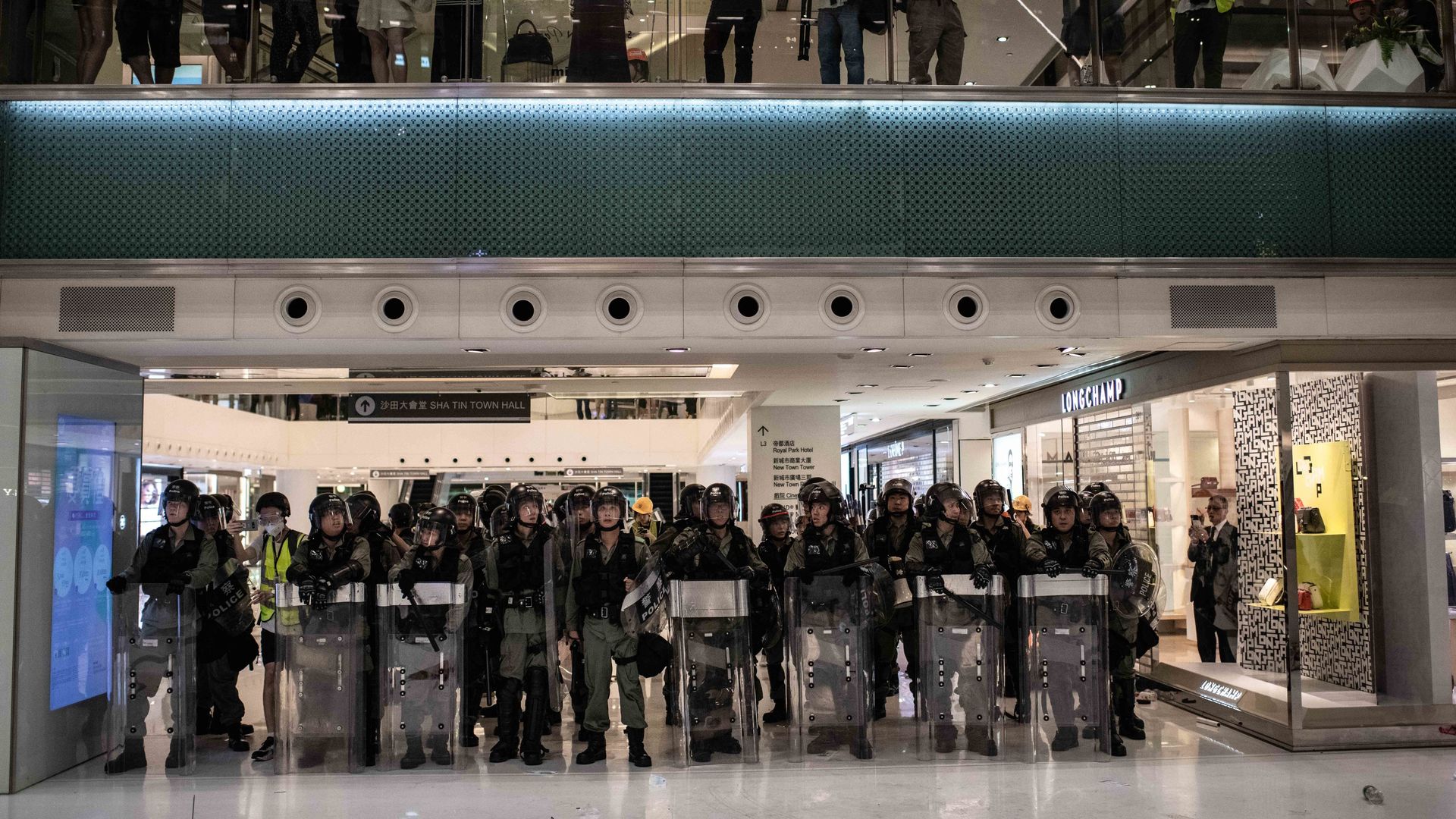
Hong Kong businesses are questioning if the city is safe after almost 3 months of protests, while others are being advised to create contingency plans if unrest continues, the BBC reports.
The big picture: Hong Kong's stock market is the 5th largest in the world, when considering the value of its traded companies. As of July, financial analysts said the territory's market hadn't yet suffered serious consequences — but regulatory changes caused by protests would be a different story entirely.
The deteriorating political situation in Hong Kong threatens to severely muddy the financial gateway between East and West.
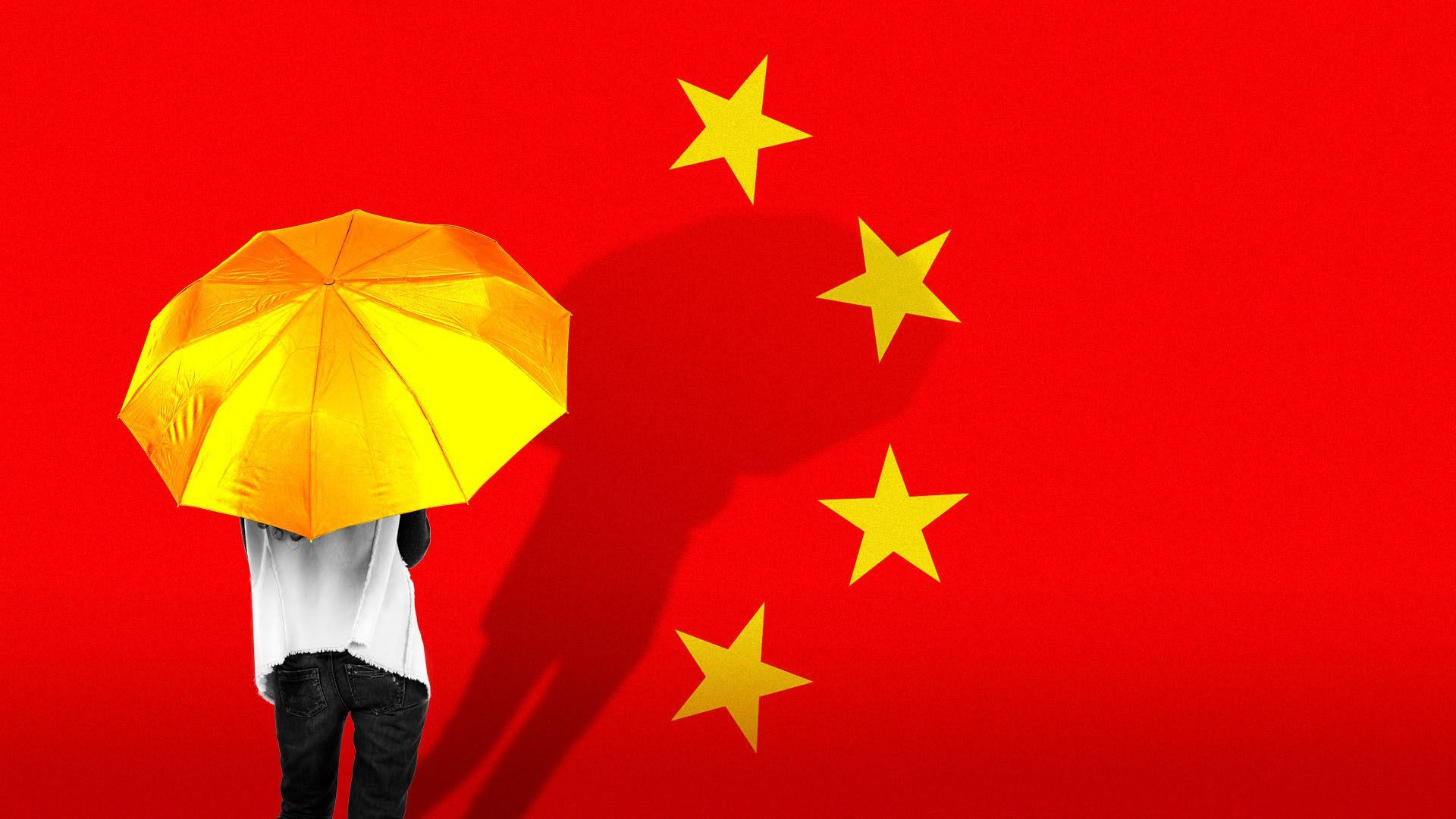
The state of play: If the protesters succeed in maintaining, or even furthering, "one country, two systems" governance, then it likely would keep global capital flowing through Hong Kong. But it's unclear how China can possibly allow that to happen without eroding its authoritarian bonafides on the mainland, and almost any crackdown would be viewed as ripping down the legal fabric that made Hong Kong a financial powerhouse in the first place.
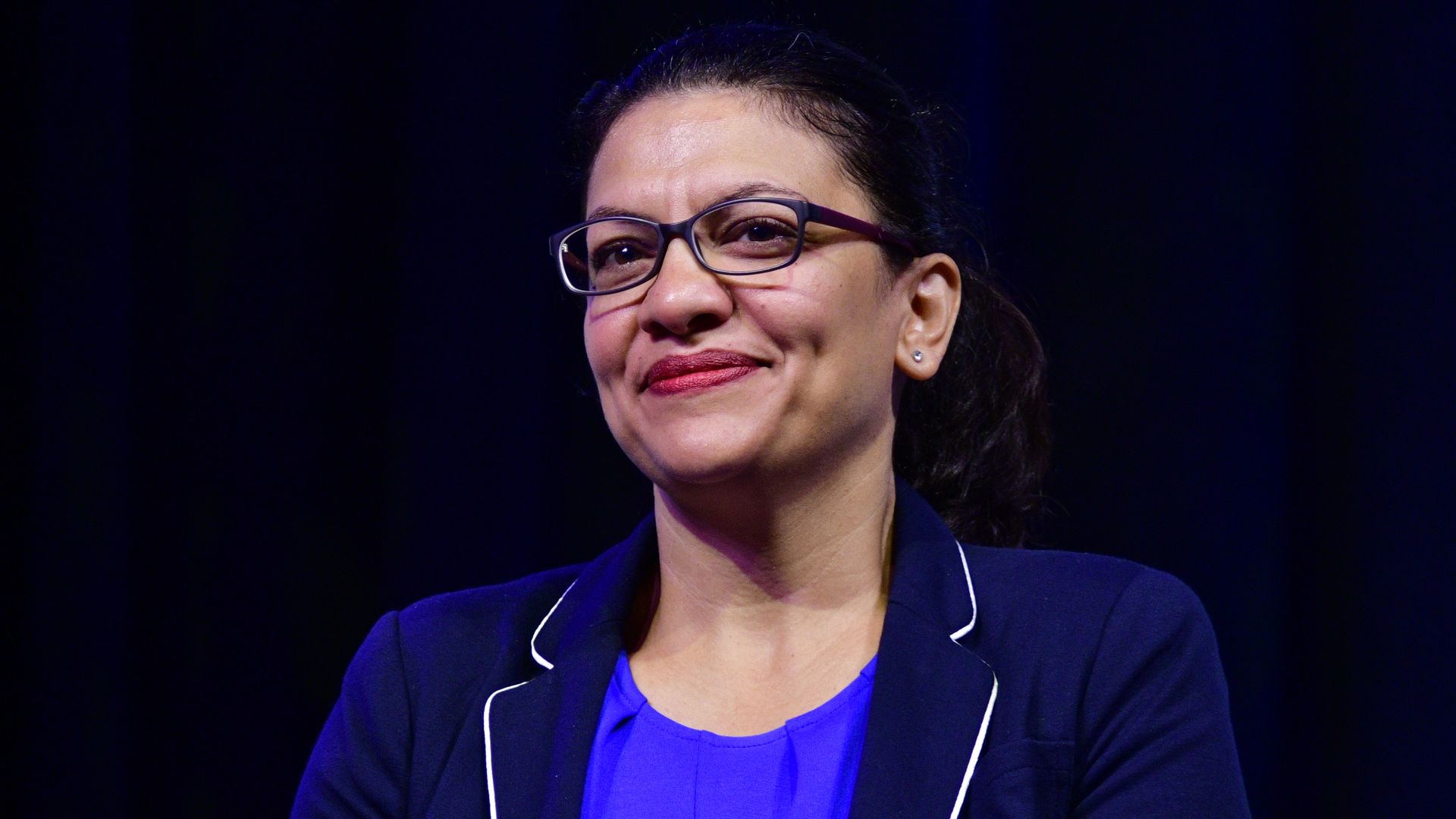
Rep. Rashida Tlaib (D-Mich.) said Friday that she will not enter Israel due to the "oppressive conditions" placed upon her visit, despite the Israeli government's permission to enter Israel on humanitarian grounds to visit her family in the occupied West Bank, including her 90-year-old grandmother.
The big picture: Israeli Prime Minister Benjamin Netanyahu reversed course yesterday after pressure from President Trump and barred Tlaib and Rep. Ilhan Omar (D-Minn.) from a planned visit to Israel and the West Bank, saying the trip was meant "to strengthen the boycott and delegitimize Israel." In a letter requesting the visit to her family, Tlaib said she would "respect [her] restrictions" and would not "promote boycotts against Israel."