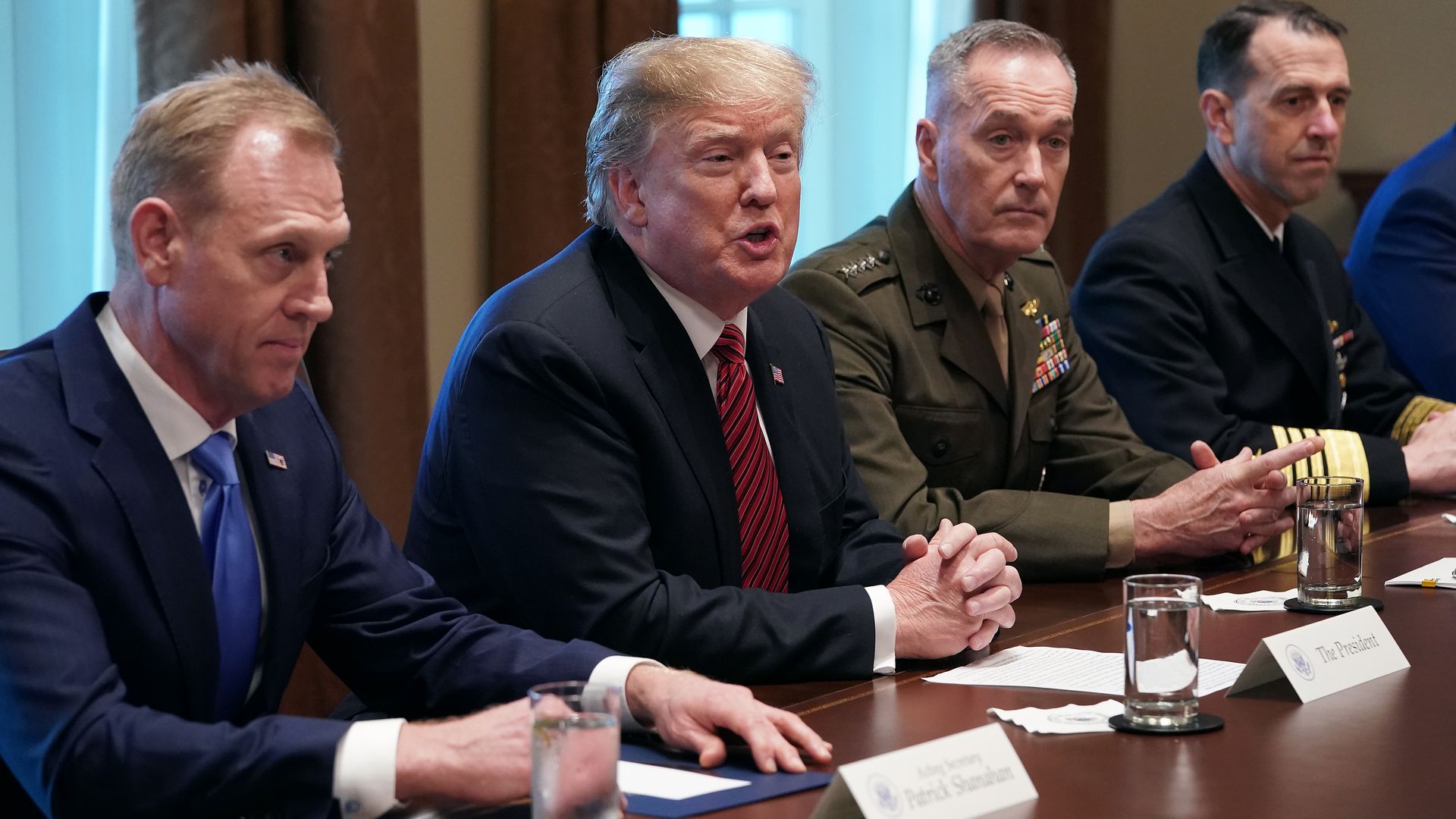
The Pentagon is expected to submit plans to the White House that would see up to 10,000 additional U.S. troops deployed to the Middle East, according to AP. The report comes amid growing fears of war with Iran.
Why it matters: Both U.S. and Iranian officials have said they don't want war, but U.S. officials have made repeated but unspecific claims of possible impending Iranian attacks. President Trump tweeted Monday, "If Iran wants to fight, that will be the official end of Iran." Trump has also dismissed a previous report of a Pentagon plan involving 120,000 troops, but said he'd send "a hell of a lot more" if necessary.
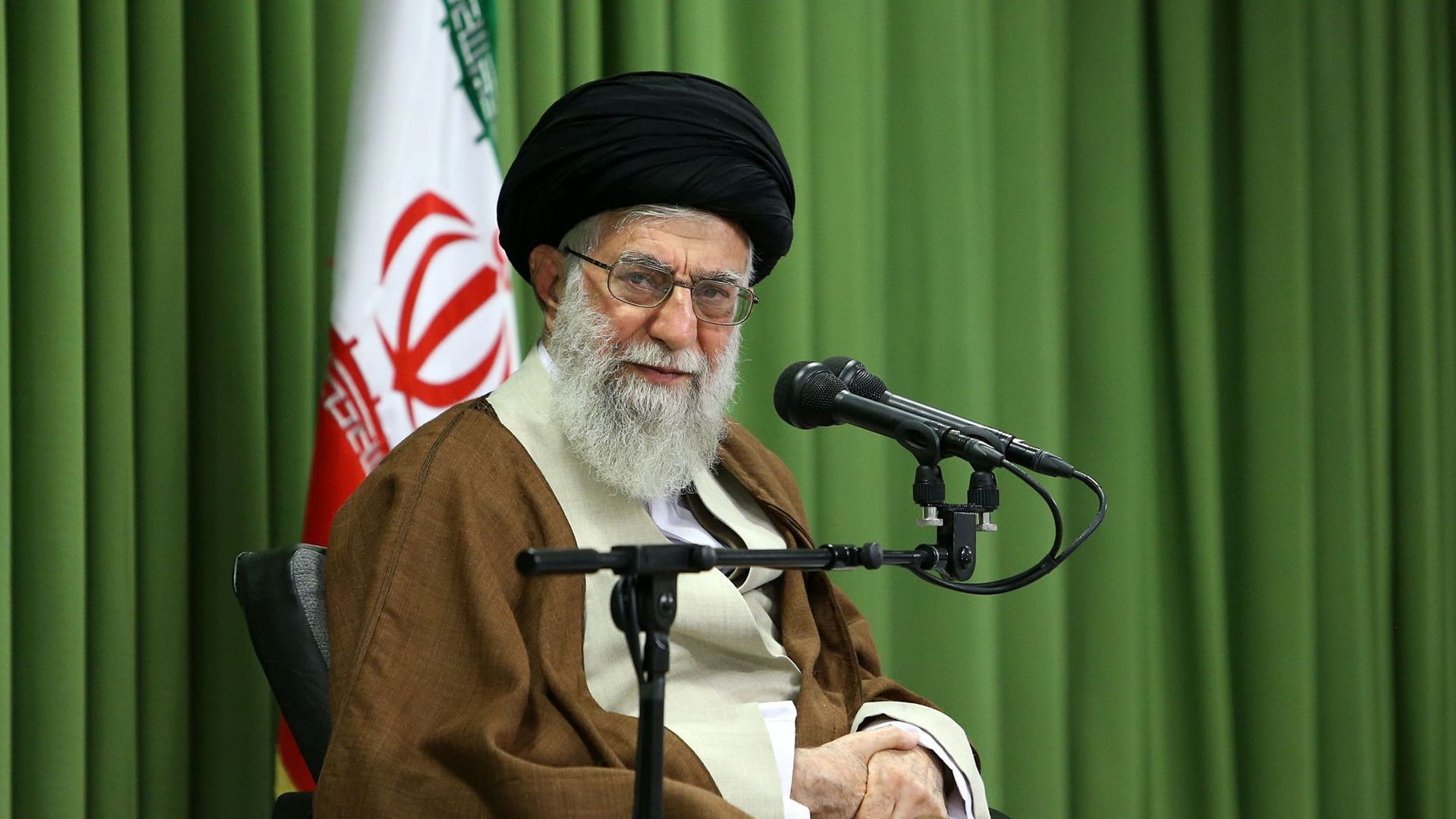
Iran's supreme leader has publicly criticized the country's president and foreign minister for the first time over their roles in negotiating and implementing the 2015 Iran nuclear deal, reports AP.
Why it matters: Ayatollah Ali Khamenei's remarks come as Tehran weighs whether to abandon the nuclear deal and decides how to respond to threats coming from Washington. His criticism undercuts the influence of President Hassan Rouhani and Foreign Minister Mohammad Javad Zarif, who are considered moderates by the standards of the Iranian regime.
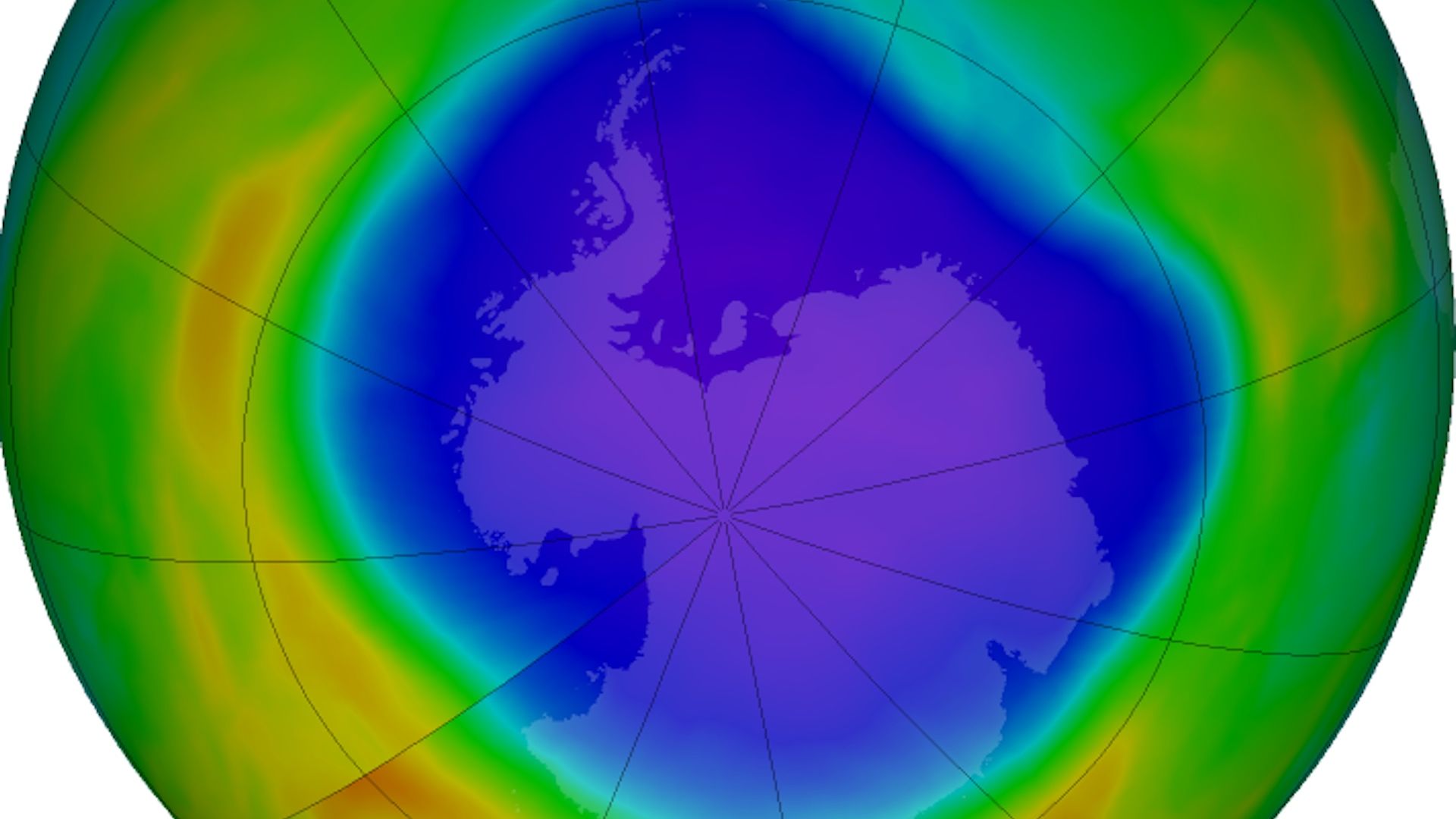
Scientists have solved an international environmental mystery by pinpointing the source of a troubling uptick in a dangerous, ozone-destroying chemical: factories in northeastern China.
Why it matters: The Montreal Protocol on Substances that Deplete the Ozone Layer is viewed as the most successful environmental treaty ever enacted. However, its success depends on rigorous monitoring and enforcement, particularly regarding the ban on the production and use of ozone-depleting substances from developing countries since 2010.
The march toward a tech Cold War between the U.S. and China is continuing, but both sides are ignoring the reality of just how much they need each other. The 2 nations certainly would like to be independent, but today neither one's vast tech economy can function without the other.
Why it matters: A continued trade impasse will likely mean lots of pain on both sides of the Pacific.
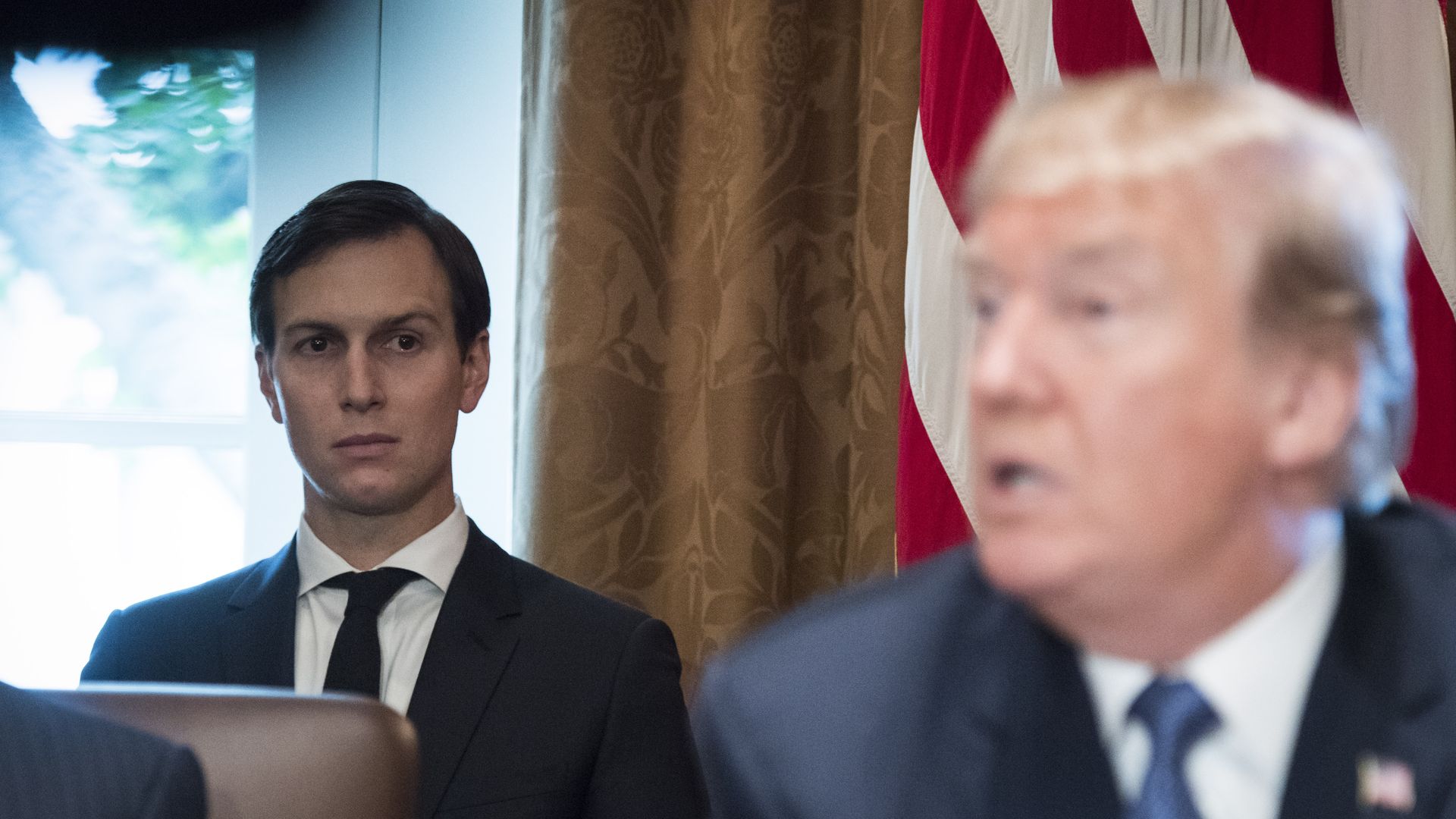
Ashraf Al-Jabari, a businessman from Hebron who maintains ties to the Trump administration, is the only Palestinian so far who will attend the U.S.-led economic conference in Bahrain, the first phase of the launch of the White House's Middle East peace plan.
Why it matters: The fact that Al-Jabari is the only Palestinian willing to attend the event is a testament to the problems the Trump administration is having with promoting its peace plan. That's been exacerbated by fractured relations with Palestinian leadership since 2017, which occurred after the White House's decision to move the U.S. Embassy in Israel to Jerusalem.
Representatives from two wealthy Gulf states, the United Arab Emirates and Saudi Arabia, announced on Tuesday that they will attend the economic gathering next month to roll out President Trump's Middle East peace plan.
Driving the news: The UAE's Ministry of Foreign Affairs and International Cooperation said in a statement that the UAE would send a delegation to Bahrain at the end of June to participate in what the Trump administration is calling an "economic workshop." Saudi Arabia announced that its Minister of Economy and Planning will attend as well.
British Prime Minister Theresa May said Tuesday that she would offer lawmakers "a new Brexit deal" that — if passed — would also include a vote in Parliament on whether to hold a second referendum.
Why it matters: Holding a second referendum has long been a red line for May, who has staked her entire premiership on delivering the results of the 2016 Brexit vote. Now, in a last-ditch effort to salvage Brexit before stepping down as prime minister, May is offering lawmakers a potential chance to put it to the people in exchange for passing her deal.