A French judicial official says Meng Hongwei, president of the International Criminal Police Organization (Interpol) since 2016, is missing after traveling to China, according to the Associated Press.
The details: Hongwei, who traveled to the country at the end of September also serves as vice minister of public security in China. His wife reported him missing on Friday and says she has not heard from him since he left for the trip, the AP reports.
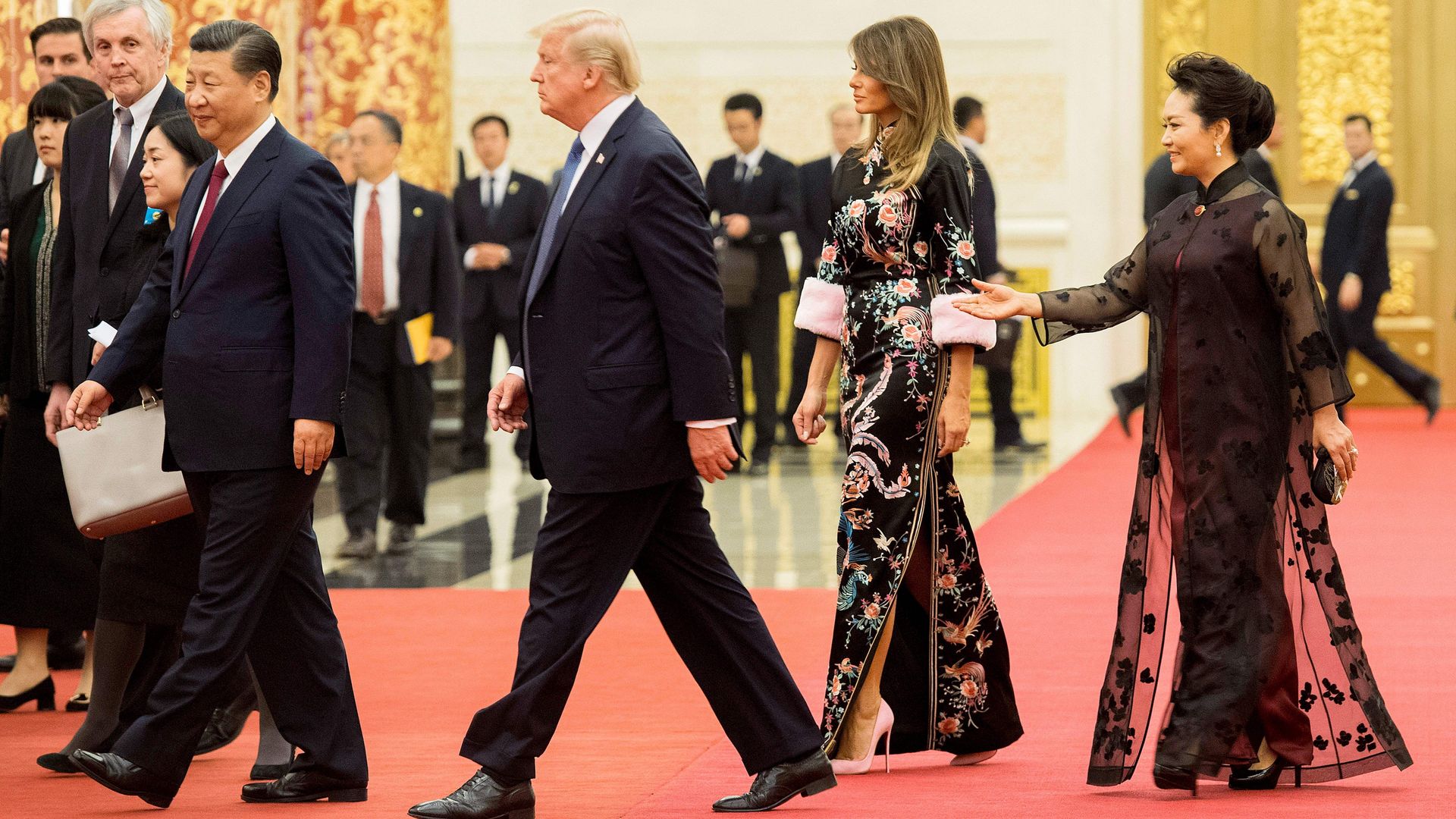
Why it matters: The U.S. is far less popular around the world than it was before Trump took office, and the decline has been particularly sharp in countries like the U.K., Germany and Canada. That stands to benefit America's rivals for global influence, but these numbers reveal widespread wariness ofa China-led world.
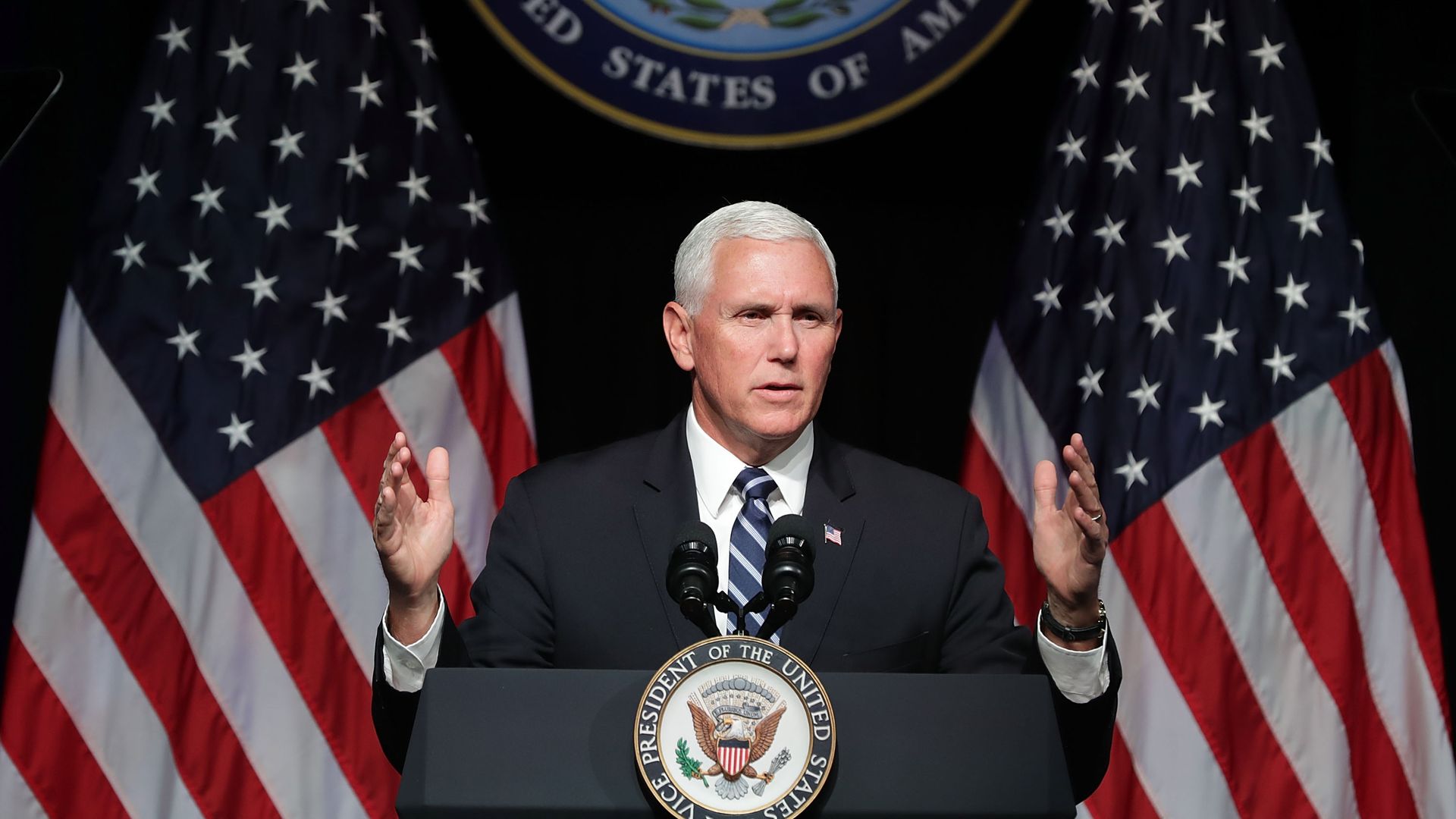
Vice President Mike Pence today accused China of using its military, spies, economic power and propaganda prowess to undermine the U.S. around the world and influence its domestic politics. The U.S. had long turned a blind eye, Pence said, “but those days are over.”
Why it matters: Pence made headlines by declaring that China “wants a different American President,” and by repeating the still-unsubstantiated claim that Beijing is meddling in the midterms. But his underlying message echoes a growing consensus among China watchers: we're entering a new era of U.S.-China relations, driven by competition and confrontation.
Jared Kushner and special envoy Jason Greenblatt — President Trump's "peace team" — went today to Capitol Hill and briefed a bipartisan group of senators on the administration's Middle East peace efforts.
Why it matters: This is the first such briefing to senators, and is part of the pre-launch phase of the White House peace plan. Kushner and Greenblatt have met recently with Jewish groups, Israeli Prime Minister Netanyahu and Arab officials (though not Palestinians). The briefing didn't include details, a source with knowledge tells me, only an overview on where things stand. Trump said last week that he wants to present his peace plan within 2-4 months, and he said for the first time that he supports a two-state solution.
For several years, North Korea has been conducting a spree of bank robberies online. A new report from FireEye makes clear that a recent attempt to "name and shame" a North Korean government-affiliated hacker did nothing to curtail the digital heists, and sanctions have only made Pyongyang more eager to steal money. But experts think the U.S. still has other levers it can pull.
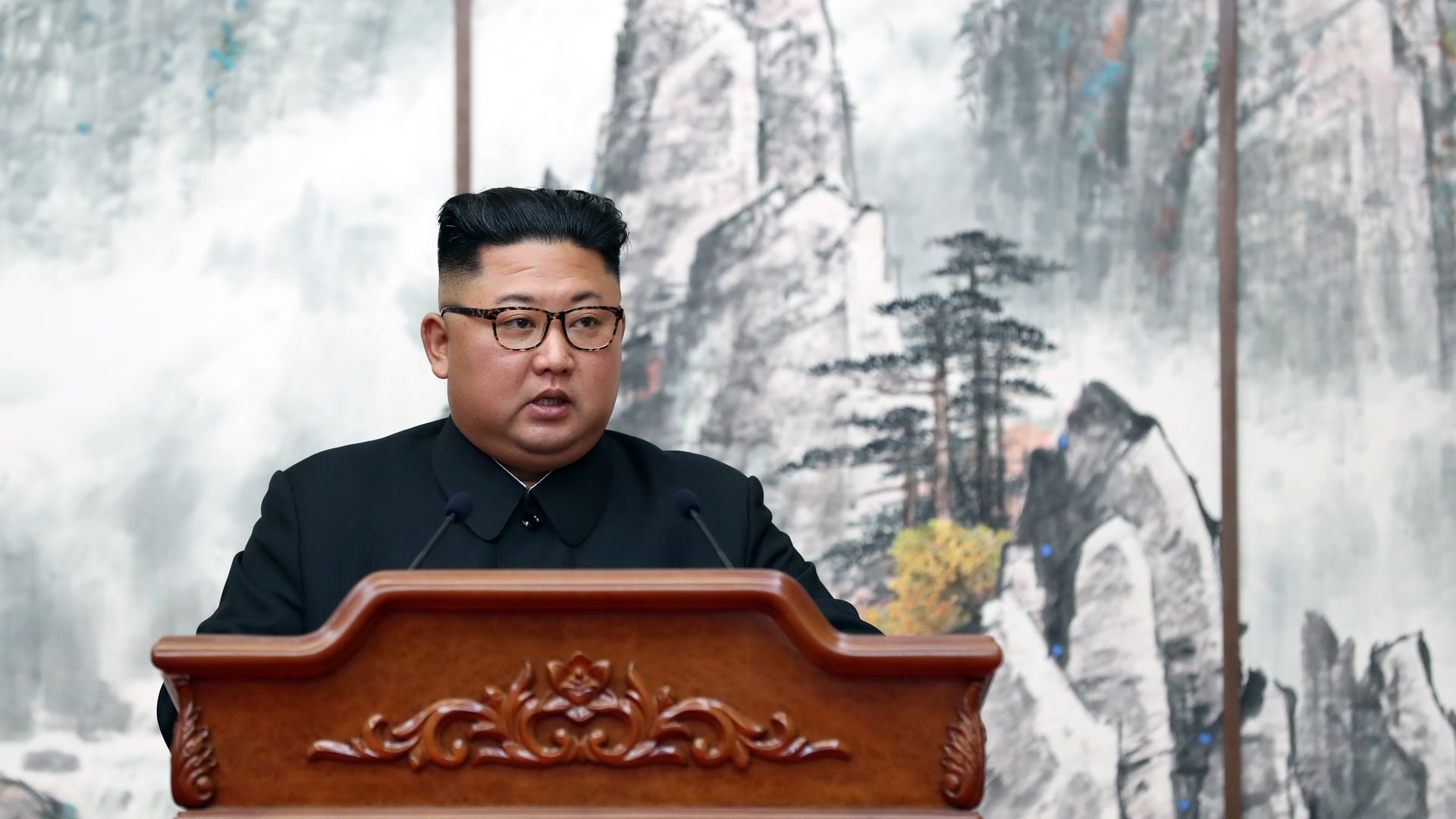
Why it matters: While the Trump administration is trying to play nice with Kim Jong-un ("We fell in love," said Trump at a rally Saturday night), the continuing heist campaign has attempted to steal more than $1 billion total.
Vice President Mike Pence will lay out the Trump administration's case that China is "meddling in America’s democracy" in a speech this morning, according to excerpts of his prepared remarks.
What to watch: Axios' Jonathan Swan reported recently that the Trump administration was planning an "administration-wide" anti-China campaign. This is part of that ongoing effort.
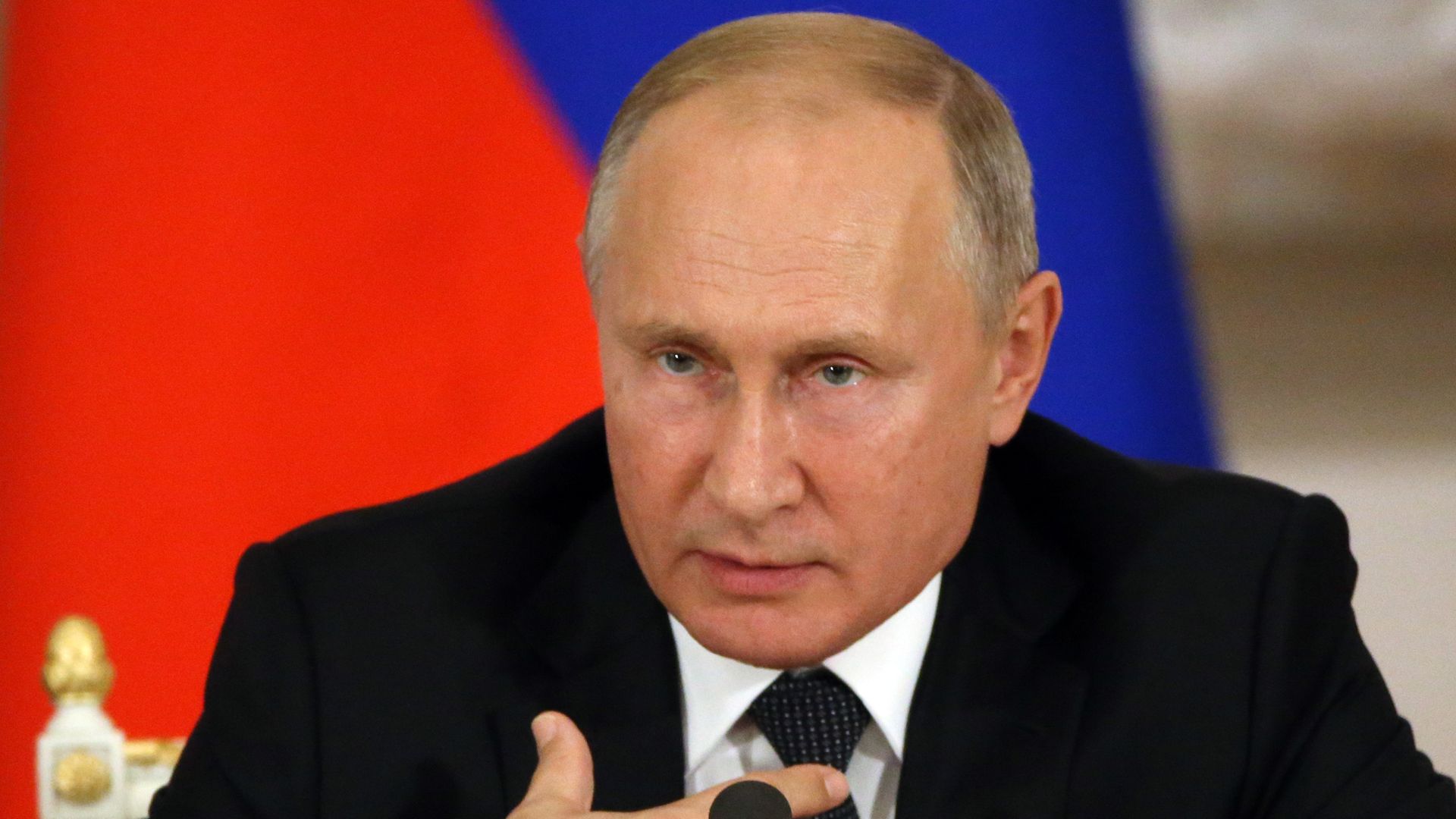
]The Department of Justice announced indictments Thursday against seven Russian military intelligence officers for alleged malicious cyber activities against the U.S. and its allies, including retaliation against officials and organizations that exposed state-sponsored doping by Russian Olympic athletes and the hacking of a lab investigating Russia and Syria's use of chemical weapons.
The big picture: The new indictments come on the heels of the U.K. and the Netherlands accusing Russia of running a massive global campaign of cyber attacks intended to undermine Western democracies. Dutch authorities said today they expelled four GRU officers for attempting to hack OPCW, a global chemical weapons watchdog investigating the Novichok poisoning of former Russian spy Sergei Skripal in Salisbury, England.
In the past 24 hours, we've seen a Bloomberg report that Amazon and Apple network servers may have been compromised by Chinese spy microchips, a Reuters report warning of attacks by a Beijing-linked hacking group, a CNN story about the U.S. Navy proposing a show of force in the Pacific, and a speech by Mike Pence accusing China of trying to undermine President Trump.
Why it matters: Per Axios contributor Bill Bishop, the Chinese government will likely view the onslaught of negative press as a coordinated propaganda effort by the U.S.
Amazon and Apple network servers may have been compromised by Chinese spy microchips, a Bloomberg Businessweek report claims.
What happened: U.S. investigators found that microchips were installed in servers used by various companies while they were being manufactured in China. The goal, per Bloomberg, was "long-term access to high-value corporate secrets and sensitive government networks."
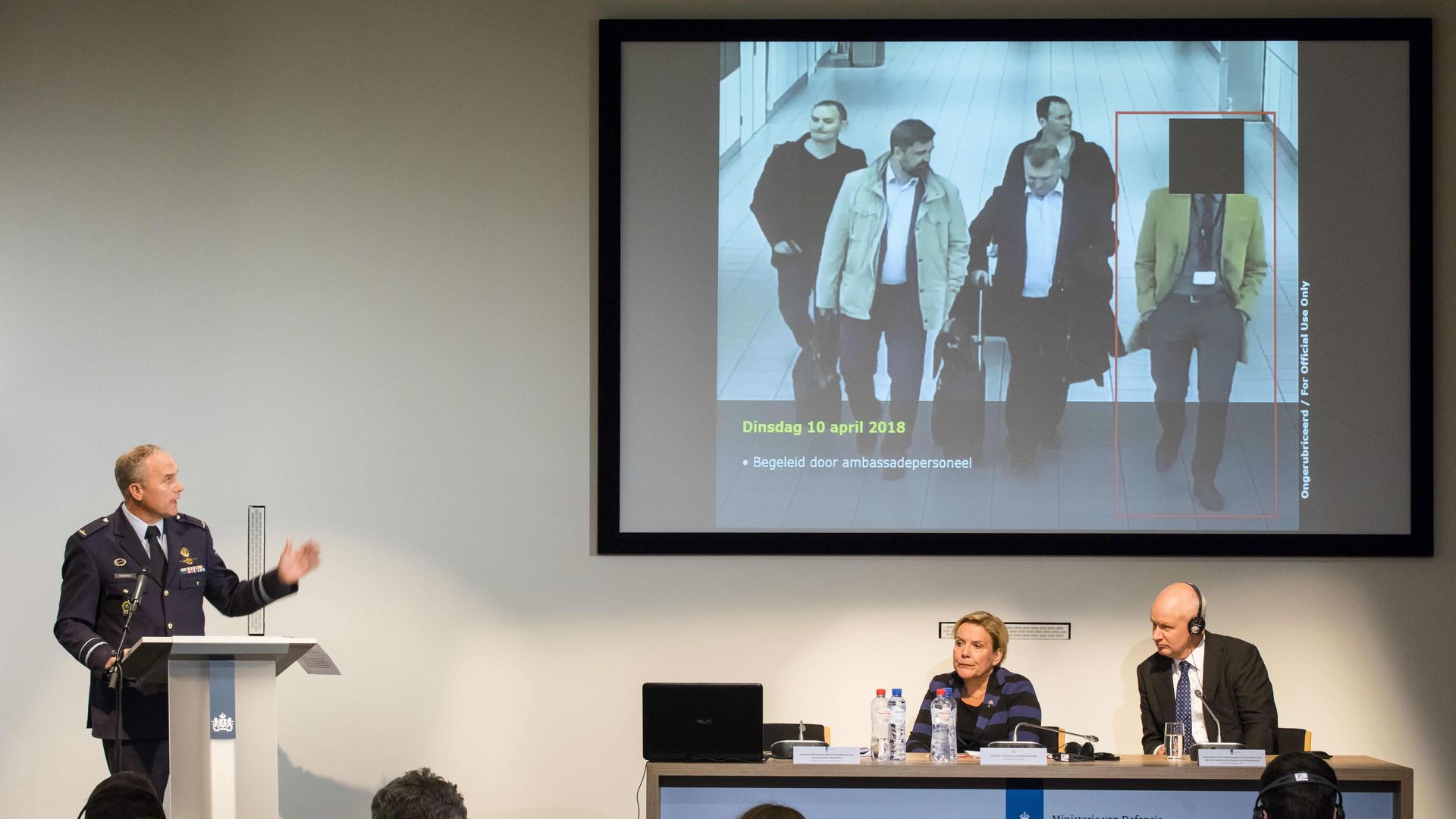
The Netherlands has expelled four Russian military intelligence officers who were attempting to hack the Organization for the Prohibition of Chemical Weapons (OPCW), a global watchdog investigating the Novichok poisoning of former Russian spy Sergei Skripal in Salisbury, England, reports the AP.
The details: Dutch authorities said the Russians were expelled from the country on April 13, the same day they were discovered in a hotel parking lot across the street from OPCW setting up a car full of spy equipment. A receipt shows the four men, who are also suspected of targeted the investigation into the 2014 Malaysian Airlines crash over Ukraine, took a taxi from the headquarters of the GRU, Russia's military intelligence agency, to the Moscow airport.
Hackers linked with foreign governments, known as advanced persistent threats (APT) actors, are using stolen administrative credentials and inject malware into critical systems around the world, including in the U.S., the Department of Homeland Security warned Wednesday.
Why it matters: The attackers are still active, per DHS, and have affected information technology, energy, healthcare, communications, and critical manufacturing sectors. These threat actors are particularly difficult to detect since their use of stolen credentials can make them appear to be authorized users and their movement between service providers and customers’ shared networks can conceal some of their activity, per DHS.