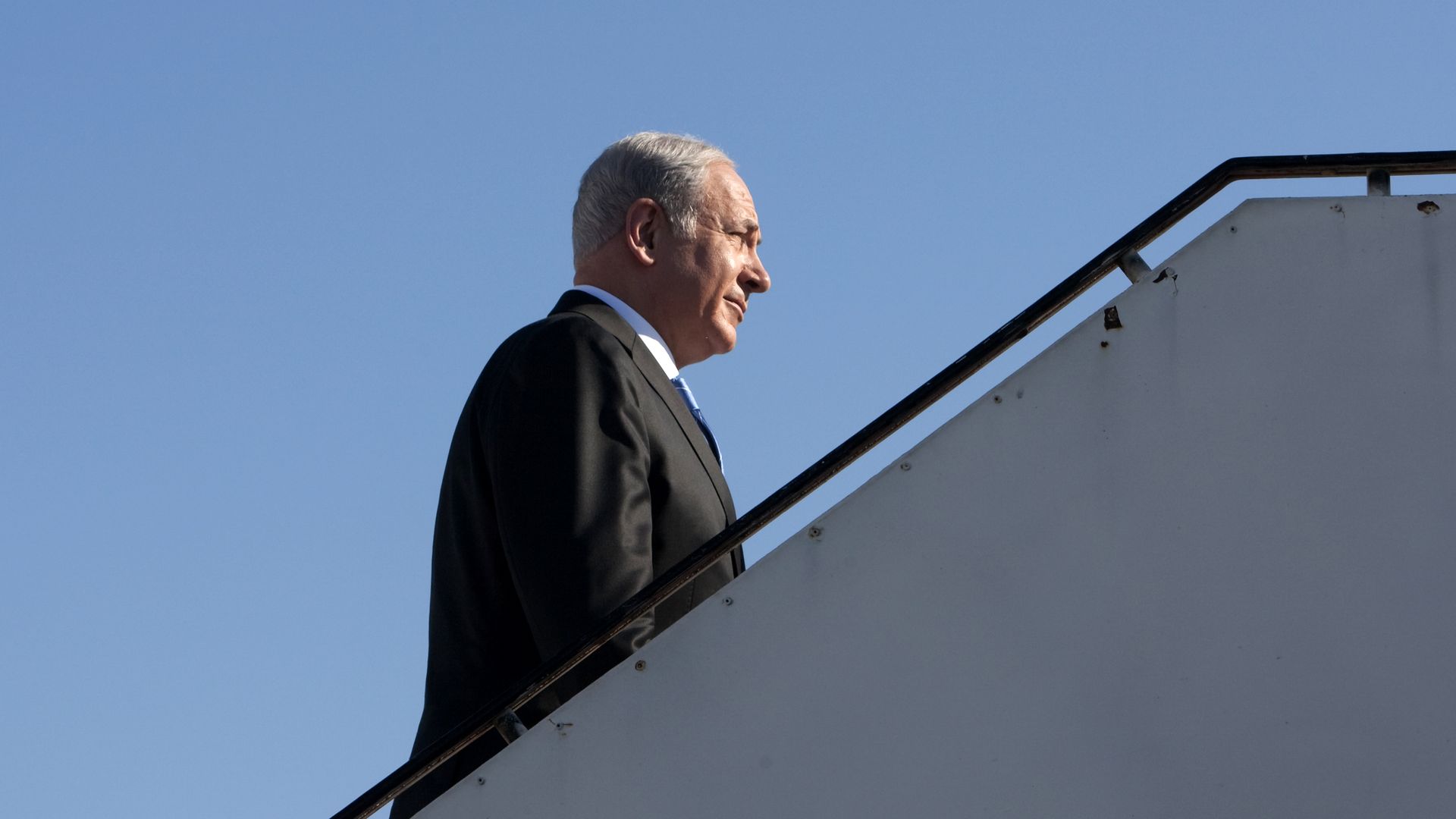
Israeli Prime Minister Benjamin Netanyahu and Egyptian President Abdel Fattah el-Sisi held a secret summit in Egypt on May 22nd to launch efforts toward a Gaza stabilization deal, U.S. officials told me.
Why it matters: This meeting was pivotal in the Egyptian-led efforts over the last three months to reach a deal between Israel, Hamas and the Palestinian Authority on stabilizing Gaza. The Egyptians updated the Trump administration about their efforts and got the backing of the White House.
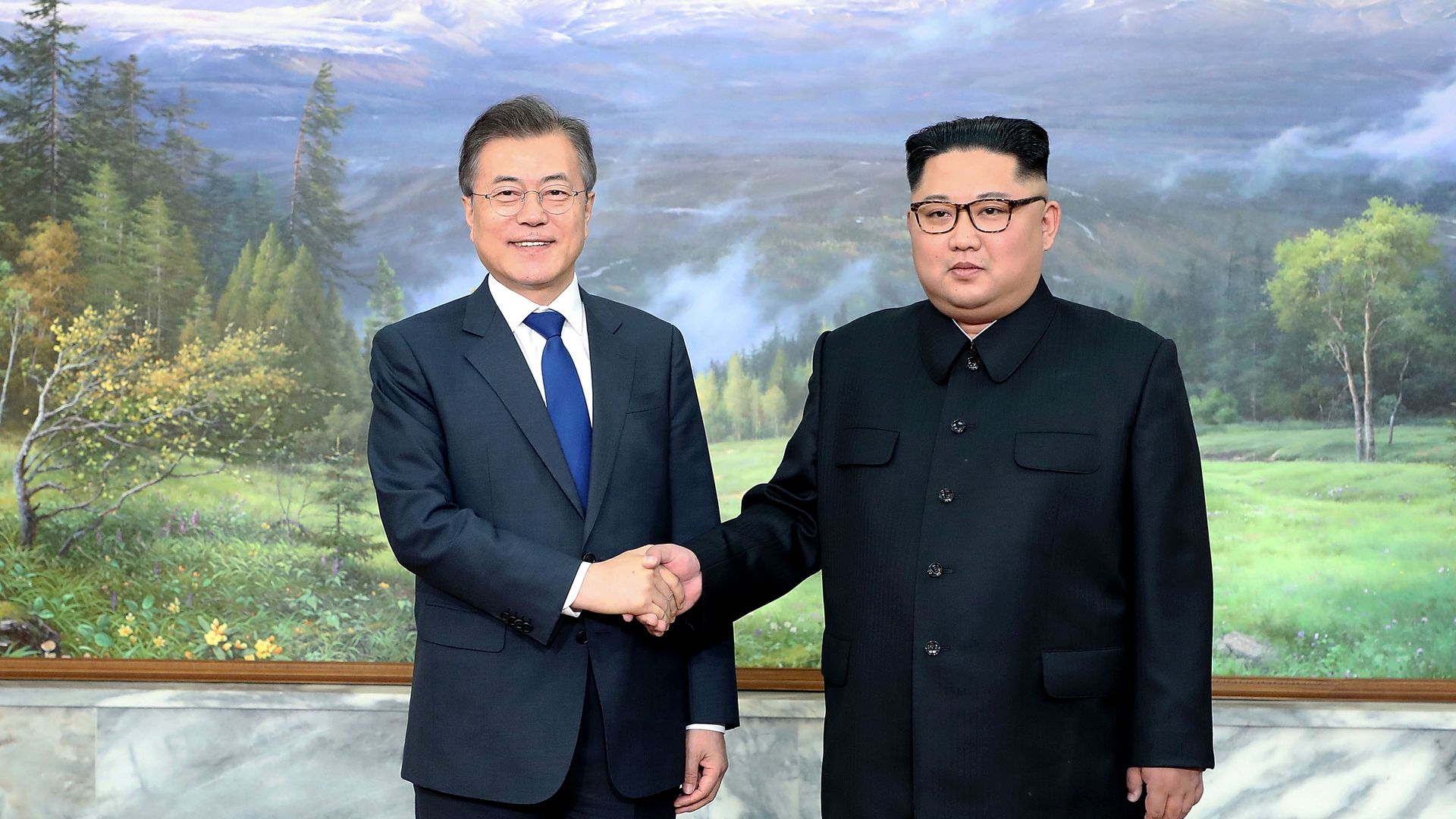
South Korean President Moon Jae-in will travel to Pyongyang in September to meet with North Korean leader Kim Jong-un, reports the AP.
Why it matters: Despite the easing of tensions between the rival Koreas, Kim Jong-un has refused to provide documents related to his country's nuclear weapons, stalling any further progress in talks between North Korea and the United States.
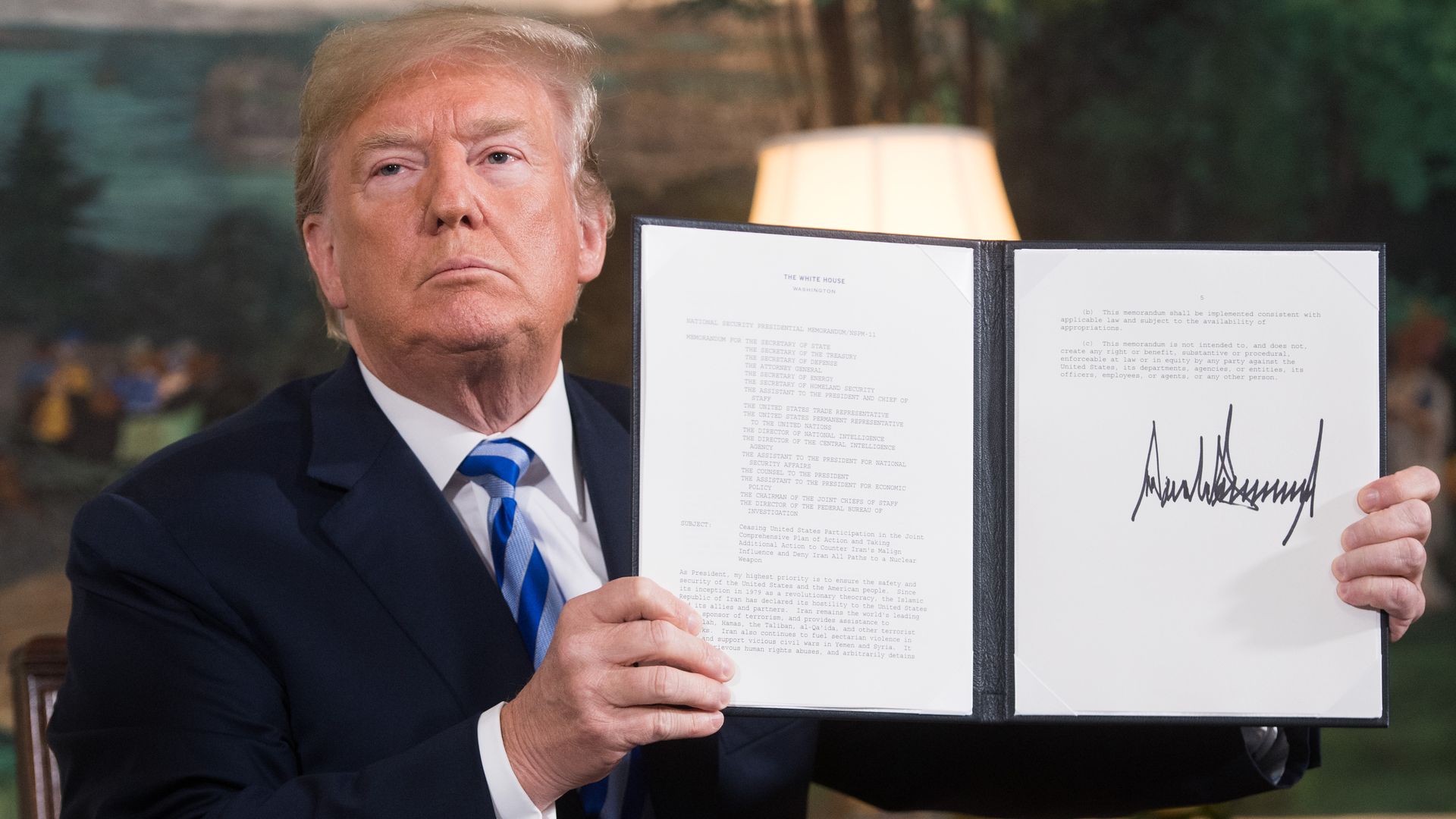
On a White House conference call with Iran experts last week, a senior administration official said the Trump administration will reimpose sanctions on financial messaging services later this year. That might sound boring. But the administration official was referring to what could soon become another major fight between the Trump administration and Europe.
Why this matters: In the context of Iran sanctions, "financial messaging services" refers to SWIFT (Society for Worldwide Interbank Financial Telecommunication) — a linchpin of the global financial system that facilitates payments across borders and connects more than 11,000 banks around the world.
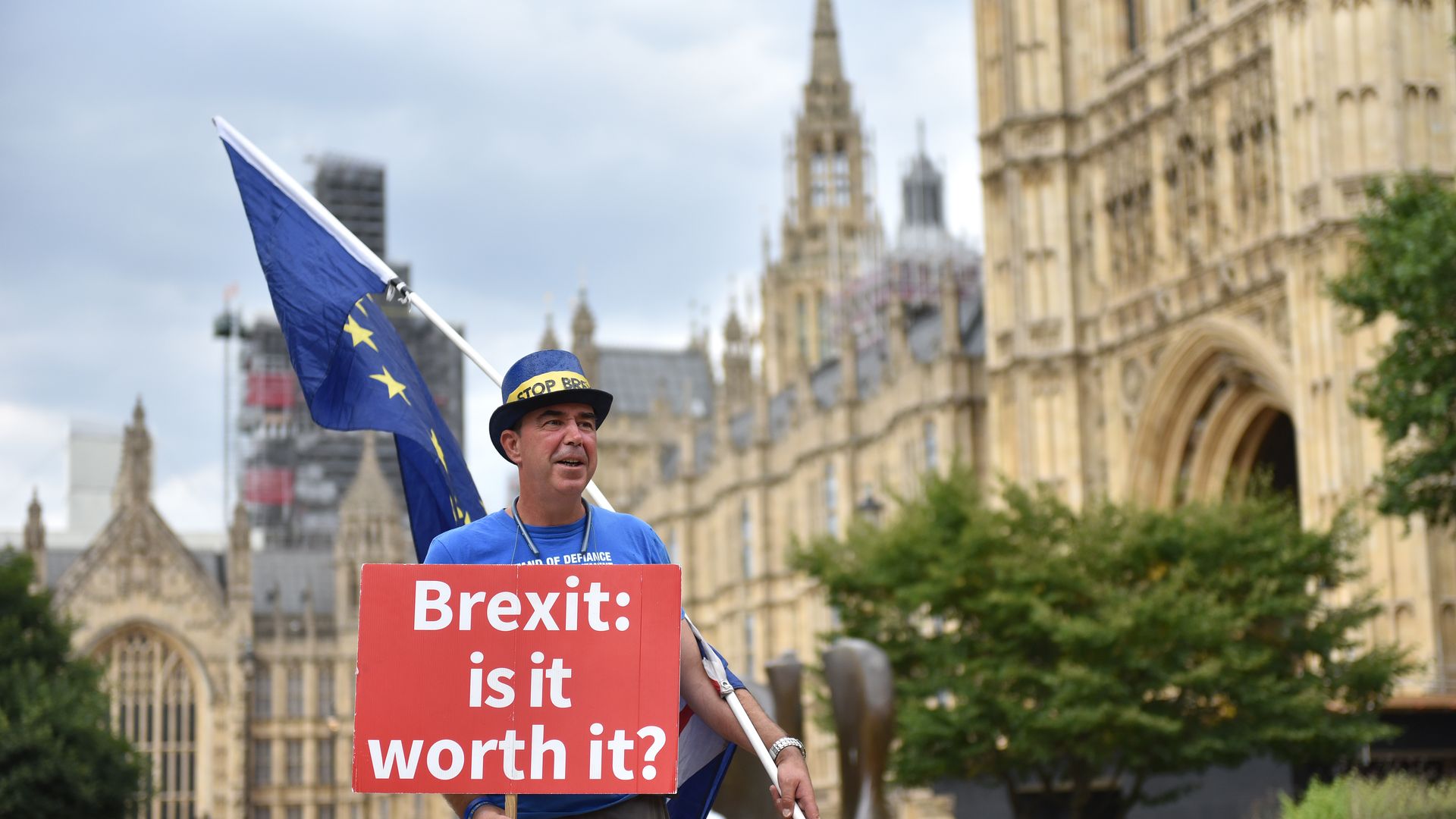
More than 25% of the 403 constituencies of British Parliament that voted to leave the European Union in 2016 now oppose Brexit, according to data reviewed by The Guardian.
The big picture: The majority of parliamentary seats now favor remaining in the EU, a shift driven largely by members of the Labour Party in northern England and Wales who originally voted to leave. But even if attitudes hadn't changed, analysis shows that trending demographic changes in the U.K. would be significant enough to reduce support for Brexit by 2% in 2019, 4% in 2021, and more than 7% in 2026.
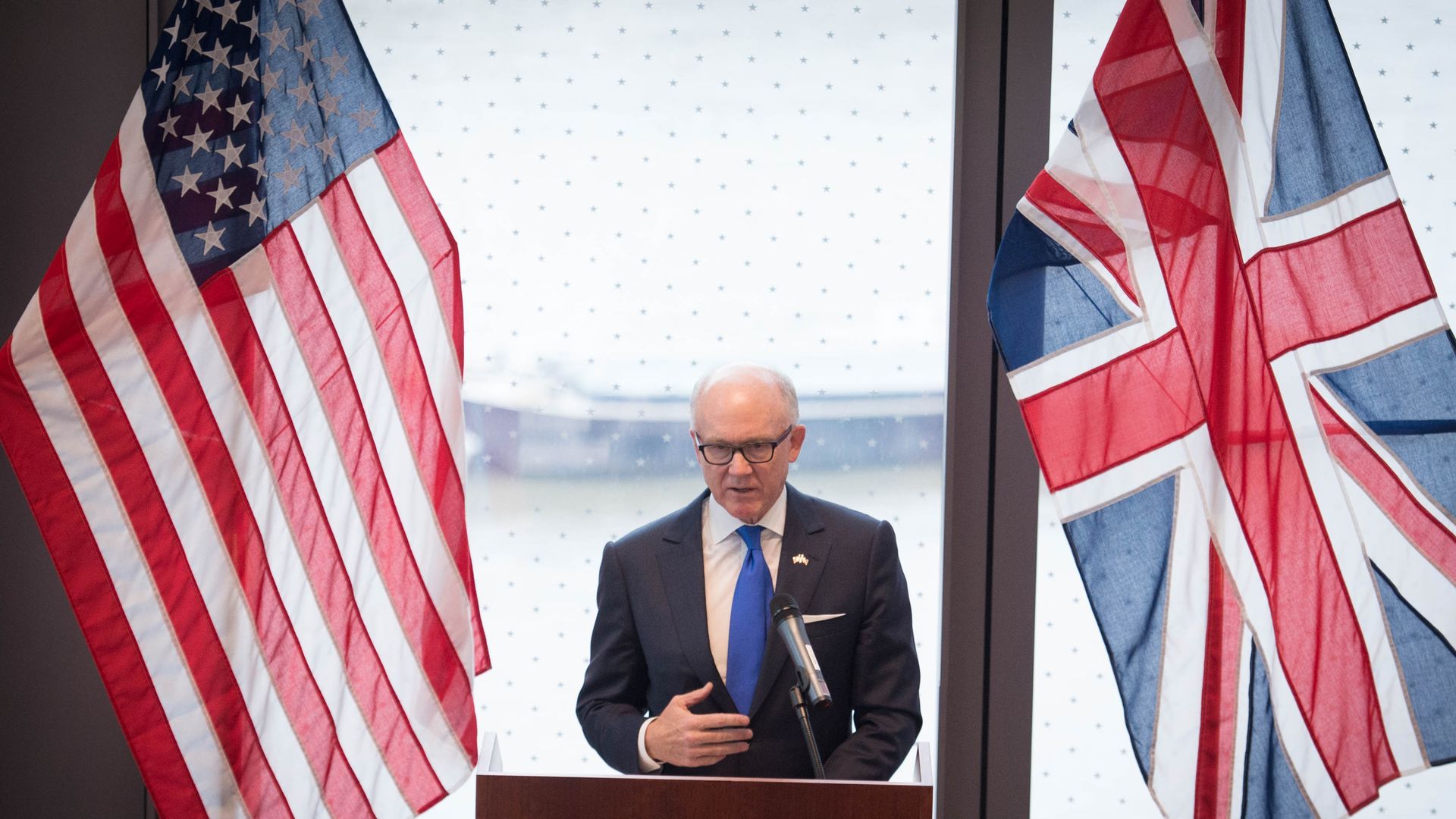
In a Sunday Telegraph op-ed, U.S. Ambassador to the United Kingdom Woody Johnson called on the British government to move on from the "flawed" Iran deal and side with President Trump in complying with Iranian sanctions.
Why it matters: The U.K. is one of several countries, along with the EU, China and Russia, that has pledged to protect companies that continue to do business with Iran. Unlike those implemented prior to the 2015 nuclear deal, Trump's recent round of sanctions do not appear to have the broad international support necessary to apply maximum economic pressure on the Iranian regime.