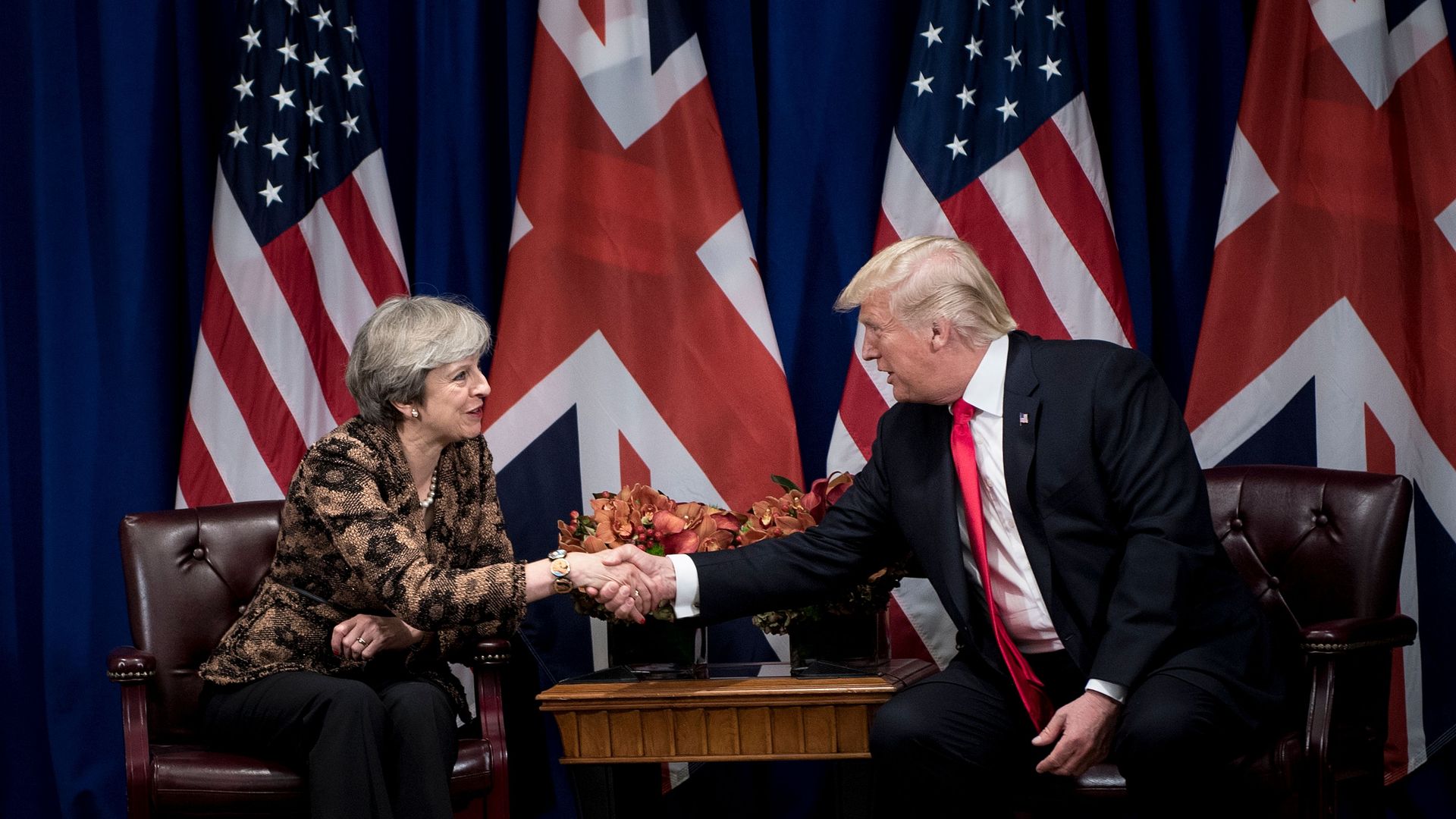
Roughly 150 business leaders have been invited to dine with President Donald Trump during his first visit to the United Kingdom as president next week, the Financial Times reports.
One big thing: Those invited see the dinner as an opportunity to convince Trump of a post-Brexit trade deal. British businesses are already seeing a downturn in investment from the European Union due to Brexit, per a previous report from Axios. And now that Britain cannot depend on the EU for investment, production, and jobs, Britain will need a trade deal with the U.S. now more than ever.
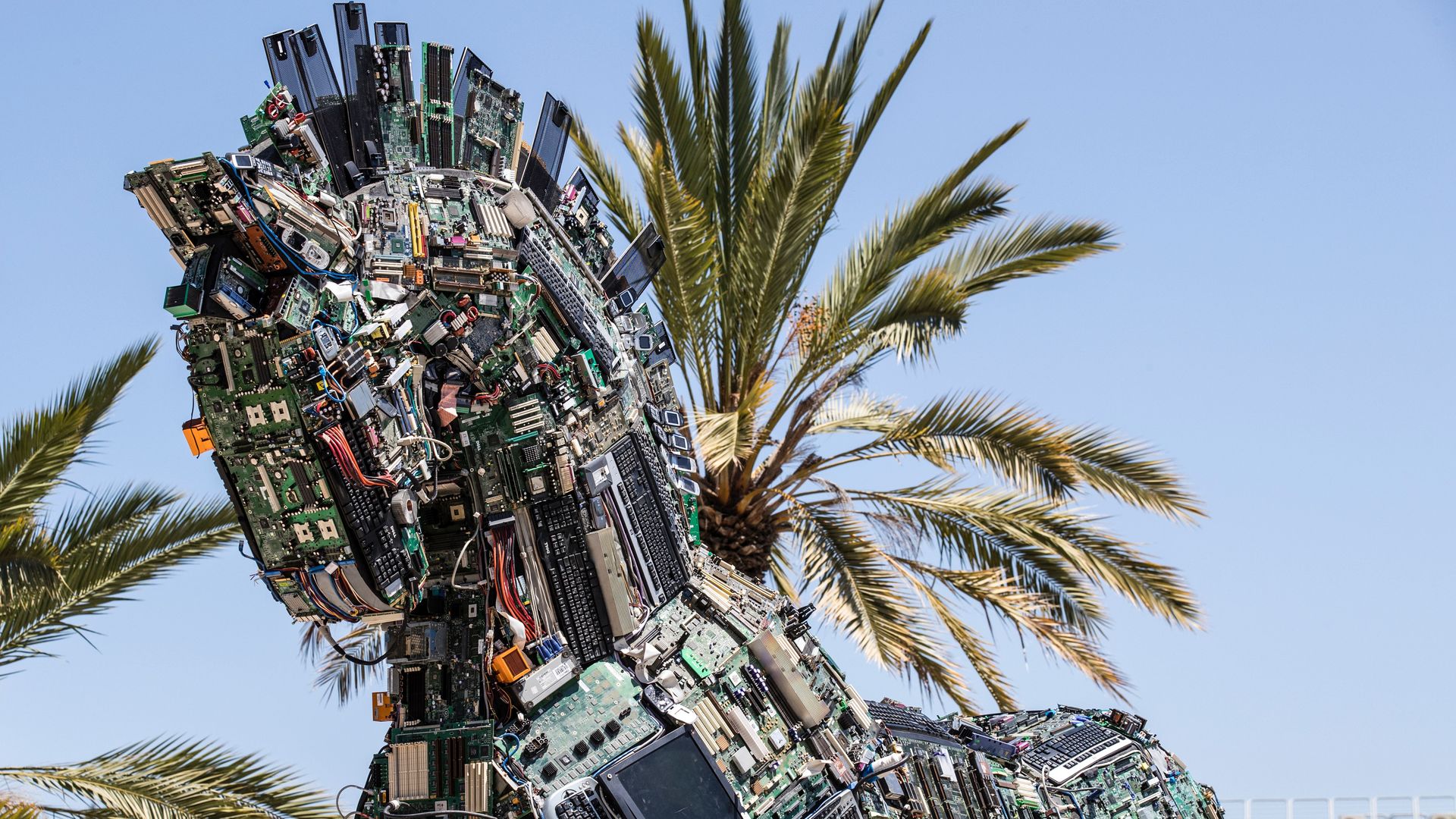
An employee of NSO Group, an Israeli contractor known for its surveillance tools, is being charged for stealing the firm's internationally renowned "Pegasus" cell phone spyware and trying to sell it on the dark web for $50 million, according to the newspaper Globes.
Why it matters: When nations lack cyber espionage tools, they turn to contractors for off-the-shelf tools. Mexico was caught spying on politicians, lawyers and journalists with Pegasus last year. Pegasus is serious stuff, giving full access to a phone for surveillance or other purposes.
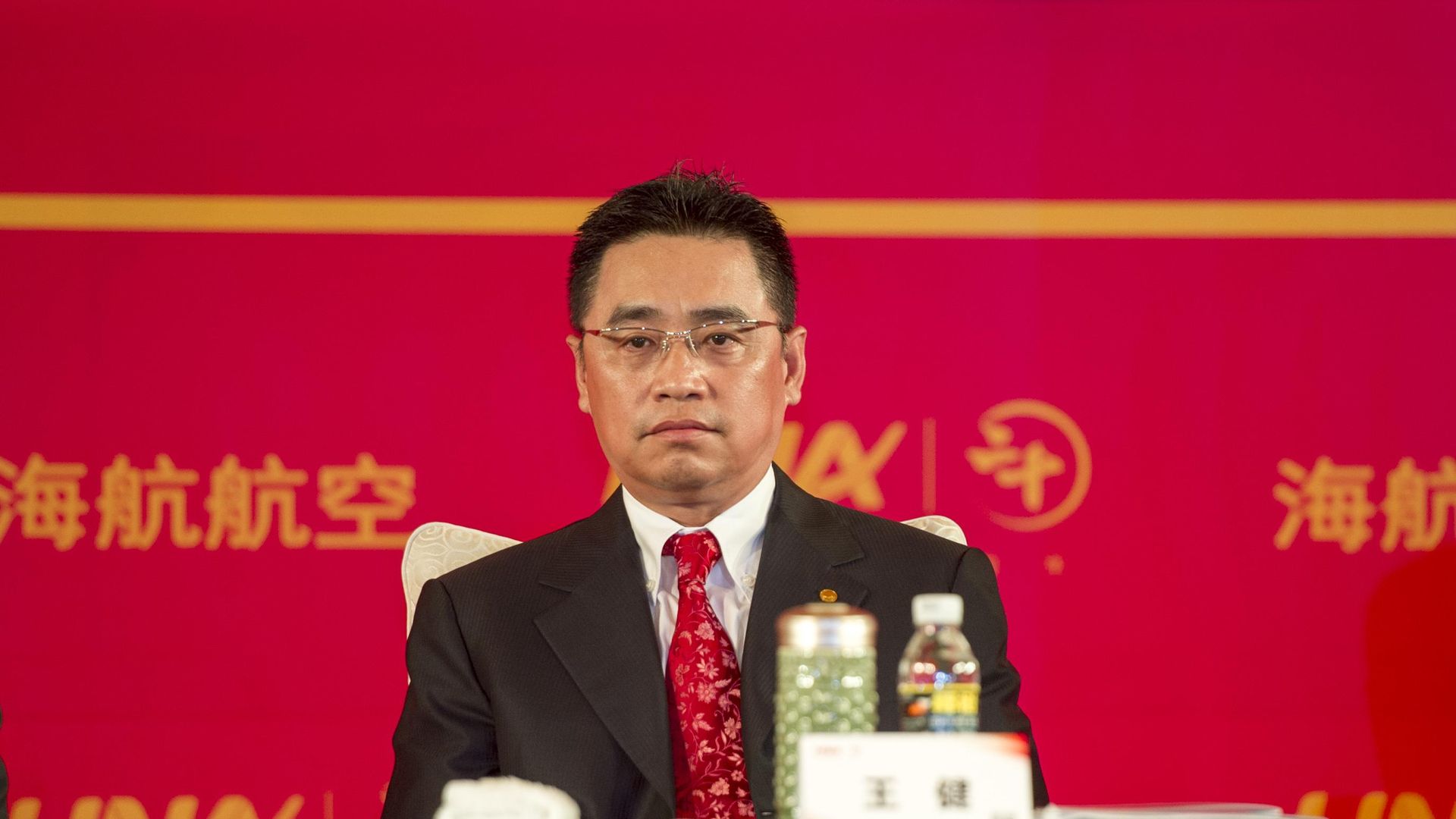
Wang Jian, co-founder and chairman of Chinese conglomerate HNA, died Tuesday after falling off a wall in France while having his photograph taken.
Why it matters: Beyond the obvious human tragedy, Jian was architect of HNA's massive global expansion — when it invested more than $40 billion to buy big stakes in companies like Hilton. But he's also been helping to lead HNA's great unwind, as the firm had overextended itself, and his death could make that process more difficult.
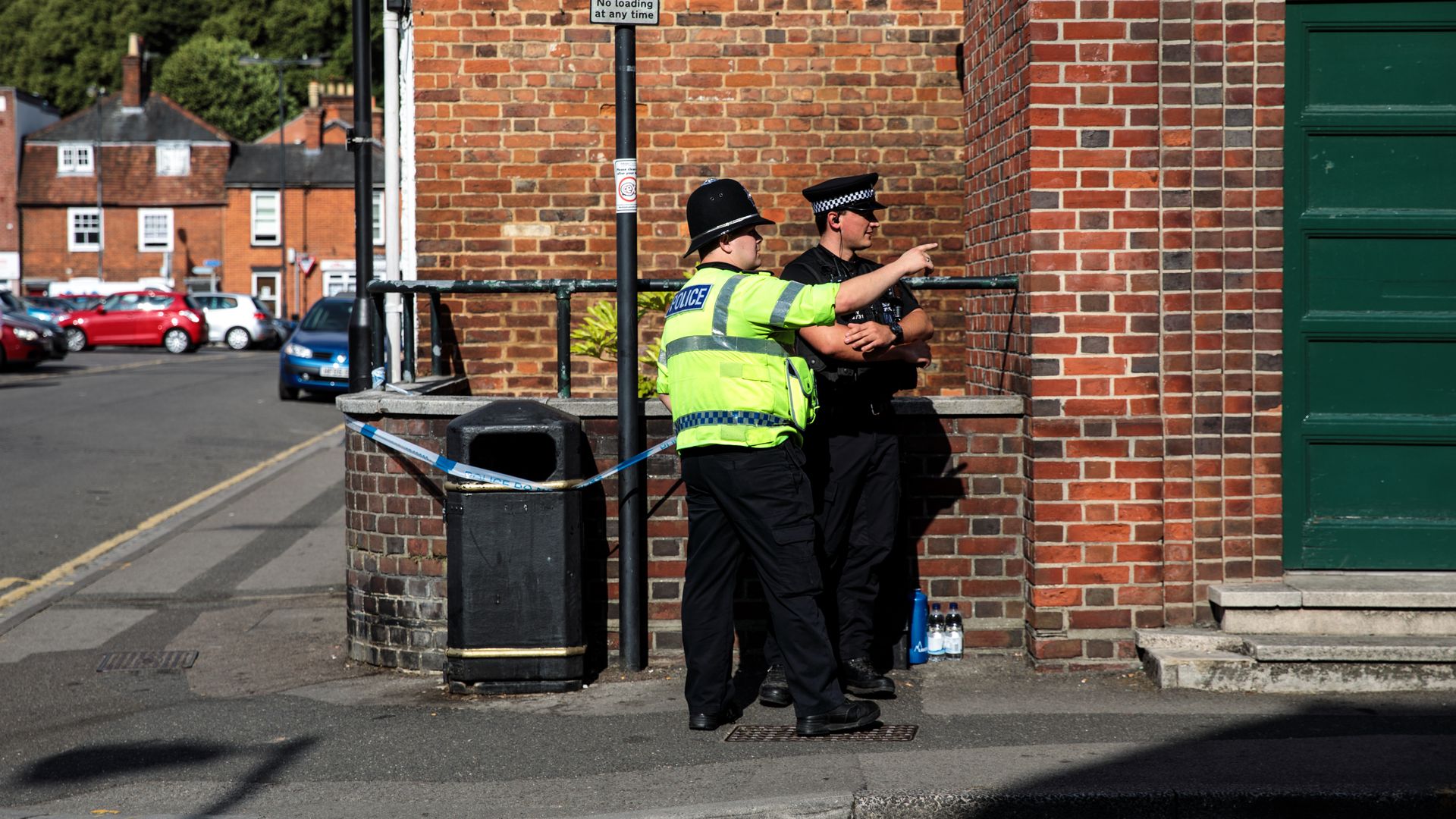
U.K. police confirmed Wednesday afternoon that a British couple is in critical condition after having been exposed to the nerve agent Novichock — the same used on a former Russian spy, Sergei Skripal, and his daughter in the U.K. in March, reports the AP.
Bottom line: It is unclear whether this instance is related to the poisoning of Skripal, which was blamed on the Russian government. However, both incidents occurred near Salisbury, England, just miles apart.
President Trump’s every-man-for-himself foreign policy resembles the world of the 1930s, when Europe was dominated by populist and nationalistic politics and veering toward a catastrophic war, according to the co-author of a new book on geopolitics.
Why it matters: With his assault on institutions, set up seven decades ago to soften the frictions that led to World War II, Trump risks re-igniting the emotions that put nations at each other's throats, says Ivo Daalder, president of the Chicago Council on Global Affairs.