Wednesday's world stories

Kaspersky Lab confirms that it downloaded secret NSA tools
The head of Russian cybersecurity company Kaspersky Lab confirmed that his company's anti-virus software copied hacking tools from the National Security Agency to its servers but promptly deleted them upon learning of their existence, per the AP.
Why it matters: Kaspersky has been suspected of having ties to the Russian government — which the company denies — and it has come under scrutiny since the revelation of Russia's meddling in the 2016 presidential election, especially given the wide use of its popular anti-virus program in the United States. The U.S. government ordered Kaspersky's software to be removed from government-owned computers last month.

China's all-powerful Xi has no heir apparent
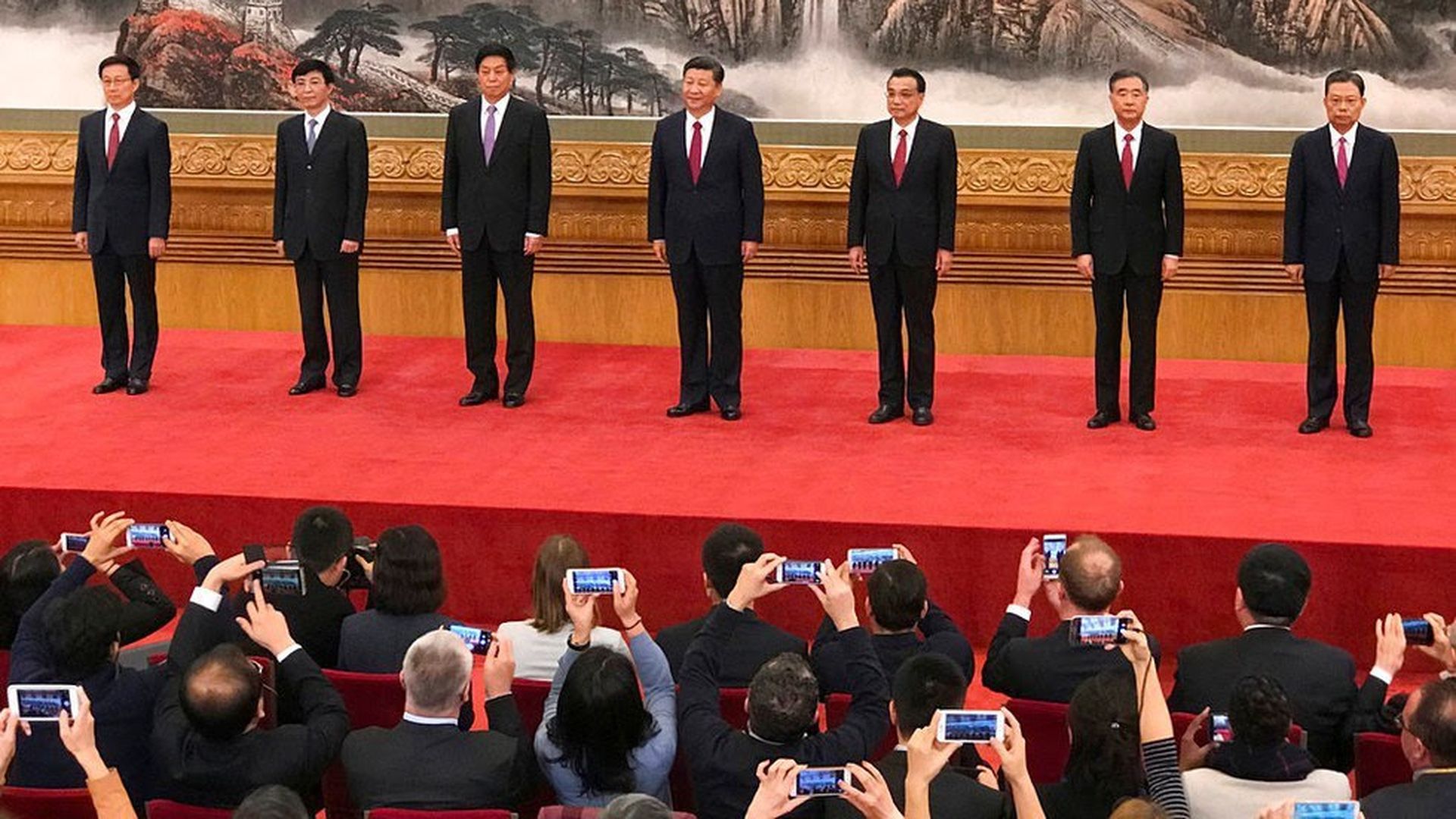
China revealed its Politburo Standing Committee, China's most powerful body, breaking with tradition by not including a clear successor to President Xi Jinping. All members are ages 60 to 67.
Why it matters, via BBC: "The omission cements Mr Xi's grip on China for the next five years and possibly beyond, a day after his name was written into the constitution."

Russia vetoed extending review of Syrian chemical weapons use

Russia has vetoed an extension on the chemical weapons inquiry in Syria. China abstained, along with Kazakhstan, per the State Department. The report on who was behind the April attack in Syria is due in two days, and Russia's UN Ambassador said it wanted to discuss the report before voting on the extension. The inquiry is set to expire in November.
Why it matters: Russia has rejected a report from UN investigators who place the blame on Russia's ally Syria, and this is the ninth time Russia has blocked action against Syria, per the BBC. "Russia has once again demonstrated it will do whatever it takes to ensure the barbaric Assad regime never faces consequences for its continued use of chemicals as weapons," U.S. Ambassador to the UN Nikki Haley said while traveling through Africa, per Reuters.
House panels open probe into Obama-era uranium deal
House Intelligence Committee Chairman Devin Nunes announced a joint inquiry between the House Intel Committee and the Oversight Committee into the Obama-era Russian uranium deal. What the joint investigation wants to know, per Nunes: "Whether or not there was an FBI investigation: Was there a DOJ investigation? And if so, why was Congress not informed of this matter?"
Why we're watching: The Obama administration reportedly signed off on the Russian deal despite the fact that the FBI had evidence that Russia used bribery to edge its way in to the U.S. energy industry. The Clinton Foundation is implicated in relation to donations with potential links to the uranium deal as well.
Catch up quick: The background on the uranium deal