Gambling culture is enveloping American sports, politics, media and trading, bringing betting out of the shadows and into the mainstream in a way that disturbs some and exhilarates others.
Why it matters: What was once a fringe vice is fast becoming a mass-market habit — raising urgent questions about addiction, fairness and who should regulate the business of betting on almost anything.
As fans descend on the 2026 Winter Olympics and the Super Bowl this weekend, hackers are gearing up for their own high-stakes contest.
The big picture: Hackers love to target global sporting events, and newer AI tools have made it easier to scale phishing and vulnerability scanning, experts told Axios.
Studios, award shows and agencies are increasingly working with creators as digital talent becomes central to entertainment.
Why it matters: Hollywood's hierarchy is changing as digital creators become the next A-listers and studios adapt to younger generations' fandom and content habits.
Sports leagues are courting creators to expand their fandom as athletes are increasingly building their own content portfolios.
Why it matters: Creators can connect leagues to younger fans, who tend to watch highlights instead of tuning into full games, expanding reach and engagement.
TikTok and Spotify are redefining how artists break through and how hits are made.
Why it matters: Traditional gatekeepers like labels and radio are no longer the sole arbiters of success. Virality is a democratizing force, allowing artists to build careers on their own terms.
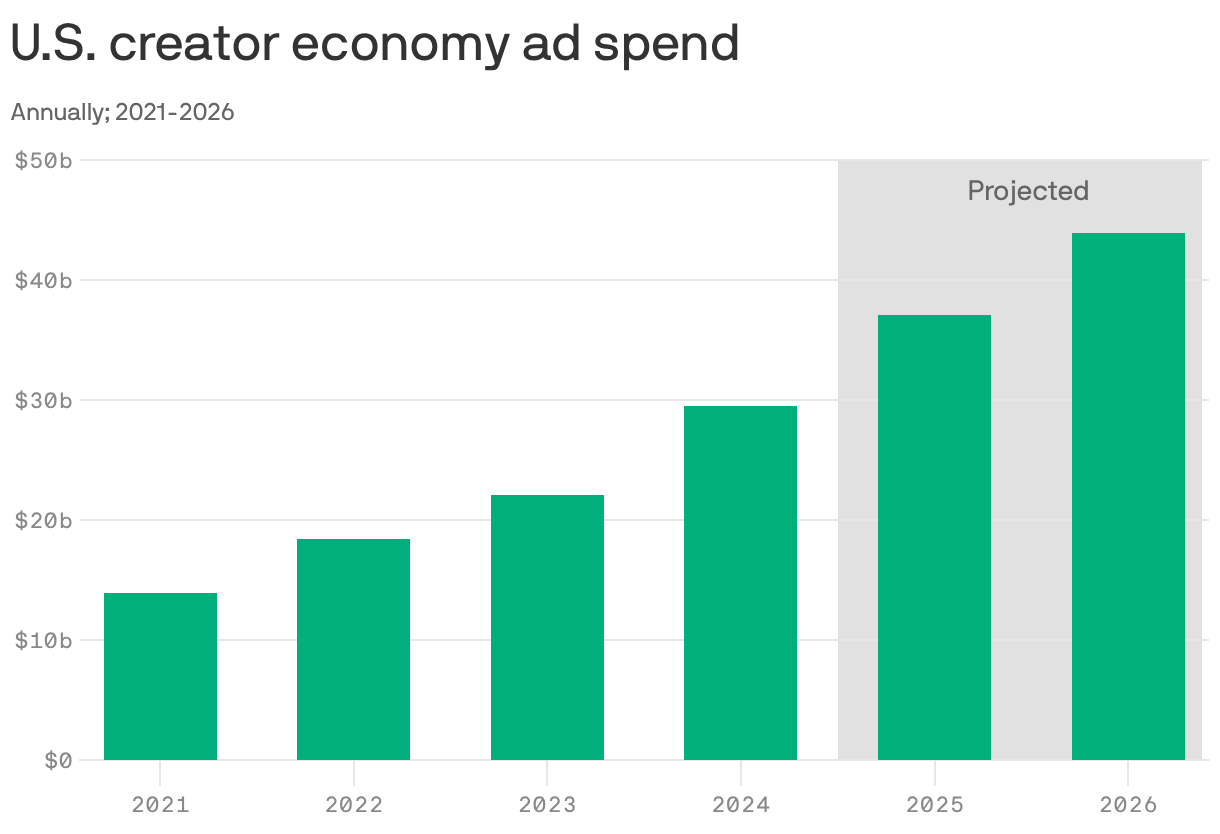
Data: IAB + Advertiser Perceptions; Note: Includes direct partnerships brands have with creators, paid amplification of those partnerships and content adjacencies, i.e. investment; Chart: Axios Visuals
Retailers are tapping creators as collaborators and encouraging their employees to become online ambassadors.
Why it matters: Consumer products that sell are the ones discovered and championed by trusted online voices.
AI is here — and this week, investors lost over $400 billion to the realization that entire industries are on the cusp of being replaced.
Why it matters: The software-industry selloff, sparked by Anthropic's latest release, is ultimately just a baby step in a bigger transformation that may reshape how we all live and work.
When asked if he would apologize for an overtly racist video clip of the Obamas posted on President Trump's Truth Social, the president said Friday, "No, I didn't make a mistake."
Why it matters: The clip, which portrayed former President Obama and former first lady Michelle Obama as apes and was taken down on Friday, used a centuries-old trope against the first Black president and first lady in U.S. history during the first week of Black History Month.