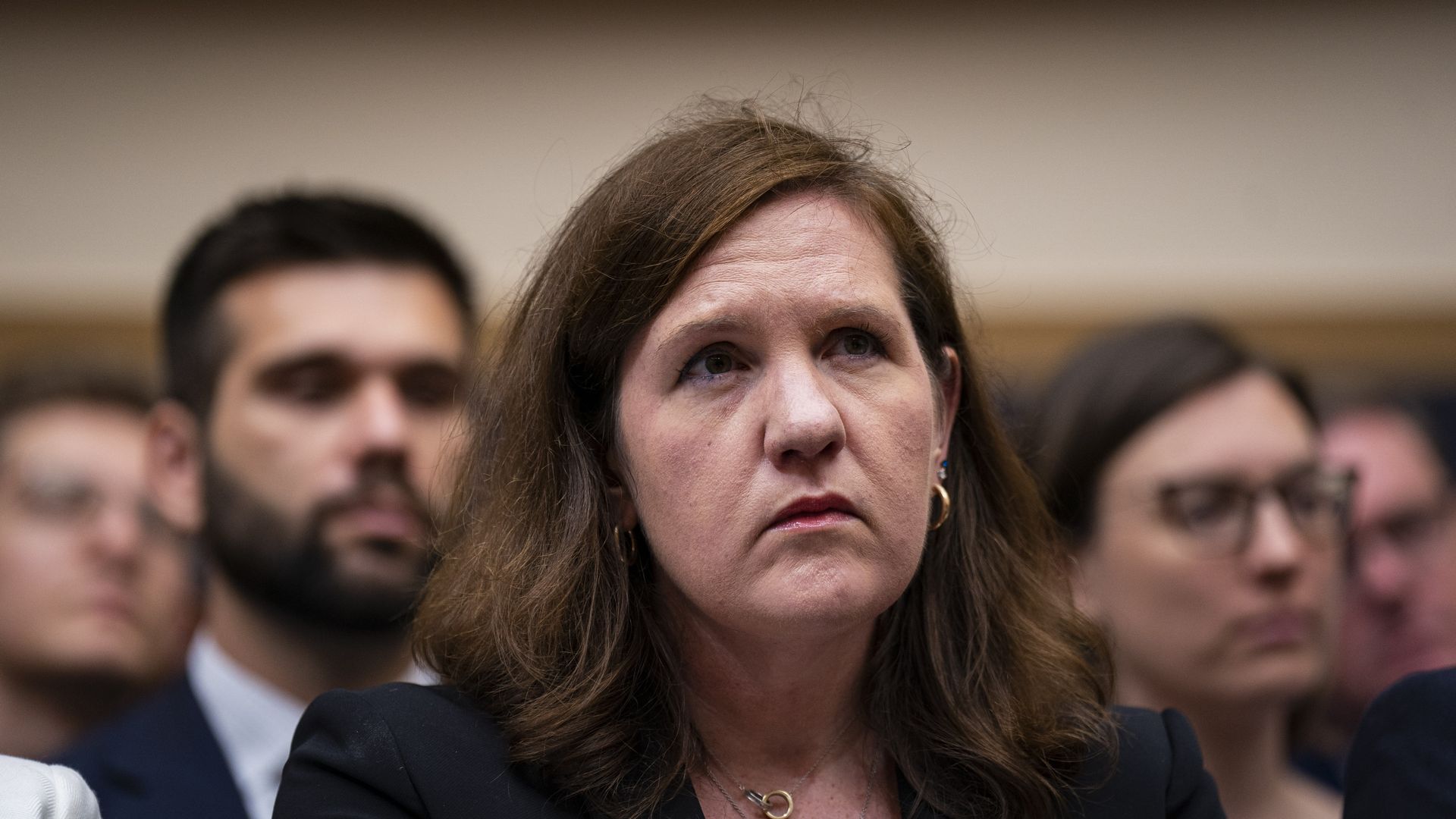
Allowing President Trump to fire independent agency commissioners without legal cause would "profoundly destabilize institutions" at the heart of American governance, the attorneys representing Rebecca Slaughter argue in a brief filed on Friday.
Why it matters: The last Democratic member of the Federal Trade Commission is not only embroiled in a legal battle to get her job back, she's challenging the White House over its broader effort to set a new precedent on the president's authority.
Hallucinations across large language models are a problem for the entire AI industry and problems arise when consumers use models only meant for developers and researchers, Google wrote in a letter to Sen. Marsha Blackburn (R-Tenn.) obtained by Axios.
Why it matters: Conservative claims of Big Tech censorship are shifting to focus on AI models that spit out false information — and this is likely just the first of many spats.
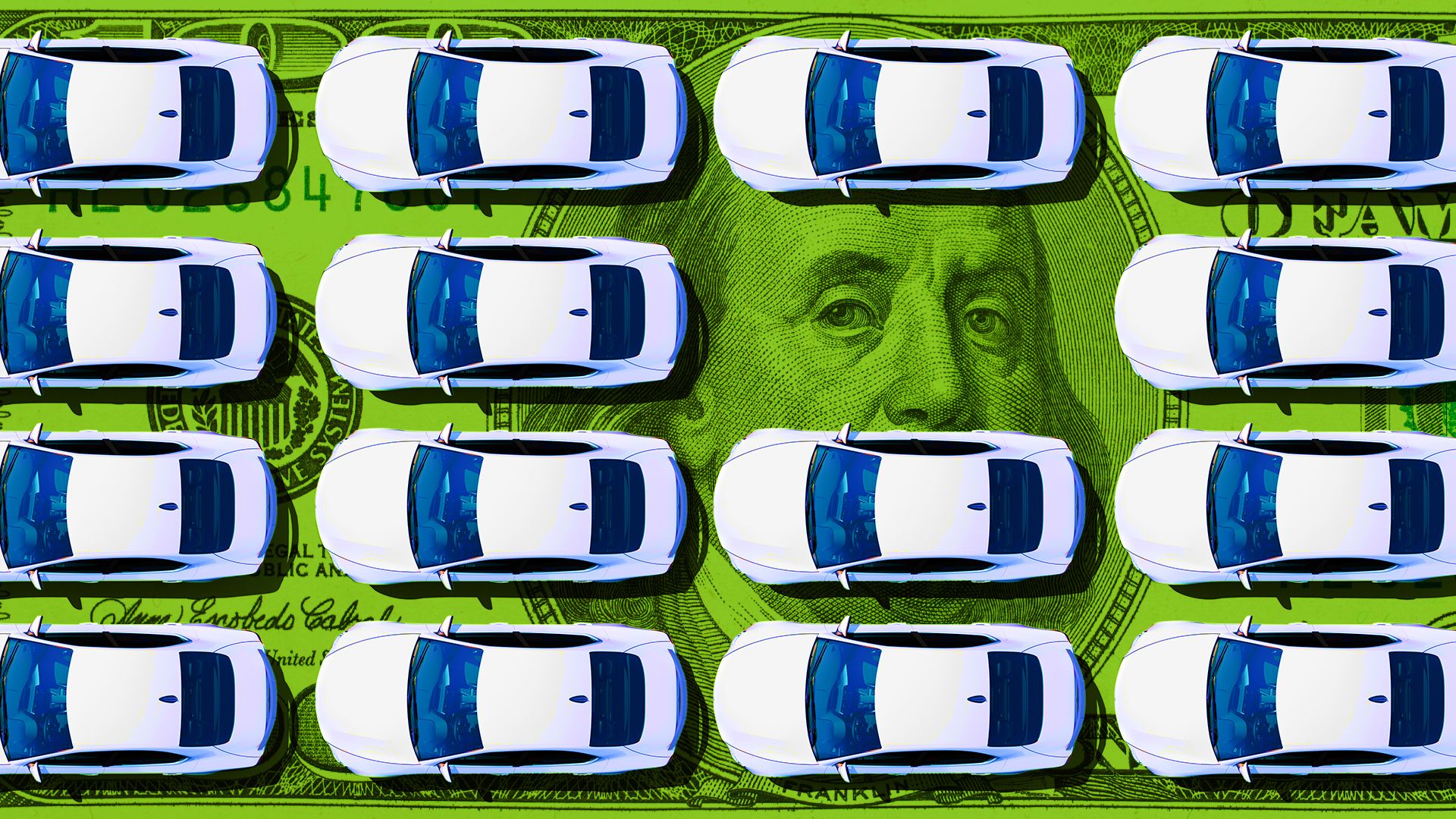
Metropolis, a tech-enabled parking lot network, has raised $500 million in Series D funding led by LionTree at around a $5 billion valuation. It also secured a $1.1 billion syndicated term loan led by JPMorgan.
Why it matters: This is both a short and long-term bet on transportation automation.
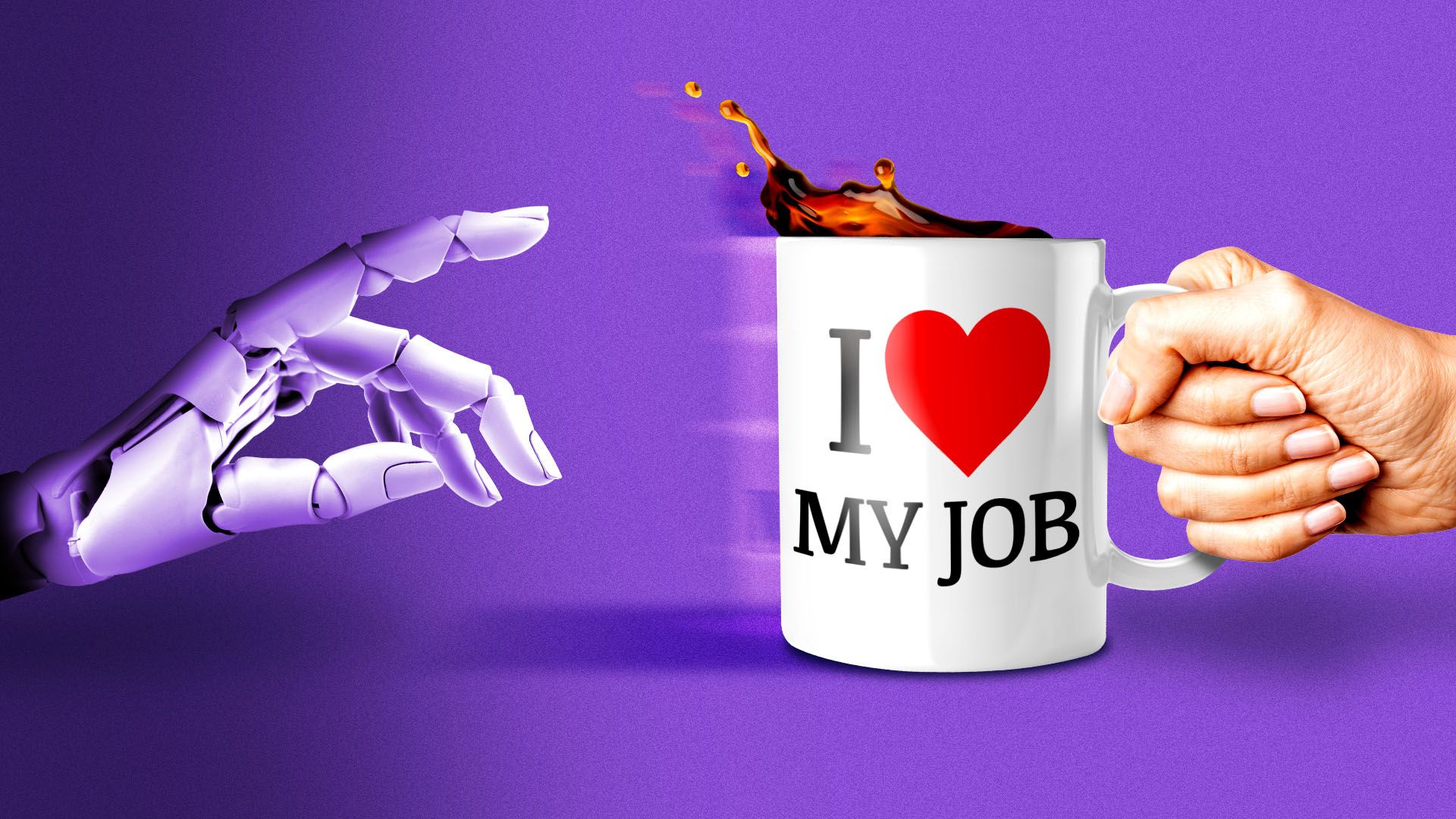
Alex Karp, co-founder and CEO of Palantir, tells me on a new episode of "The Axios Show" that AI could lead to dysfunction and even violence if benefits aren't spread broadly to workers at all levels.
"Does the person on the factory floor in America — vocationally trained, with specific knowledge of their domain — do they participate [in the prosperity]?" asked Karp, an outspoken mogul who's at the forefront of how AI is reshaping government, business and the workplace.
Karp — whose AI-driven software company has won big government contracts and soared in value since President Trump took office — gestured around the room in Manhattan where we taped the hour-long interview this week and added: "How well does your camera person do?"
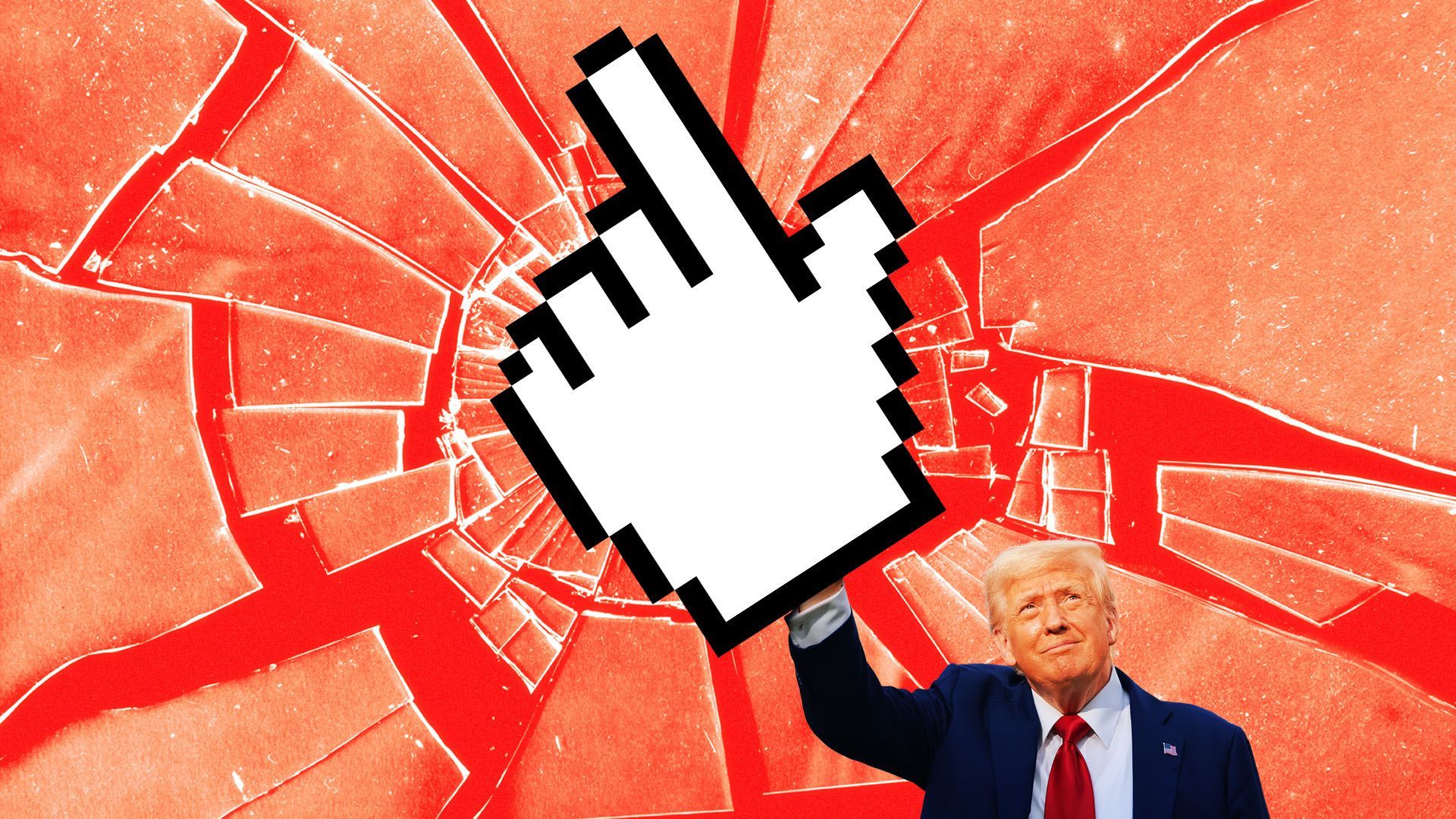
The MAGA populists who made breaking up Big Tech their rallying cry are losing momentum under President Trump's full-throated embrace of AI and cozy relations with the tech industry.
Why it matters: The Trump administration would rather scrap regulations than create new ones in the age of AI, blunting whatever bipartisan unity remained around curbing tech's power.
Colorado's approach to implementing AI has been "bullish with guardrails," DavidEdinger, the state's chief information officer, told Axios in an interview.
Why it matters: Colorado is an example of a state where AI safety still reigns supreme.
OKLAHOMA CITY — Governors and local leaders in the Midwest and South say they're hopeful that AI will supercharge stagnant economies and create new jobs despite questions over whether the AI revolution is all it's cracked up to be.
Why it matters: Tech investments are pouring into communities, and states are embracing AI for economic growth, even as skepticism grows over how long the boom can last.
Apple has yet to deliver a smarter Siri, but a potential partnership with Google could yield an AI assistant beyond what Apple could produce on its own.
The big picture: Using Google's Gemini under the hood could create a stronger pocket assistant, but much will come down to how well Apple can stitch together its voice assistant with Google's technology.
Tesla CEO Elon Musk said Thursday that he expects the company will need to build a chips factory to fulfill its ambitions to build self-driving cars and humanoid robots.
Why it matters: Tesla's move would be highly unusual, with most advanced chip manufacturing handled by a handful of fabricators like TSMC, Samsung and Intel.
SpaceX could eventually become a public company, Elon Musk said Thursday.
Why it matters: Often listed as one of the most valuable private companies in the world, SpaceX has spurned the public markets so far, remaining privately held by Musk and its investors.
OpenAI on Thursday released a blueprint the company hopes lawmakers will use in crafting safety standards for teens using AI, per a copy first shared with Axios.
Why it matters: OpenAI is trying to get ahead of criticism — and shape the norms for teens' use — by touting its new safety mechanisms to policymakers.
Communication leaders have made an effort to unpolish their CEOs, but some of these top executives are taking the need for authenticity a little too far.
Why it matters: The balance between personality and precision is hard to grasp, and over-indexing on either can affect a company's reputation.
Snap will receive $400 million in cash and equity in Peplexity, as part of an agreement whereby Snap will incorporate Perplexity's AI search engine into Snapchat next year.
Why it matters: For Snap, it's a new business line that it seems eager to replicate. For Perplexity, it's a giant distribution boost. For everyone, it feels like a step toward sponsored AI and, possibly, agentic commerce.
Meta CEO Mark Zuckerberg and physician Priscilla Chan announced Thursday they're refocusing their philanthropy to the intersection of biology and AI to help cure disease.
Why it matters: The couple behind the Chan Zuckerberg Initiative (CZI), long known for funding education and housing, is now betting that AI can help scientists prevent, manage and cure disease faster.
Carbon removal startup Avnos has landed $17 million in project finance from Shell and Mitsubishi Corp. to build a "commercial demonstration" plant, the company first told Axios.
Why it matters: Avnos says its approach pulling CO2 and water from the atmosphererequires far less energy than other direct air capture methods, and produces lots of usable water.
Microsoft is launching its own effort toward superintelligence. AI chief Mustafa Suleyman told Axios the company plans to build safer, more human-centered frontier models.
Why it matters: The move follows Microsoft's renegotiated deal with OpenAI and signals the company's intent to catch up in an expensive and crowded race to build artificial general intelligence.
Americans are being monitored more closely by private companies than by government, and should worry about that rather than a new "surveillance state," Palantir co-founder and CEO Alex Karp told "The Axios Show."
Why it matters: Palantir, which sells software for AI-driven decisionmaking, has become a target for some in both parties who worry about a too-powerful government.
Wall Street analysts are stuck in outdated, favoritism-driven ways of thinking and can't understand the success of companies like Palantir, co-founder and CEO Alex Karp told Axios' Mike Allen on "The Axios Show."
The big picture: The tech company's stock slid about 5% over the last week after a ferocious run in recent years — with a 267% rise in the past 12 months alone.
A new peace prize will be awarded at the World Cup draw in Washington, D.C., on Dec. 5 that recognizes "exceptional actions for peace and unity," soccer's international governing body FIFA announced Wednesday.
The big picture: FIFA president Gianni Infantino said in a statement that in an "increasingly unsettled and divided world, it's fundamental to recognize the outstanding contribution of those who work hard to end conflicts and bring people together in a spirit of peace."
Amazon is testing a robot-powered "store within a store" at a Whole Foods Market near Philadelphia, merging the grocer's organic offerings with Amazon's regular brands — and a promise of speed.
Why it matters: The move underscores Amazon's ongoing effort to refine its grocery strategy — even as it generates more than $100 billion in annual grocery sales.
Nvidia CEO Jensen Huang has sounded his loudest alarm about the U.S. falling behind to China on AI, telling the Financial Times that "China is going to win the AI race."
Why it matters: The trillion-dollar bet on AI's success, pushed by the Trump administration, hinges in large part on Nvidia, the dominant maker of chips for AI computing.
Huang's warning reflected an apparent frustration with mounting calls for regulation in the U.S.