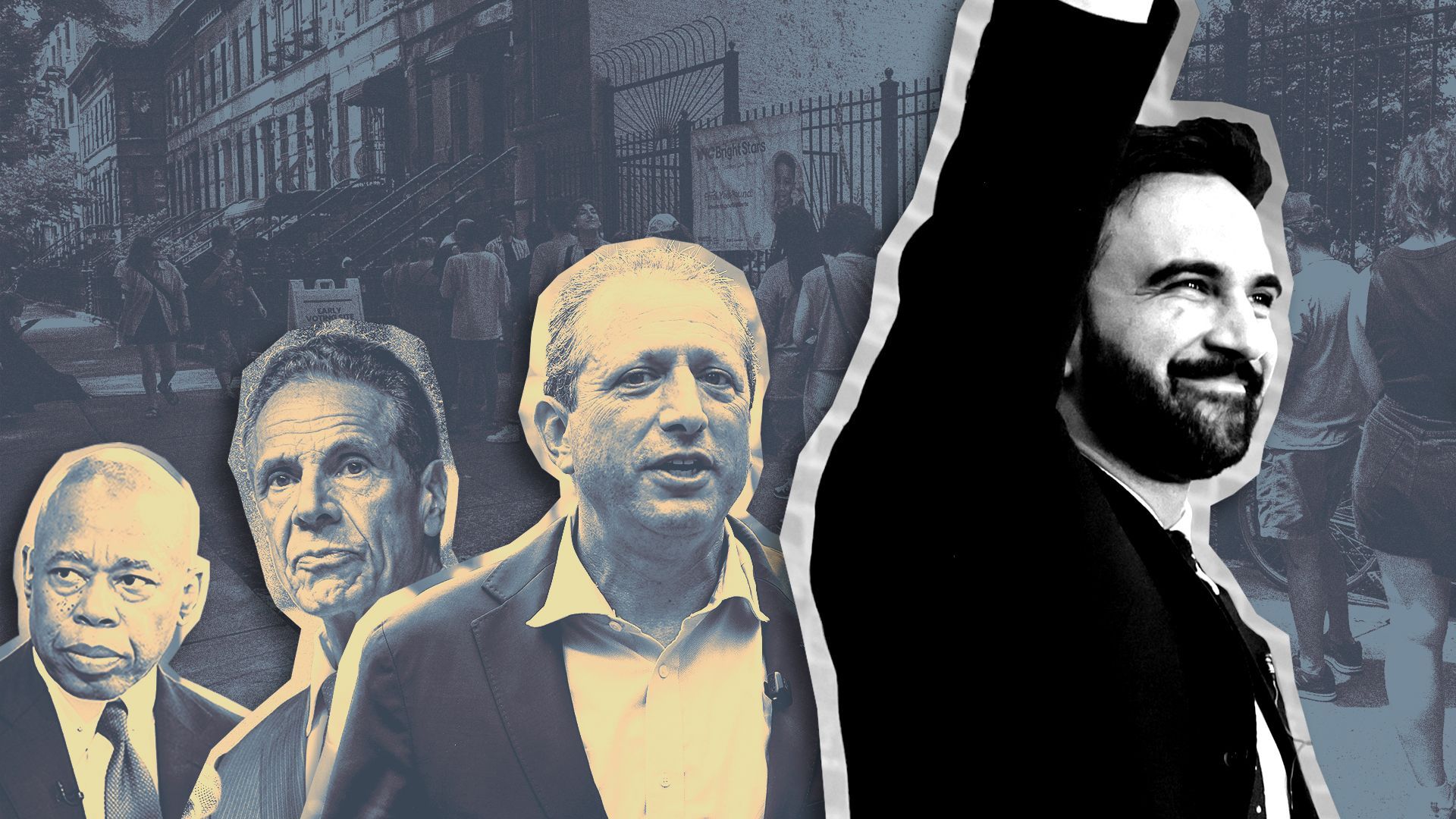
Young progressive Zohran Mamdani's historic upset in the New York City Democratic mayoral primary was made possible by a confluence of factors that have left his fans in a fever-dream state Wednesday and his enemies ready to pounce.
Why it matters: No matter where you stand on the self-proclaimed democratic socialist, Mamdani's success offers a playbook to a disillusioned Democratic party whose establishment didn't back him.
Spirit Airlines is asking the U.S. Department of Transportation to block a proposed partnership between JetBlue and United Airlines, calling it "anticompetitive."
The big picture: Spirit argues that the deal would make JetBlue a "de facto vassal" of the larger United, and that it would lead to more industry consolidation as other small airlines would feel compelled to accept similar offers from American and Delta.
A new app launching today promises to let anyone digitally clone themselves in under three minutes.
Why it matters: The startup, called 2wai (pronounced "two-way"), was co-founded by Disney Channel actor Calum Worthy and Hollywood producer Russell Geyser, and is designed to give entertainers — and everyone else — lifetime ownership over their AI avatars.
The company dominated the Paris Air Show narrative last week, notching several deals across Europe.
Why it matters: Embraer has said it wants to be a U.S. prime — one of the military-contracting big boys, like Lockheed Martin, RTX and Northrop Grumman.
OpenAI says Chinese competitor Zhipu AI is aggressively courting governments in developing countries, aiming to entrench Chinese AI systems ahead of Western rivals.
Why it matters: OpenAI and others argue that it's a must-win race between U.S. and China over whose technology will control a bot-filled world.
If politics and public debate were a rational, fact-based exercise, the government, business and the media would be obsessed with preparation for the unfolding AI revolution — rather than ephemeral outrage eruptions.
Why it matters: That's not how Washington works. So while CEOs, Silicon Valley and a few experts inside government see AI as an opportunity, and threat, worthy of a modern Marshall Plan, most of America — and Congress — shrugs.
One common question: What can we actually do, anyway?
Silicon Valley's on-again, off-again cycle of engagement with the U.S. military is swinging hard toward defense work.
The big picture: The Trump administration has opened the door to spending, the Pentagon is pushing modernization and a new era of instability and flash wars has engulfed the world just as AI is remaking the entire tech industry.













/2025/06/24/1750800809295.gif?w=3840)