Peloton's stock shot up more than 13% Friday, after the company said it would lay off more people and begin "aggressive" cost cutting measures that will include store closures.
Why it matters: Peloton shot to prominence during the pandemic lockdowns, quickly becoming a poster child of the stay-at-home rally among technology stocks.
With that effect long gone, the company is now in the midst of a turnaround strategy: In the past year it's already replaced its CEO and laid off at least 2,800 people.
Details: Peloton is now cutting approximately 780 jobs in areas including delivery, and customer support, CNBC and Bloomberg first reported.
At the same time, CEO Barry McCarthy wrote in a company memo reviewed by Axios that the company will continue to recruit for people in "key" roles such as software engineering.
The big picture: Peloton has admitted to being overly optimistic about how many people were interested in its products and services.
The fitness equipment maker and platform has been facing an inventory glut, as consumer demand diminished after the height of the pandemic.
The brand has halted production of its bikes and treadmills, canceled plans to open a manufacturing facility, and outsourced delivery and logistics of its products.
What to watch: The company is also reversing its April decision to cut the price of some of its products in an effort to generate free cash flow.
The price of the Bike+ is now back to $2,495 in the United States and its Tread machine is now $3,495, a $650 increase from its initial price.
The changes are designed to "maintain [Peloton's] position as the undisputed premium brand in the Connected Fitness category," McCarthy wrote.
Our thought bubble: Most people who wanted a Peloton likely already have one. To try to sell the equipment now to new customers, when they are like now also more interested in spending on experiences than goods, seems like yet another uphill battle.
Read the email that Peloton CEO Barry McCarthy shared with the company:
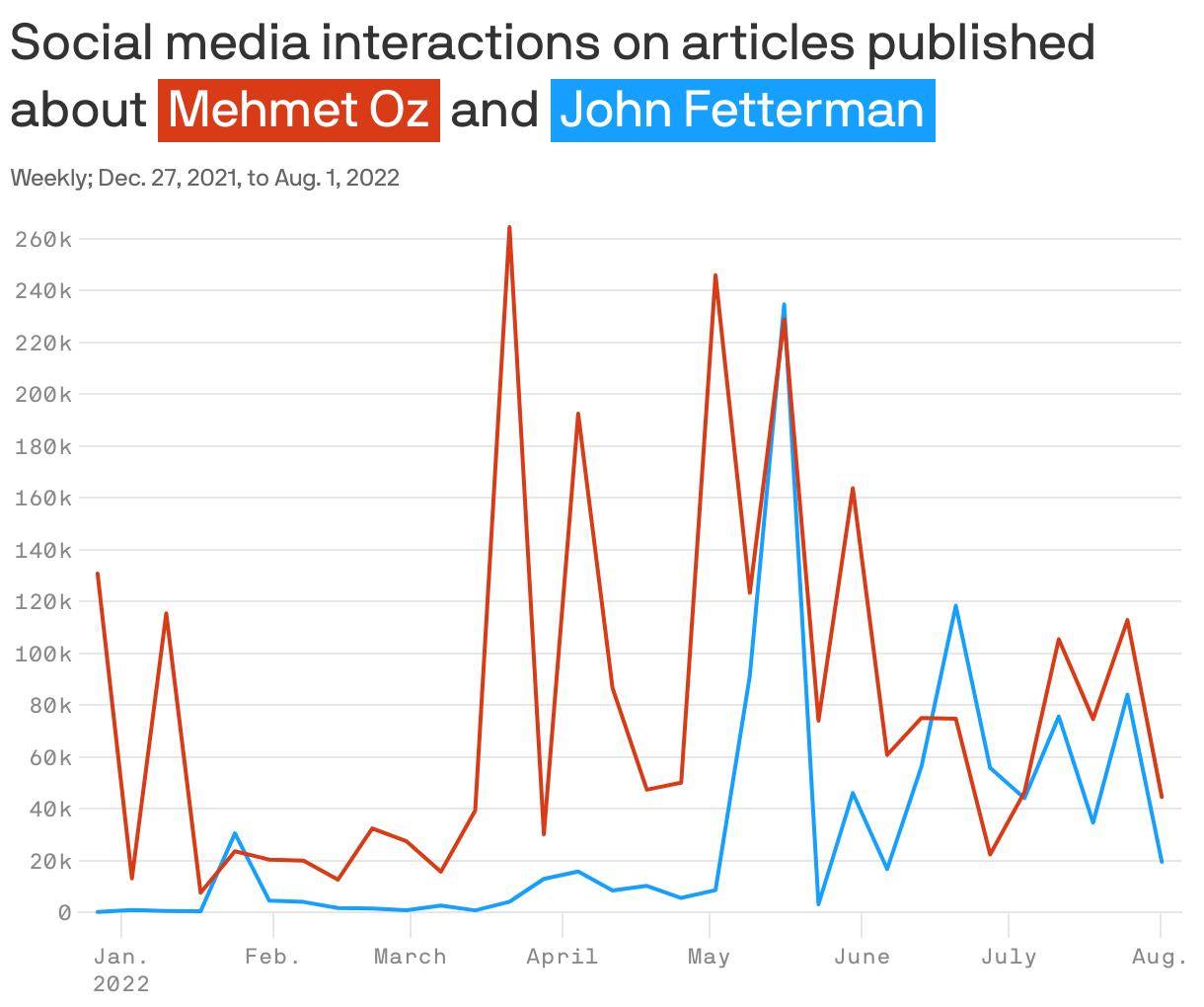
The number of online news articles and social media interactions about Mehmet Oz, the Republican nominee for U.S. Senate in Pennsylvania, has exceeded his Democratic rival John Fetterman's metrics for most of the year.
Why it matters: That's not necessarily a good thing. Oz is polling at an average of 10 points below Fetterman in what should be one of the most closely contested Senate seats in the nation.
Sales of PlayStation products have migrated along with the U.S. population, out of large metro areas to smaller cities, according to a Sony executive who believes the migration is tied to pandemic-related population shifts.
Why it matters: One way to understand what has happened in the country over the past few years is to see where people are buying stuff.
HanesBrands suffered a $100 million blow from a ransomware attack that temporarily devastated its supply chain and orders, the company said Thursday.
Why it matters: These cyber attacks pose a serious financial threat to companies in which bad actors seize control of their target's systems and then threaten to delete data, release information or refuse to relinquish control until payment is received.
The Federal Election Commission voted 4-1 Thursday to approve a Google pilot program that would keep campaign emails out from automatically going to Gmail's spam folders, unless a user directs them there themselves.
The big picture: The program was roundly panned by FEC commenters begging the commission not to open up their email inboxes to even more spam. Now Google has to decide whether to go ahead with it.
The Federal Trade Commission on Thursday began an effort to regulate data privacy practices, the first major regulatory undertaking by FTC chair and Big Tech antagonist Lina Khan.
Why it matters: The FTC rulemaking could lead to strict regulations on how firms collect and use people's personal information online — a threat to the Big Tech business model that relies on targeted advertising.
Digital asset exchange FTX has launched a web campaign to bring the public around on cryptocurrency, called "Get to Know Crypto."
Why it matters: Starting with the White House's executive order this spring, 2022 has become the year policymakers have moved beyond holding the odd hearing about the industry and actually started drafting laws. They are more likely to actually enact laws if they have informed voters.
Homeowners interested in adding rooftop solar panels, installing heat pumps and otherwise green-ifying their houses have plenty to like in the big climate, health and tax package likely to pass Congress in the coming days.
Why it matters: For consumers, the bill — called the Inflation Reduction Act (IRA) — has an array of rebates and tax breaks that will reduce green tech's upfront costs. That tech, in turn, generally leads to lower long-term energy bills, among other benefits.