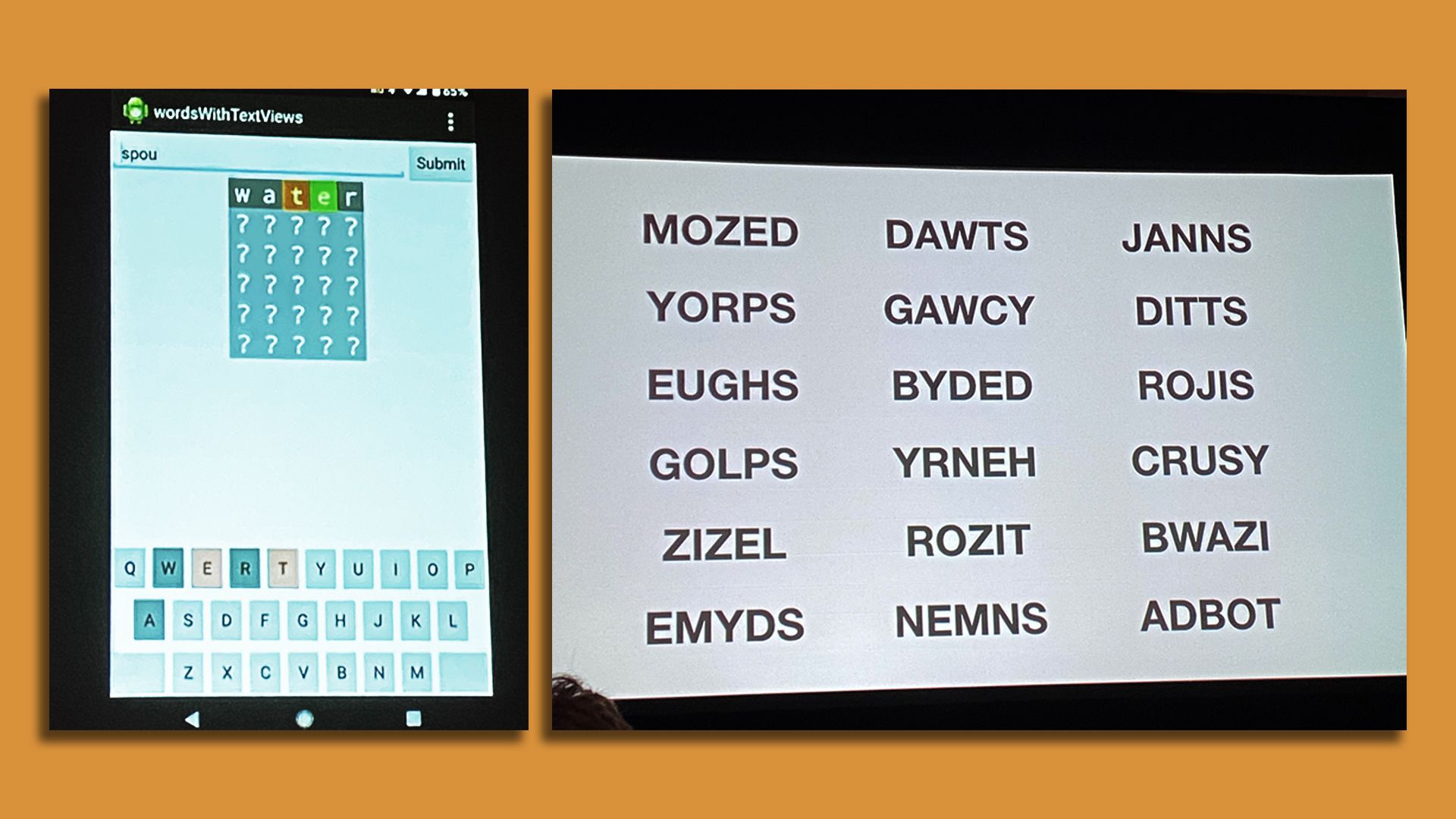
The earliest version of Wordle had a much harder word list back in 2013, the game’s creator Josh Wardle shared during an exuberant talk at Game Developers Conference.
Driving the news: Wardle’s talk came amid a week of GDC discussions about what it takes to make successful games.
A decade after its creation, “Tropes vs. Women in Video Games” creator Anita Sarkeesian believes the series has had an essential, undeniable impact on the games industry.
Driving the news: Reflecting on her work and its impact during a Game Developers Conference talk on Thursday, Sarkeesian says that making those videos today might be “not impossible, but harder,” as there are fewer examples and “the pattern is less egregious.”
The U.S and European Union have reached an agreement on a new deal enabling data flows across the Atlantic.
Why it matters: After an EU decision struck down a previous arrangement allowing EU- and U.S.-based companies to store and share data despite differing regimes governing data privacy, tech firms stood at risk without a new data deal in place.
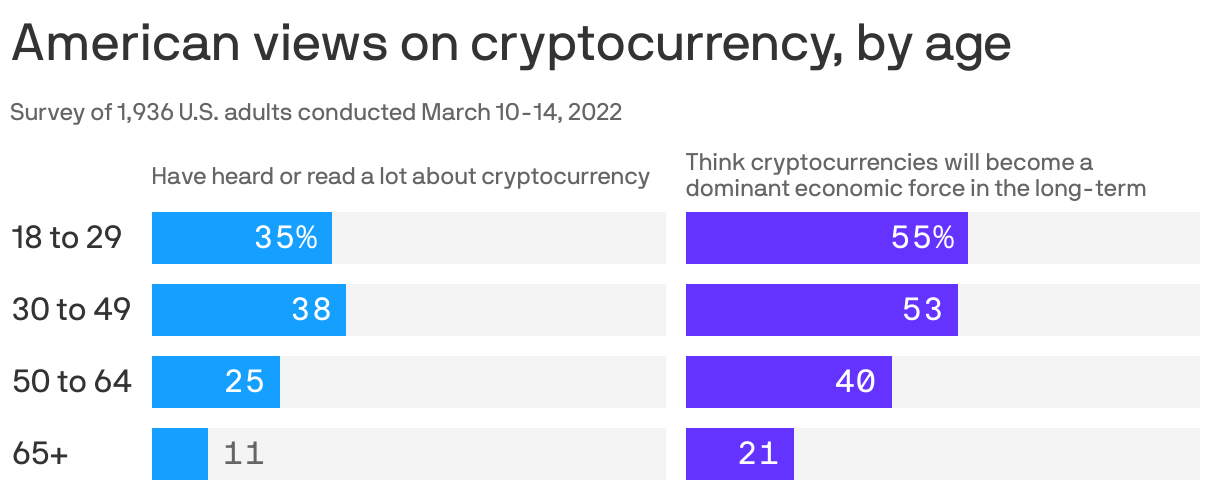
Americans under 50 are bullish on the future of cryptocurrencies, according to a Quinnipiac University poll released Thursday.
Driving the news: "That signals the marketing is working as crypto companies target sports advertising in a push to go mainstream," Quinnipiac finance professor Osman Kilic said.
The "smart home" of the future may be fully or partially energy self-sufficient, equipped with a charging station that not only powers your electric vehicle, but could serve as a backup generator if the electricity goes out.
Why it matters: One of the great promises of smart home technology is resilience — the idea that we might wean our dependence on the power grid by building in solar capabilities and relying more on stored battery power.
European regulators have come to an agreement on major competition rules that could force the world's biggest tech platforms, including Google, Apple, Facebook, Amazon and Microsoft, to reshape big chunks of their business.
Driving the news: Negotiations over the Digital Markets Act, which aims to address what the European Union sees as a lack of competition in the digital economy, wrapped up Thursday in Brussels.
Epic Games may have lost most of its case against Apple over its App Store practices, but the iPhone maker is still appealing part of the judgment.
Driving the news: Apple filed court papers on Thursday asking an appeals court to overrule the trial judge's order that Apple allow apps to direct users to outside websites to make purchases.
Uber has long battled with the yellow cab industry, but today's landmark detente in New York City shouldn't come as a surprise.
Why it matters: The agreement, between the biggest rideshare operator in the country and adversaries in one of its most lucrative markets, was an inevitability. And while the deal may not be entirely win-win, it’s undoubtedly a need-need.
The head of a new multibillion-dollar gaming conglomerate backed by the Saudi government’s sovereign wealth fund says it’s a real business — and not a reputation booster for the controversial kingdom.
Driving the news: The Savvy Gaming Group burst into public view in January with an announcement from the country’s Public Investment Fund (PIF) that the new entity had purchased esports organizations ESL and Faceit for $1.5 billion.
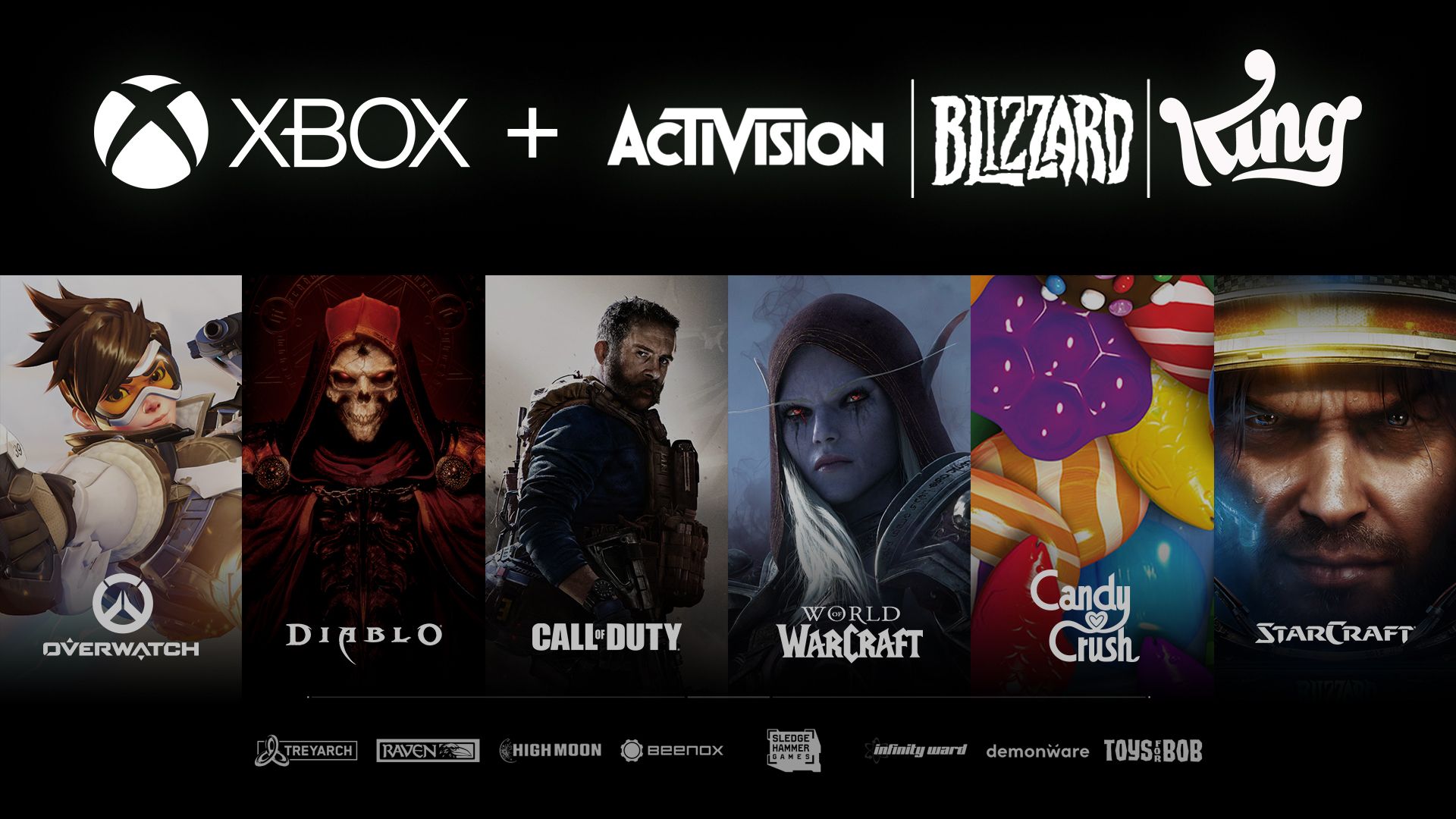
Microsoft says it will not object to Activision Blizzard recognizing internal unionization efforts, in response to a letter from Activision workers pressing the company to state its position about a potential union at Call of Duty studio Raven Software.
Why it matters: Microsoft’s proposed $69 billion acquisition of Activision still faces regulatory hurdles, but the tech giant may have some say about union efforts at the games company.
Activision failed to recognize the union by a January deadline.
A February outline of the acquisition sent by Activision to its shareholders states that the company may not voluntarily recognize a union or enter a collective bargaining agreement without satisfying one of several conditions, one of which is to receive Microsoft’s approval.
In the letter, sent to CEO Satya Nadella and shared exclusively with Axios, workers ask whether his company has authorized Activision to approve or oppose recognition of the union–or if it would potentially OK recognition.
The letter requests information about Microsoft’s involvement, if any, in the workers’ current dispute with Activision over the unionization process, which is now subject to a ruling by the National Labor Relations Board.
And it asks, “[W]hat conditions, if any, will Microsoft put on the collective bargaining process?”
A version of the letter will run as an ad in the Seattle Times on Sunday.
“Microsoft will not stand in the way if Activision Blizzard recognizes a union,” a company spokesman told Axios when asked about the letter.
“Microsoft respects Activision Blizzard employees’ right to choose whether to be represented by a labor organization and we will honor those decisions.”
The company did not clarify what discussions have already taken place, nor its expectations for any collective bargaining process.
Flashback: Quality assurance workers at Raven announced their intent to form a union in January, after striking over their parent company’s decision to drop a dozen QA contractors.
Activision said it did so as part of a process of converting hundreds of other contractors to staff positions.
It has stated that it supports its workers' right to organize but has communicated internally and externally that it believes "a direct relationship" between workers and management is better for workers.
Between the lines: Unionization is rare in the global gaming industry and nearly non-existent in the U.S., where Raven, Activision and many of Microsoft’s own video game development teams are based.
In 2014, subcontractors for Microsoft voted to form a union and were soon dismissed by their direct employer. A 2016 union-busting complaint against Microsoft filed to the NLRB went nowhere, according to a Bloomberg report.
A Microsoft rep at the time said the dispute was a matter for the workers and the contracting company that employed them.
In their letter to Nadella, the Raven workers also accused Activision of using “union-busting” tactics to slow collective action, and pushed Microsoft to stop the “campaign that is being waged against us."
Uber on Thursday announced an agreement to list New York City taxis on its app, ending more than a decade of animosity between the two sides.
Why it matters: This is Uber's first citywide partnership in the U.S., as first reported by the WSJ. This could make it easier for New Yorkers to find rides, as Uber and other ride-hail companies have faced driver shortages.
Spotify paid out $7 billion to the music industry in 2021, "the highest annual payment from any single retailer in history," the audio giant said Thursday. It also said that for the first time, over 1,000 artists generated over $1 million on Spotify
Why it matters: Spotify says that the data shows "the music industry is healthier than it’s been in a long time, and more artists are finding more success than ever before."
Toshiba shareholders today rejected two rival proposals, one supported by management that would have spun off the company's devices unit and another supported by activist investors that would have solicited takeover offers.
Why it matters: This keeps the Japanese giant stuck in strategic limbo, after several years of scandal, shareholder fights and spurned private equity advances.
An actual shooting war on the ground makes the business of flagging and blocking cybersecurity threats even more devilishly tricky than usual.
The big picture: With Ukraine fending off Russia's invasion, every new hack — like the recent exploits of the Lapsus$ group — ends up being viewed not only on its own terms but through the lens of that conflict.
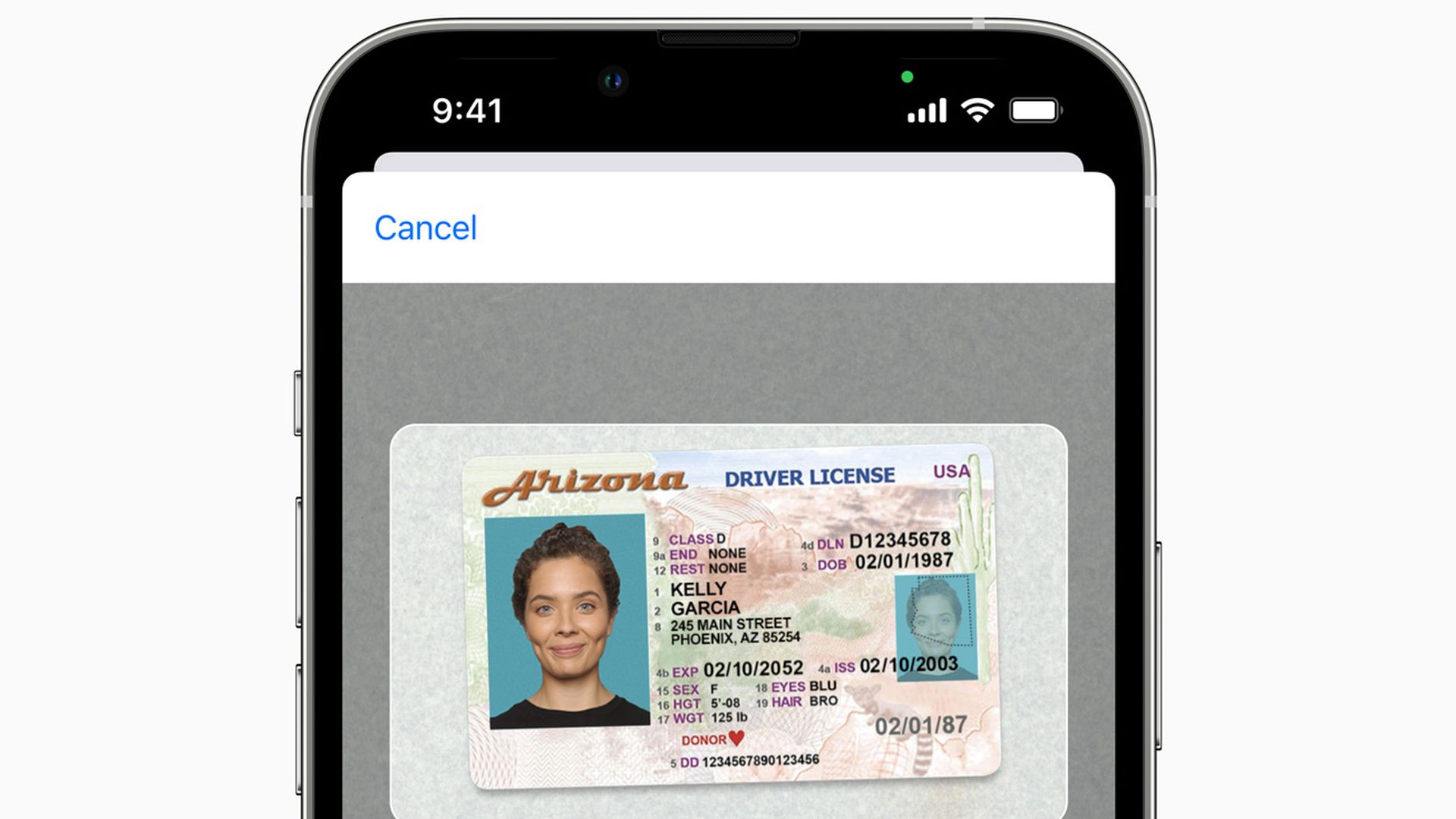
Apple's quest to let you leave your wallet at home has taken another step forward as Arizona has become the first state to let people store their official driver's license or ID on their iPhone.
Why it matters: Payments via phone, once rare, have become widely accepted. Until now, though, there has been no electronic option for government-issued identification.