Friday's technology stories

Portable PC gaming's moment arrives with Valve's Steam Deck
One of PC gaming’s top companies is making one of its biggest bets with today’s launch of the Steam Deck.
Why it matters: Valve hopes Steam Deck can make portable high-end PC gaming a lasting thing.
Burnout risk threatens cyber defense readiness
Adam Meyers is still recovering from COVID and hasn’t slept much this week as he and his team at cybersecurity firm CrowdStrike work around the clock to monitor and defend private sector and government clients against potential new threats from Russia.
Why it matters: U.S. ability to detect, monitor and defend systems against direct attacks or fallout from cyberattacks may be compromised by potential burnout of cybersecurity workers.
The big picture: Cybersecurity experts have already had to deal with years of increased large-scale attacks while facing the same physical, mental and emotional challenges as the rest of the global workforce during the health crisis.
- Being in a prolonged period of high state alert where people are constantly trying to react and respond to incidents may lead to people being worn down and making mistakes, Meyers, SVP of intelligence, tells Axios.
- "If you're a bad guy and you target an organization and cause those defenders to constantly get worn down ... that's a long game strategy that may result in degrading their ability to respond."
What they're saying: "You're literally the only person that's ever expressed any concern about the people that are working on this," Meyers told Axios.
- "I have over 70 people that have been burning the candle on both ends for the better part of six weeks now because of this situation."
- For smaller organizations, the issue may become even more acute, says Luke McNamara, principal analyst with cybersecurity company Mandiant.
- "You may have [only] one individual ... so that's a tremendous load."
State of play: While it's hard for experts to say exactly how and what a direct cyberattack on a U.S. company or agency might look like, the consensus, largely, is that the threat level is low for the moment, but the situation is changing continuously.
- "What we're seeing so far is pretty tame," says Josephine Wolff, associate professor of cybersecurity policy at The Fletcher School at Tufts University.
- Spreading of disinformation and cyber espionage have been constant, and not just from Russia, McNamara says.
- "What we're always looking for is any sort of notable changes in the threat activity," he adds.
Threats to watch: The concern anytime you see espionage is how that activity might be further leveraged for something more destructive.
- Specifically, cybersecurity analysts are looking at where sanctions are going — think finance and energy — because that's where there may be signs of retaliatory targeting by Russian "threat actors," according to McNamara.
The bottom line: "There's no shortage of crises that are happening when it comes to cyberthreats," he says.
- Just this morning, Meyers reminded his team to "get some sleep, exercise, whatever — to be in fighting shape. And some of them refuse because there's a sense of mission."

Ukrainian esports star calls for peace during tournament
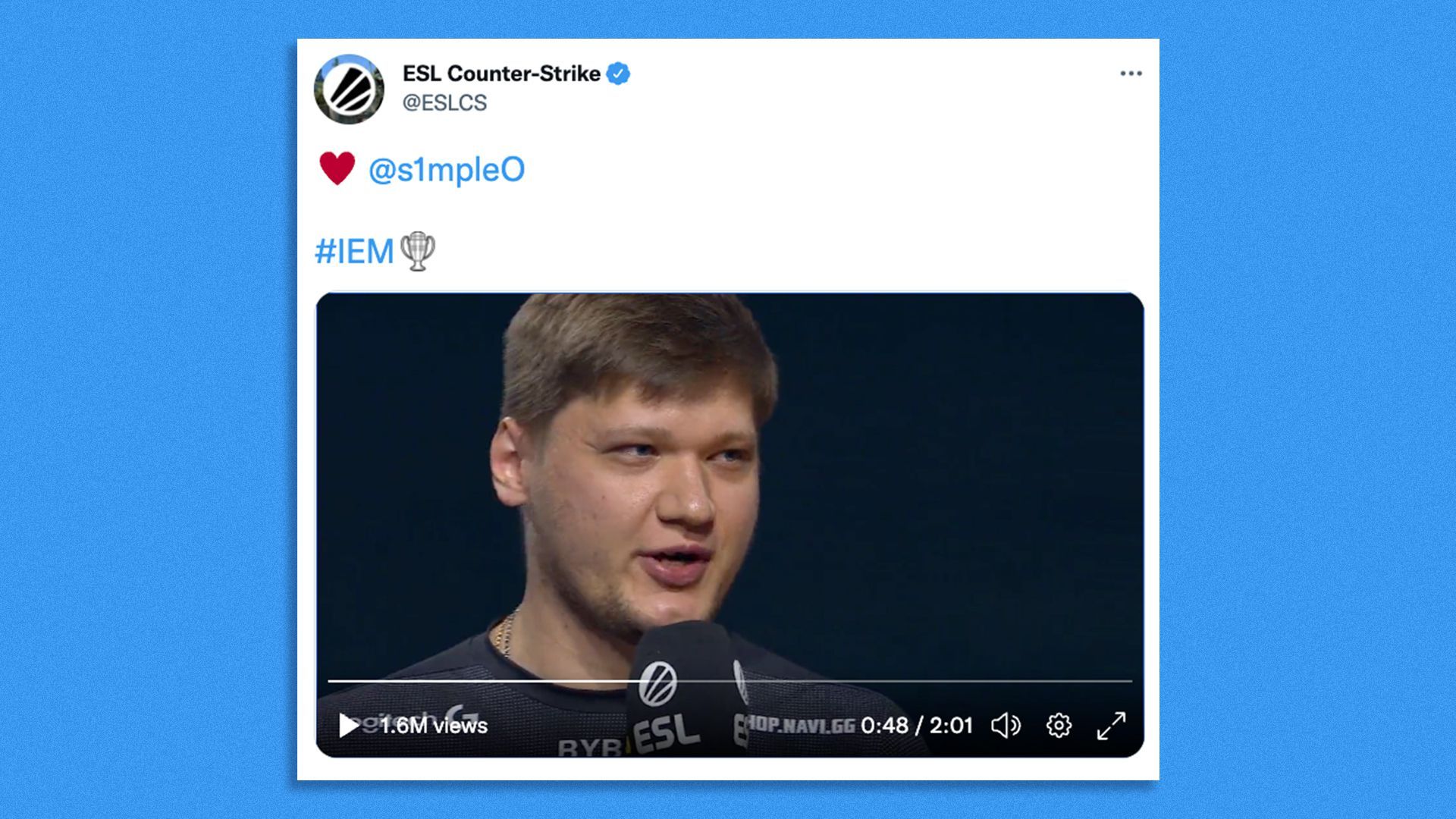
A major esports tournament in Katowice, Poland began today with a member of a Ukraine-based team that includes Ukrainian and Russian players calling for peace.
Why it matters: The Intel Extreme Masters includes teams from nations now at war. Organizers had rebuffed any calls to postpone the tournament or prohibit Russian teams.

Nvidia confirms cyber incident
Chipmaker Nvidia confirmed an "incident" involving its computer systems amid a report that it has been hit with a cyberattack over the past days.
Why it matters: Companies have been urged to be on high alert for potential cyberattacks during Russia's invasion of Ukraine.

Russia moves to restrict Facebook access amid Ukraine invasion
Russia's communications regulator Roskomnadzor on Friday said it would partly restrict Facebook, citing the social network as a "violation of fundamental human rights and freedoms, as well as the rights and freedoms of Russian citizens."
Why it matters: It’s part of a greater effort by Russia to silence dissent amid protests against Russia’s Ukraine offensive.

The crypto industry's latest milestone: its own corporate VCs
Earlier this month, NFT marketplace OpenSea became the latest big crypto company to set up a venture arm.
Why it matters: Despite the recent boom in VC money now focused on backing cryptocurrency and web3 companies ($32 billion invested in 2021 alone), these corporate VCs still believe there’s something unique they can bring to the table.

The cybersecurity steps businesses need to take now
While it's not totally clear how Russian cyberattacks might spill over to — or even directly target — American businesses, experts say prudent businesses should take steps now to prepare.
Why it matters: It's too late to radically revamp a firm's entire security setup, but there's still time for measures that can help minimize potential damage.


Washington steels for Russian cyberattacks
The Biden administration and Congress are steeling for cyberwarfare from Russia following its invasion of Ukraine and warning businesses to prepare for potential attacks.
Why it matters: Russia's invasion was coupled with cyberattacks on Ukraine. American officials fear cyber-conflict could escalate if Russian President Vladimir Putin believes the U.S. is responsible for retaliation.

Ukraine game studio asks fans to donate to country’s military
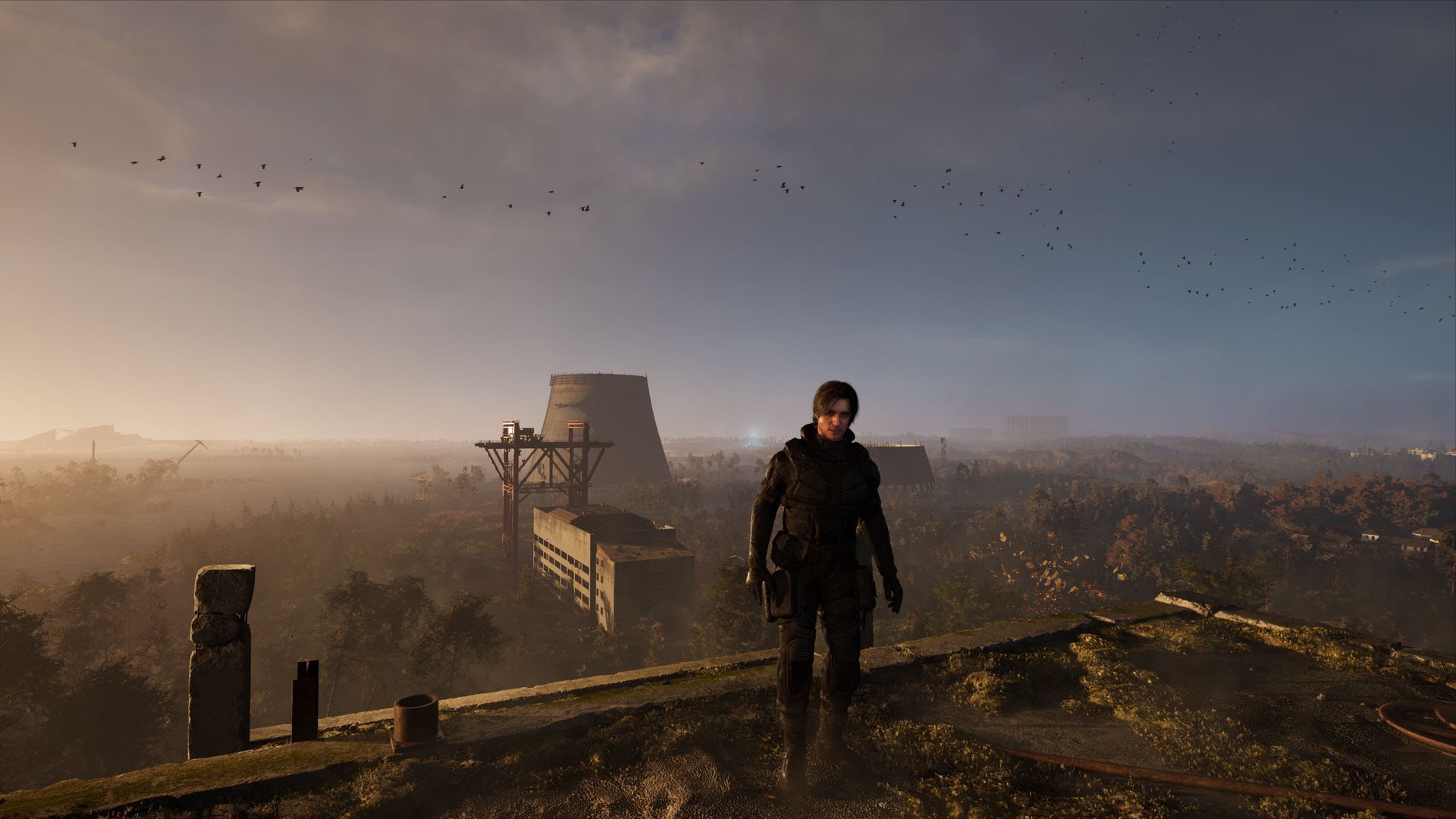
Ukraine’s most prominent video game studio, GSC Game World, appealed to the game industry and its fans to donate money to support their country’s military.
Why it matters: The unprecedented plea came hours after Russia’s invasion of Ukraine began.
What they’re saying: “The future is unknown, but we are sure of our Armed Forces and country,” the studio said in a tweet.
- “We thus address all of our colleagues in the gaming industry: players, bloggers or anyone who sees this post in their newsfeed: share this, do not stand aside[.] And help those in need.”
- Last week, a rep for GSC declined to comment to Axios about the Kyiv-based studio’s preparations for a possible invasion, but any caution has given way to a plea for support posted to the game’s Discord, Reddit and Twitter feed.
- GSC’s newest game, S.T.A.L.K.E.R. 2: Heart of Chernobyl was meant to be a marquee PC and console release this spring, before it was delayed last month.
Between the lines: Game developers and tech workers, like millions of other people in Ukraine, have been grappling for weeks with how to deal with what used to be just the threat of Russian invasion.
- Last week, some told Axios they were leaving the country, hoping for the best and despondent about leaving their home.
More industry reaction to the invasion:
- “We call on everyone to force Putin to withdraw from our lands“ — Tweet from Kyiv-based studio Frogwares, makers of Sherlock Holmes video games.
- “We will not able to answer or help you that much with the game atm” — Tweet from Ukraine-based developers of Serpent Rogue, noting Russian attacks on Ukrainian citizens.
- Publisher Ubisoft, which has multiple studios in Ukraine, reiterated to Axios that they are “providing assistance to aid all team members.”
- Riot Games’ Valorant esports division said it was suspending a tournament that involves teams in Ukraine and Russia.
- Polish-based 11bit Games says it will donate the next seven days’ worth of revenue from its hit anti-war game This War Of Mine to the Ukrainian Red Cross.
- Game studios and developers, including Bungie CEO Pete Parsons and Poland-based Draw Distance, expressed solidarity with Ukraine.
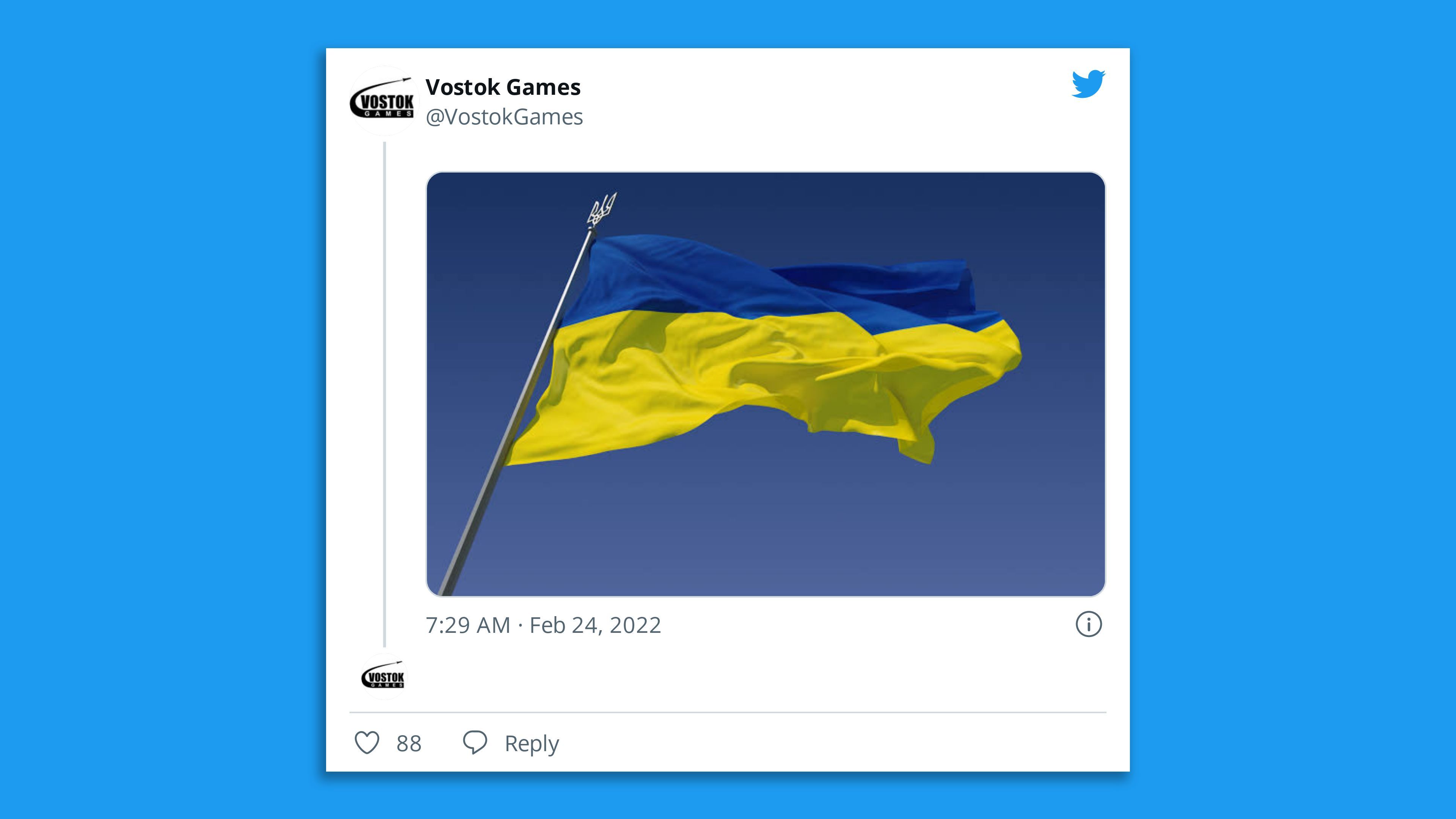
- And this from Kyiv-based Vostok Games:
Sign up for the new Axios Gaming newsletter here.
Editor’s note: This story has been corrected to note that Draw Distance is based in Poland (not in New York).


Exclusive: Senators press TikTok on eating disorder content
Sens. Amy Klobuchar (D-Minn.) and Tammy Baldwin (D-Wis.) have pressed TikTok about content that promotes disordered eating on the platform, per a letter to the company sent Wednesday shared exclusively with Axios.
Why it matters: As TikTok's popularity booms, the video-sharing app is getting more attention from lawmakers concerned about content that circulates on the platform that could harm vulnerable teens and kids.
- TikTok executives have previously appeared before Congress to discuss the impact of its platform on young people.
Details: Klobuchar and Baldwin cite Wall Street Journal reporting about TikTok's algorithm serving 13-year-olds tens of thousands of weight-loss videos soon after joining the platform. Their letter notes that TikTok's stream of videos exposes users to harmful content even when they haven't sought it out.
What they're saying: "We are deeply disturbed by this report and believe this content violates TikTok's policies related to self-harm, suicide, and dangerous acts," the senators wrote in a letter to TikTok CEO Shou Zi Chew.
- They asked the company to answer questions by March 9.
- The letter asks TikTok how many of its users have seen content promoting unhealthy eating in 2021, and seeks more information about TikTok's planned changes to its algorithm aimed at curtailing how much material on the same theme it sends users' way.
- The senators also ask TikTok if it prioritizes videos with high numbers of views while moderating content, and if the company has any plans to introduce new features aimed at reducing harmful content.
Background: The senators recently introduced a bill to provide training and assistance for health care workers, teachers and parents for identifying eating disorders and supporting recovery.

Meta plans AI-driven universal translator
Facebook parent company Meta on Wednesday detailed several research efforts that it insists are key to its project of building a metaverse.
The big picture: While some of the work, like a new type of haptic gloves, is closely tied to virtual reality, a number of the efforts Meta talked about on Wednesday predate the company's metaverse push and have wide use beyond it.


Tech on high alert for Russia's Ukraine disinformation offensive
Russia's Ukraine invasion, seeded by a web of state-backed disinformation campaigns, is putting Big Tech in a bind.
Why it matters: How tech firms respond to Russia's disinformation efforts in real-time could shape the role they play in future geopolitical conflicts. But already, experts argue they aren't moving quickly enough.


/2022/02/23/1645660621583.gif?w=3840)