Efforts to organize workers in the U.S. video game industry advanced Friday as quality assurance staffers at Call of Duty studio Raven Software say they intend to form a union.
Why it matters: Their group, the Game Workers Alliance, would be the first union at a major American video game maker, one that is set to become part of Microsoft should the tech giant’s planned $69 billion acquisition of Raven parent Activision go through.
QA workers at Raven have been on strike since December to protest Activision’s decision to drop a dozen QA contractors.
34 members of the QA staff voted to form GWA in affiliation with the Communication Workers of America.
The union won’t be official unless Activision voluntarily recognizes it or the group is certified through an election overseen by the National Labor Relations Board.
The big picture: The multi-billion-dollar global game industry, which employs tens of thousands of workers, is largely non-unionized, with some exceptions mainly in Europe.
For years, challenging work conditions, including workplace misconduct, crunched development cycles and limited project-to-project job security have sparked developers' interest in unionizing.
Scandals at Activision Blizzard last year led some workers there to begin unionization efforts, a process that is adjacent to the QA-focused GWA effort.
In December, North American indie studio Vodeo unionized with support from management.
Details: In a tweeted list of its principles, GWA said it will focus on solidarity, sustainability, equity and diversity.
“We strive to foster work environments where Quality Assurance Testers are respected and compensated for our essential role in the development process,“ the group writes.
GWA also signaled that it will push for “realistic” development timelines, saying abbreviated ones are unhealthy for workers and hurt game quality.
What they’re saying: “Activision Blizzard is carefully reviewing the request for voluntary recognition from the CWA, which seeks to organize around three dozen of the company’s nearly 10,000 employees,” a company spokesperson said.
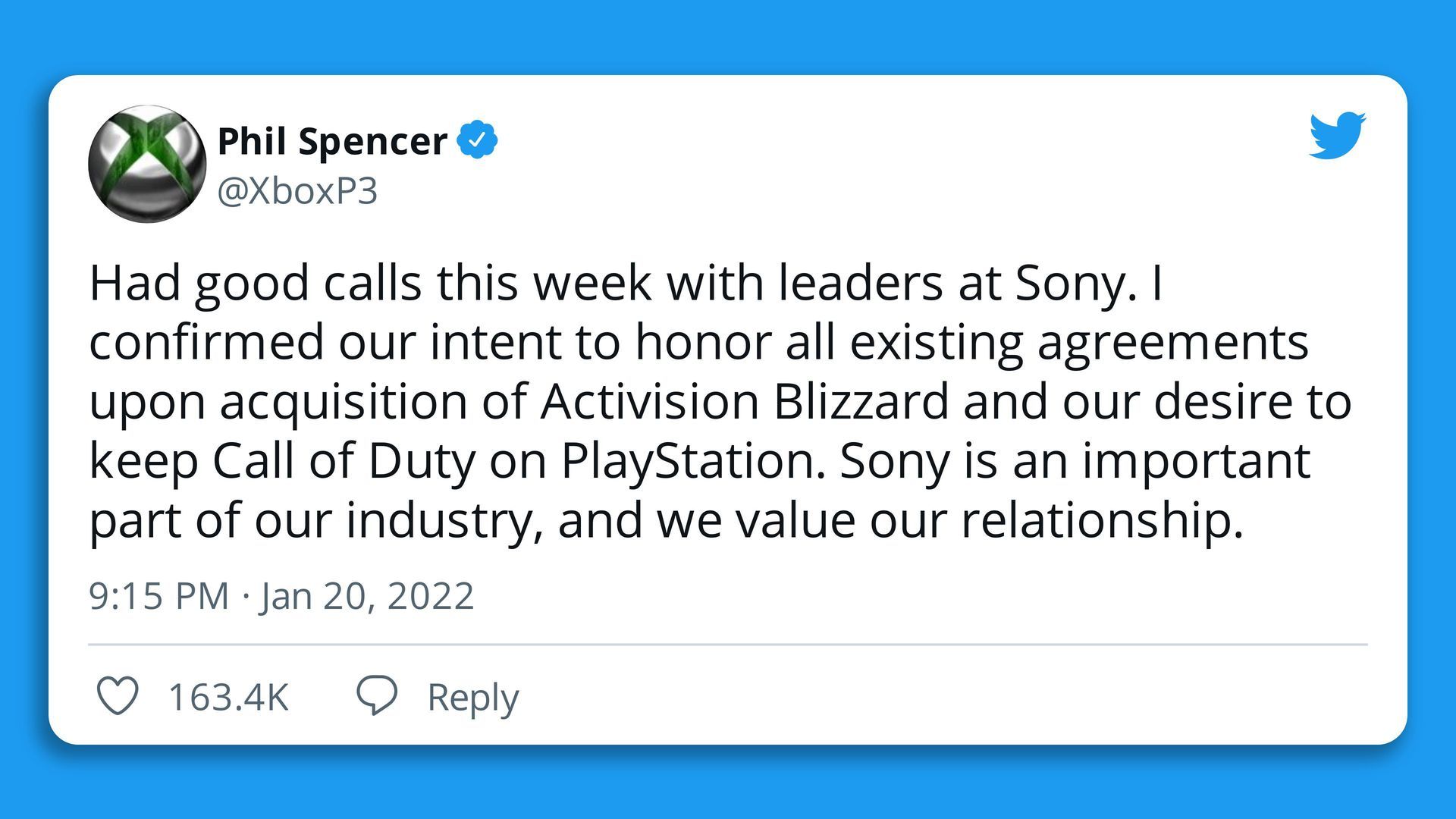
Gamers and games media are scrutinizing a 46-word tweet from Microsoft gaming CEO Phil Spencer to see if it indicates that new releases of Activision flagship franchise Call of Duty will continue to come to PlayStation, should Microsoft successfully buy Activision.
Why it matters: If Call of Duty leaves Sony’s platforms, millions of players would have to seek the game on PC or Xbox, devices they may not own.
With $30 million in fresh funds, health monitoring startup Casana is readying to debut a toilet seat that takes your vitals.
Why it matters: Casana’s clinical commode is part of a broader trend that is seeing health care move out of the doctor’s office and into the home — or bathroom.
The prominent climate tech-focused VC firm Energy Impact Partners has raised $200 million — and is aiming for more — for a new fund to support "early-stage, revolutionary technologies" across several industries.
Driving the news: EIP announced the launch of the Deep Decarbonization Frontier Fund yesterday with a target of $350 million.
Microsoft is pitching investors and regulators that its $68 billion Activision Blizzard deal is all about the metaverse, that nebulous buzzword taking the tech world by storm.
What they're saying: By my colleague Stephen Totilo's count, Nadella used the word "metaverse" at least five times in his conference call discussing the deal. Activision Blizzard CEO Bobby Kotick mentioned the metaverse four times, while Microsoft gaming chief Phil Spencer used the term twice.