A TikTok executive said at a U.K. parliamentary hearing this week that the video-sharing platform previously censored content that was critical of China, especially videos about Uighur Muslims being detained in Xinjiang.
What they're saying: "At that time we took a decision [...] to not allow conflict on the platform, and so there was some incidents where content was not allowed on the platform, specifically with regard to the Uighur situation," Elizabeth Kanter, the company's U.K. director of public policy, said.
KuaiShou, a Chinese short-video and live streaming app, filed for a Hong Kong IPO that reportedly will seek to raise $5 billion.
Why it matters: This reflects the booming market for TikTok-style services in China, as KuaiShou claims to have over 300 million daily users. Its rivals include Douyin (ByteDance's Chinese version of TikTok) and Nasdaq-listed Bilibili (which, like KuaiShou, includes Tencent and Alibaba as shareholders).
This week's election count is already giving the large tech platforms a taste of their future content-moderation challenges.
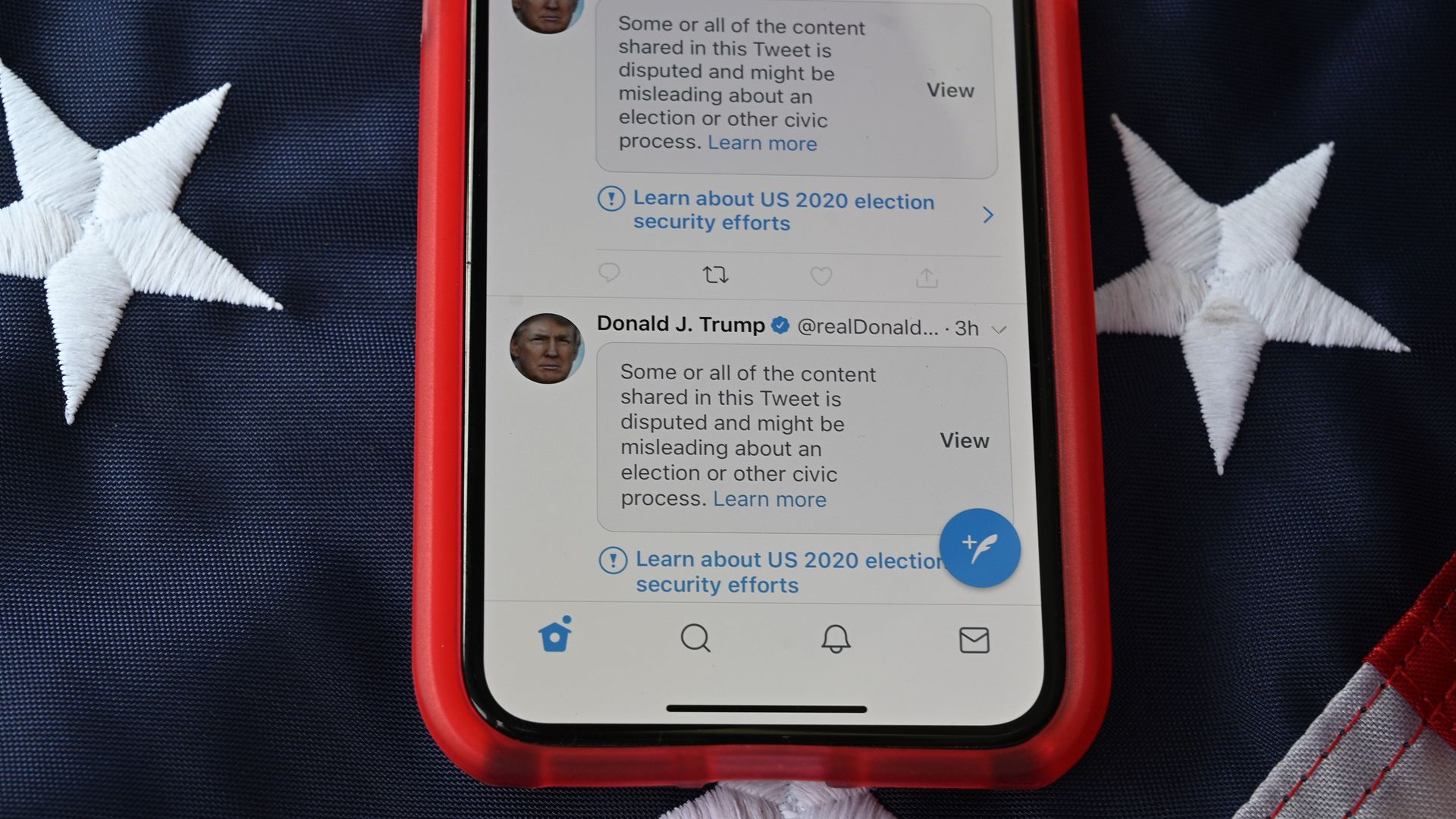
The state of play: Each day is proving harder than the last for internet gatekeepers amid swirling conspiracy theories, misinformation from elected leaders and growing violent speech from pockets of the far right.
The 2020 election outcome presents Facebook, Twitter and other online platforms with a worst-case scenario for misinformation management even as it takes some of the regulatory pressure off the wider tech industry.
Why it matters: Aggravated red state/blue state grievances look to usher in an open-ended era of partisan trench warfare online — but a split Congress shrinks the likelihood of new laws reining in tech's power.
Facebook is temporarily demoting posts containing election-related misinformation on its platforms and limiting the distribution of livestreams that may relate to the election, the company confirmed Thursday.
Why it matters: Facebook is turning on emergency measures like those used in countries where democracy is under threat as it looks to contain the spread of false claims and conspiracy theories about ballot counting.
Uber is looking to export to other states California's newly voter-approved policy that will let the company continue to treat its drivers as contractors and not employees, CEO Dara Khosrowshahi said on an analyst call after the company posted mixed third-quarter results Thursday.
The big picture: Uber and Lyft helped lead a $200 million campaign to convince Californians to vote for Proposition 22, which they did overwhelmingly Tuesday. Uber now wants to "have dialog with governments and other states" on enacting similar arrangements, Khosrowshahi said.