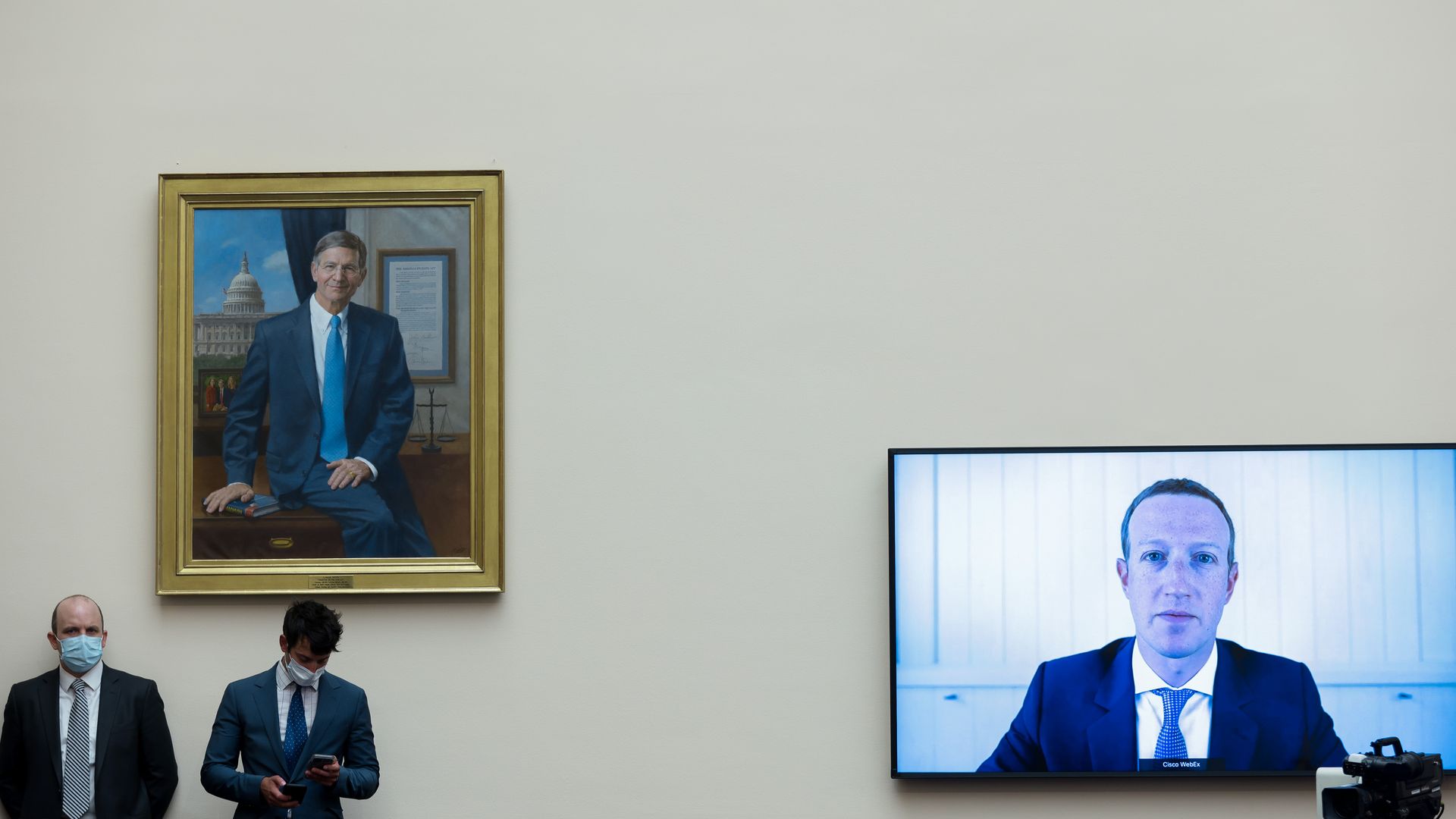
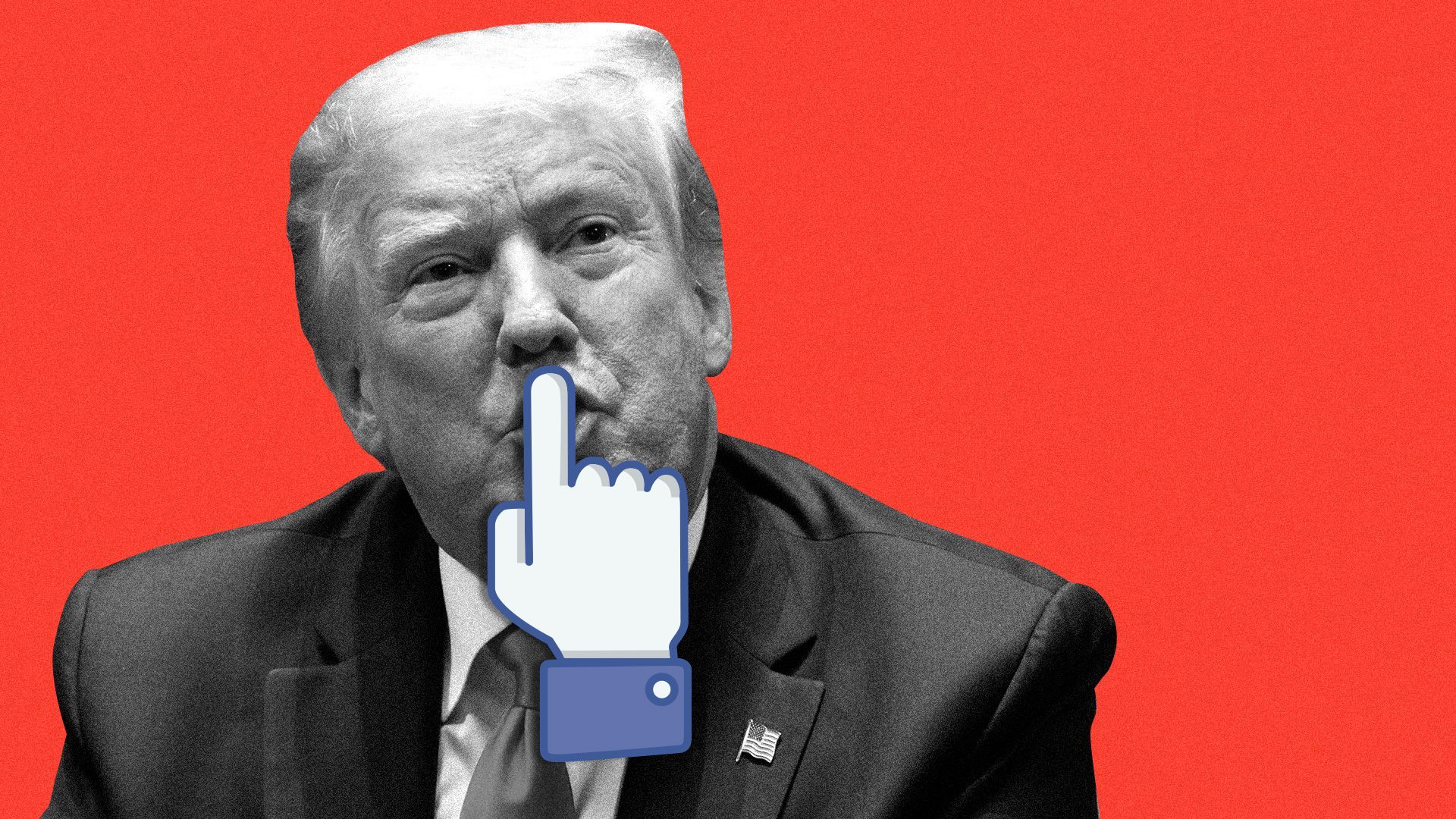
The CEOs of Twitter, Google and Facebook will testify before the Senate Commerce Committee on October 28, six days before Election Day, a committee aide confirmed to Axios.
Driving the news: On Thursday, the committee authorized subpoenas for Facebook's Mark Zuckerberg, Google's Sundar Pichai and Twitter's Jack Dorsey. By Friday evening, the companies and the committee worked out a date, first reported by Politico.
The Supreme Court on Friday agreed to hear a case brought to it by the Federal Communications Commission, with support from the National Association of Broadcasters, about the FCC's longtime attempts to relax media ownership rules.
Why it matters: The case will determine whether a 2017 FCC rule allowing broadcast companies to own more than one of the top four stations in a market can stand. If it does, it will likely usher in even more local broadcast consolidation in the U.S.
If social media platforms don't start dealing much more aggressively with altered audio and video, they risk seeing their platforms devolve into a sea of faked content, experts tell Axios.
Why it matters: The platforms are already struggling to deal with manipulated media, and the technology to create "deepfakes," which are fabricated media generated by machine-learning-based software, is improving rapidly.
Some tech CEOs just want to make great products and boost profits while ignoring politics, but 2020 isn't letting them.
Driving the news: Coinbase CEO Brian Armstrong told employees in a memo Sunday that their company would henceforth take no political stands that are "unrelated to their core mission" and bar political conversation from its office.
President Trump's tweet on Friday announcing that he and First Lady Melania Trump tested positive for coronavirus quickly become his most retweeted and liked tweet ever.
Why it matters: The tweet — sent at 12:54 a.m. ET — set records while most of the nation was asleep, so it's bound to get even bigger.
The startup IonQ today announced what it's calling "the world's most powerful quantum computer."
Why it matters: Quantum is the next frontier in computing, theoretically capable of solving problems beyond the ability of classical computers. IonQ's next-generation computer looks set to push the boundaries of quantum, but it will still take years before the technology becomes truly reliable.
The Senate Commerce Committee has voted to authorize subpoenas compelling Facebook CEO Mark Zuckerberg, Twitter CEO Jack Dorsey and Google CEO Sundar Pichai to testify before the panel.
Why it matters: The tech giants are yet again facing a potential grilling on Capitol Hill sometime before the end of the year, at a time when tech is being used as a punching bag from both the left and right.
In June, a group of Coinbase employees walked out after CEO Brian Armstrong did not immediately commit to making a public statement in support of Black Lives Matter.
Why it matters: The crypto "unicorn" is now offering severance packages to employees who no longer feel aligned with the company’s apolitical culture and mission, which Armstrong clarified Sunday in a blog post.
Course Studio, a new online class startup that launched as the coronavirus pandemic hit, has raised $1 million, the company tells Axios.
Why it matters: Course Studio is aiming to create professionally produced online learning experiences at a time when internet classes are the only way many people are able to learn new things or reach their audiences.
Tech companies are bracing for a tough day in three separate Capitol Hill committees Thursday, as lawmakers move to show they're tough on social media platforms in the days leading up to the election.
Why it matters: Big Tech has become a go-to punching bag for both the right and left, and tech policy has become increasingly fertile ground for grievance politics.
President Trump's refusal to condemn white nationalists during Tuesday night's debate drew a lot of attention — including from the Proud Boys, the far-right group he asked to "stand back and stand by."
Why it matters: The Proud Boys remain relatively small — a Portland rally this past weekend billed as the group's largest-ever gathering drew just a few hundred people. But Trump's failure to condemn extremist groups has been welcomed as an endorsement by a wide constellation of people on the fringes.
Google will pay publishers more than $1 billion over the next three years to create and curate high-quality journalism for a new set of features called Google News Showcase, executives tell Axios.
Why it matters: This is Google's biggest ever financial commitment to the news industry. In 2018, it pledged $300 million to efforts supporting the news industry. This announcement builds on that effort and its existing news licensing program, where it pays select publishers to feature their stories in Google News and Search.
Facebook said Wednesday that it was removing a series of ads from President Trump's campaign that linked American acceptance of refugees with increased coronavirus risk, a connection Facebook says is without merit.
Why it matters: The ads were pulled after they received thousands of impressions and are a sign that the Trump campaign continues to test the limits of social media rules on false information.