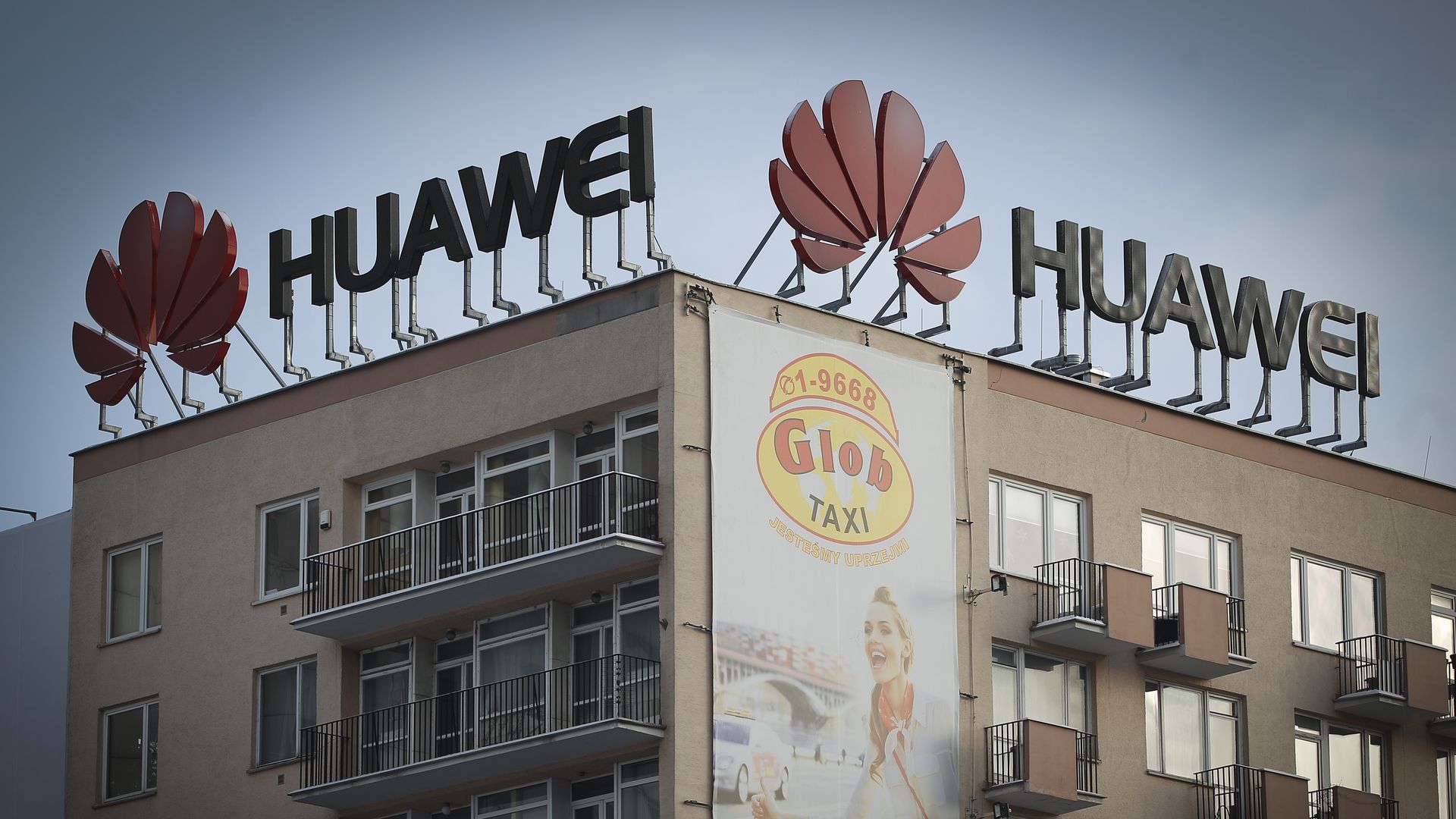
Chinese telecom giant Huawei has fired a local sales director arrested in Poland on charges of spying, Reuters reports.
Why it matters: Huawei likely recognized that the arrest would intensify Western scrutiny of the company's relationship with the Chinese government, and said in a statement that the employee's "alleged actions have no relation to the company” in an attempt to distance itself from the incident. Huawei CFO Meng Wanzhou was arrested in Canada last month for violating U.S. sanctions on Iran.
Amazon's Whole Foods is considering snapping up square footage belonging to fallen retail giants like Sears and its subsidiary Kmart, Yahoo Finance is reporting.
Why it matters: Amazon, long the king of online retail, has been overflowing into brick-and-mortar at a frenzied pace. Now, it could expand its grocery footprint into several new states, reports Yahoo Finance.
The mood in Detroit is gloomy on the eve of next week's North American International Auto Show, and — for once — it has (almost) nothing to do with Michigan weather.
The big picture: Automakers are bracing for a cyclical downturn, exacerbated by the Trump administration's trade policies, rising interest rates and consumer rejection of 4-door sedans. While tightening their belts, they're still trying to fund massive investments in electric and self-driving cars they say are needed to secure their long-term survival.
Multiple major wireless providers have said they won't continue to engage in the sort of location data sharing portrayed in a Motherboard investigation earlier this week that saw reporter Joseph Cox pay a bounty hunter to track a cellphone.
Why it matters: Privacy scandals aren't limited to the major web companies.
A local sales director for the Chinese company Huawei Technologies, identified by people familiar as Weijing Wang, has been charged with high-level espionage on China's behalf in Poland, the Wall Street Journal reports.
Why it matters: The charge bolsters U.S. and other Western nations' suspicions that Huawei's technology could be used by China to spy on other nations. Last month, the company's chief financial officer was detained in Canada for allegedly violating U.S. sanctions on Iran.
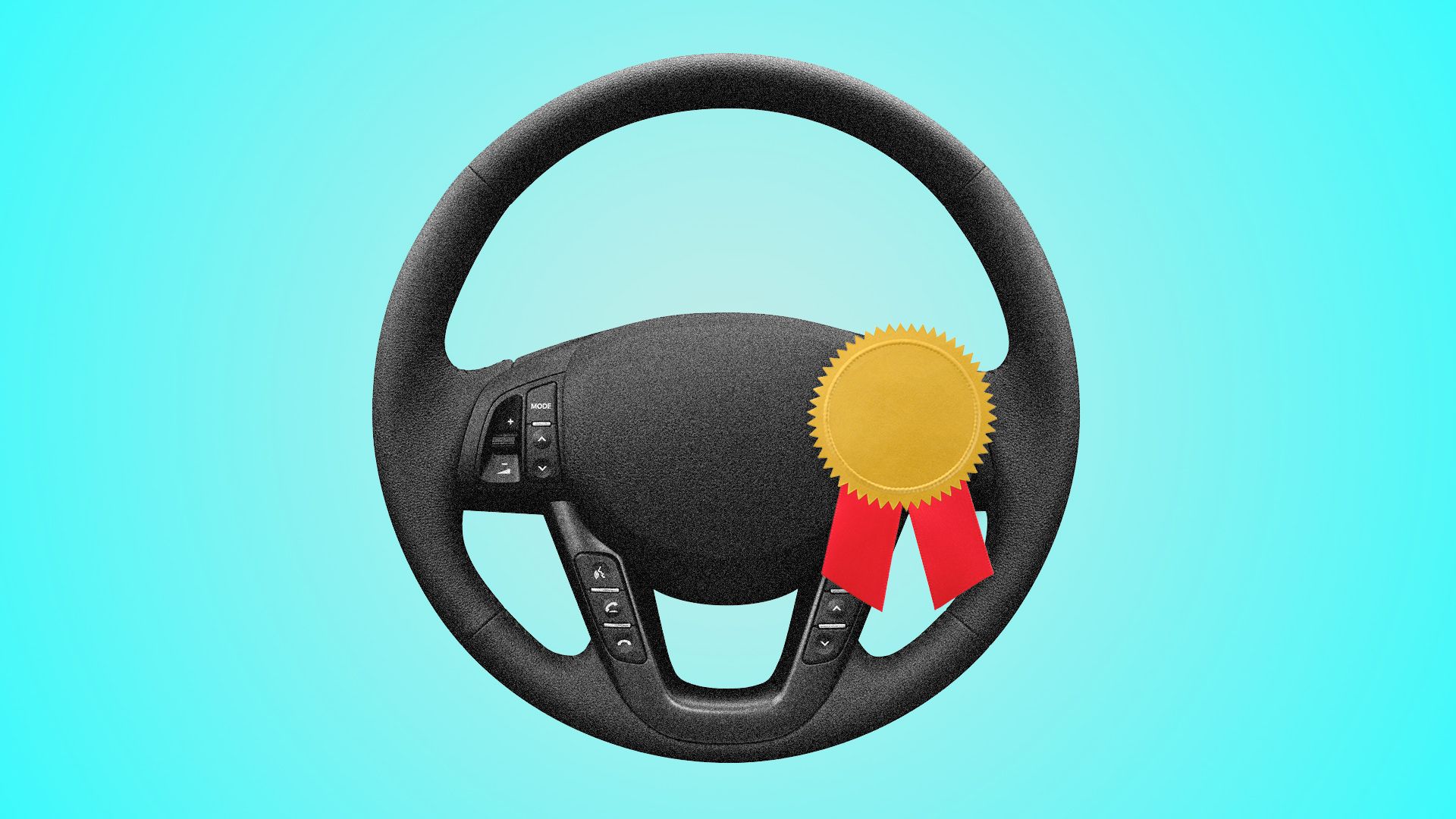
There are currently no performance standards against which manufacturers can self-certify autonomous vehicles, as they do for conventional cars and trucks. Until the adoption of such standards, one way to assess the safety of AVs would be a certification program that includes objective safety criteria, simulations, road tests, and third-party review.
Why it matters: As more AVs are tested on public roads, a third-party certification program could improve public trust, reduce the risks of injury or death, and deliver on industry safety promises — ultimately advancing the technology and its adoption.
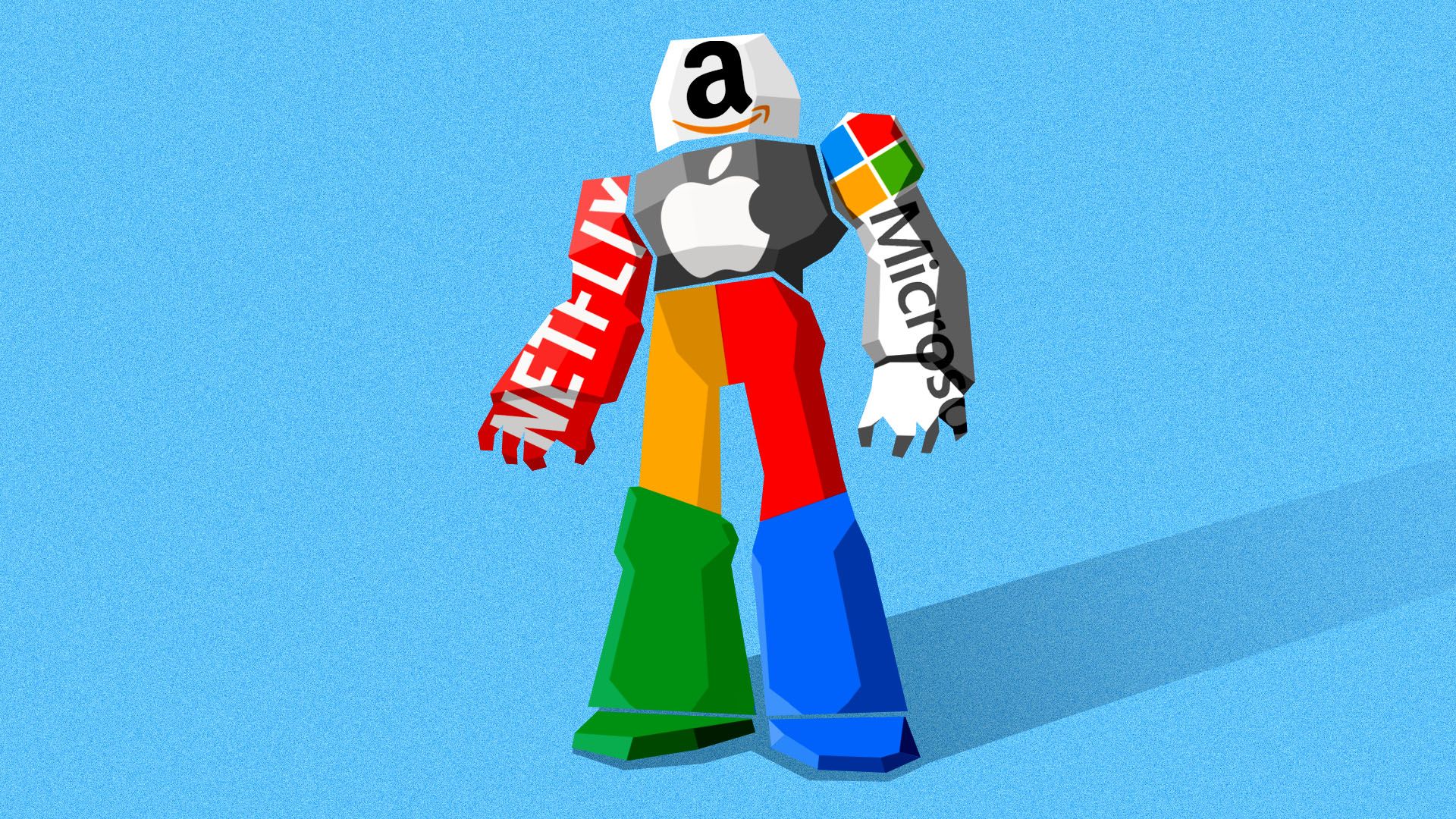
For several years it has made sense, in some quarters, to lump together the tech giants — chiefly Google, Facebook, Apple, and Amazon, sometimes also including Netflix or Microsoft. But talking about "big tech" is beginning to offer diminishing returns.
The big picture: Industry insiders have always known that differences among these companies are as pronounced as their shared traits. The rest of the world is catching on.
Overall, 41% of American adults support the development of artificial intelligence, according to a new survey.
Adapted from a Center for the Governance of AI report; Chart: Axios Visuals
Yes, but: That leaves a lot of other peopleopposing it — a lot of women, low-wage earners, people without a college education and people without coding experience. The same goes for Republicans and people 73 or older. Essentially, those unsupportive of AI are those least likely to be involved in designing it — and the most likely to be adversely affected.
Applicants usually don't know when a startup has used artificial intelligence to triage their resume. When Big Tech deploys AI to tweak a social feed and maximize scrolling time, users often can't tell, either. The same goes when the government relies on AI to dole out benefits — citizens have little say in the matter.
What's happening: As companies and the government take up AI at a delirious pace, it's increasingly difficult to know what they're automating — or hold them accountable when they make mistakes. If something goes wrong, those harmed have had no chance to vet their own fate.