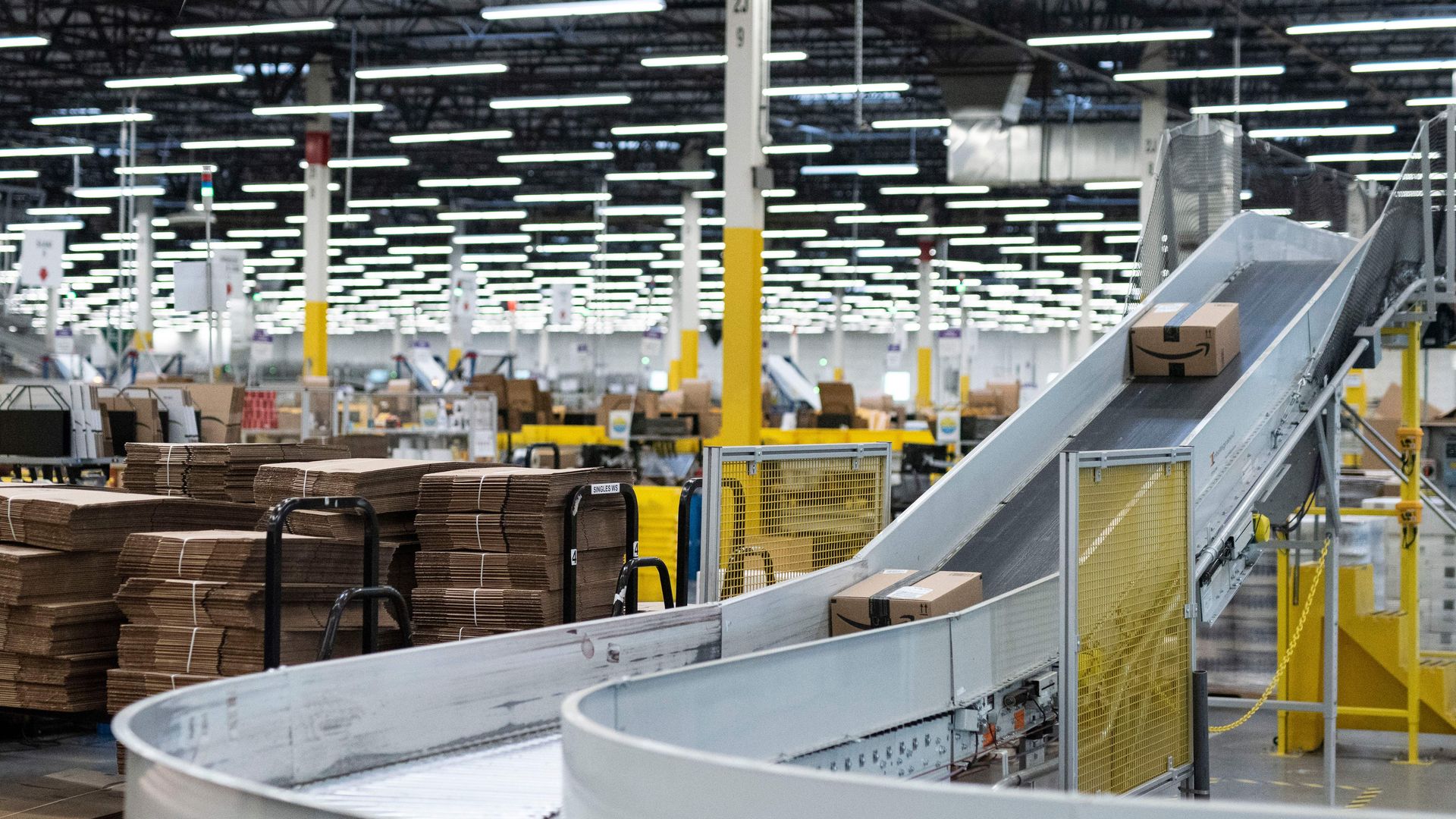
Amazon has kicked off the holiday shopping season with an aggressive shot over the bow of its competitors — free shipping, including for non-Prime members.
Why it matters: After capturing half of all U.S. online holiday sales last year, Amazon is now plotting how it can lure even more customers in what's expected to be a $720 billion shopping bonanza this holiday season, per the National Retail Federation.
As Amazon narrows the finalists to host its much-sought second headquarters and its tens of thousands of new, high-paying jobs, a little-remarked-upon factor may be playing a large role in its thinking — the company's vulnerability to antitrust action by an activist White House.
In a new development, Amazon has decided to split HQ2 between two cities, scoops the WSJ's Laura Stevens. Whether there are one or two new headquarters, the antitrust threat could favor the D.C. area, since a big local jobs creator may be less likely to be charged by the Justice Department. The same thinking could lead CEO Jeff Bezos to rule out the only finalist on foreign soil — Toronto.
Some of the leading tech companies are seeing evidence that the same bad actors looking to interfere in the U.S. elections are now looking to spread false claims of meddling, sources tell Axios.
Why it matters: With just one day left before voting ends, experts are worried about anything that undermines confidence in the election and, on that score, false claims can be just as effective as real ones.
A stunning datapoint from Axios' Ina Fried: Apple's iPhone revenue rose by 29% in the most recent quarter, compared to a year previously — even as the total number of iPhones sold was flat.
Why it matters: Technology always plunges in price over time. Except, it seems, if you're Apple.
Facebook and Google should be afraid of being taxed on their annual revenues, rather than their profits.
What's happening: The UK is proposing a 2% tax on the British revenues of any profitable tech company with more than £500 million in global revenues. The European Commission is proposing a similar tax, which could reach 3%. Spain's version of the tax could raise as much as $1.4 billion next year. Nine Asia-Pacific countries, including South Korea and India, could follow suit, as could Mexico and Chile.
According to a report in The Australian, Australia received intelligence reports that Huawei personnel provided Chinese spies passwords to hack a "foreign network."
Why it matters: Though there are many broad allegations that telecommunications equipment providers Huawei and ZTE sabotage products so that spies can conduct espionage, the public is largely in the dark about how and if the nation has ever used that capacity.


/2018/11/05/1541398047552.gif?w=3840)

/2018/11/04/1541357329132.gif?w=3840)