Friday's science stories

Exclusive: Army creates autonomy command amid Hegseth's robo-warfare push
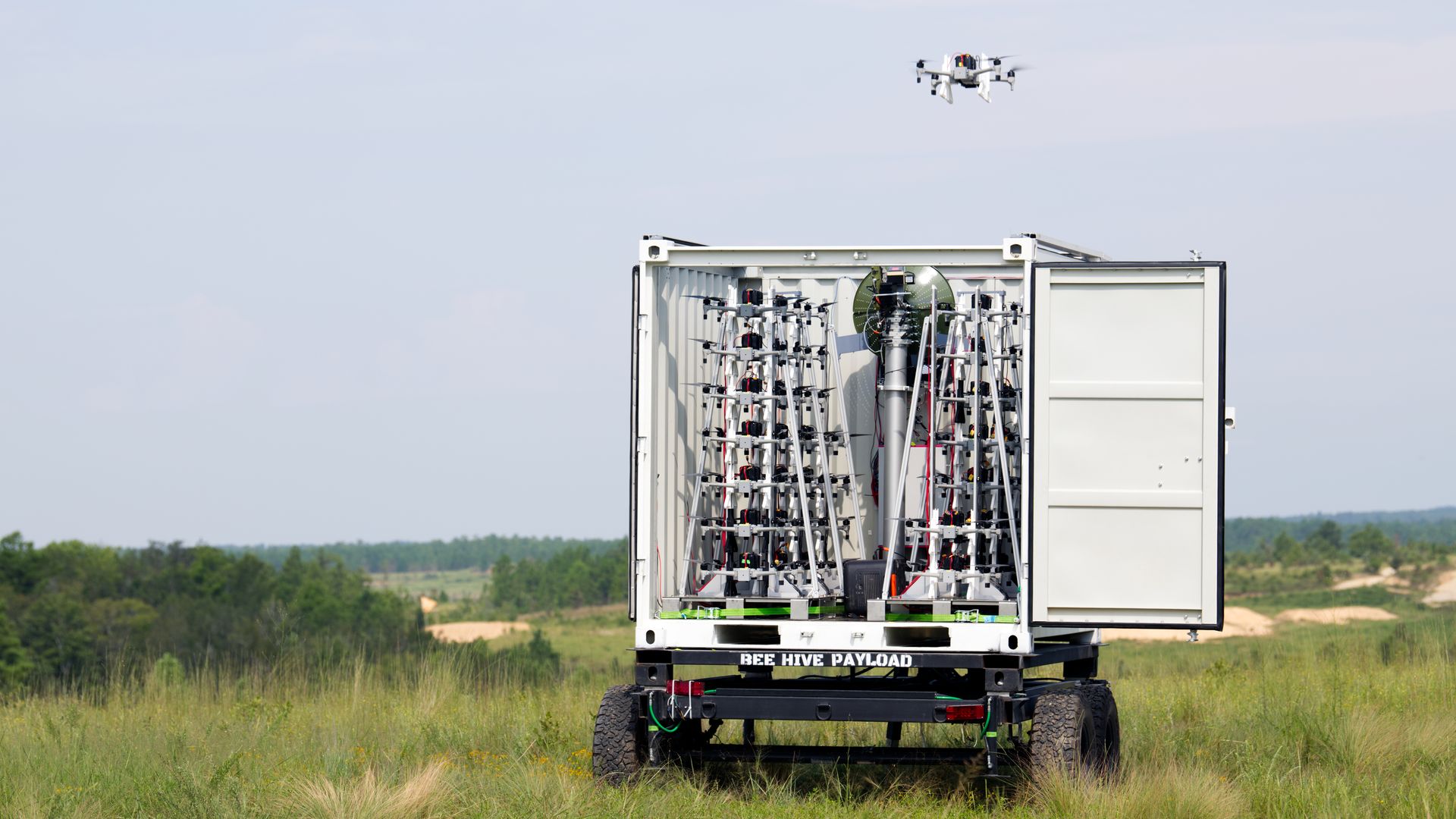
The U.S. Army is creating a new autonomous systems command and appointing an acquisition executive to prioritize buying and fielding smart machinery, according to a memo first seen by Axios.
Why it matters: Directions to do so come from acting service Secretary Adam Telle and were issued a day after Defense Secretary Pete Hegseth revealed the Meridian and Agincourt projects, both focused on the robotized future of warfare.
- Hegseth "made it clear: We are done with the bureaucratic inertia holding back modernization," Telle told Axios.
Zoom in: The Thursday memo, titled "Army Autonomous Initiatives," includes several directives:
- Establish Army Futures and Autonomous Systems Command, or FASCOM.
- Conduct "autonomous force development to create force structure aligning autonomous capability" in at least six service formations, including aviation, armor, sustainment and training.
- Designate a "portfolio acquisition executive for autonomy" and focus this fiscal year on autonomous fires, combat vehicles, watercraft resupply, breachers, surveillance and targeting, and more.
- Expand authorizations for 15X and 390A military occupational specialties to "all applicable Army units." (The service in August described 15X, tactical unmanned aircraft systems specialist, as its newest role.)
Zoom out: U.S. military leadership has for years advocated for manned-unmanned teaming. The incredible success of drones in Eastern Europe — whether on the ground, in the air or on the water — has raised the stakes.
The bottom line: "The Army is rapidly advancing to maintain our lethal edge," Telle said. "This is about combat readiness to destroy the enemy and ensure our Army never enters a fair fight."

When to plant bulbs for spring flowers

If you envision tiptoeing through tulips or dancing among daffodils next spring, now might be the time to get those bulbs in the ground.
Why it matters: Spring-flowering bulbs need cool soil but also enough time to establish roots before the ground freezes. Planting too early or too late can hurt their chances for a strong bloom.

The comms hiring slowdown

Exclusive new data from Indeed Hiring Lab shows that communications and PR job postings in the U.S. are down about 31% since July 2023, compared with a 26% decline in all U.S. job postings.
Why it matters: Comms leaders are building teams while the work itself is changing, forcing new decisions about which roles, skills and levels of experience they actually need.

Change.org leans into AI with $100 million investment

Change.org was founded as a venture-backed organization, before a 2021 restructuring that saw investors like Reid Hoffman and Sam Altman donate their shares to a nonprofit structure.
- Now the group tells Axios that it's investing around $100 million of its own money to rebuild its core petitions platform via AI.

New satellites test orbital data centers and "energy beaming"

Several futuristic space experiments involving orbital data centers and high-tech energy transfers launched into orbit aboard a SpaceX Falcon 9 rocket Thursday afternoon.
Driving the news: Among the 130 payloads aboard the Transporter-18 "rideshare" mission:
- Google's MVP satellite, designed to test the concept of solar-powered data centers in space.
- Protostar, a satellite from startup Star Catcher meant to transmit energy to another satellite — to bear out the idea of an orbital power grid.
- Reason-1, a satellite from startup Cowboy Space designed to collect solar energy in space and beam it to Earth.
What they're saying: Cowboy Space founder and CEO Baiju Bhatt tells Axios that the idea is to provide power in places without an existing power grid — a kind of Starlink for energy — while also working toward orbital data centers.
- There are also potential military applications, Bhatt adds — powering high-endurance surveillance drones, for example.
Reality check: It's early days for all of these concepts, which have long existed on drawing boards and in sci-fi novels but have yet to be borne out.
The bottom line: It's a boom time for intriguing commercial efforts in Earth orbit, though SpaceX's plan to wind down its workhorse Falcon 9 rocket has left the space industry scrambling for launch alternatives.