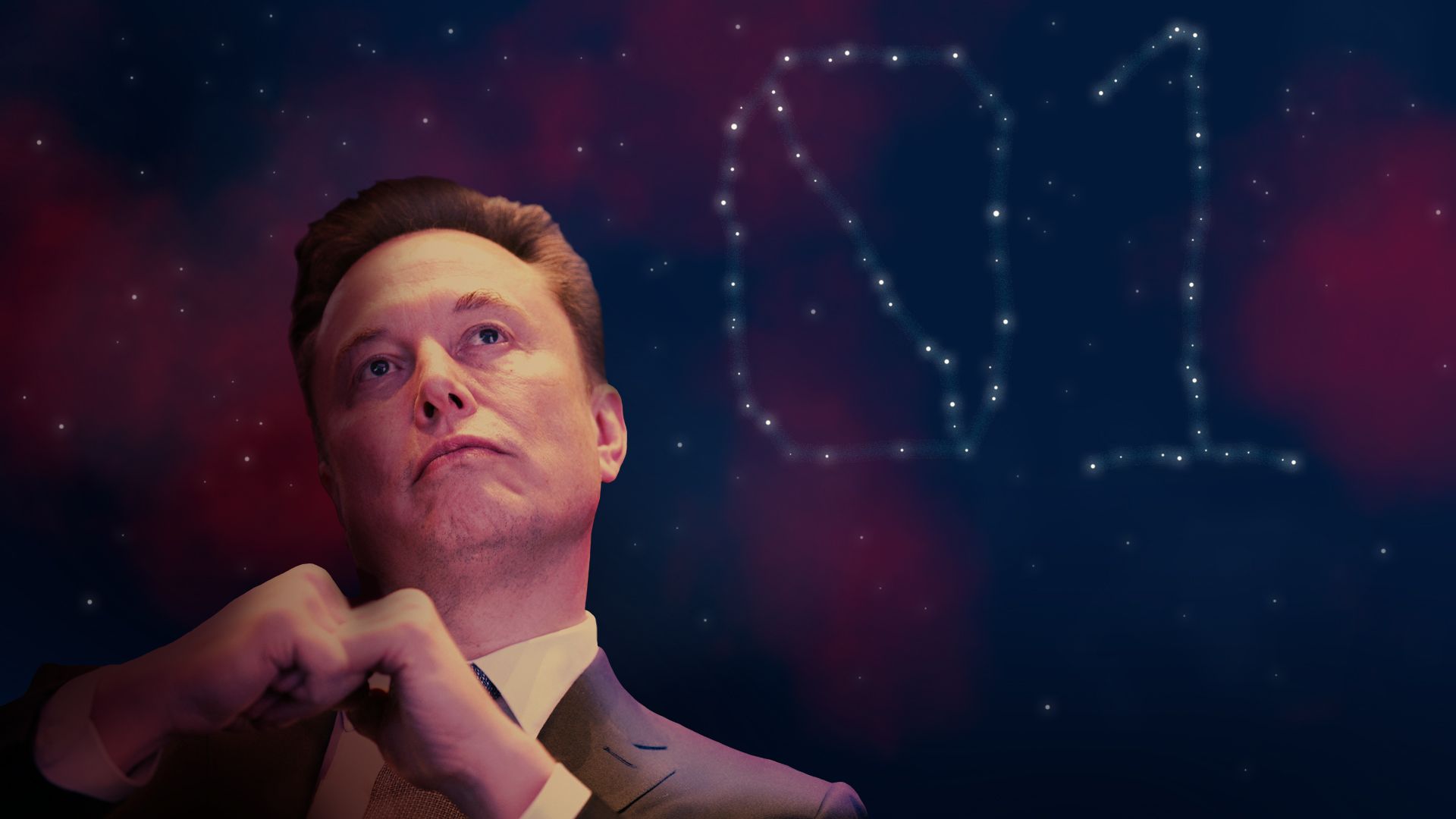
Elon Musk's SpaceXAI is launching Grok 4.5, its smartest model yet, and its first release since going public and acquiring the AI coding startup Cursor.
Why it matters: The new model is being pitched as a coding and agentic-work tool, more than a consumer-facing chatbot — one that Musk says is "maximally truth-seeking" compared to its competitors.
My 1,900-mile road trip last week in an electric vehicle proved it's easily doable, but the charging experience is still not as seamless and convenient as pumping gas.
Why it matters: Driving an EV is delightful. Charging an EV is what gives people anxiety. Until that problem is solved, EV sales in the U.S. will remain lackluster.
Wall Street's sell-side analysts published a slew of bullish reports on SpaceX Tuesday, while cautioning that years of massive investments will be needed to bring Elon Musk's vision for the company to fruition.
Why it matters: These notes are some of the clearest and most well-informed public statements yet on the financial prospects for SpaceX.
A dozen or so people gathered around a table in suburban Washington and were presented with a tense scenario: Someone had detonated a space nuke, American satellites were failing, and fighting in Europe and Asia was intensifying.
How could this happen, they wondered. To whom could the attack be attributed? How quickly could the U.S. repopulate its constellations?
Are world powers in contact? How could they avoid an exchange of intercontinental ballistic missiles? And how were the people back home, not bombed out but very much confused, stomaching crippled GPS and financial markets?
The big picture: While the mental gymnastics were very much real, the world-ending stakes were not. The deliberations were part of a tabletop exercise put on by Fuse, a fusion-energy company.