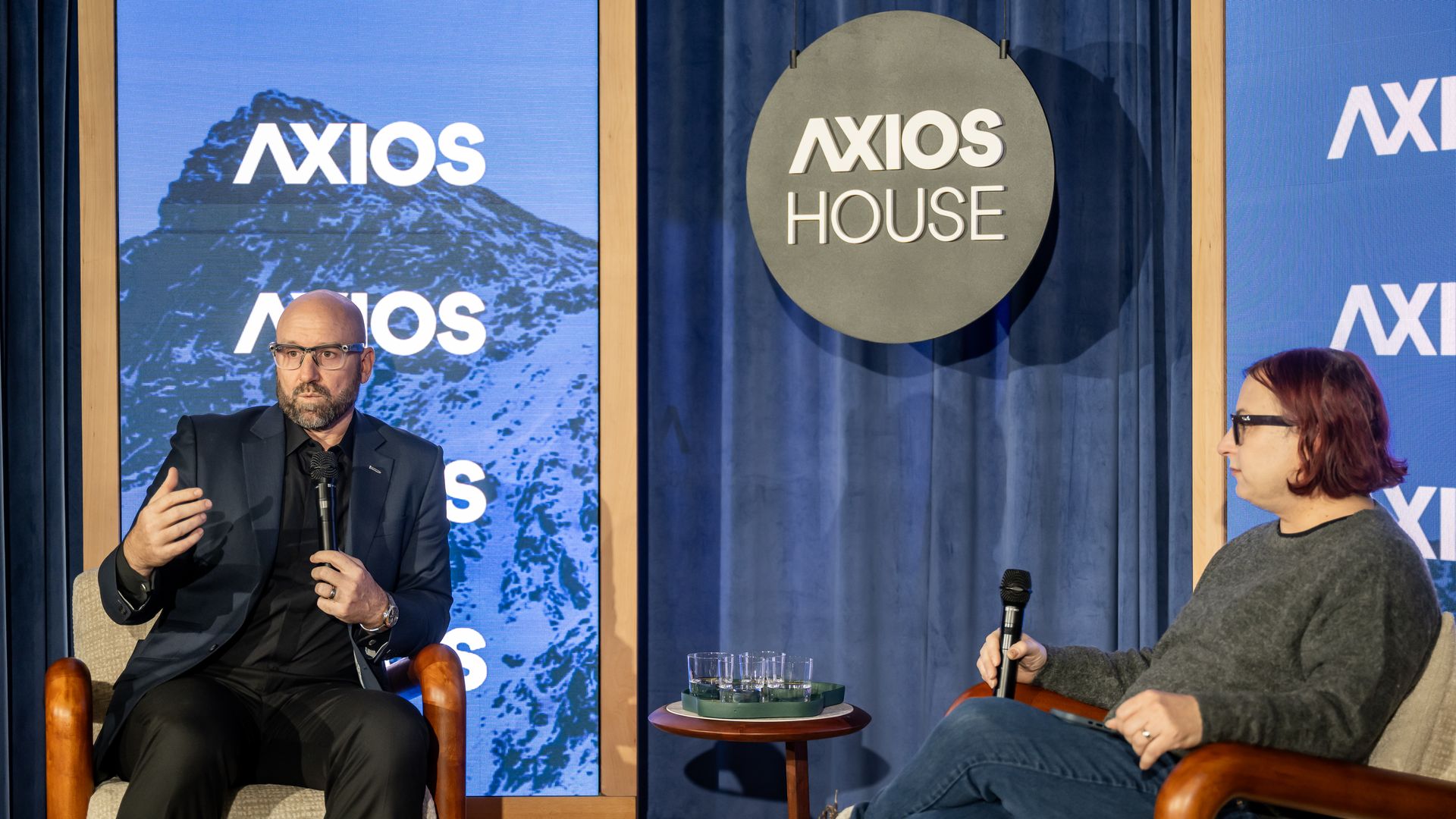
DAVOS, Switzerland — Artificial intelligence is moving to physical devices, transforming how the technology is built and used, according to three executives who spoke at Axios House in Davos.
Why it matters: This shift is likely to unlock economic opportunities globally.
Axios' Mike Allen, Ina Fried and Dave Lawler moderated conversations with Qualcomm Incorporated president and CEO Cristiano Amon, Gecko Robotics co-founder and CEO Jake Loosararian, and Meta president and vice chair Dina Powell McCormick. The Jan. 19 conversations were sponsored by Qualcomm.
What they're saying: "Where AI is going is in the physical realm," Loosararian told Lawler. "It's very important to understand this."
"The countries and the companies that get this quickest and fastest are going to be the ones at an advantage in terms of the margin — the amount — of product, and how safely they're able to do it. Environmentally so as well."
"If you're able to refine petroleum or refine hydrocarbons cheaper with less labor, and we find more of it at less cost, this is a huge advantage as it relates to your country's GDP and its growth and long-term potential."
By the numbers: Physical AI devices like glasses already exceed 10 million units, Amon said.
"I think you're going to very quickly see, when you add all of those devices, they can get to about 100 million devices," he added.
"About 1.2 billion phones get sold every year. If all of us want to have the wearable with access to an agent, that's kind of the order of magnitude [we're looking at], and that's just in [the] consumer" market.
Yes, but: All this power is going to require massive compute, and that means new data centers.
"I also do think [about] these investments — massive investments — across communities, and being very careful to not upend those communities but to respect and listen to local residents," Powell McCormick said to Allen.
"My dream will be to maybe be able to say one day that small businesses are the builders of data centers across the country."
Wall Street strategists busted into 2026 overwhelmingly bullish, with one big caveat: AI had to deliver measurable returns this year.
Why it matters: Two weeks in, investors are getting their wish, as Alphabet is lending its AI horsepower to several companies, while much of its risk is in the rearview.
Meta CTO Andrew Bosworth compared the massive investments into AI to the railroad boom in the 19th century: some companies will go bust, but consumers will benefit.
Why it matters: "You're getting a ton of private capital building out a bunch of investment that will be useful to us," Bosworth said Tuesday at Axios House Davos. But among the companies racing to develop AI — a race Meta itself is very much involved in — "there will be winners and losers."
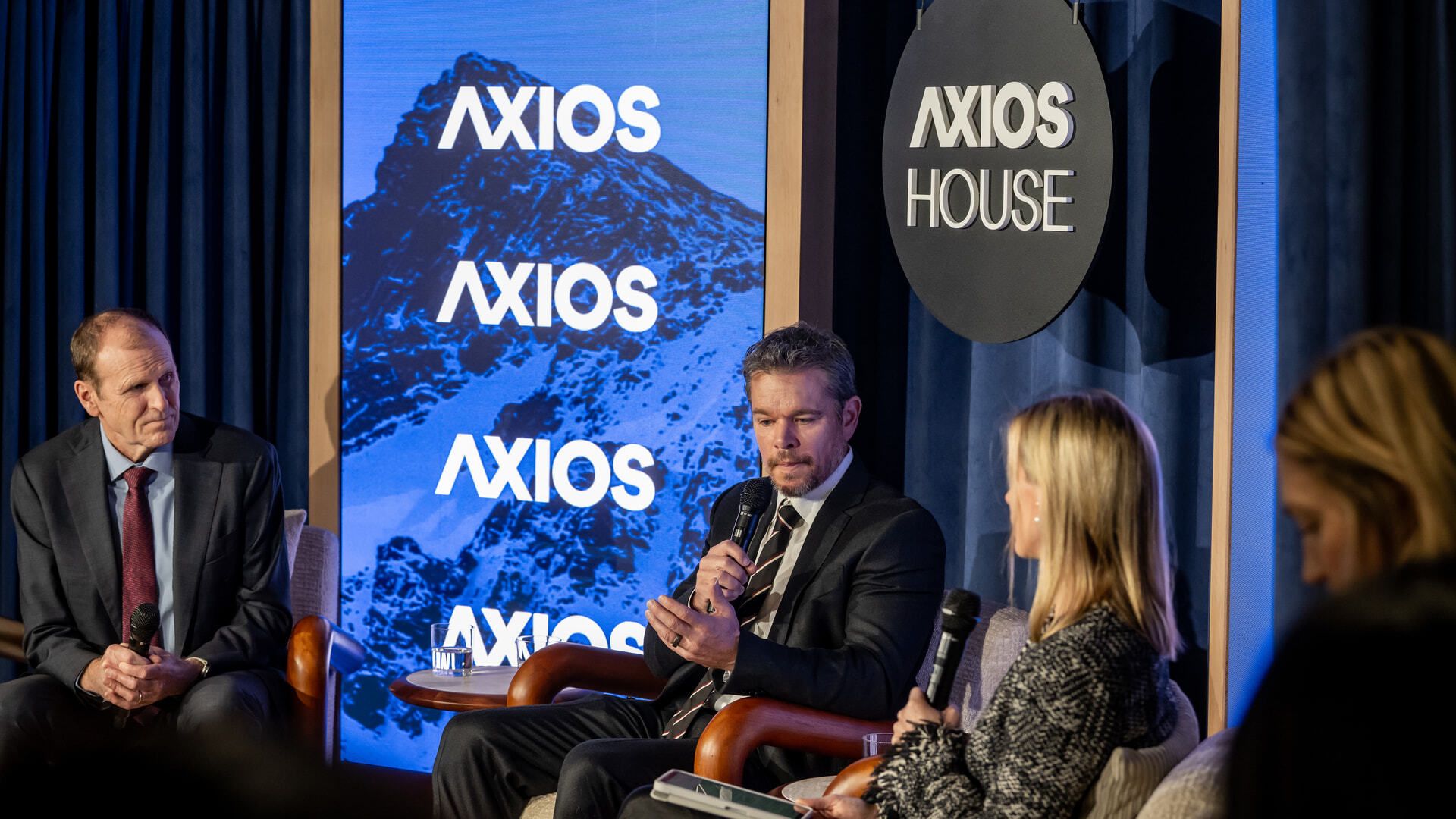
Actor Matt Damon is in Davos to recruit more corporate partners for his water access nonprofit, pronouncing on stage at Axios House, "We're trying to raise an army."
The big picture: Damon decided about 20 years ago to devote "all my time and energy" to increasing access to clean water after learning about the scale of the challenge and how it compounded so many other issues. That led to co-founding Water.org.
Elon Musk and his SpaceX team believe they've cracked the code on building orbiting data centers to power the future of AI — and plan to use the company's upcoming public offering to help fund the audacious vision, according to people briefed on the plans.
Why it matters: Musk and top executives at other AI giants believe that earthbound data centers will become politically toxic and less efficient than space, which they see as the inevitable answer.