The latest in a series of severe heat waves to affect the West continues Monday, although conditions are not expected to be quite as extreme as they were during the weekend.
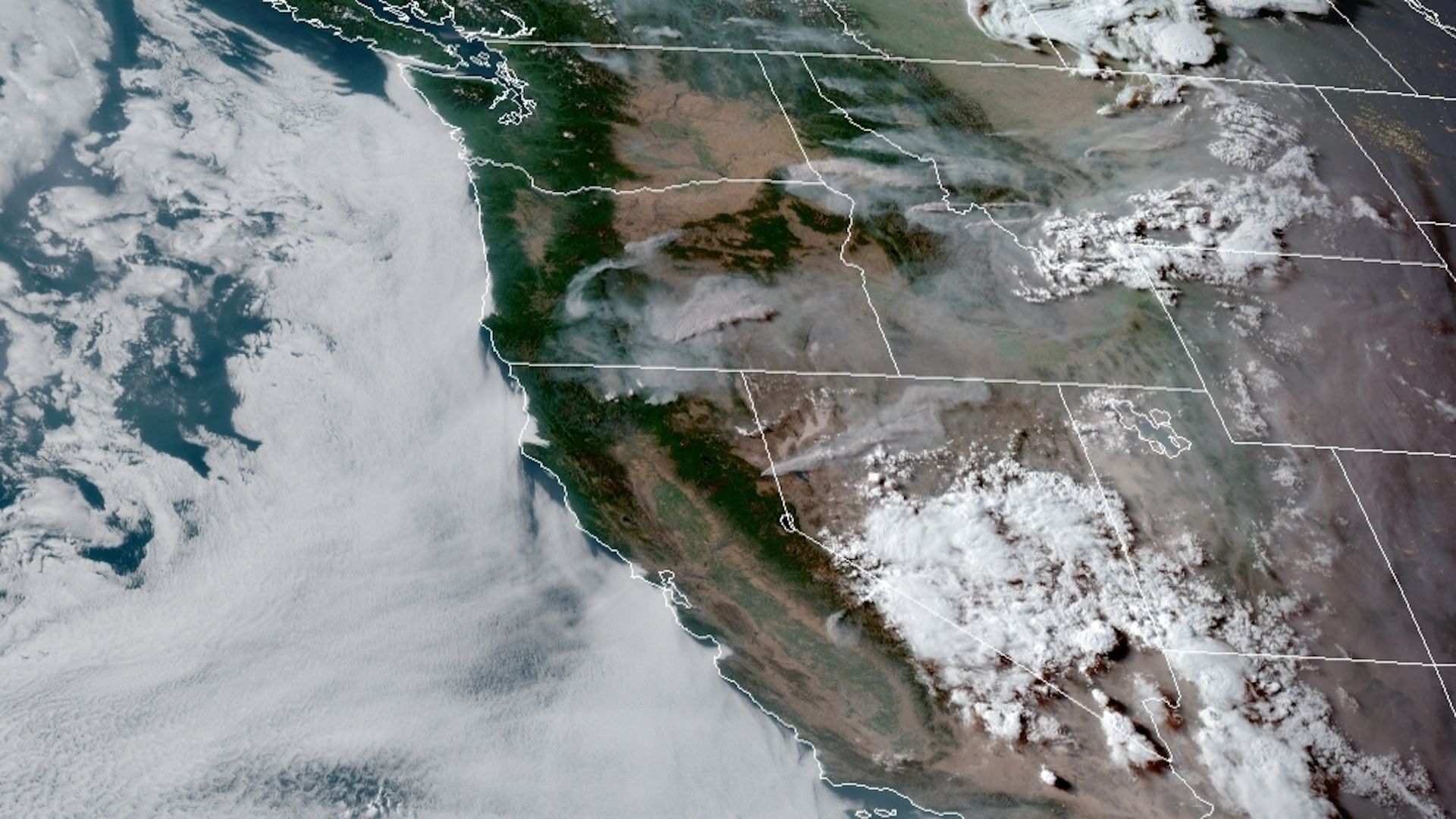
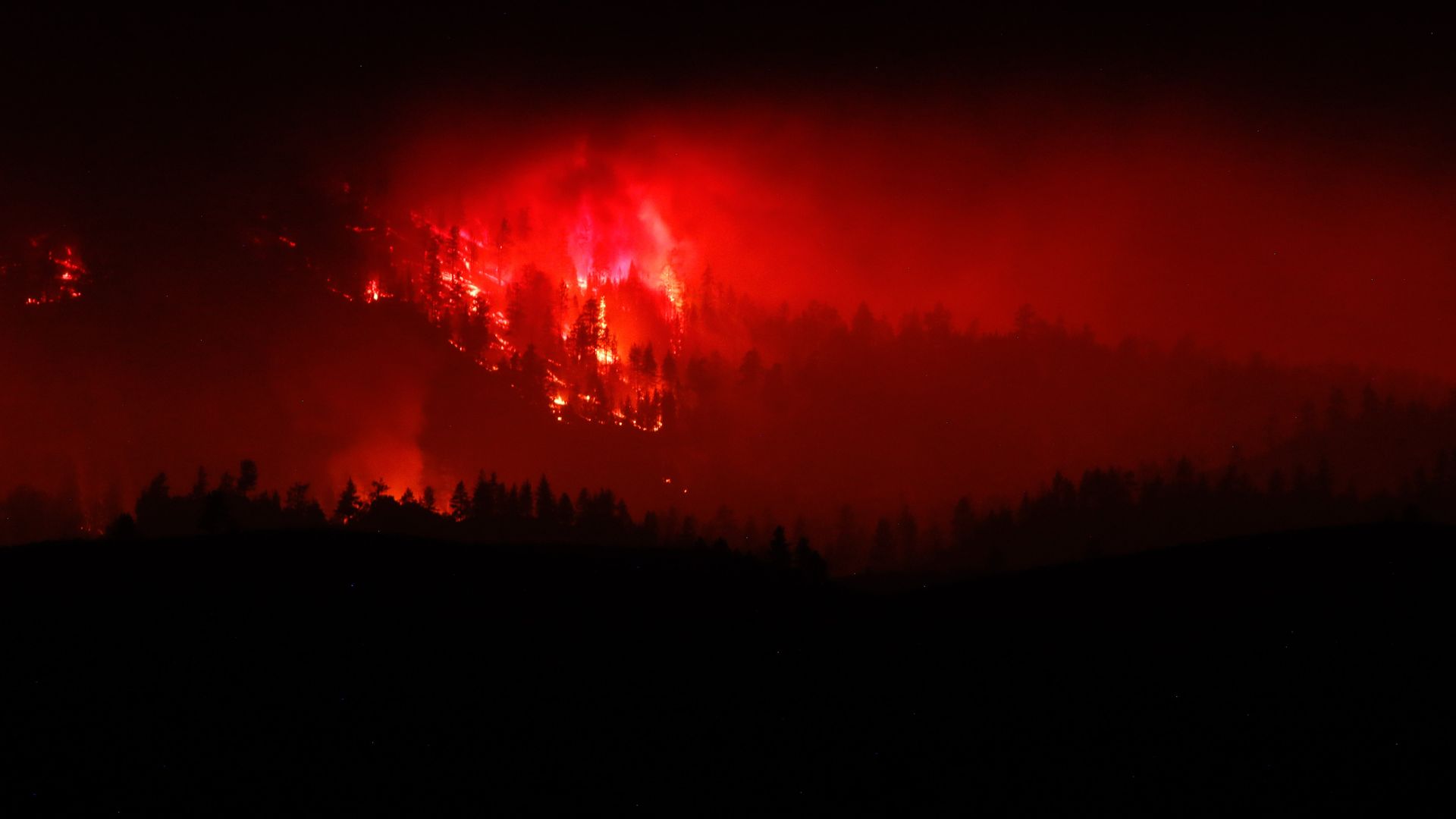
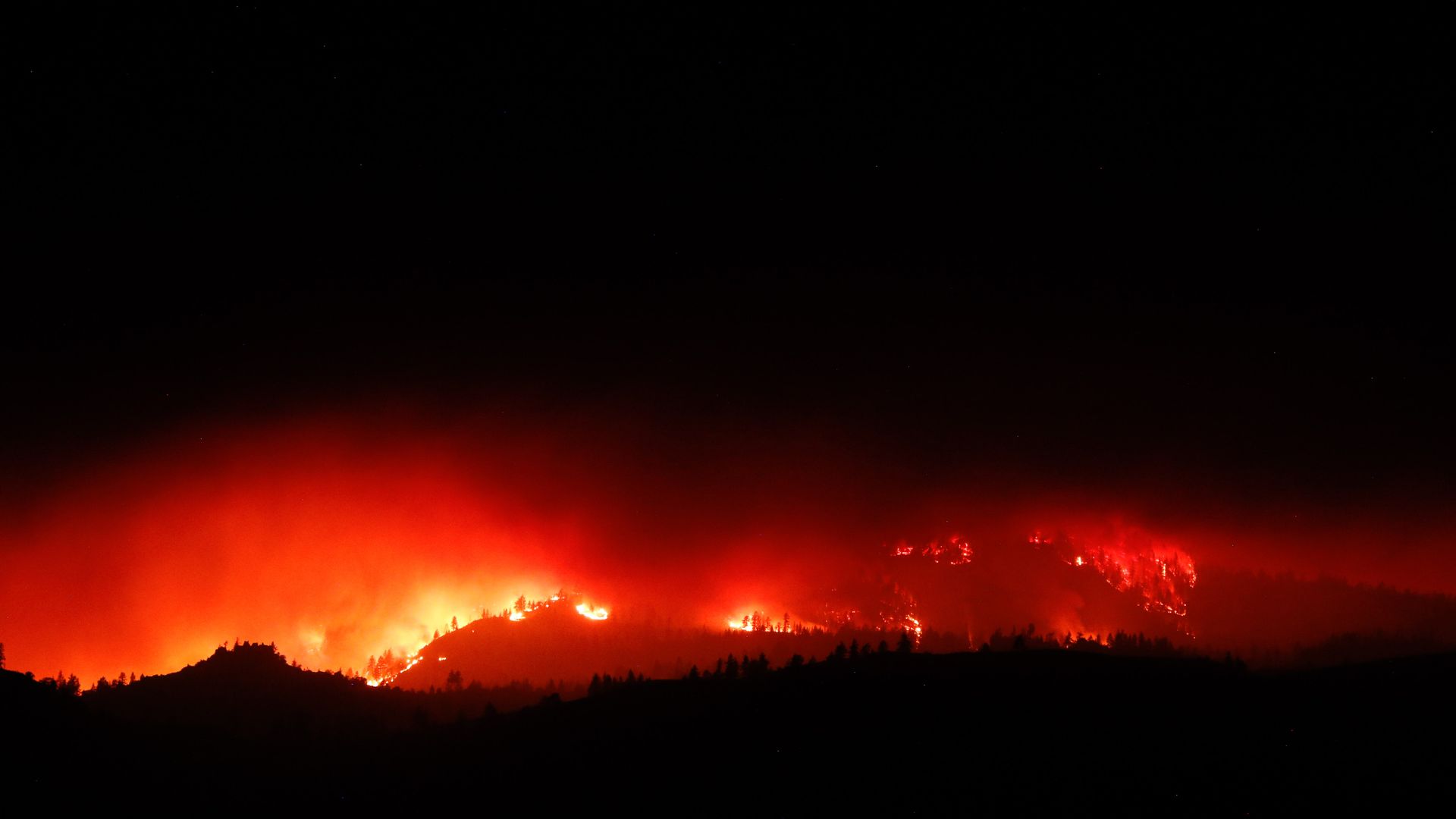
The big picture: The heat, combined with a deepening drought and lightning strikes, has set more than 1 million acres of land in California, Oregon, Washington, and Canada ablaze, with smoke obscuring the skies thousands of miles away.
Wildfires were burning across more than 768,000 acres of land in 12 western U.S. states, and over 500,000 acres in Canada on Sunday amid another searing heat wave.
Driving the news: Many of the wildfires started when a severe heat wave erupted in June and lasted into July, first hitting southwestern British Columbia before migrating eastward.
About 30 million people are under excessive heat warnings or advisories as a heat wave sweeps the Western United States, bringing more record-high temperatures on Sunday, according to the National Weather Service.
Why it matters: The heat wave comes after some regions in the Pacific Northwest saw temperature records shattered last month, with the same "heat dome" weather pattern that is engulfing the West now. Human-caused climate change has exacerbated the frequency, severity and intensity of these extreme heat events.
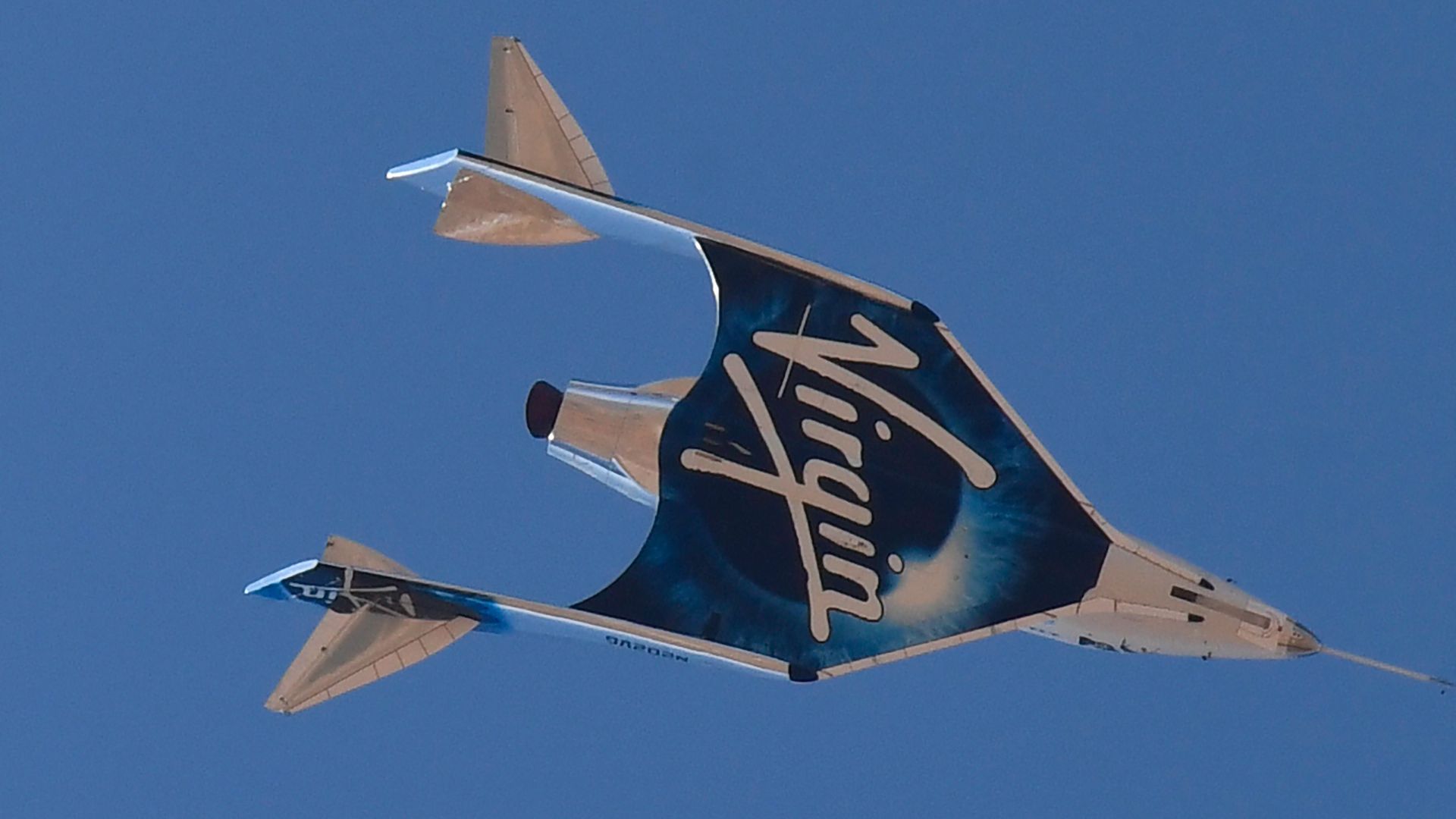
Billionaire Richard Branson flew on a suborbital mission to the edge of space with his company, Virgin Galactic, on Sunday, beating fellow space billionaire Jeff Bezos to the punch in the process.
Why it matters: This very public moment of success could help buoy the company as it pushes to begin commercial service next year and attract new customers.
More than 30 million Americans were under excessive heat warnings or advisories across the West on Saturday, as forecasters warned of more record high temperatures.
Of note: McCarran International Airport tied Las Vegas' all-time record highest temperature of 117°F on Saturday evening, per a National Weather Service statement. Flights were canceled at the airport Friday as the temperature hit 116°F.