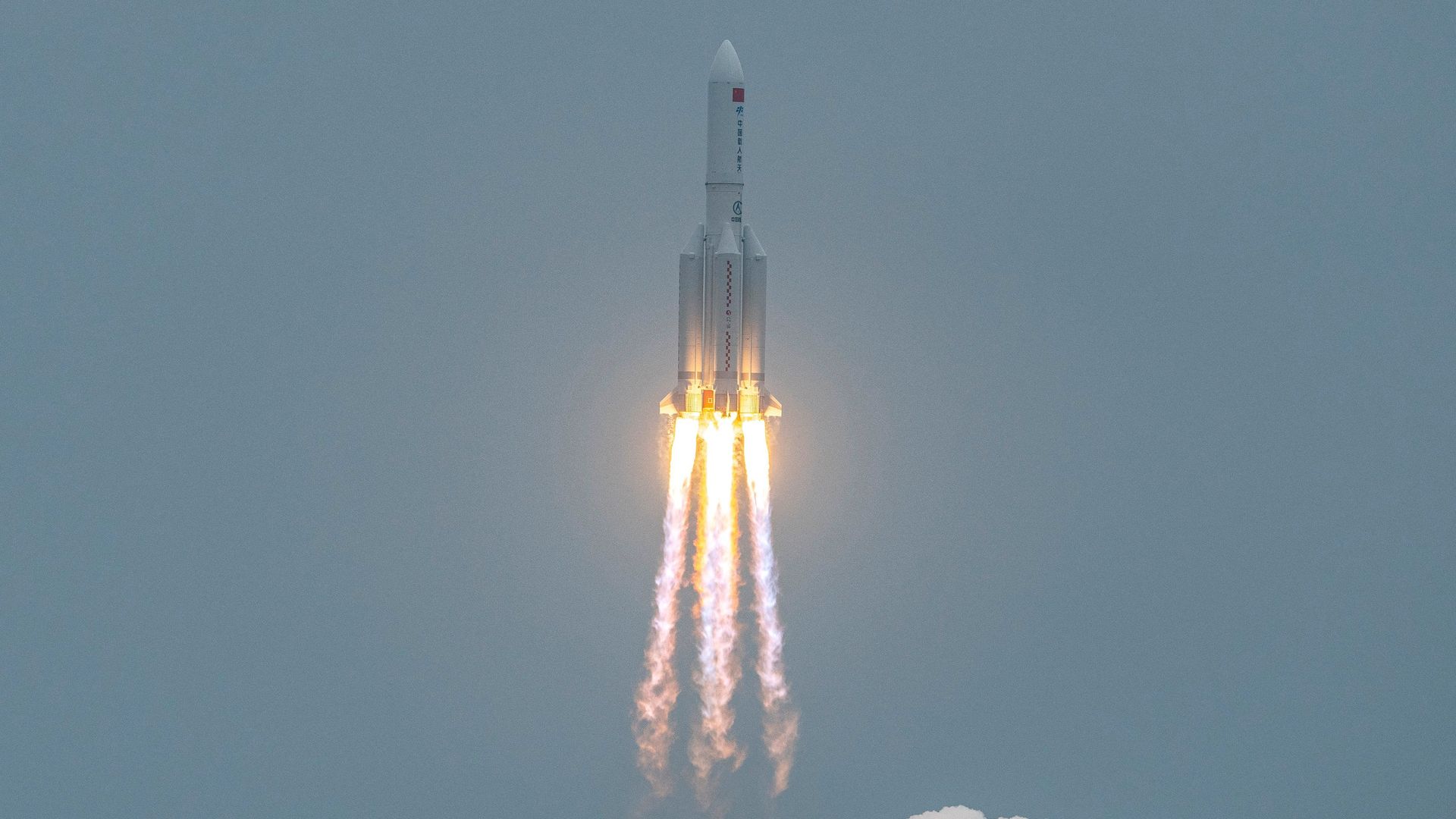
A massive booster rocket from a Chinese Long March 5B launch vehicle is expected to fall back to Earth in an "uncontrolled reentry" this weekend, though experts don't really know where debris from the rocket will land.
The state of play: China's space agency has said it expects most of the rocket to burn up in Earth's atmosphere. The chance of debris from the rocket actually landing in a populated area is low — but there is still a chance.
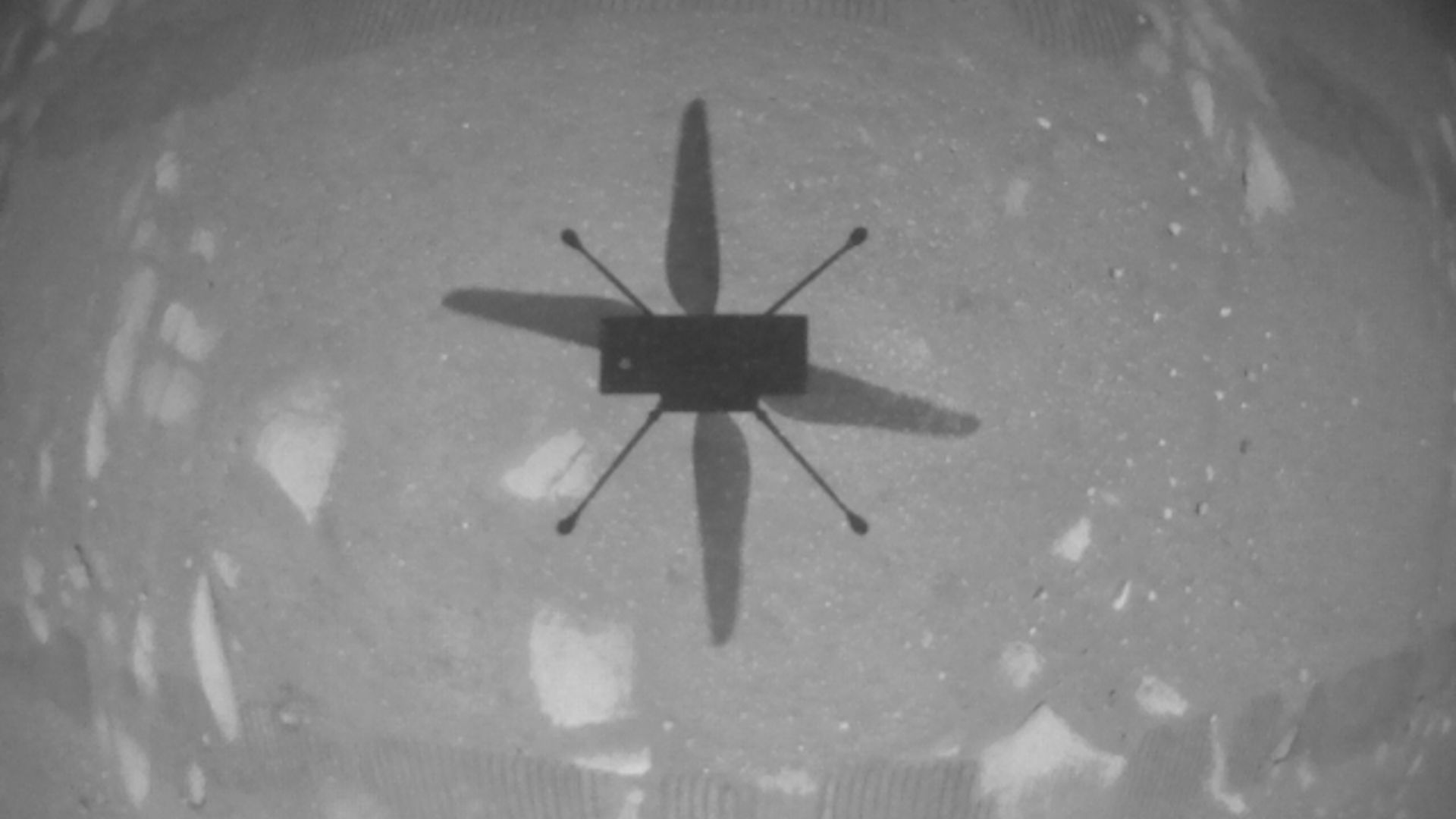
NASA's Perseverance rover captured the humming sounds of the tiny Ingenuity helicopter flying above the Martian surface.
Why it matters: By recording sound on Mars, scientists will be able to learn more about how the Martian atmosphere works and potentially diagnose problems with Perseverance, should they pop up.
Slow global COVID-19 vaccination rates are raising concerns that worse variants of the coronavirus could be percolating, ready to rip into the world before herd immunity can diminish their impact.
Why it matters: The U.S. aims to at least partially vaccinate 70% of adults by July 4, a move expected to accelerate the current drop of new infections here. But variants are the wild card, and in a global pandemic where only about 8% of all people have received one dose, the virus will continue mutating unabated.
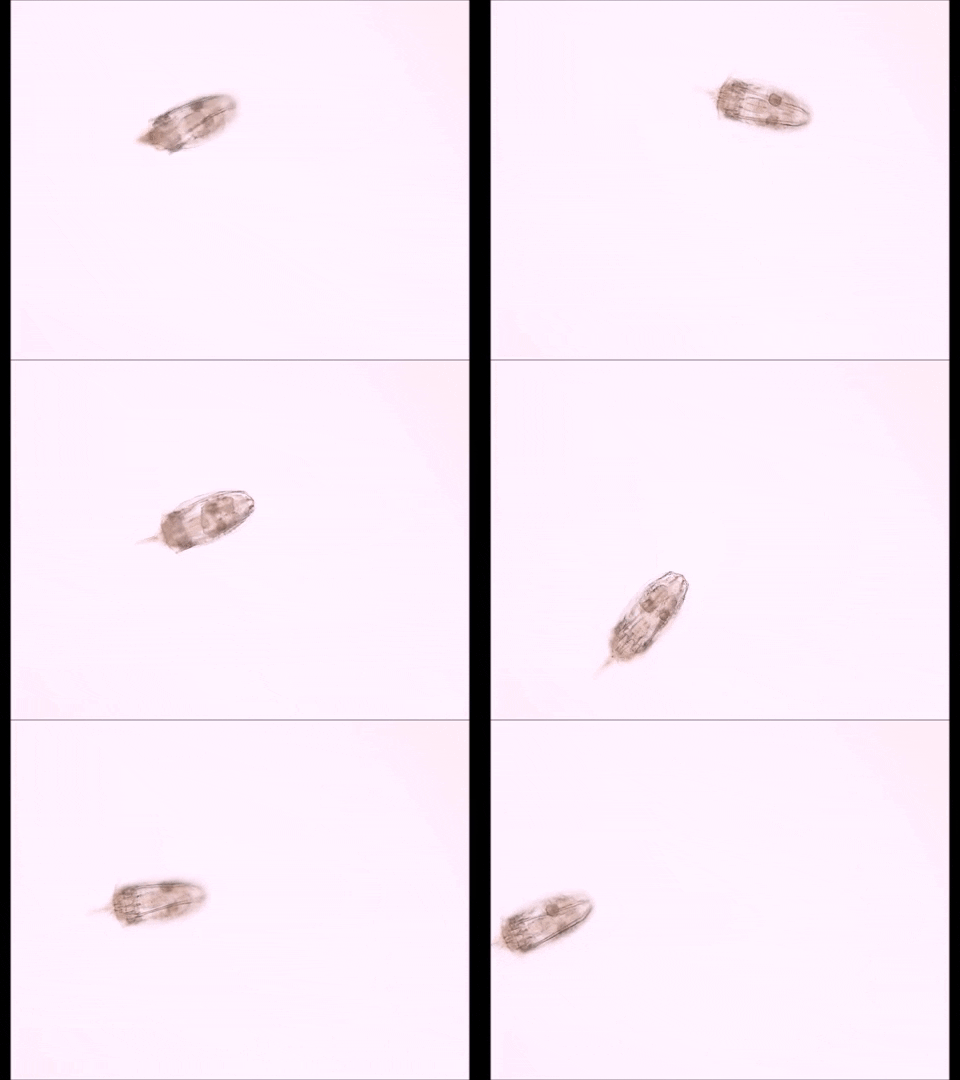
The space between sand and sedimentat the bottom of the sea is home to tiny animals called loriciferans. This week researchers describe three new species of the animals found off the coast of France.
The big picture: These minute animals are part of a lesser known group of fauna in the oceans whose role in the ecosystem is largely understudied.