NASA's little Ingenuity helicopter on Mars will have to wait a bit longer to take to the Martian skies for the first time after a problem was detected during a test last week.
Why it matters: If the eventual flight is successful, this will mark the first time an aircraft has flown on a world other than Earth, opening the door to a new type of planetary exploration.
Scientists have discovered the three fastest spinning "failed stars" yet found, suggesting there might be a speed limit to how fast they can rotate.
The big picture: These objects — called brown dwarfs — are thought to be "failed stars" that didn't collect enough mass to ignite fusion in their cores needed to be considered a star and too large to be a gas giant planet like Jupiter.
In the run-up to the White House's virtual climate summit on April 22-23, environmental groups and now major corporations are presenting a united front in calling for at least a 50% cut in U.S. greenhouse gas emissions by 2030, when compared to 2005 levels.
Why it matters: The 2030 targets are needed since the world is on course to sail above the warming targets set in place by the Paris Climate Agreement, resulting in potentially catastrophic climate impacts. These include the loss of much of the world's coral reefs and melting of some of the planet's largest ice sheets.
As humanity stretches into orbit and beyond, experts are still grappling with how rights afforded to workers on Earth apply to those living in space.
Why it matters: In order to create businesses and perhaps societies in space — where the biological necessities for sustaining human life, like air and water, aren't readily available — there will need to be fundamental rights agreements to guarantee laborers aren't exploited.
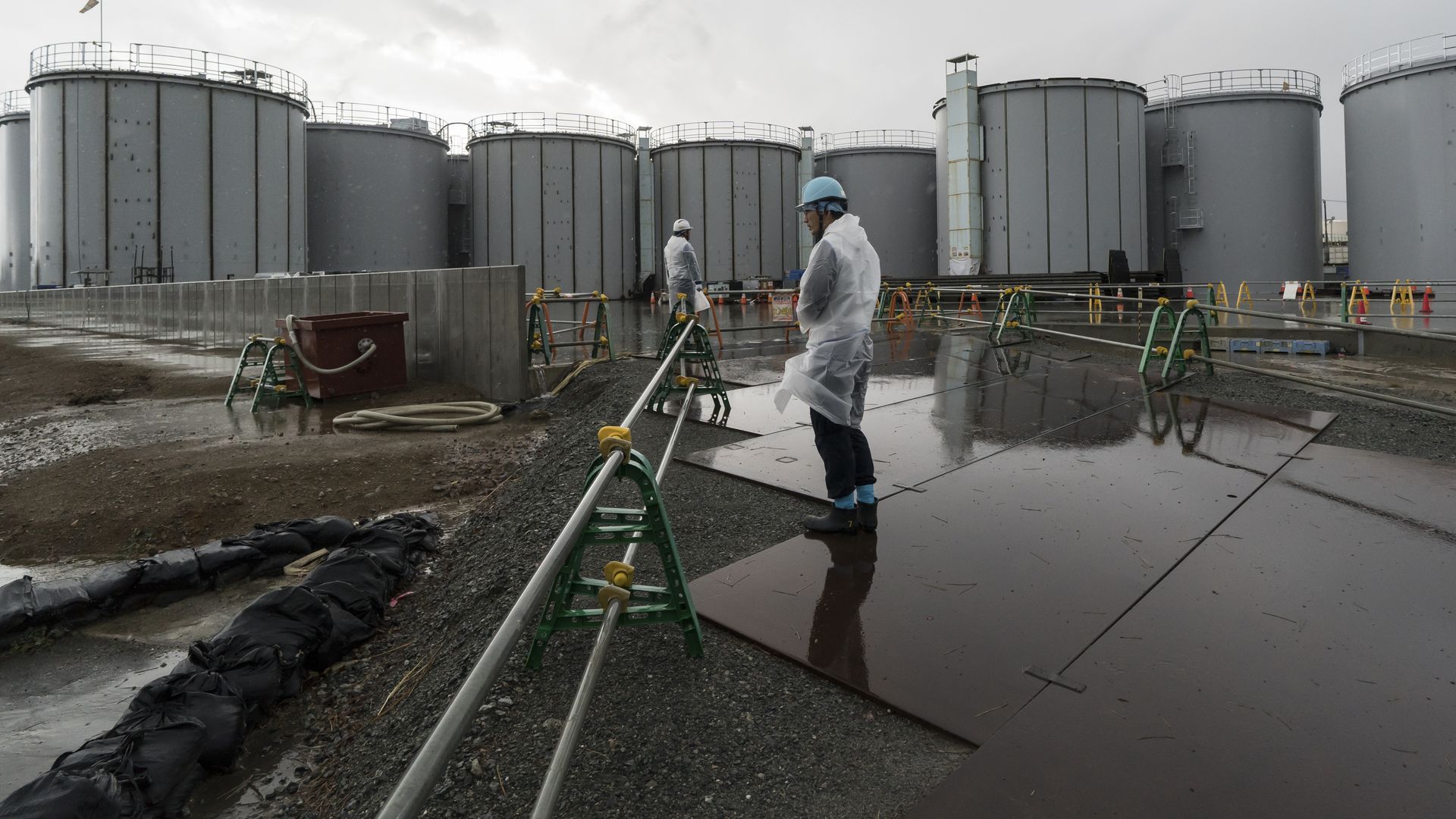
Japan's government on Tuesday announced plans to release more than 1 million metric tons of contaminated water from the destroyed Fukushima nuclear plant into the Pacific Ocean following a treatment process.
Why it matters: While the Biden administration has said Japan appears to have met globally accepted nuclear safety standards, officials in South Korea, China and Taiwan, local residents, those in the fishing industry and green groups oppose the plans, due to begin in about two years, per the Guardian.
A new report out later today concludes that basic scientific research plays an essential rolein creating companies that later produce thousands of jobs and billions in economic value.
Why it matters: The report uses thepandemic — and especially the rapid development of new mRNA vaccines — to show how basic research funding from the government lays the necessary groundwork for economically valuable companies down the road.