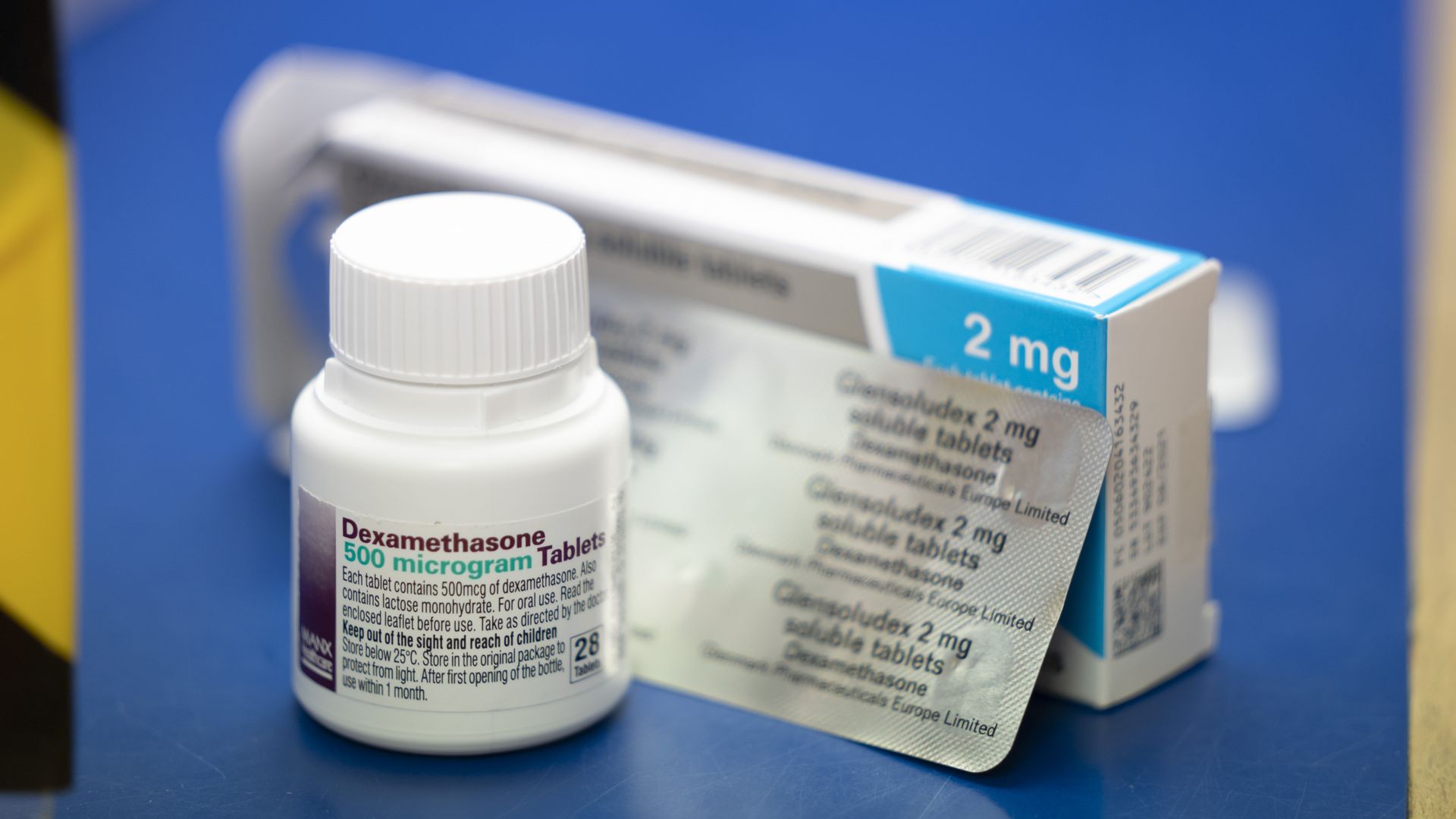
Data from seven studies with about 1,700 seriously ill COVID-19 patients found that corticosteroids reduce mortality by about one-third, according to analysis published Wednesday in JAMA.
Why it matters: Corticosteroids, which are anti-inflammatory drugs, could likely be a low-cost, first line of defense for critically ill coronavirus patients.
A group of 81 Nobel Prize winners endorsed Joe Biden for president, reports CNN.
Why it matters: They cited Biden's "deep appreciation for using science to find solutions" in the letter — which it highlighted as particularly important during the coronavirus pandemic.
The space industry has always accepted some level of risk and failure, but as the commercial space industry matures, companies are using failure to their advantage to try to help their businesses succeed.
Why it matters: By taking on more risk and pushing their systems to the limits, space companies may be able to reach ambitious goals — like building a city on Mars or mining the Moon for resources.
Scientists have spotted pairs of quasars — supermassive black holes feeding on huge amounts of material — in merging galaxies light-years from our own.
Why it matters: By learning more about these types of rare mergers, scientists may be able to piece together details about how galaxies grow and evolve over billions of years.
United Launch Alliance CEO Tory Bruno believes humanity's push to explore the solar system could one day reduce poverty on Earth.
Why it matters: ULA is the workhorse of the space industry, with a high rate of success for the rockets it flies and big government and commercial contracts. It is well-positioned to one day act as the ride for companies and nations hoping to push farther into deep space.
Executives at weather news companies tell Axios that the coronavirus pandemic has forever changed the way they cover the weather.
The state of play: Reporters are forced to address new safety threats in the field. Meteorologists need to evaluate new weather factors that impact COVID-19. News executives need to consider the impact of weather on new consumer habits, like daily walks and home-schooling during quarantine.
Eli Lilly CEO David Ricks, whose company has a coronavirus treatment in Phase 3 of clinical trials, told "Axios on HBO" that it'd be smart to share with other countries rather than going America first.
The big picture: 66% of Americans don't want to share a vaccine right away with the rest of the world if the U.S. gets there first, according to a recent Harris poll, Axios' Sam Baker reported last week.


/2020/09/02/1599015346216.gif?w=3840)