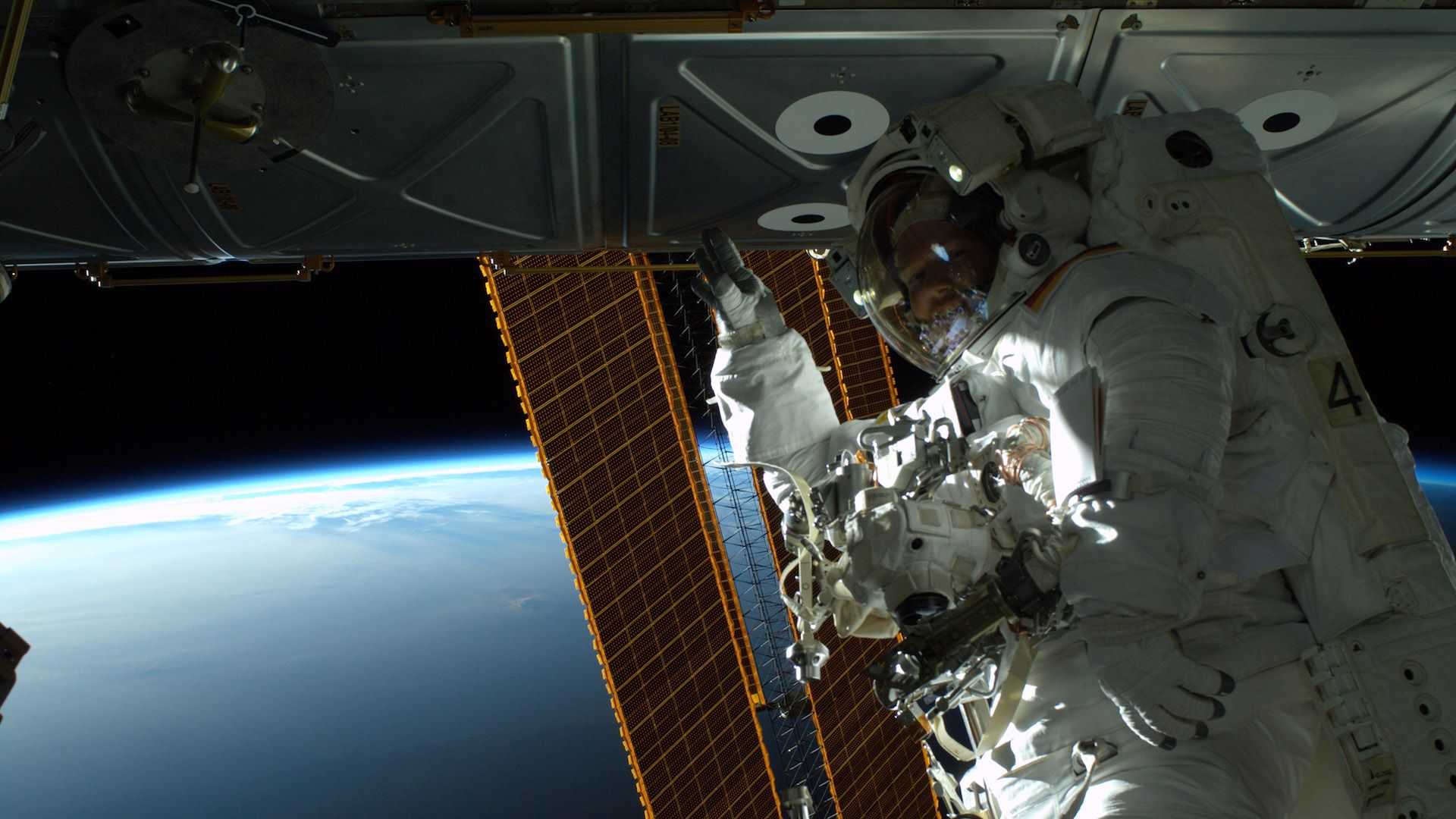
Private companies and tourists will have to pay a pretty penny if they hope to fly people to the International Space Station (ISS) under NASA's new plan to further open the station up to private industry.
Why it matters: NASA wants to stimulate the growth of the private space industry using the ISS, but the agency won't give away its resources for free. NASA is expecting private spaceflight companies and private astronauts using the ISS to reimburse them for their services in orbit.
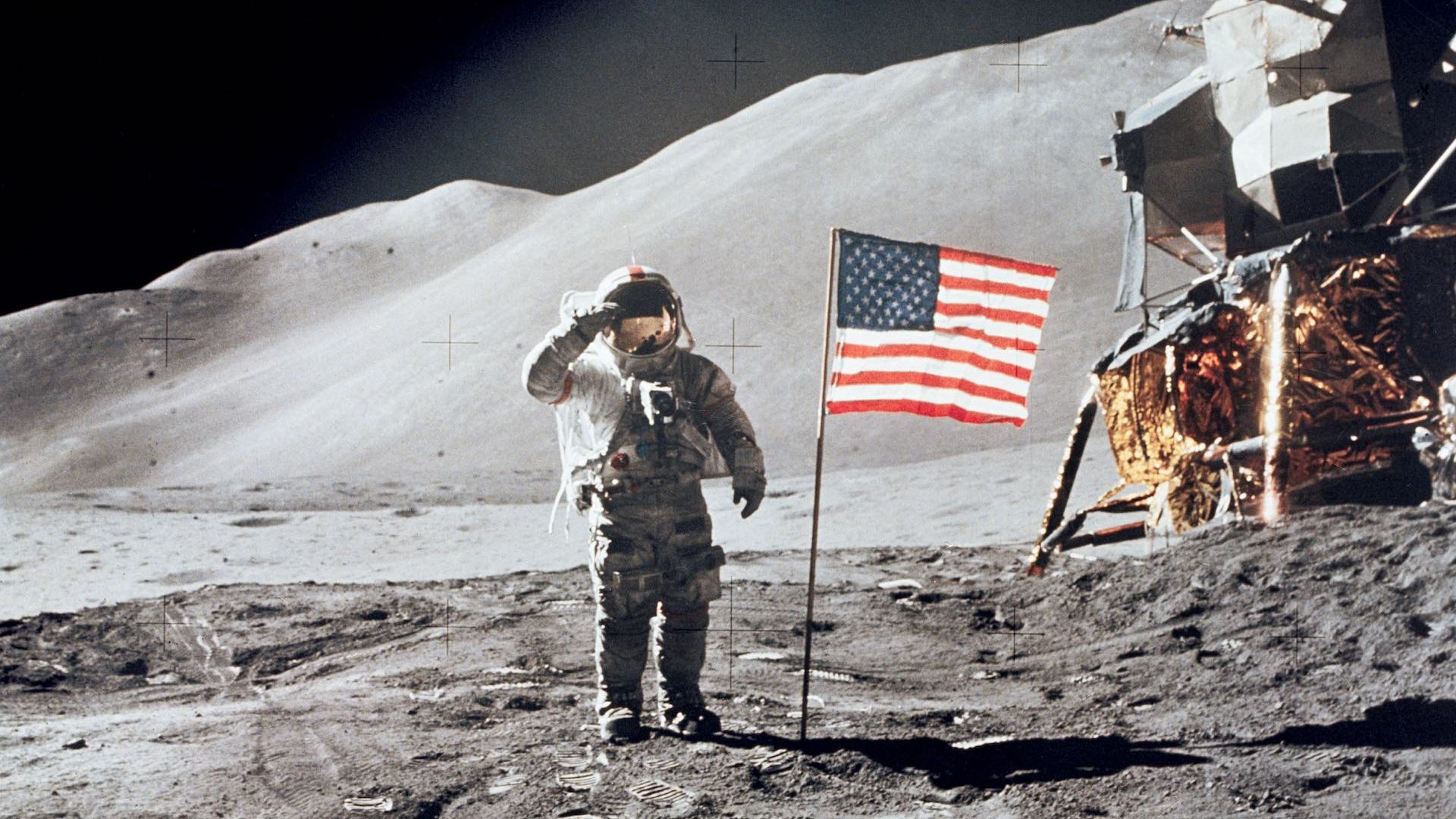
President Trump signaled he may be souring on his administration's stated plan to return humans to the Moon by 2024 —4 years earlier than NASA had previously planned, in a tweet on Friday.
Why it matters: In order to meet the administration's aggressive timetable, the space agency needs focus and resources. Presidential tweets such as this one, in which Trump said the administration should not be playing up its moon mission, can cause confusion and sap morale for those working on this project.
NASA is moving to expand its privatization of the International Space Station and bring more commercial activities to low-Earth orbit, freeing up the space agency to focus on returning to the moon by 2024 and ultimately proceeding to Mars, the agency announced Friday in New York.
Why it matters, per Axios space reporter Miriam Kramer: NASA believes that its resources would be better used with deep space missions. By moving into a customer role in Earth’s orbit instead of providing services, it could free the agency up for more of that cutting-edge exploration.
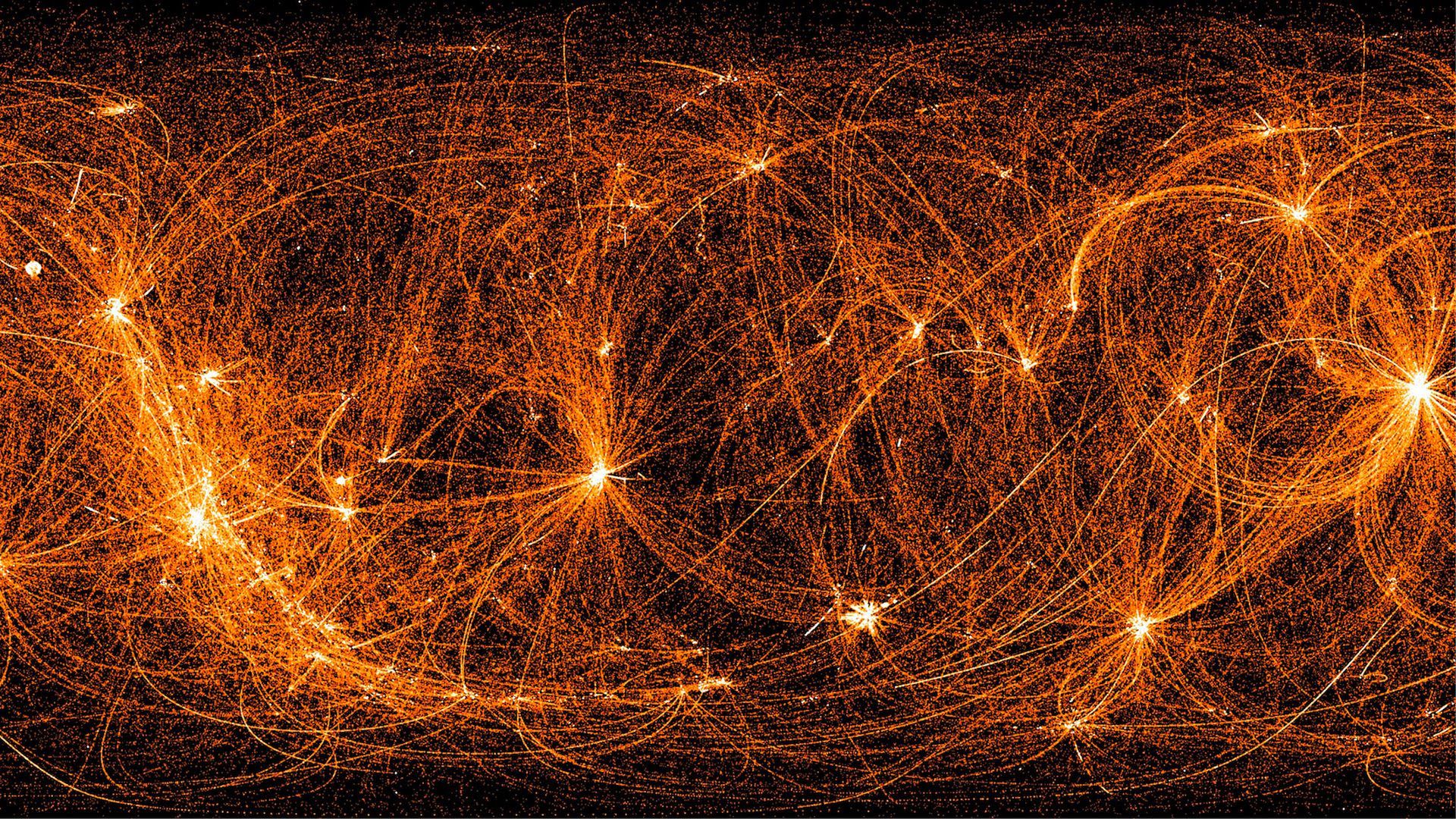
This image, which at first might strike you as a visualization of global flights or shipping traffic, is actually far more otherworldly. In fact, this is a map of the entire sky in X-rays, as recorded by NASA's Neutron star Interior Composition Explorer (NICER), aboard the International Space Station.
Why it matters: NICER's imagery could one day result in a navigation system that would allow spacecraft to navigate autonomously using an X-ray-based map of the solar system.
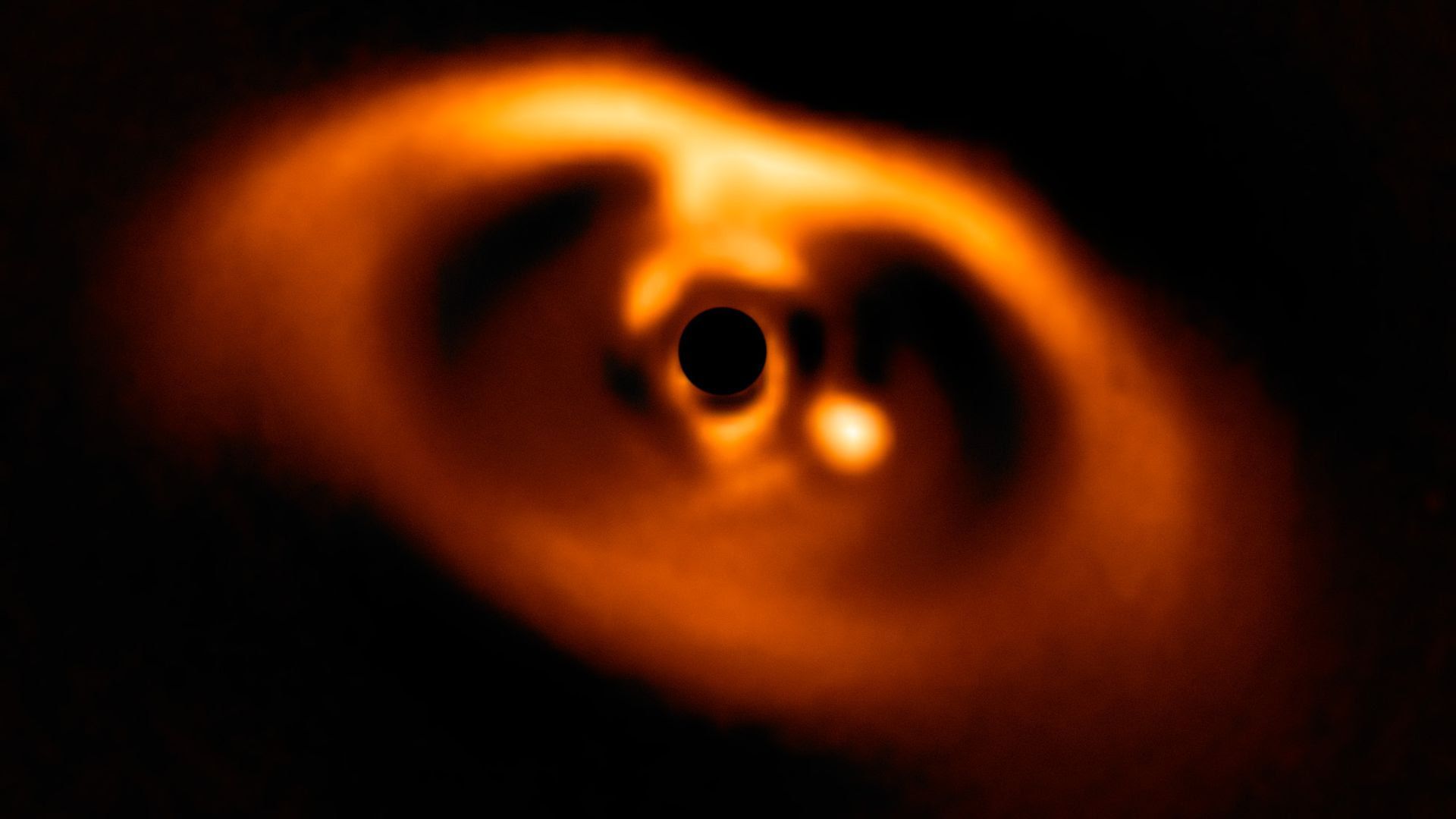
For the first time, scientists have caught sight of a ring of dust and debris around a planet as it forms. The new results were published this week in the journal Astrophysical Journal Letters, and they shed light on the process of planetary formation.
Why it matters: The disk surrounding the planet — named PDS 70 b — is viewed as a sign that moons could form around it, which is estimated to be about 4–17 times more massive than Jupiter.
Unrelenting rains catapulted May to the second-wettest month on record in the U.S., leaving vast tracts of farmlands flooded across the nation's midsection, and jeopardizing this year's corn crop.
The big picture: The May precipitation total for the Lower 48 states was 4.41 inches, which was 1.5 inches above average, according to the National Oceanic and Atmospheric Administration (NOAA). The past 12 months have been the wettest such period on record for the Lower 48 since such records began in 1895, with rains especially concentrated in the Midwest, Plains and Northeast.