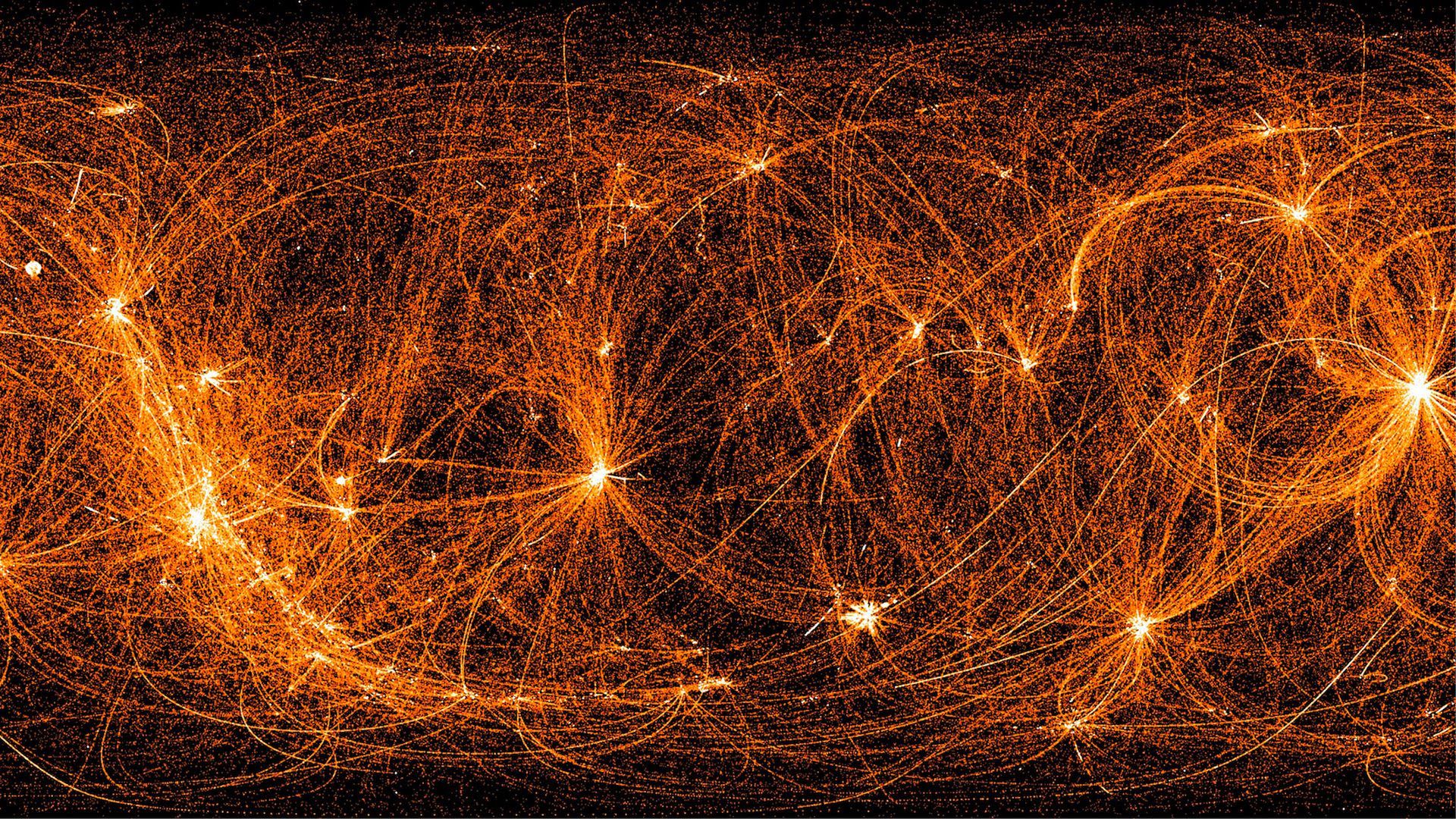
This image, which at first might strike you as a visualization of global flights or shipping traffic, is actually far more otherworldly. In fact, this is a map of the entire sky in X-rays, as recorded by NASA's Neutron star Interior Composition Explorer (NICER), aboard the International Space Station.
Why it matters: NICER's imagery could one day result in a navigation system that would allow spacecraft to navigate autonomously using an X-ray-based map of the solar system.
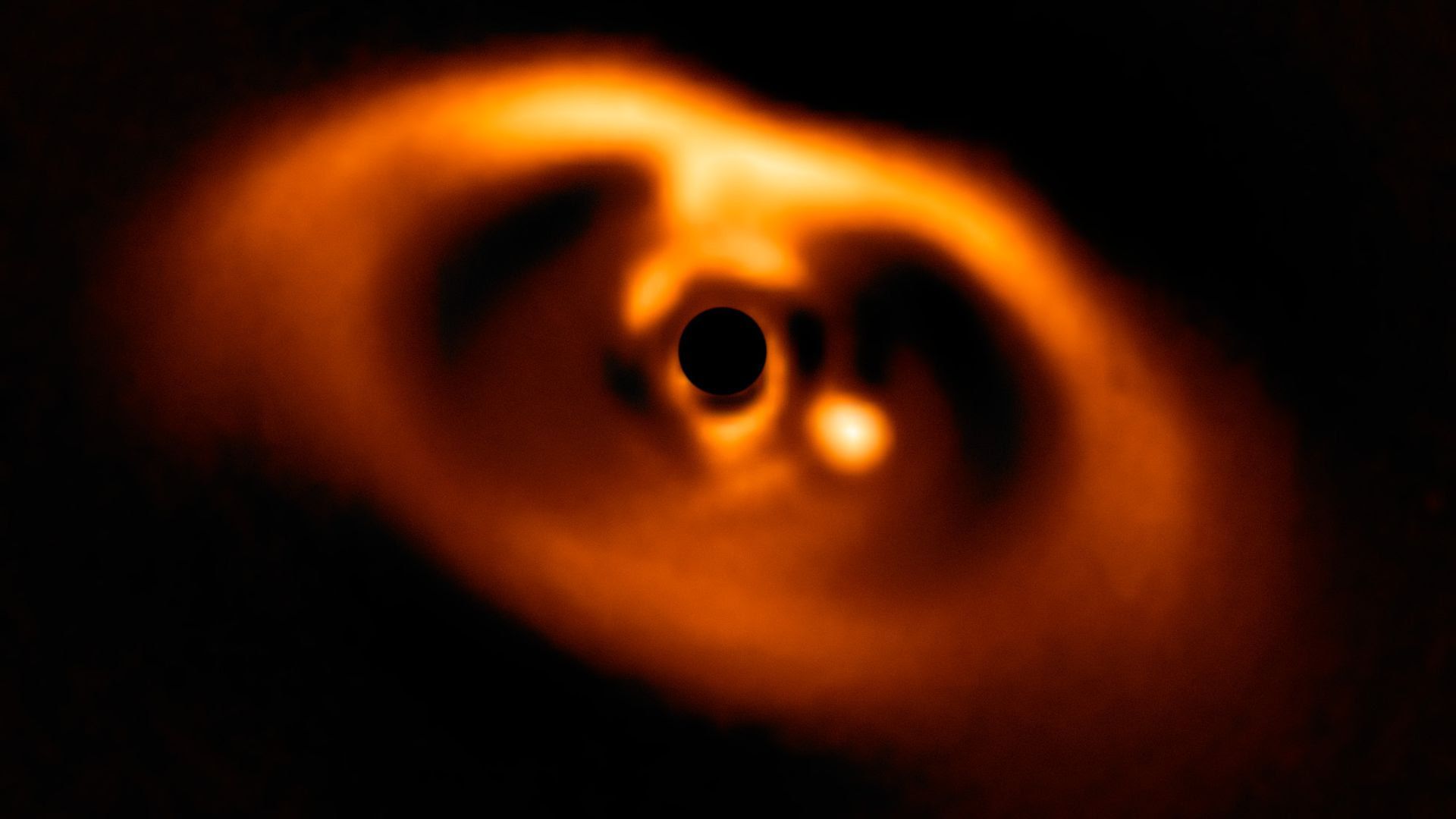
For the first time, scientists have caught sight of a ring of dust and debris around a planet as it forms. The new results were published this week in the journal Astrophysical Journal Letters, and they shed light on the process of planetary formation.
Why it matters: The disk surrounding the planet — named PDS 70 b — is viewed as a sign that moons could form around it, which is estimated to be about 4–17 times more massive than Jupiter.
Unrelenting rains catapulted May to the second-wettest month on record in the U.S., leaving vast tracts of farmlands flooded across the nation's midsection, and jeopardizing this year's corn crop.
The big picture: The May precipitation total for the Lower 48 states was 4.41 inches, which was 1.5 inches above average, according to the National Oceanic and Atmospheric Administration (NOAA). The past 12 months have been the wettest such period on record for the Lower 48 since such records began in 1895, with rains especially concentrated in the Midwest, Plains and Northeast.
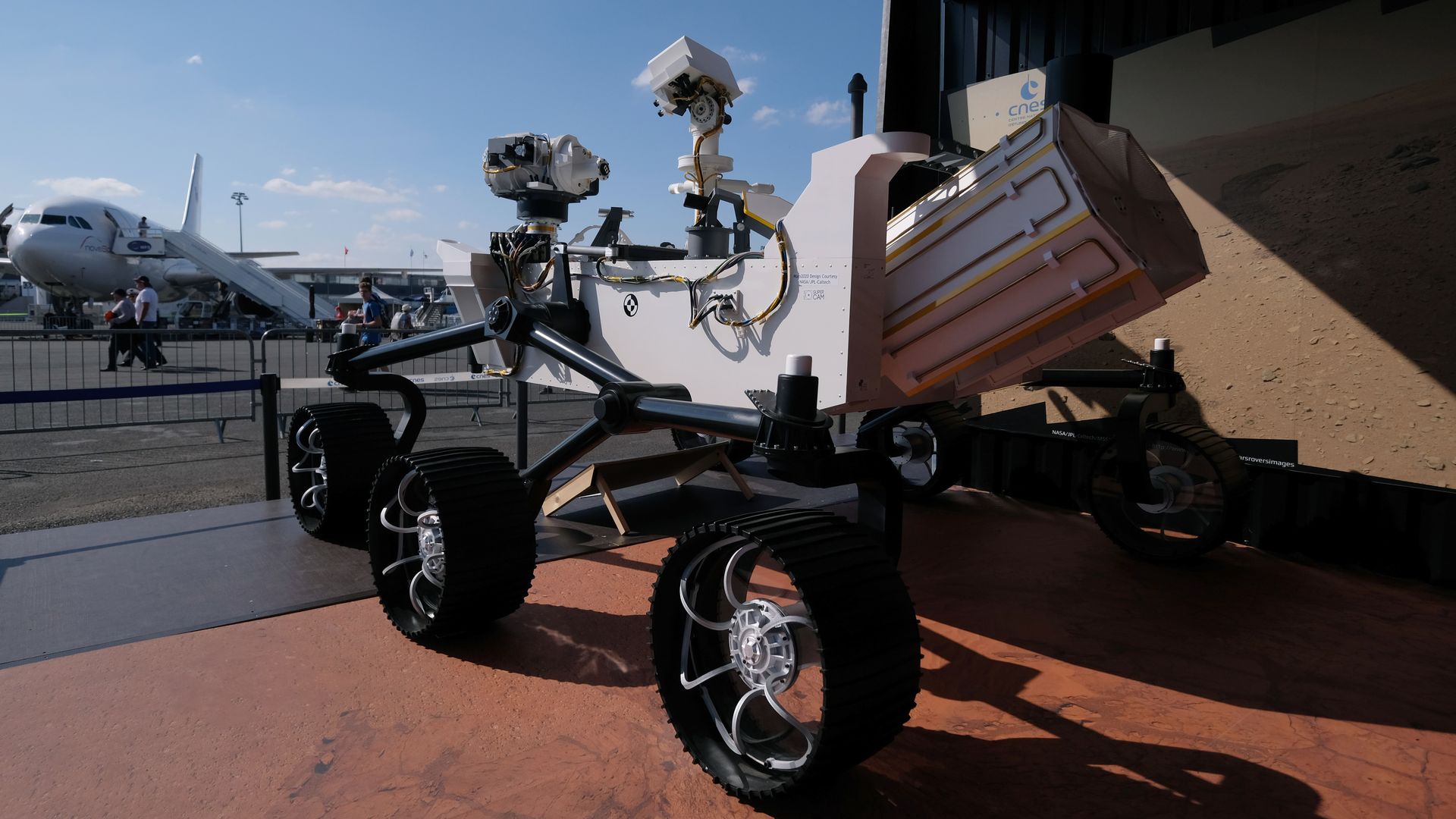
NASA's next Mars rover, the Mars 2020 rover, is set to launch in July 2020. The rover is designed to sniff out signs of past life on Mars.
Driving the news: NASA engineers are expected to install two high-definition cameras on the rover this week, per NASA. The Mastcam-Z will serve as the rover’s eyes, aiding in the spacecraft's movements and observations.