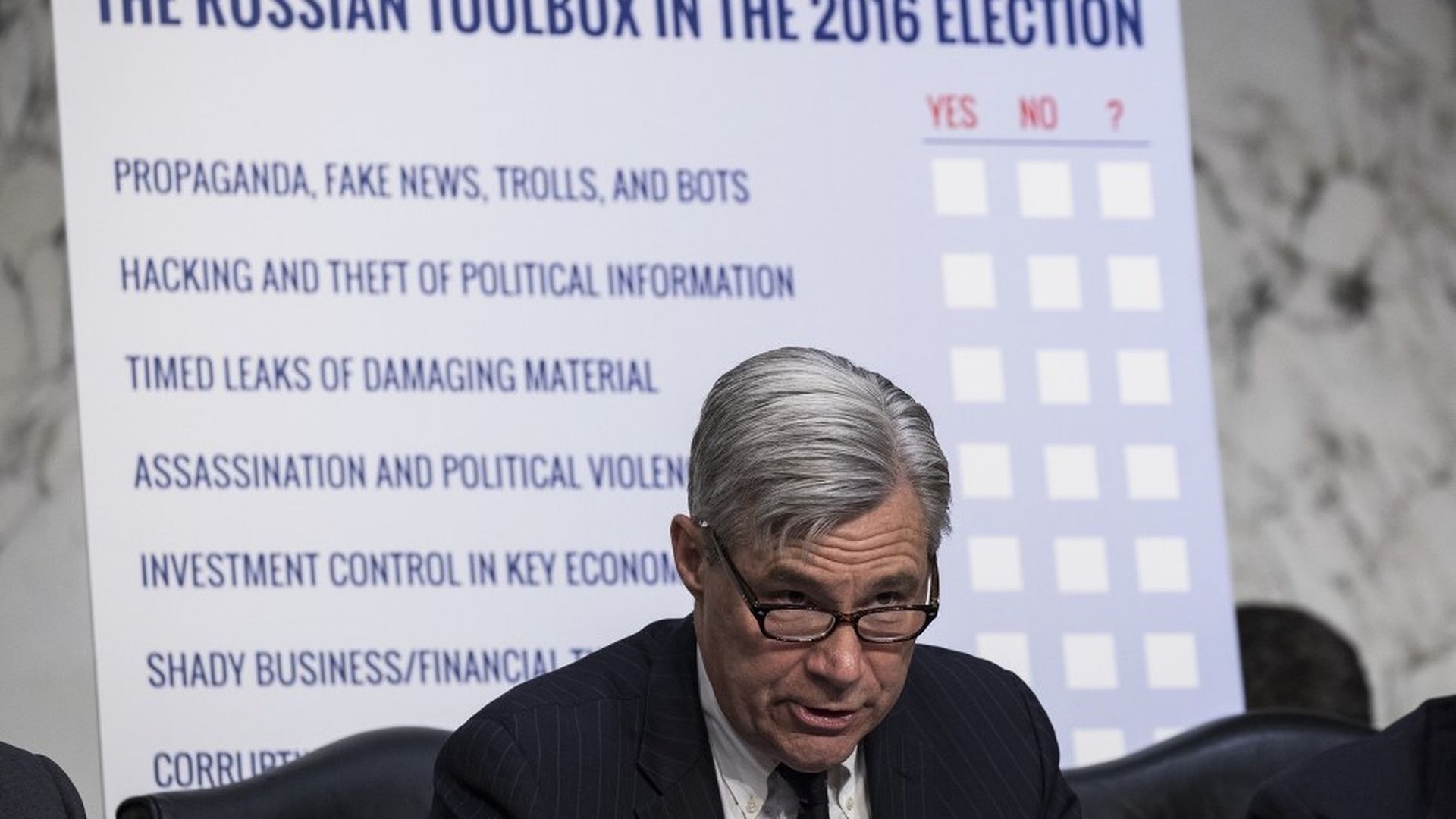
Russia's success in waging its disinformation campaign during the 2016 presidential election stemmed largely from a web of government bureaucracy that placed too much confidence in American standing and institutions, according to The Washington Post.
Why it matters: Russia's success in influencing the 2016 election came as government officials couldn't agree on a legal, satisfactory course of action or counterattack — and, for the most part, they still haven't. That leaves the critical 2018 midterms and 2020 presidential election similarly open to foreign targeting and disruption.
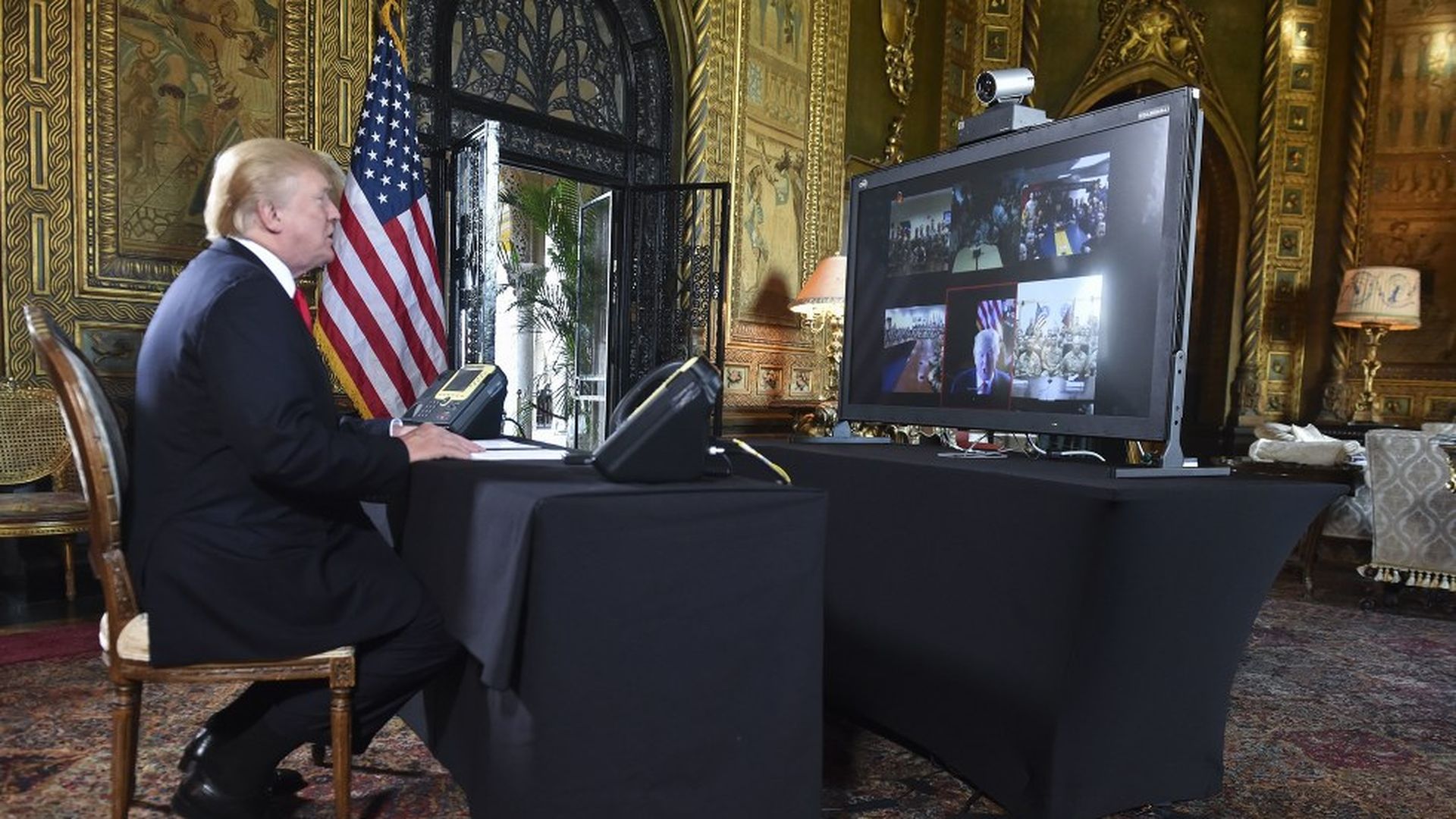
Trump video-called U.S. troops stationed abroad Sunday to thank them for their efforts to "defend all of our families, our freedoms, and our pride," noting he thinks military families are "always underappreciated," per the AP.
Trump took questions from service members without press present. The AP reports the president spoke with members of the Army, Navy, Air Force, Marine Corps, and Coast Guard in Qatar, Kuwait, the Strait of Hormuz, and Guantanamo Bay.
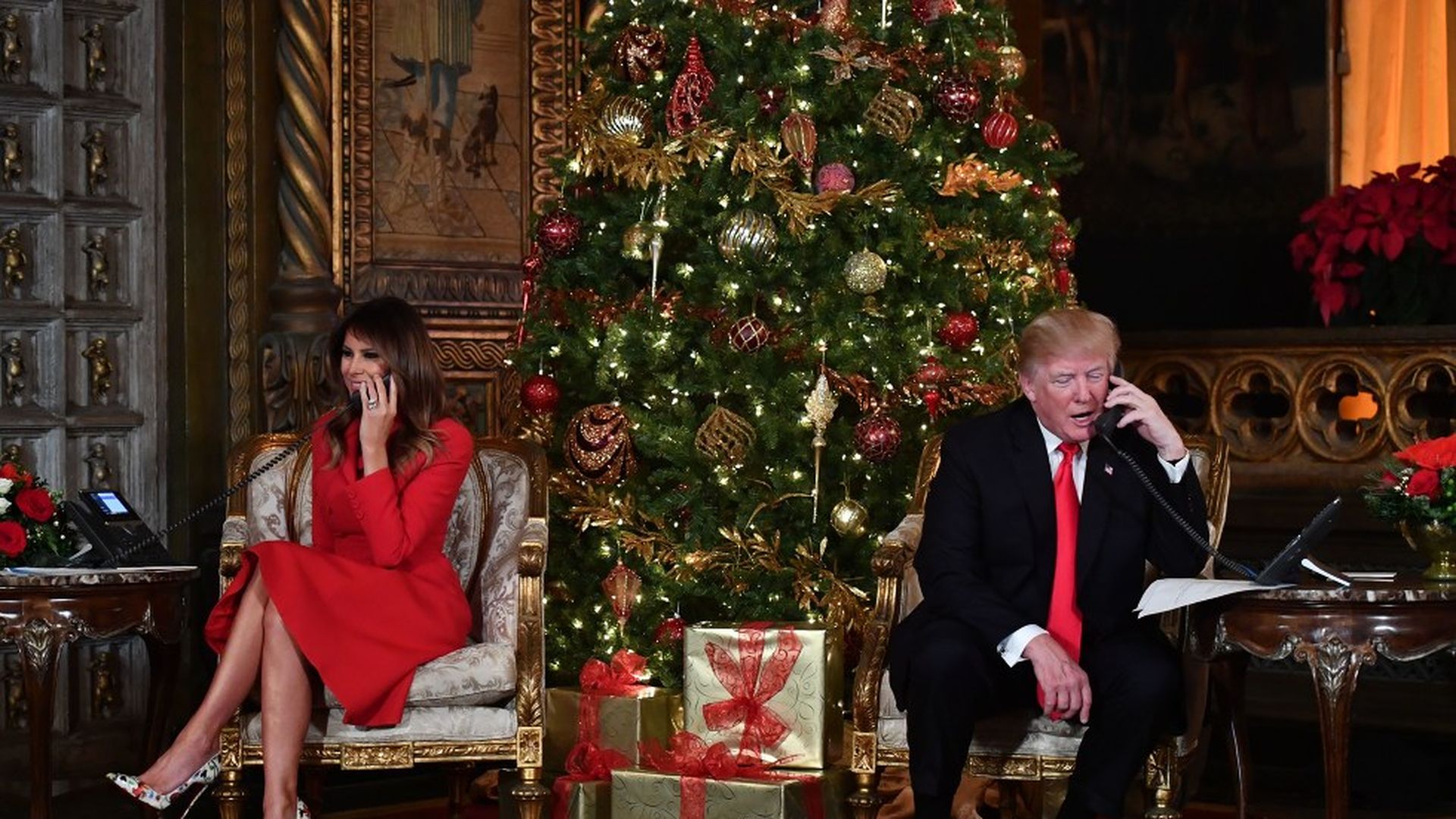
Along with Melania Trump, President Donald Trump took calls from children asking for updates about Santa Claus' travels today through the North American Aerospace Defense Command (NORAD) Tracks Santa program. NORAD has been tracking Santa's annual trip for more than 6 decades.
The children were patched in randomly and did not know beforehand they would be speaking with Trump, per The Hill.
Sen. Jeff Flake (R-Ariz.), a public opponent of President Trump, said he is extremely concerned by what he sees as the White House's repeated attempts to undermine Special Counsel Robert Mueller's Russia investigation: