Axios World

July 06, 2023

We start tonight with some bittersweet news: Monday's edition of Axios World will be my last.
- I'm staying at Axios, but moving into a new role overseeing our web coverage. Axios World will no longer be in your inboxes, but you can follow our world news reporting on Axios.com and subscribe to other great Axios newsletters.
- I'll have more to say in Monday's edition, but writing this newsletter twice a week for the past 5+ years for such an engaged, savvy and kind audience has been the most rewarding experience of my career so far. Thank you for reading, corresponding, and caring about the important topics we've covered.
Tonight's edition (1,871 words, 7 minutes) starts in Ukraine.
1 big thing: 500 days of war in Ukraine
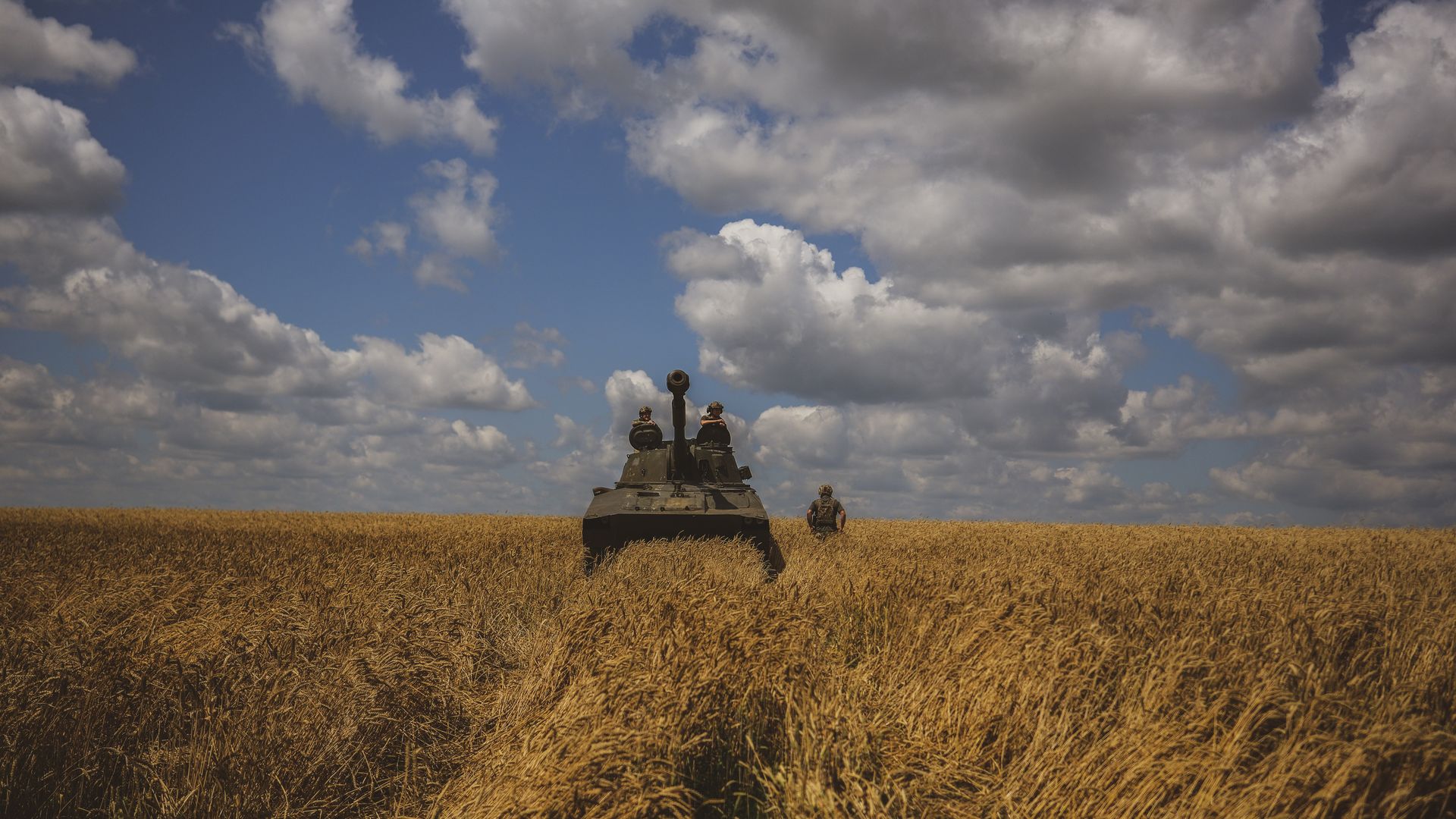
Ukrainian soldiers on patrol in Donetsk Oblast. Photo: Ercin Erturk/Anadolu Agency via Getty Images
As the war in Ukraine reaches the 500-day mark, three questions still loom large:
- Is a negotiated settlement possible?
- Can Ukraine take back its occupied territories by force?
- Will Vladimir Putin use a nuclear weapon?
Driving the news: There have been a flurry of recent developments that might help answer all three.
The diplomacy
Former senior U.S. officials have met with well-connected Russians — including Foreign Minister Sergey Lavrov — to try and set the stage for potential peace talks, NBC News reports.
- The Lavrov meeting took place in New York in April, but there are no indications the Kremlin is currently prepared to make concessions for peace.
- Likewise, Ukrainian President Volodymyr Zelensky continues to insist Ukraine will retake all of its territory, including Crimea — and polls suggest his population agrees.
- But Ukrainian officials told CIA Director Bill Burns on a secret visit last month to Kyiv that they believe if Ukrainian forces advance in the east and move within striking distance of Crimea in the south, Russia will negotiate in order to avoid defeat and keep control of the occupied peninsula, WaPo reports.
Between the lines: Even under such circumstances, it's unclear what a deal might look like that both Putin and Zelensky could sign, given Putin has claimed large swaths of Ukraine as Russian territory.
- However, Putin's handling of the Wagner rebellion — in which he struck a deal with Yevgeny Prigozhin to halt the march on Moscow — suggests he may be willing to negotiate with his back against the wall.
The counteroffensive
For now, though, Ukraine's counteroffensive has made only gradual progress.
- While Ukraine has yet to bring many of its Western-armed-and-trained troops into the fight, its forces have also yet to reach Russia's most heavily fortified defensive lines, Joint Chiefs Chair Gen. Mark Milley said last week.
- The British Ministry of Defense estimates that Russia's force is now so depleted that Moscow would be unable to mount an offensive of its own, but officials in Kyiv concede that Russia's defenses — which include multiple layers of minefields and trenches — have been stronger than anticipated.
- Ukraine's top general has expressed frustration at suggestions he's moving too slowly, while Zelensky told CNN Ukraine could have attacked earlier and more effectively if it had received more Western equipment.
What to watch: The White House is expected to provide cluster munitions to help Ukraine attack Russian entrenchments, despite concerns that dud bombs will endanger civilians.
- Milley, meanwhile, cautioned that these are only the early stages of Ukraine's offensive, which will be "very long" and "very, very bloody."
- Russian military officials are cautiously optimistic about how the counteroffensive is playing out, but acknowledge things could still change dramatically before winter, Alexander Gabuev, director of Carnegie's Russia Eurasia Center, tells Axios.
2. Part II: The nuclear question
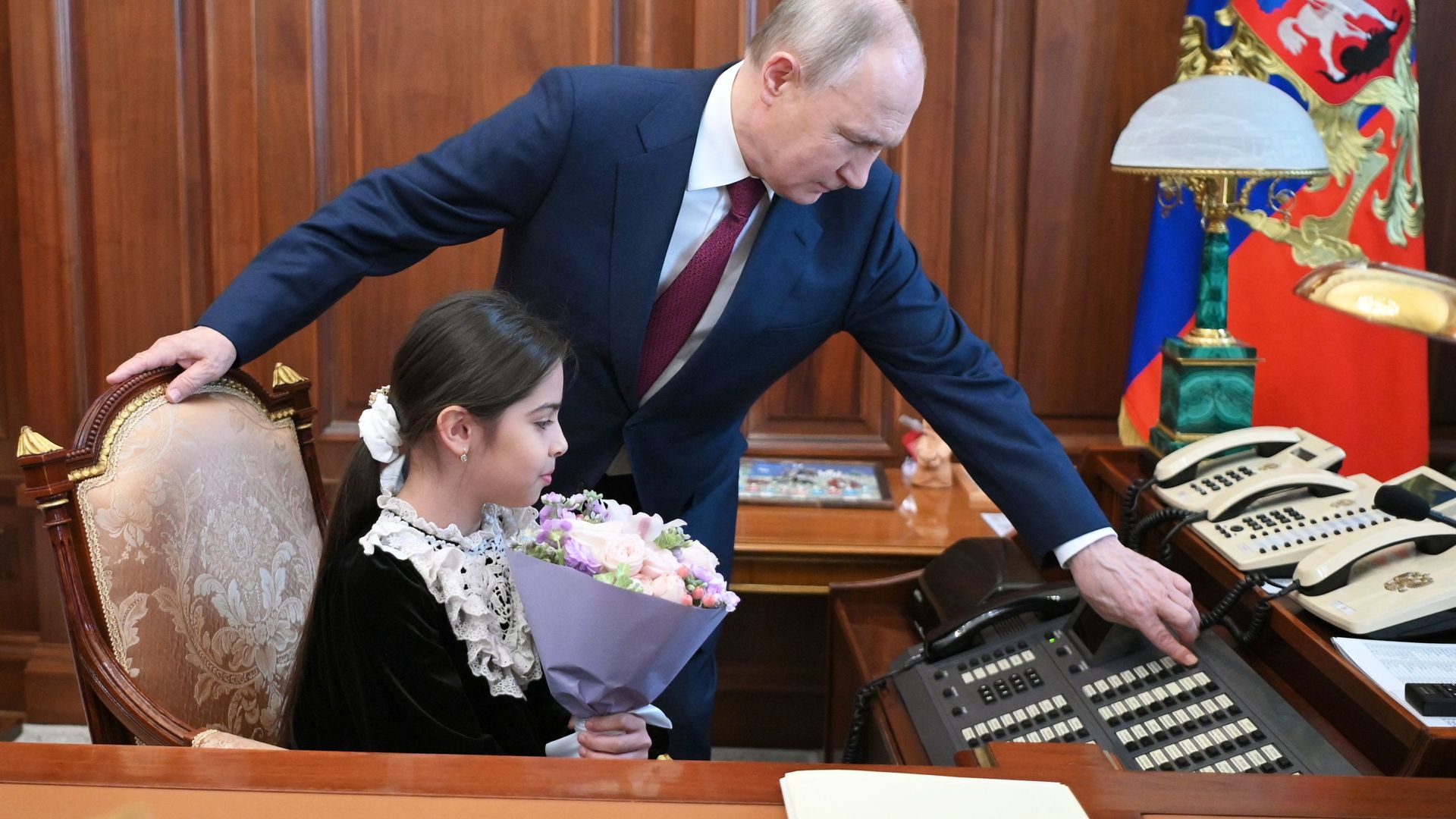
"This button? You do not want to know what this button does." Photo: Alexander Kazakov/Sputnik via Getty Images
While officials in Kyiv hope military breakthroughs would push Putin to seek a cease-fire, Gabuev notes that they could also cause him to reach for his nuclear stockpile if his hold on power appears threatened.
- "The scenarios in which we think Putin might use nukes are these really high-impact, low-probability events — some rapid development on the battlefield that make Putin think he is losing this war in a catastrophic way," Gabuev says.
A nuclear strike may be improbable, but officials in Washington and Beijing are taking the prospect seriously.
- Chinese President Xi Jinping warned Putin in person in March against using nuclear weapons, according to a report this week in the FT.
- Meanwhile, the U.S., U.K. and France informed Putin they'd attack Russia with non-nuclear means if he followed through on threats to use a tactical nuclear weapon.
- Putin has stopped making such threats, possibly because he's been convinced that using a tactical nuke on the battlefield wouldn't help Russia win the war, according to the FT.
Two prominent Russian military analysts have proposed another strategy: a preemptive nuclear strike in Poland or elsewhere on NATO territory to convince the West to back off.
- Meanwhile, former President Dmitry Medvedev, who has reinvented himself as an ultra-hawk, said in the past few days that the war could end with a devastating nuclear strike, and also that a "nuclear apocalypse" is likely.
- Such statements may reflect the mood in Moscow, but don't necessarily reflect internal discussions in the Kremlin, Gabuev says.
- For his part, Putin said last month that Russia has "no need" to use its nukes.
The latest: Zelensky has been warning of a different kind of nuclear threat. He claimed Tuesday that Russia had placed “objects resembling explosives” on the roof of the Zaporizhzhia nuclear plant.
- The Kremlin has denied that and claimed Kyiv may be planning its own "sabotage" attack.
- Because the reactors are in a "cold shutdown" mode, an explosion at Zaporizhzhia would not cause a Chernobyl-like disaster, and the radiation danger would be contained to the local area, experts tell CNN.
Worth noting: Prigozhin is back in Russia, according to Belarus President Aleksandr Lukashenko, and it remains unclear whether or how his mercenaries will be absorbed into Russia's army.
- Wagner's rebellion briefly raised the prospect of a new Russian leader taking control of the Kremlin, Russia's war effort, and its nuclear arsenal.
- It also offered a reminder, after nearly 500 days of fighting, that this war can still turn in unforeseen directions.
3. Global news roundup
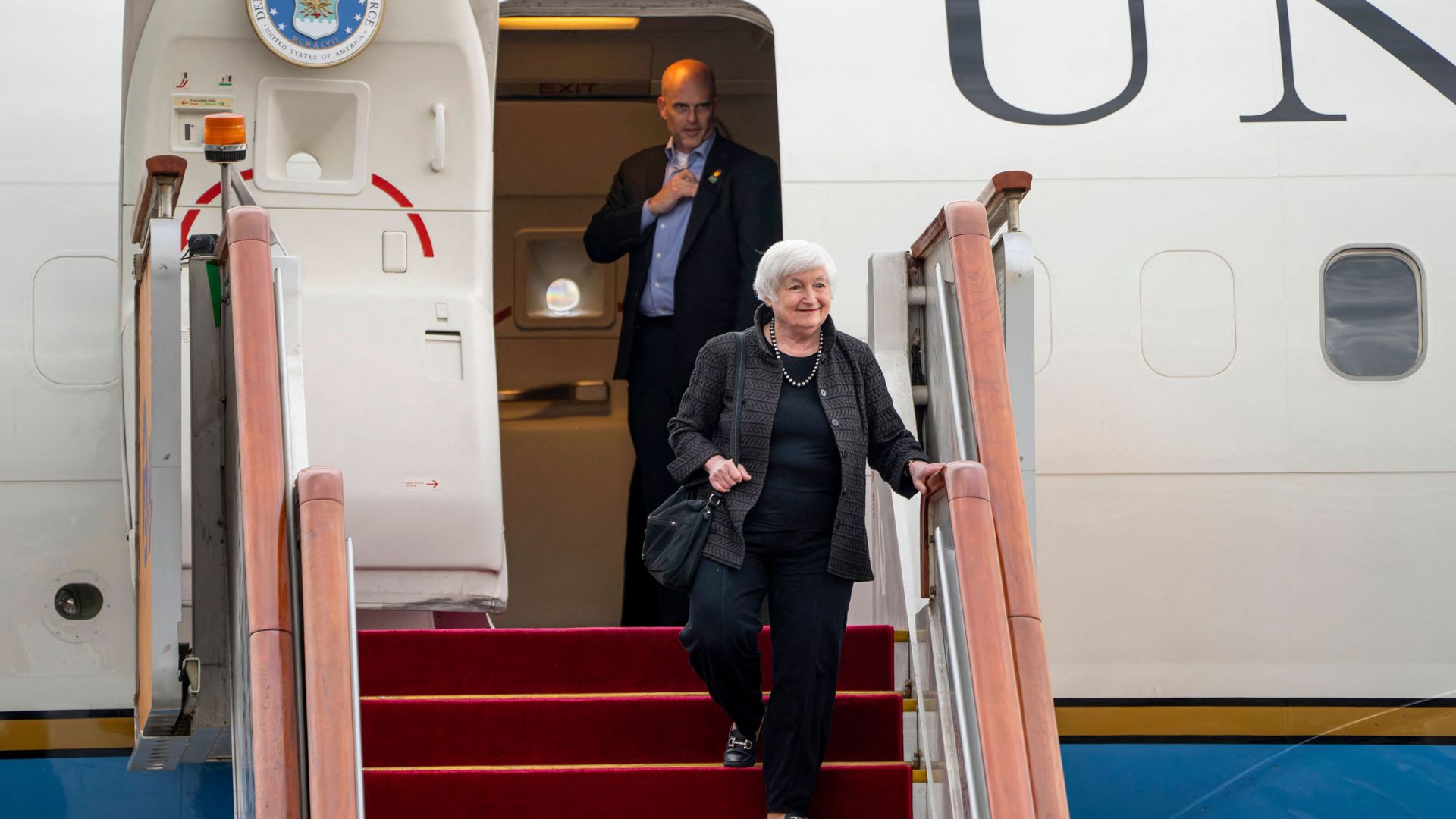
Janet Yellen arrives today in Beijing. Photo: Mark Schiefellin/Pool via Getty Images
1. Senegal President Macky Sall announced he will not seek a constitutionally dubious third term in February, belatedly diffusing what had become a major political crisis.
2. Guatemala’s Constitutional Court suspended its certification of the results of the June 25 first-round presidential vote after a dark horse anti-corruption candidate appeared to qualify for next month’s runoff. Some analysts argue the country’s corrupt elite is trying to manipulate the outcome.
- Meanwhile, Venezuelan opposition favorite Maria Corina Machado was barred from running in elections slated for next year, in another sign that the vote will likely be rigged in Nicolás Maduro’s favor.
3. Prominent Russian journalist Elena Milashina was kidnapped and severely beaten while in the Chechen capital to attend a court hearing.
4. Treasury Secretary Janet Yellen is in China for a four-day visit aimed at improving relations.
- She arrived three days after Beijing announced it would restrict exports of two rare earth minerals used to make semiconductors and electric vehicles.
- Beijing abruptly canceled a visit by the EU’s top diplomat planned for next week.
5. Colombia’s largest rebel group, the ELN, says it will stop attacking the military as part of a cease-fire agreement with the government.
6. Iran’s navy tried to seize two oil tankers yesterday before being chased off by U.S. ships and aircraft, the Pentagon says.
7. Nine additional African countries will receive doses of a new malaria vaccine over the next two years, according to the GAVI vaccine alliance.
Bonus: Where in the World

Illustration: Natalie Peeples/Axios
I'm feeling nostalgic, so I'm flashing back to five years ago, when we launched this newsletter. Can you fill in the blanks on each news event of 2018?
- Former Russian double agent Sergei Skripal is poisoned with Novichok in the English city of ___.
- Donald Trump and Kim Jong-un meet for their first summit in _____.
- Swaziland changes its name to ______.
- An opposition alliance led by Mahathir Mohamad wins a shock victory in _____.
- African neighbors ____ and ____ sign a peace treaty for which one of their leaders later wins a Nobel Peace Prize.
- Members of a youth soccer team are rescued from a flooded cave in _____.
- The French South Pacific territory of ____ votes against independence in a referendum.
- Jacob Zuma resigns as president of ____ amid the "state capture" scandal.
- Jamal Khashoggi is murdered inside the Saudi consulate in _____.
- A fire breaks out in the national museum of ___, destroying most of its collection
Scroll to the bottom for answers.
4. Palestinians begin rebuilding after massive Israeli raid in Jenin
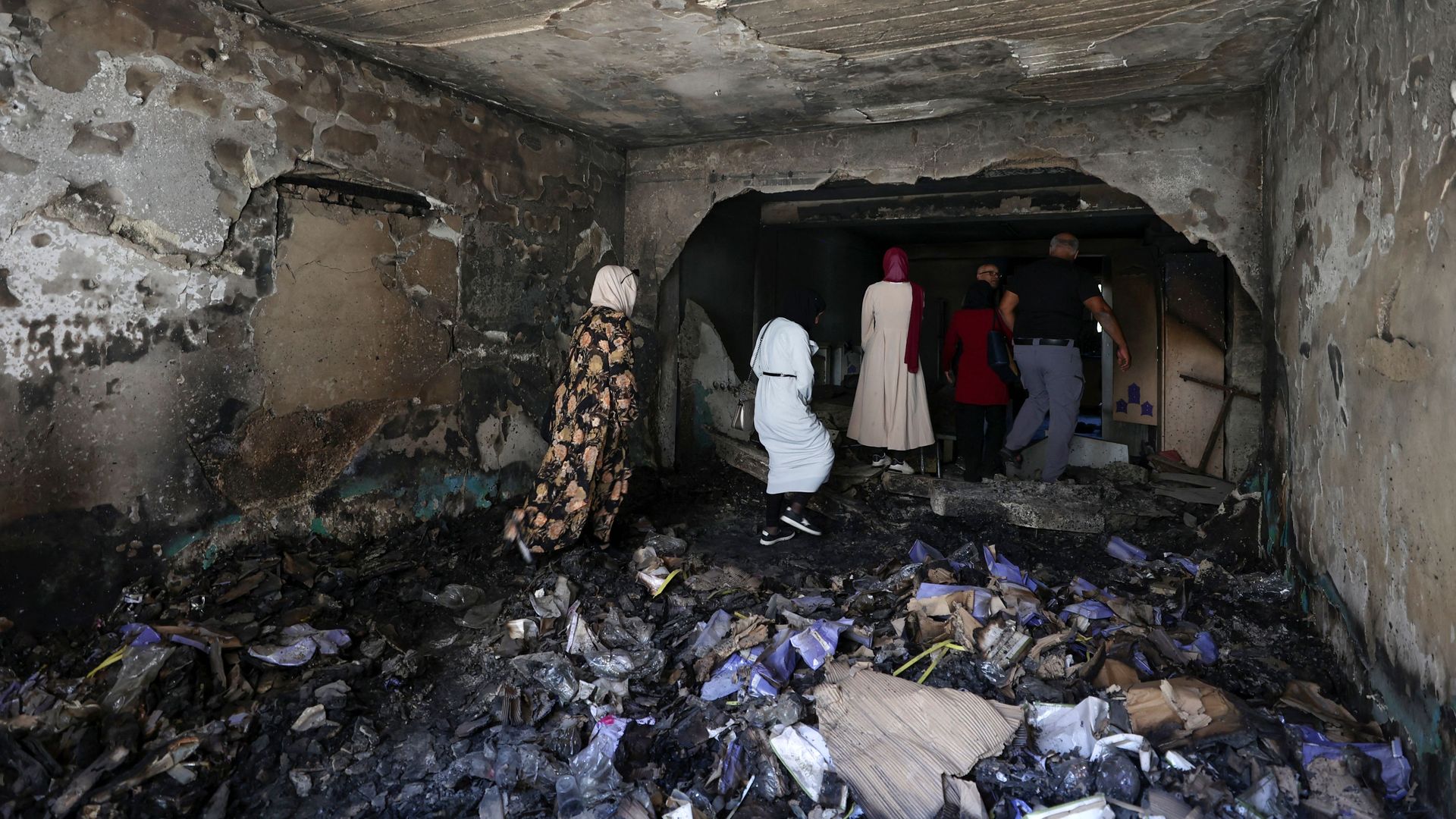
Residents assess the damage inside a shop in Jenin's refugee camp. Photo: Zain Jaafar/AFP via Getty Images
Residents of the refugee camp in the West Bank city of Jenin are taking stock of the destruction left behind after Israel's military launched the biggest and most intense assault on the occupied West Bank— with airstrikes and hundreds of ground forces — in nearly two decades, Axios' Laurin-Whitney Gottbrath writes.
- 12 Palestinians, including three children and several fighters, were killed, according to the Palestinian Health Ministry. Dozens were injured. One Israeli soldier was also killed.
- Nearly 80% of the homes in Jenin's refugee camp were either "destroyed, damaged or burnt,” according to one estimate by a Palestinian official. Some 500 families were forced to evacuate the camp during the raid.
What they're saying: Israel says its mission succeeded in destroying "terrorist infrastructure."
- But Palestinians and some analysts, speaking to Al Jazeera, say the assault will likely embolden armed groups in Jenin, a city that has become a symbol of Palestinian resistance.
- "[H]istory shows us [the attack] will actually get Palestinians even more determined," said Inès Abdel Razek, executive director of the Palestine Institute for Public Diplomacy.
- At the same time, the incursion further weakens the position of the Palestinian Authority, which some Jenin residents accused of standing by and allowing the raid to happen.
The big picture: Tensions and violence were already on the rise.
- The Israeli military has killed at least 130 Palestinians in the West Bank this year, per the UN and news reports. Many have been militants, but several civilians, including children, were also killed.
- Nearly 30 Israelis were killed in attacks by Arabs inside the West Bank and in Israel over the last year, AP reports.
- Israeli settler attacks against Palestinians and their homes and cars have increased as well.
5. Data du jour: Hottest days on record
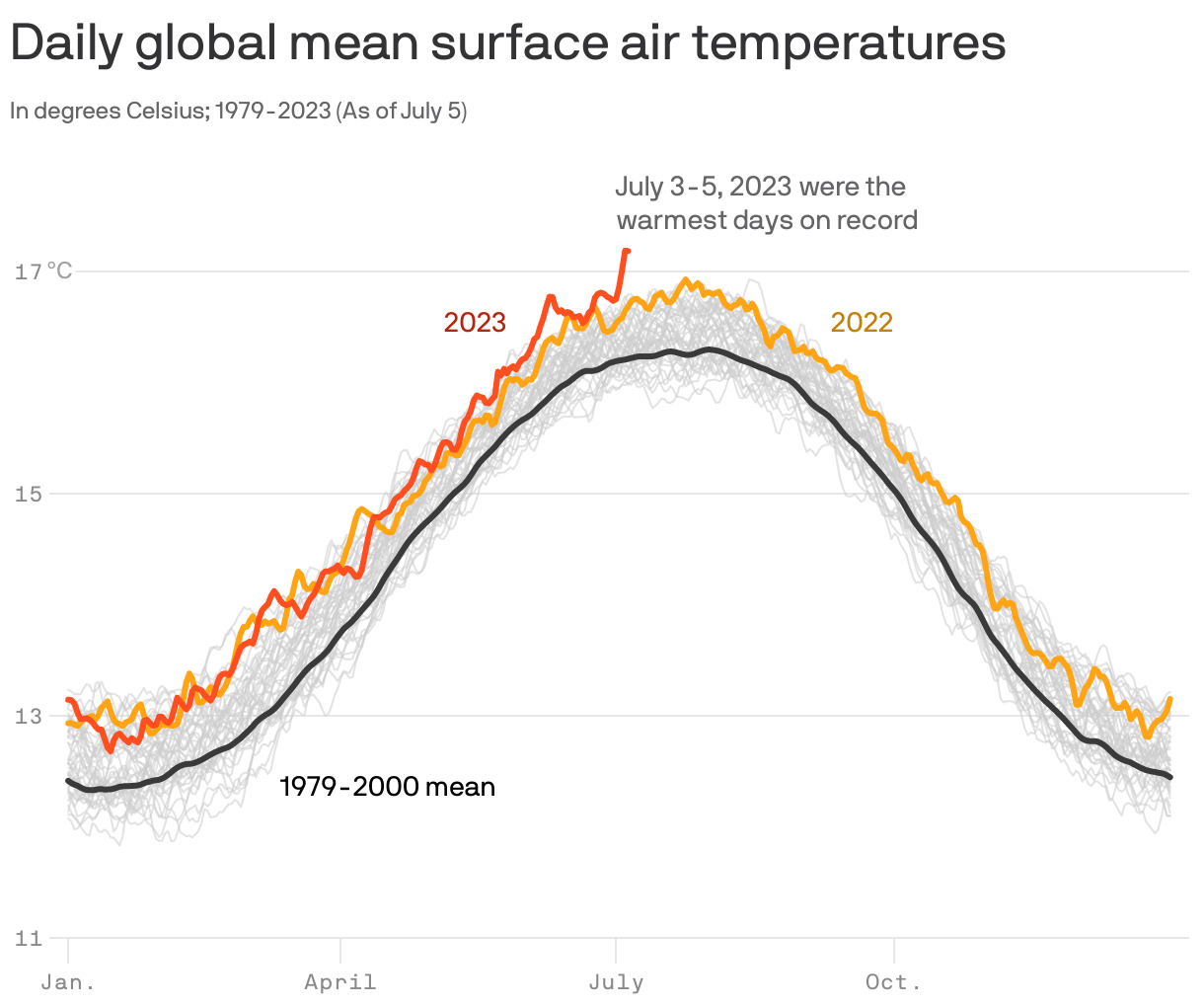
The past three days have each broken or tied records as the Earth's hottest day since at least 1979 and likely far longer, according to National Oceanic and Atmospheric Administration data.
6. What I'm reading: Two books on cross-border crime
Illustration: Aïda Amer/Axios
If you're looking for your next summer read, I've got two globe-spanning true crime investigations for your consideration. I devoured both on some recent travel.
In "The Snakehead," Patrick Radden Keefe investigates people smugglers in the grimy underworld of New York's Chinatown, and the Chinese migrants who pay tens of thousands of dollars to undertake circuitous and incredibly dangerous journeys to the U.S.
- It will leave you questioning the ways the U.S. immigration system filters those who get to stay from those who are sent back (and almost always try again).
Evan Ratliff's "The Mastermind" is one of the wildest nonfiction books I've ever read, about a reclusive Zimbabwean programmer who made millions operating in a legal gray area — shipping online orders of prescription opioids — and ended up trafficking meth from North Korea and setting up a military compound in Somalia.
- Your jaw will drop almost every chapter. It's that crazy.
7. Stories we're watching
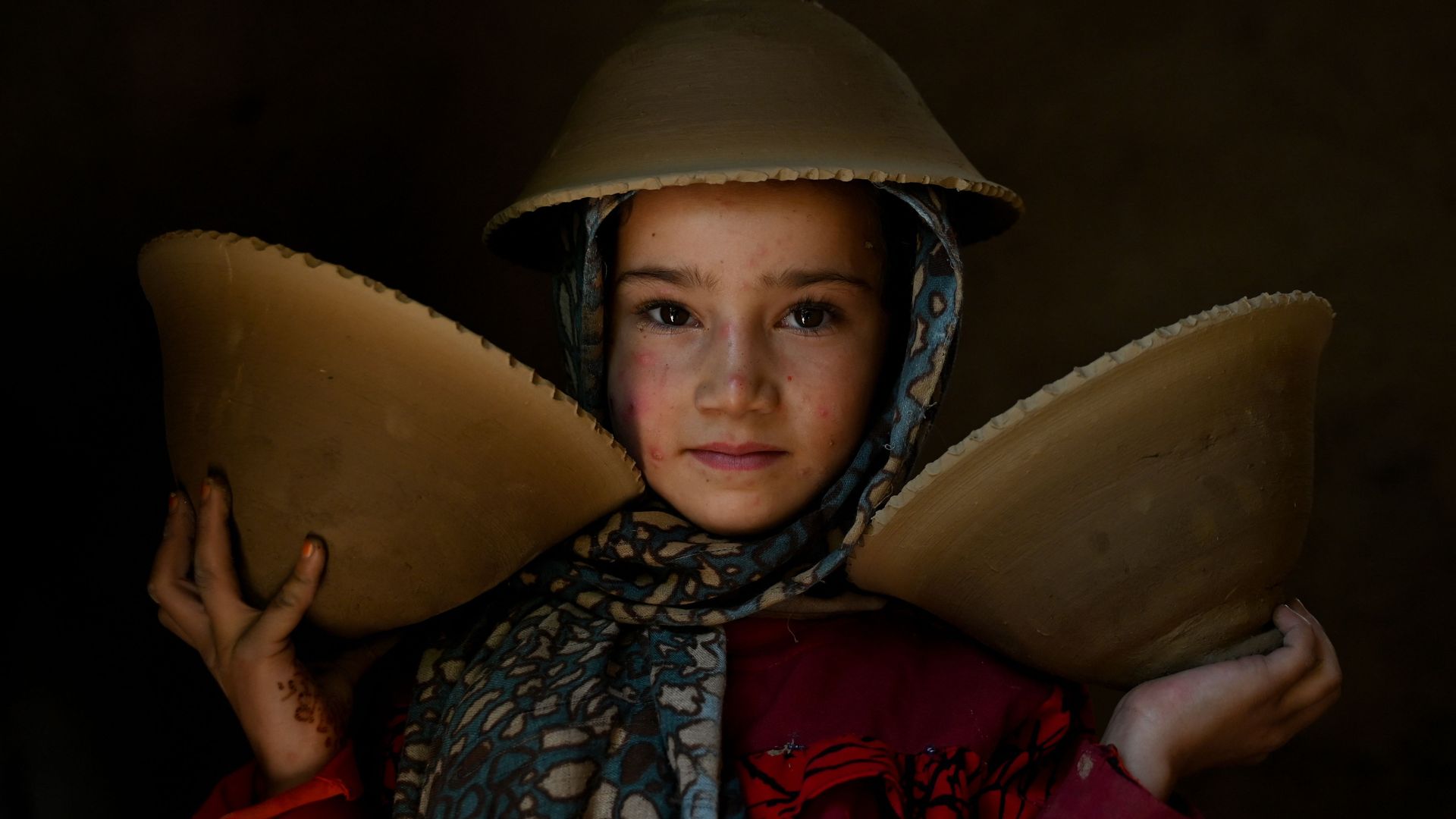
An Afghan child carries clay pots at a traditionally run factory in Kabul province. Photo: Wakil Kohsar/AFP via Getty Images
- Japan to release radioactive Fukushima water into sea
- Why Vietnam banned the "Barbie" movie
- U.S. ambassador meets detained WSJ reporter Evan Gershkovich
- Canada's wildfire crisis: By the numbers
- Charted: El Niño is bad news for coral reefs
- Rare octopus nurseries discovered deep in the Pacific Ocean
- Making international chess a spectator sport
Quoted:
“I admit with deepest embarrassment that it was only after what regrettably happened that I learned of the monument’s antiquity."— An apology from a man who professed his love for his girlfriend by carving their names into Rome's Colosseum wall with a key. Now facing jail time, his excuse seems to be that he didn't realize the Colosseum was so old.
Answers: 1. Salisbury; 2. Singapore; 3. Eswatini; 4. Malaysia; 5. Ethiopia and Eritrea; 6. Thailand; 7. New Caledonia; 8. South Africa; 9. Istanbul; 10. Brazil.