Axios World

June 12, 2023
Welcome back to Axios World.
- Tonight's edition (1,856 words, 7 minutes) begins in Haiti, visits Italy and Israel, and ends in the Amazon jungle with a remarkable story of survival.
1 big thing: Gang wars tear Haiti apart
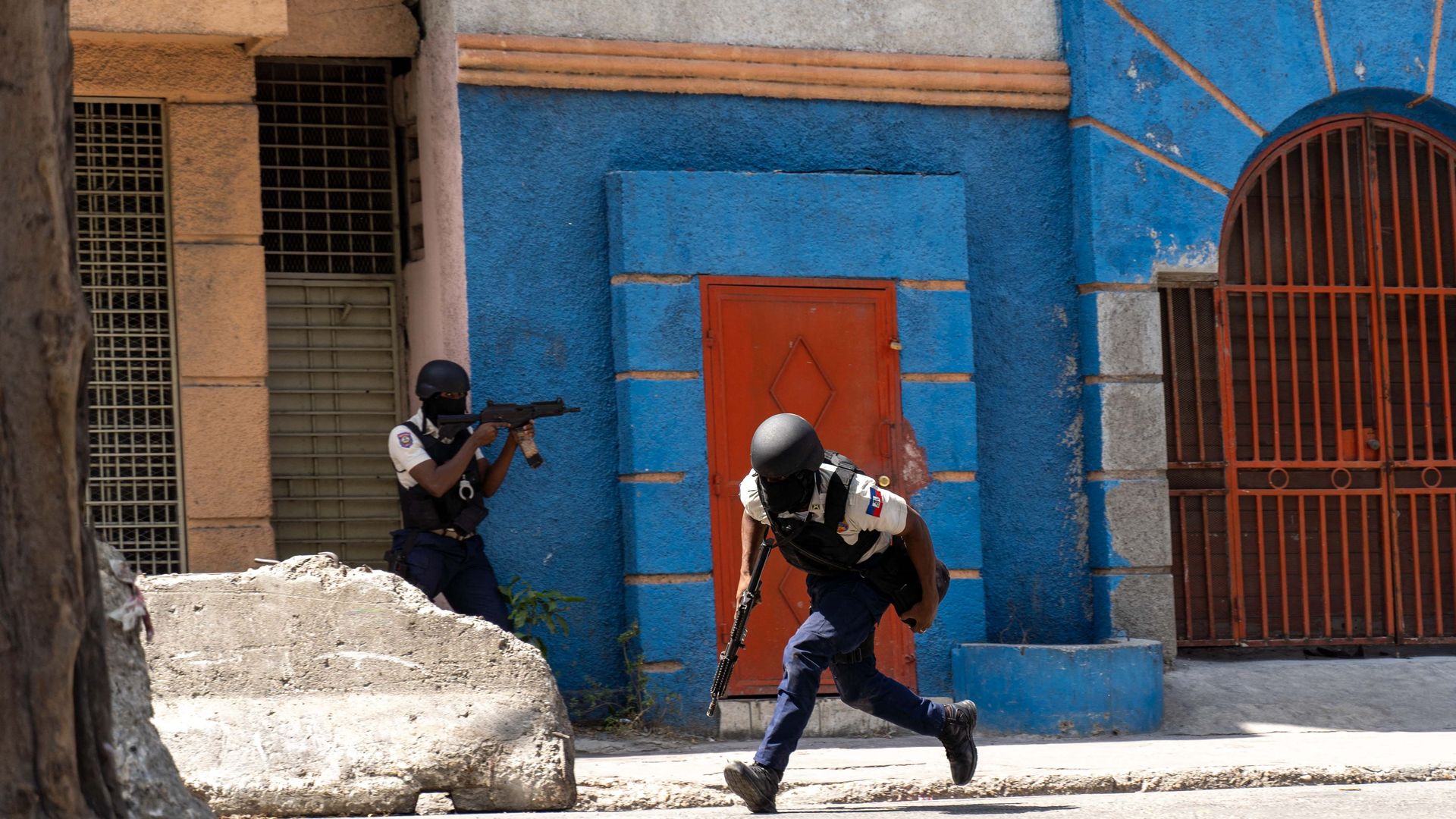
Police officers in a gunfight with gangs near the presidential palace in Port-au-Prince. Photo: Richard Pierrin/AFP via Getty
The U.S. is reiterating its call for an international intervention in Haiti to break the stranglehold of violent gangs that have terrorized the capital city and paralyzed the country's economy.
Why it matters: It's been eight months since interim Haitian President Ariel Henry first requested an armed intervention. The government now controls only small pockets of Port-au-Prince, and violence has spread out of the slums into virtually every corner of the city.
- With police outgunned and under-resourced, civilians have become vigilantes, arming themselves with machetes and improvised weapons and reportedly killing scores of gang members.
- Thousands of others have fled in hopes of reaching the U.S., though many have been turned back at the U.S. border under new policies.
- Vice President Kamala Harris reiterated U.S. support for a multinational intervention last Thursday at a regional summit in the Bahamas.
- Meanwhile, UN spokesperson Stéphane Dujarric confirmed to Axios that Secretary-General António Guterres continues to see a "non-UN force, authorized by the Security Council" as "the most effective option" to reduce violence, improve the humanitarian outlook and create the conditions for elections.
Yes, but: It still hasn't gotten off the ground. Only Jamaica has said it's willing to send troops.
- The U.S. doesn’t want to lead the intervention, and Canada has also declined. A State Department official tells Axios the U.S. is still trying to find a “lead nation” for what would be a “police-driven multinational force.”
- The U.S. has also approached Brazil about the multinational mission. Others have floated missions led by the UN or CARICOM, the Caribbean regional bloc.
Flashback: A UN-backed intervention that began in 2004 was marred by allegations of abuses by peacekeepers and failed to deliver stability.
- The idea of a new intervention has divided Haitians. In a possible sign of how desperate things have become, a poll conducted in January found 69% in support.
- In the meantime, the U.S. has provided the Haitian National Police with $92 million in assistance, including armored vehicles, protective equipment and specialized training, the State Department official says.
Driving the news: CARICOM is hosting a three-day gathering in Jamaica from Sunday to Tuesday to try to break another stalemate by pushing Henry and members of the opposition to agree on a political road map.
- No elections have been held since 2016, leaving Haiti without an elected legislature.
- Henry, meanwhile, was never elected and had only recently been appointed prime minister when President Jovenel Moïse was assassinated in 2021. While Henry won the subsequent power struggle, he's never been widely accepted as legitimate.
- The opposition wants him removed. They claim U.S. backing intended to stabilize Haiti is keeping Henry in power indefinitely.
- Henry argues elections must be held to “restore democracy," but it's unclear when the situation might be stable enough to allow that to happen.
On the ground: While the gang violence has been largely centered in Port-au-Prince and the surrounding areas, the gangs have also blockaded routes in and out of the city, exacerbating the broader humanitarian crisis.
- When an earthquake struck the southwest of the country last Tuesday, days after devastating floods destroyed thousands of homes, lifesaving aid had to be sent by sea rather than by road to avoid gang-controlled areas, says Allen Joseph, Mercy Corps’ program manager in Jeremie.
- Four people in Jeremie were killed by the quake and around 200 homes were heavily damaged.
- The blockades are making food more scarce and harder to afford, Joseph says. Local needs are also increasing as thousands of people flee the capital for the provinces.
State of play: The UN estimates that 4.9 million Haitians, nearly half the population, are facing “acute food insecurity.”
- Meanwhile, Joseph is among the many Haitians who fear a "civil war" if the government can't restore control.
2. Europe: Berlusconi dies, Boris resigns, Sturgeon arrested
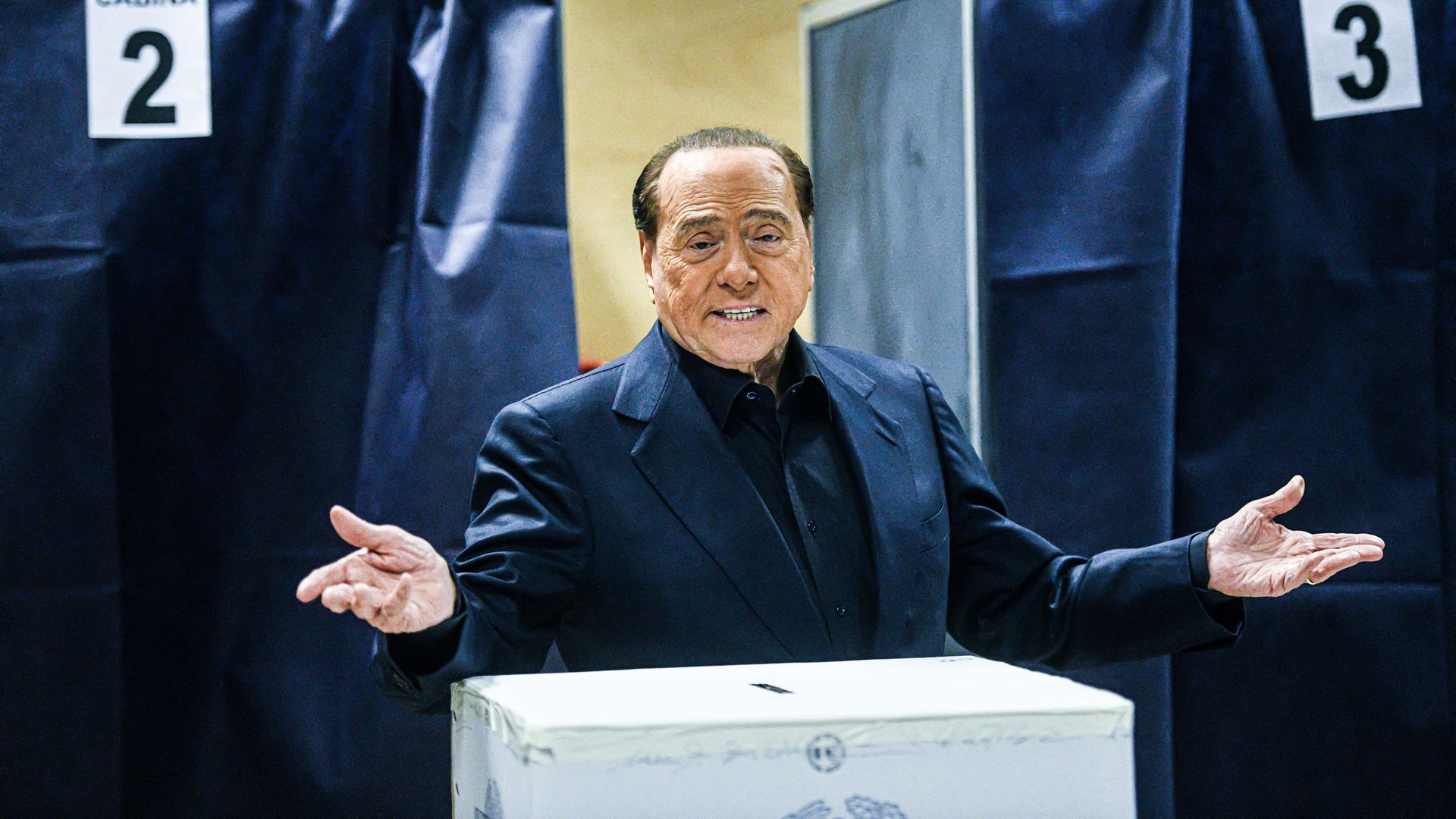
Berlusconi votes in regional elections in February. Photo: Piero Cruciatti/Anadolu Agency via Getty
Former Italian prime minister and billionaire media mogul Silvio Berlusconi died today at the age of 86.
The big picture: A right-wing provocateur who blazed a trail other populists would follow, Berlusconi thrice served as prime minister between 1994 and 2011 and led his Forza Italia party right up until his death.
- His political career survived multiple criminal trials and one conviction, for tax fraud, as well as scandals over "bunga bunga" sex parties and accusations of economic mismanagement.
- Before he became the dominant figure in Italian politics, Berlusconi built a media empire that revolutionized Italian TV and he bought the legendary soccer team AC Milan.
In other news... former U.K. Prime Minister Boris Johnson announced his resignation as a member of Parliament on Friday, claiming in a lengthy statement that the committee investigating him for misleading Parliament during the "partygate" scandal was determined to "drive me out."
- Why it matters: Johnson resigned as prime minister last July amid a cascade of scandals, including over social gatherings held at Downing Street in apparent violation of COVID lockdowns. Now he's out as an MP as well — a remarkable downward trajectory for a man who seemed politically untouchable after winning a landslide in 2019.
- In the statement announcing his resignation, Johnson denounced what he called a "witch hunt" and a "kangaroo court."
Meanwhile... former Scottish First Minister Nicola Sturgeon was arrested on Sunday as part of an investigation into what happened to $750,000 in donations raised to campaign for an independence referendum.
- She was released without charge and denies any wrongdoing.
3. Global news roundup
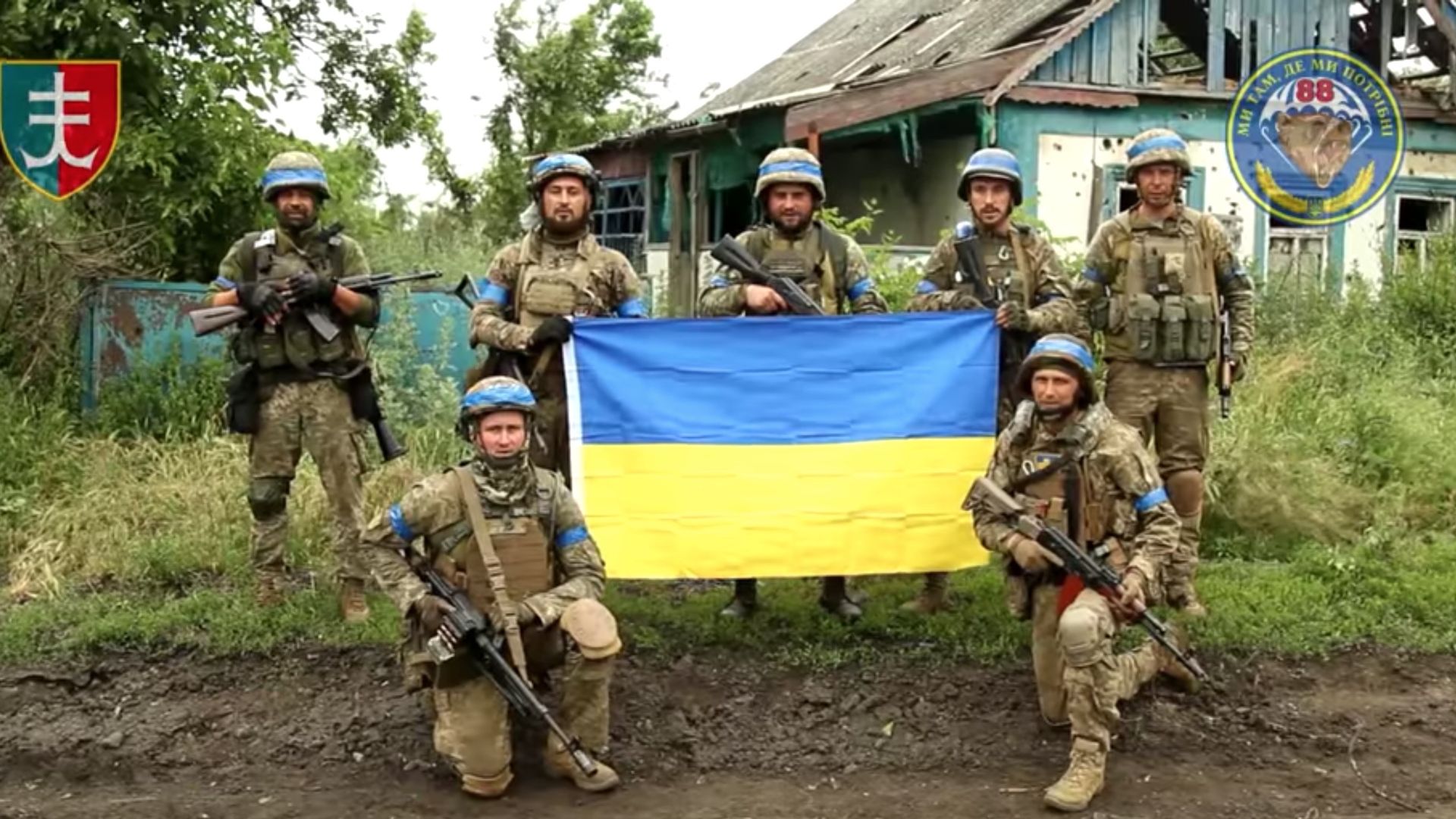
Ukrainian forces claim they captured the village of Storozheve in Donetsk. Photo: Mihail Ostrogradski/ 35th Brigade via Getty
1. Ukraine claims its forces have liberated five small villages in the southeast of the country, but the limited advances early in the counteroffensive appear to have come at a heavy cost in terms of casualties and equipment.
- Ukraine appears to be conducting small-scale attacks, possibly to probe for weaknesses before committing the bulk of its force.
- Any progress has been hard-fought, as Russia has had time to entrench its lines and plant mines.
2. The leaders of France, Germany and Poland met today to discuss how to handle the sensitive issue of future membership for Ukraine at a crucial NATO summit next month.
- Between the lines: Poland and other Eastern European countries want to offer clear security guarantees to Ukraine. Germany (like the U.S.) is wary of saying anything too concrete. French President Emmanuel Macron seems to back a middle path.
- Meanwhile, Secretary-General Jens Stoltenberg will visit the White House tomorrow. His successor is due to be chosen at the summit.
- NATO also began its largest-ever air exercises today in Germany.
3. Thailand's electoral body is investigating whether Move Forward Party leader Pita Limjaroenrat violated election rules by allegedly owning shares in a media company. He denies the accusations and any wrongdoing.
- Why it matters: Pita's progressive, pro-democracy party finished first in elections last month, putting him in a position to become prime minister. Analysts had speculated the pro-military establishment might find a way to push him aside.
4. North Korean hackers have stolen more than $3 billion in crypto and digital payments — including $600 million collected after a fake recruiter reached out to an employee at blockchain gaming company Sky Mavis, per WSJ.
- How it works: "To get hired by crypto companies, they will hire Western 'front people' — essentially actors who sit through job interviews to obscure the fact that North Koreans are the ones actually being hired. Once hired, they will sometimes make small changes to products that allow them to be hacked, former victims and investigators say," WSJ reports.
5. President Bola Tinubu is urging Nigerians to "sacrifice for the survival of our country" as a popular but expensive fuel subsidy is removed.
6. The last Indian reporter accredited to work in China has now been asked to leave the country, Bloomberg reports.
7. Mexico City Mayor Claudia Sheinbaum is stepping down to seek the ruling Morena party’s nomination for president. She’ll face Marcelo Ebrard, who resigned as foreign minister to seek the nomination. Whomever is nominated will be heavily favored in elections next June.
Bonus: Where in the world?
Illustration: Natalie Peeples/Axios
Can you name the most populous country in which each of the following is the official or most widely spoken language?
- Portuguese
- English
- Spanish
- German
- French
- Arabic
- Bengali
Scroll to the bottom for the answers.
4. Scoop: Israel to announce new West Bank settlement units
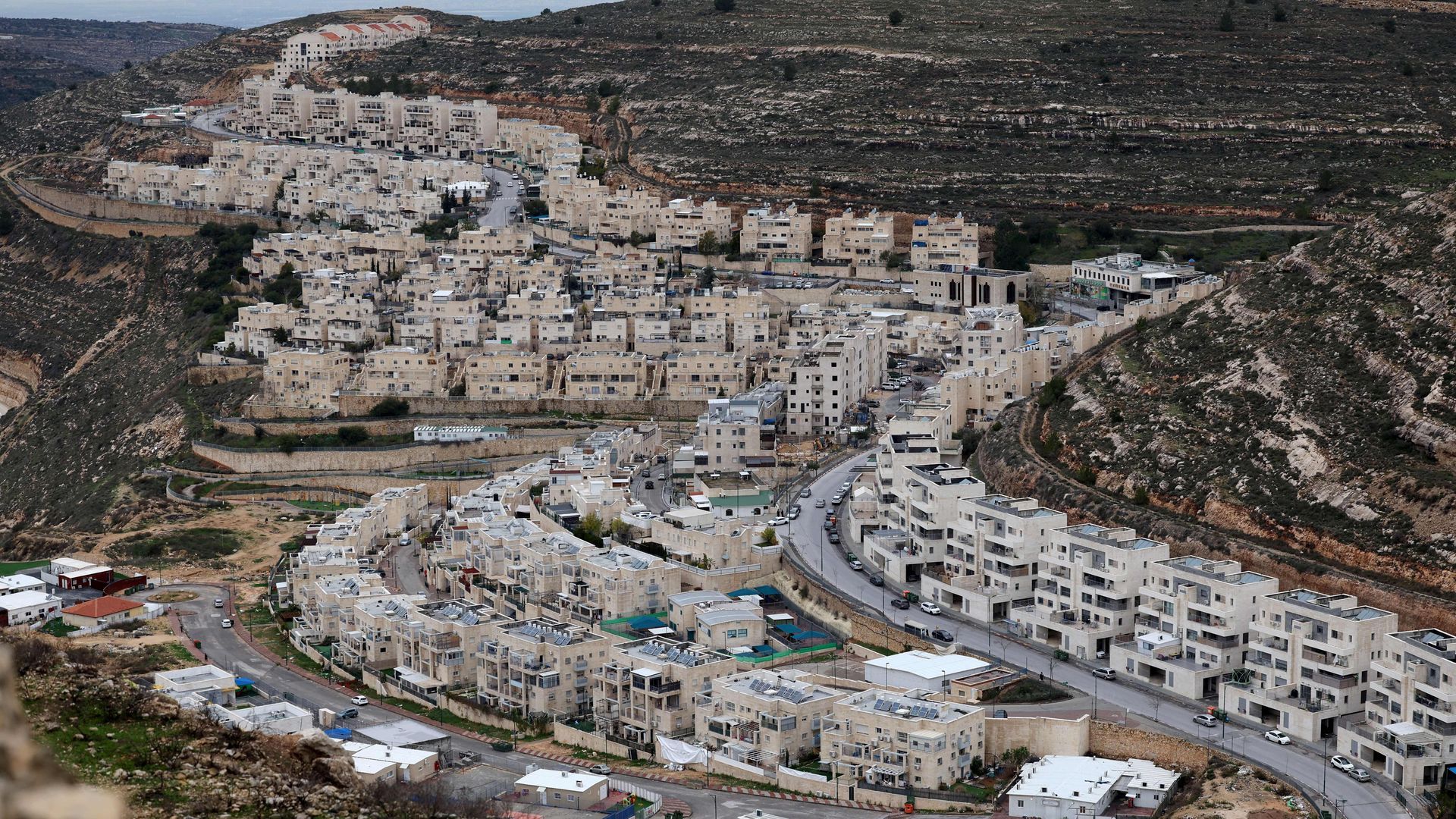
A general view of the Israeli settlement of Givat Zeev, near the Palestinian city of Ramallah in the occupied West Bank, in February. Photo:
The Israeli government informed the Biden administration it intends to announce later this month the planning and construction of at least 4,000 new housing units in Israeli settlements in the occupied West Bank, Axios' Barak Ravid scoops.
- The Biden administration is pressing Prime Minister Benjamin Netanyahu's right-wing government not to proceed.
- Between the lines: When Netanyahu postponed a meeting scheduled for next week on a plan to build a new settlement in a particularly sensitive area, his far-right Finance Minister Bezalel Smotrich told supporters not to worry: "We will have big news for the settlements in the West Bank imminently."
More reporting from Barak...
- U.S. and Iranian officials held indirect nuclear talks in Oman last month with Omani officials shuttling between their separate rooms to deliver messages — the first known engagement of that sort between the U.S. and Iran in several months. The U.S. is highly concerned about Iran's nuclear advances.
- The U.S. last week privately notified UNESCO that it has decided to rejoin the agency nearly six years after the Trump administration withdrew over what it described as anti-Israel bias.
5. Data du jour: Asian countries wary of U.S.-China conflict
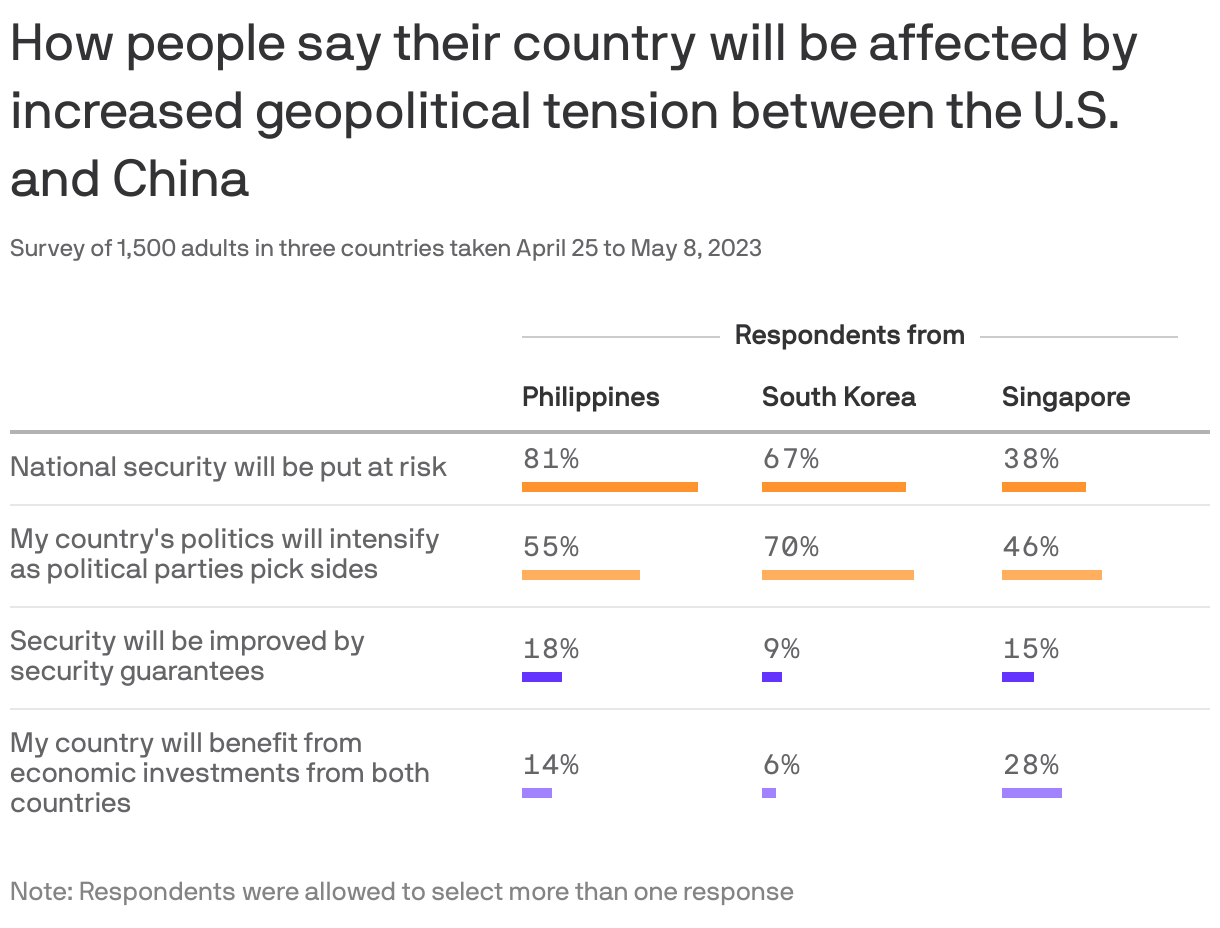
A Eurasia Group Foundation poll of three countries that are particularly exposed to U.S.-China competition finds that they are... not thrilled about it.
Breaking it down: Roughly 90% of respondents across the Philippines, Singapore and South Korea are "very" or "somewhat" concerned about U.S.-China geopolitical tensions.
- 81% in the Philippines and 67% in South Korea — both of which are U.S. military allies — worry their national security could be put at risk.
- Majorities in both countries also think U.S.-China rivalry will increase political polarization at home as parties pick sides.
- Respondents in Singapore are slightly less pessimistic. Still, only 28% believe Singapore will benefit from additional investments as the U.S. and China compete.
6. One amazing story: Children survive 40 days alone in jungle
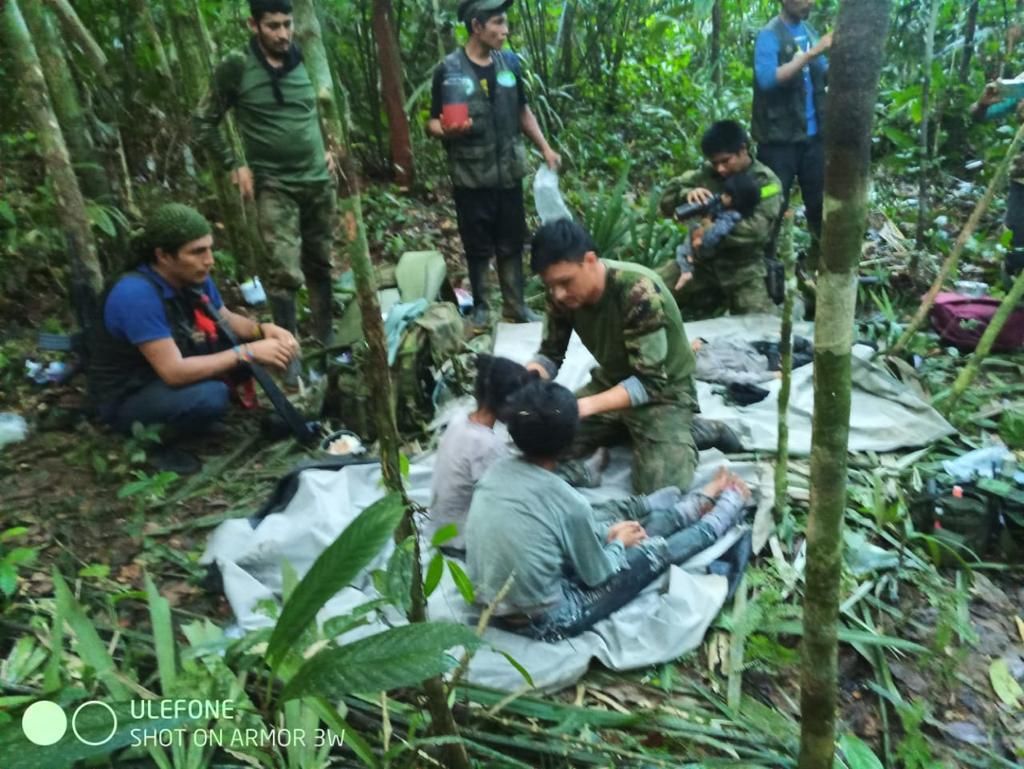
Four siblings — ages 13, 9, 4 and 1 — survived 40 days in Colombia's remote Amazon jungle after their plane crashed, killing their mother and the other two adults on board.
- The search for the children — members of the Huitoto Indigenous community — had gripped the country. News that they were found alive on Friday prompted celebrations.
- Colombian officials said the children had shown great skill in navigating the dense and dangerous forest, praising the eldest sibling in particular for her leadership, courage and knowledge of the jungle.
7. Stories we're watching
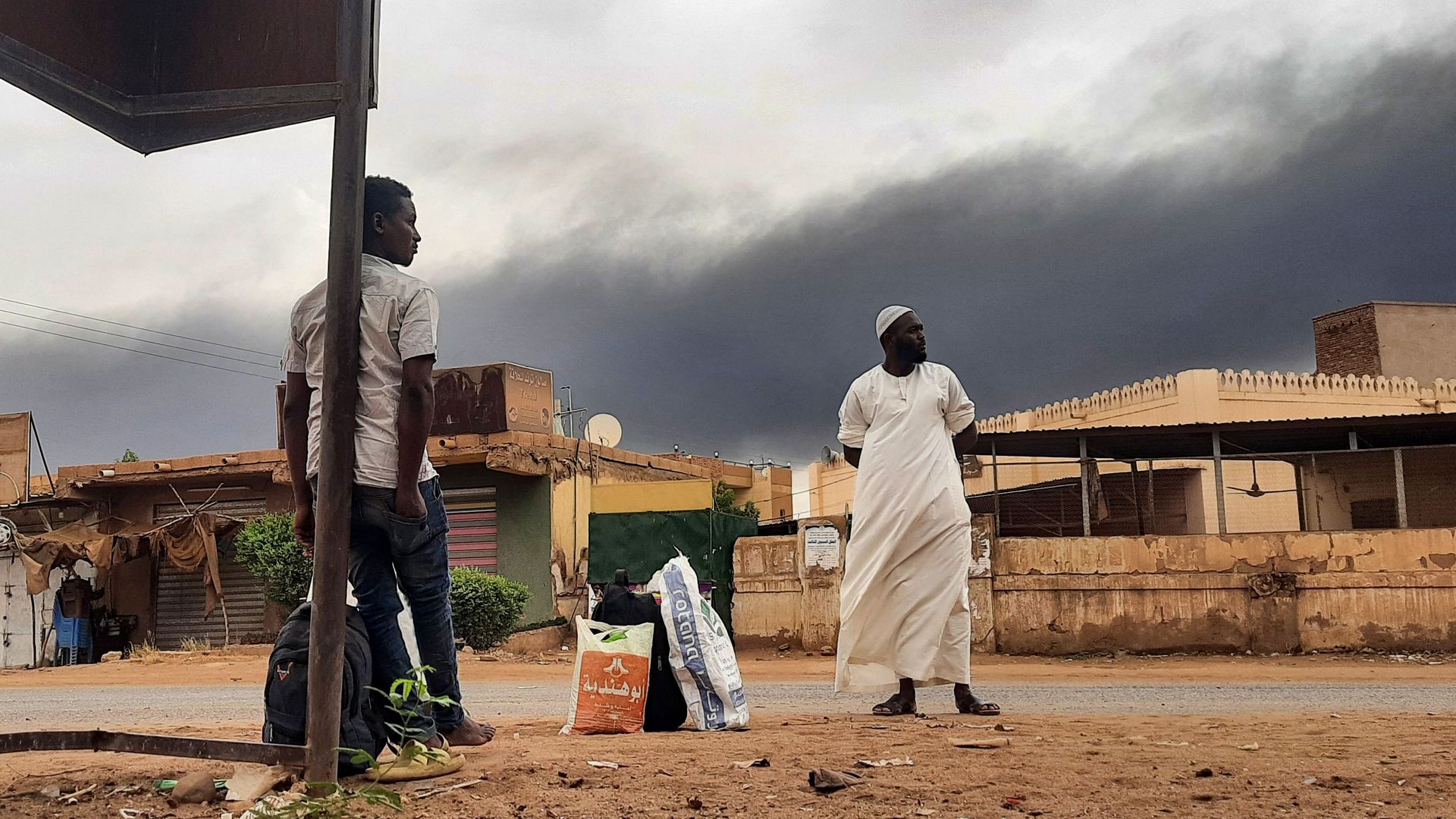
People in Khartoum pick up supplies during a 24-hour cease-fire on Saturday. Photo: AFP via Getty
- States seek to bar Chinese citizens from buying homes
- N.Y. bill takes aim at global debt
- Djokovic stands alone
- Are net zero targets meaningless?
- Canadian officials warn wildfires could "last all summer"
- Eurozone slips into (slight) recession
- U.S. economy keeps on ticking
Quoted:
"In order to increase the effectiveness of the use of volunteer formations as part of the Joint Group of Forces, the Minister of Defense of the Russian Federation signed an order that defines the procedure for organizing the service activities of volunteer organizations."— From a Russian Defense Ministry announcement on incorporating "volunteer organizations" like the Wagner Group into the regular armed forces
"Wagner will not sign any contracts with [Defense Minister Sergei] Shoigu."— Wagner Group chief Yevgeny Prigozhin, rejecting that plan
Answers: 1. Brazil; 2. U.S. (I'd also accept India, where English is a language of government alongside Hindi); 3. Mexico; 4. Germany; 5. Democratic Republic of Congo; 6. Egypt; 7. Bangladesh.
Key: 1. Portuguese; 2. English; 3. Spanish; 4. German; 5. French; 6. Arabic; 7. Bengali
Sign up for Axios World

Take a tour of the most important stories shaping our world