Axios Media Trends

June 10, 2025

Good afternoon. Today's Media Trends is 2,400 words, a 9-minute read. Sign up.
🇫🇷 Axios is returning to Cannes Lions this year (June 16–20), and our main stage lineup is bigger and better than ever.
- Speakers include Gabrielle Union, will.i.am, Paris Hilton, Reddit CEO Steve Huffman, Pinterest CEO Bill Ready, UTA CEO David Kramer and more.
- RSVP (Email me for info about our exclusive roundtables.)
📊 This Saturday: Axios will publish its biannual advertising economics report with a comprehensive breakdown of ad projections and trends by platform, medium and category. Only Axios Media Trends Executive members can access the report.
1 big thing: 🔄 History repeats itself


Warner Bros. Discovery's decision to split into two, publicly traded companies marks the latest in a long line of corporate shake-ups that have created significant headwinds for iconic media brands, like HBO and CNN.
🤝 Why it matters: History shows that mergers meant to bolster the positions of traditional media companies have mostly ended up slowing them down.
- AOL Time Warner's $182 billion merger in 2001 was ultimately unwound in 2009, after the company's stock plunged 80%.
- AT&T acquired Time Warner, forming WarnerMedia, in 2018 only to spin it off to merge it with Discovery four years later.
Driving the news: WBD is hoping that splitting its television networks from its streaming and studios business will give each unit more flexibility to compete while better positioning WBD to manage its debt.
- WBD has paid down nearly $20 billion of the more than $50 billion in debt it incurred from its 2022 billion merger of Discovery and WarnerMedia.
📺 How it works: Global Networks, which is still very profitable, will take on most of WBD's debt, but will retain an up to 20% stake in the company's stand-alone streaming and studios business.
- That structure will help "enhance the deleveraging path for global networks," said WBD CFO Gunnar Wiedenfels, who will become president and CEO of WBD Global Networks.
The big picture: WBD has used the profits from its global networks to scale its streaming product over the past few years.
- Executives believe that those investments will ensure that the streaming and studios company will be self-funding as a stand-alone business.
- "There is an expectation here, on our part, clearly, of very dynamic top line growth, profit growth and cash generation," Wiedenfels said.
What to watch: The fate of TNT's live sports rights in the U.S., which currently stream on HBO Max, remains unclear.
- While Wiedenfels' team will decide where to license those rights down the road, WBD CEO David Zaslav said "sports have been less critical" for driving streaming subscriptions in the U.S.
- Those rights include NCAA March Madness, Nascar, NHL and MLB.
2. 👀 All eyes on Versant
WBD's tax-free transaction allows each business to pursue bigger deals immediately following the close of this deal, executives told investors Monday.
Why it matters: Even though executives said there's currently no plan to pursue further deals, onlookers speculate WBD could eye a deal with Versant, the publicly traded cable company being spun out of Comcast NBCUniversal.
💸 Yes, but: It's unlikely that Versant would want to take on the debt that comes with the entire WBD Global Networks business, a source familiar with Versant's strategy told Axios.
- It wants to preserve its strong balance sheet to give it flexibility for strategic growth deals.
Zoom in: Versant is looking to acquire assets that will help enhance the offerings across its current portfolio of NBCU cable networks, which can be bucketed into four main genres:
- Political news and opinion (MSNBC)
- Business news and personal finance (CNBC)
- Golf and athletics (Golf Channel and GolfNow)
- Sports and genre entertainment (USA Network, Oxygen, E!, SYFY, Fandango, Rotten Tomatoes and Sports Engine)
🧐 Between the lines: The company is eyeing opportunities to enhance offerings in those four categories, which could be anything from a personal finance company to a digital sports offering.
- That doesn't mean it couldn't one day acquire a cable network that's complementary to its portfolio, but a mass rollup of cable networks isn't in its sights.
🔌 Zoom out: Amid cord-cutting, more entertainment giants are considering offloading their legacy TV assets to focus on streaming.
- Disney CEO Bob Iger in 2023 teased the possible sale of the firm's linear TV assets, including its broadcast network ABC, but later suggested interest in that idea had cooled.
🐭 What to watch: Iger on Tuesday told CNBC amid the spinouts from Comcast NBCU and WBD that Disney's linear networks offer it an advantage over its rivals.
- "I think it gives us a stronger hand to stay in that business," Iger said.
- "We will have, interestingly enough, a linear television business that's paired with a streaming business. So when you think about it, these spinoff companies won't have the assets from a streaming perspective that we will have. Again, I think that gives us an advantage."
3. 🇨🇳 China now owns 20% of global ad market


China's booming digital economy has boosted its share of the global ad market, challenging the United States' long reign as the world's largest ad market.
- China's 20% share of the global ad market is now greater than the country's share of global GDP, according to WPP Media.
🌎 Why it matters: Chinese ad sellers are finding enormous success selling ads to audiences globally, especially in the United States. But U.S. tech giants are still largely banned from China.
By the numbers: Nine of the world's top 25 ad sellers today are Chinese, including TikTok-parent ByteDance, Alibaba, Temu-owner PDD Holdings, Tencent, Baidu, JD.com, Kuaishou, Meituan and Xiaomi, according to a new ad forecast from WPP Media.
📱How we got here: The growth of China's economy and middle class over the past decade laid the foundation for the country's rapid ad expansion. But its mobile-first internet culture accelerated its dominance.
- Chinese tech firms have been innovating for the smartphone "to an even greater and faster degree than in other markets that went through a desktop phase first," said Kate Scott-Dawkins, the global president of business intelligence at WPP Media, who co-authored the report.
🤖 Zoom in: Over the past several years, Chinese ad sellers have gained dominance by leaning into AI-fueled retail media innovation.
- This year, China's share of all retail media globally is 44.1%, driven by e-commerce giants like JD.com and Alibaba, per WPP Media.
- But rivals are gaining ground. By 2030, China's share of retail media ad dollars globally is expected to dip to less than 40% as the U.S., U.K. and others scale up, according to Scott-Dawkins.
What we're watching: Macroeconomic and political factors like U.S. tariffs on Chinese goods and a possible TikTok ban could significantly dampen China's retail media and ad dominance. Scott-Dawkins said her projections factor in these potential risks.
4. 👻 New Snap Specs coming in 2026
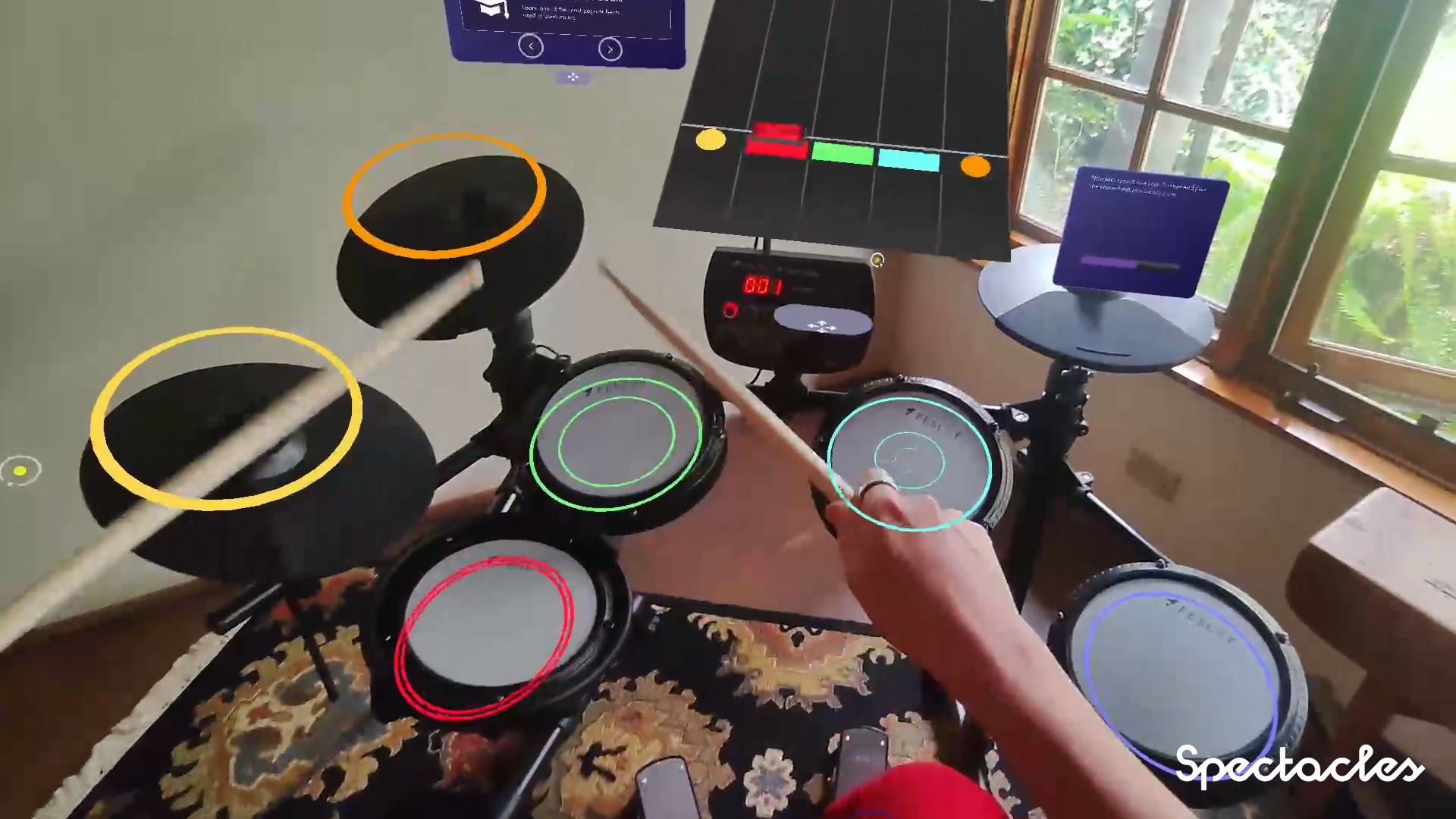
Snap plans to launch a new version of its augmented reality glasses, called Specs, in 2026. The new wearable computer lenses bring the power of AI assistant tools to the consumer's 3D AR experience.
Why it matters: Snapchat still makes most of its money from advertising on its mobile app, but CEO Evan Spiegel believes the future of connection, and its business, will live beyond the smartphone and in the real world.
- "The tiny smartphone limited our imagination. It forced us to look down at a screen instead of up at the world. It required our fingers to hold, swipe and tap when we really wanted to live hands-free," he said Tuesday at the Augmented World Expo 2025 in Long Beach, California.
Catch up quick: The new AR glasses are leaps and bounds more sophisticated than Snapchat's first iteration of consumer wearables, called Spectacles.
- Spectacles, which were first launched in 2016, allowed users to take pictures and video with their glasses and add AR overlays onto that content. But those features weren't powered by AI, which can now deliver more complex and engaging experiences.
How it works: The new glasses allow users to share games and experiences with friends, stream content and set up virtual work stations.
- They will also leverage AI recommendations and tools to help users with tasks such as figuring out how to change a tire or position a pool cue.
Zoom out: Snap has long prioritized its relationship with the developer community as a way of expanding its creative tools, especially around AR.
- Using Snap's existing AR tools, over 400,000 developers have built more than 4 million Snapchat Lenses, or AR overlays, that can be positioned on top of photos or videos taken by users.
- Snapchat users currently use AR Lenses in the Snapchat camera 8 billion times per day, according to the company.
- With the launch of Specs, Snap said it will also roll out new tools specifically for developers building location-based experiences.
5. 🗃️ Mark Read out at WPP


WPP has begun a new CEO search, as Mark Read will retire at year's end after more than 30 years at the ad giant and seven at the helm.
Why it matters: The company's stock price is down more than 50% since Read was appointed in 2018.
- While WPP has undertaken major restructuring, including consolidating creative agencies and the media division, its market performance has lagged behind its peers.
- WPP was once the dominant holding company by revenue, but Publicis recently overtook it. IPG and Omnicom are poised to leapfrog them both when their merger is finalized.
Zoom in: In his resignation note, Read referred to WPP as a "simpler, stronger business, serving four of the world's most valuable companies as their leading marketing partner." He also noted the company's investments in AI and the value of its people.
- But WPP has recently lost notable clients, including creative work from Starbucks to Stagwell and from Pfizer to IPG (later Publicis) and media buying in North America for Coca-Cola to Publicis. Paramount just dropped WPP as its media agency of record after more than two decades.
- Madison and Wall's Brian Wieser called Read's exit "unsurprising," in a Monday note, pointing to the business and stock performance as well as the recent appointment of a new board chair.
- Wieser said the key challenge ahead for WPP is its strategic direction, noting that the rise of automation and AI, a shift toward marketing services and principal-based buying will require "meaningful investments."
Zoom out: Read's upcoming departure comes as the agency model is being redefined.
- AI and automation are reshaping ad buying and creative execution and impacting the role of talent. Marketers are increasingly seeking outcome-based and performance-driven services versus traditional retainer fees.
- Adding to the industry's turbulence, Omnicom and IPG are set to merge in pursuit of scale and efficiencies. The deal is expected to put more pressure on simplification across agencies' portfolios and intensify competition for clients and talent.
The bottom line: Read's successor will inherit a more than 100,000-person behemoth going through a time of existential change.
6. 📺 Hulu drama ends with small payout
Disney will pay $439 million to purchase the last remaining part of Comcast's stake in Hulu, the company said in a regulatory filing Monday.
Why it matters: It's $439 million more than Disney wanted to pay, but it might have gotten off easy.
- Disney initially paid $8.6 billion for the 33% stake in 2023, but later entered arbitration with Comcast over Hulu's fair market value — to determine if it would need to pay more.
- Disney argued that it should be done, but also warned investors that Comcast could be awarded up to $5 billion.
💰 Ultimately, a third-party appraiser said Disney owed Comcast just $438.7 million, valuing the entire Hulu asset at around $29 billion.
The big picture: The deal finally puts Hulu in the hands of just one owner, after years of complicated ownership structures.
- Hulu was created in 2007 as a joint venture between News Corp. and NBCUniversal. Outside investors, including Disney, subsequently retained small stakes.
- In 2013, News Corp. split off its media assets, including its stake in the Hulu joint venture, to a separate company called 21st Century Fox. Disney's stake in the joint venture increased to 66% in 2019 with its acquisition of 21st Century Fox.
- Time Warner, which was later rebranded to WarnerMedia under AT&T's ownership, bought a 10% stake in 2016. AT&T sold its minority stake in Hulu back to the streaming video joint venture in 2019. (The transaction valued Hulu at $15 billion.)
What's next: Disney's acquisition of Comcast NBCU's interest in Hulu is expected to close on or before July 24, Disney said in the regulatory filing.
7. ⚖️ Court rules AP ban can continue
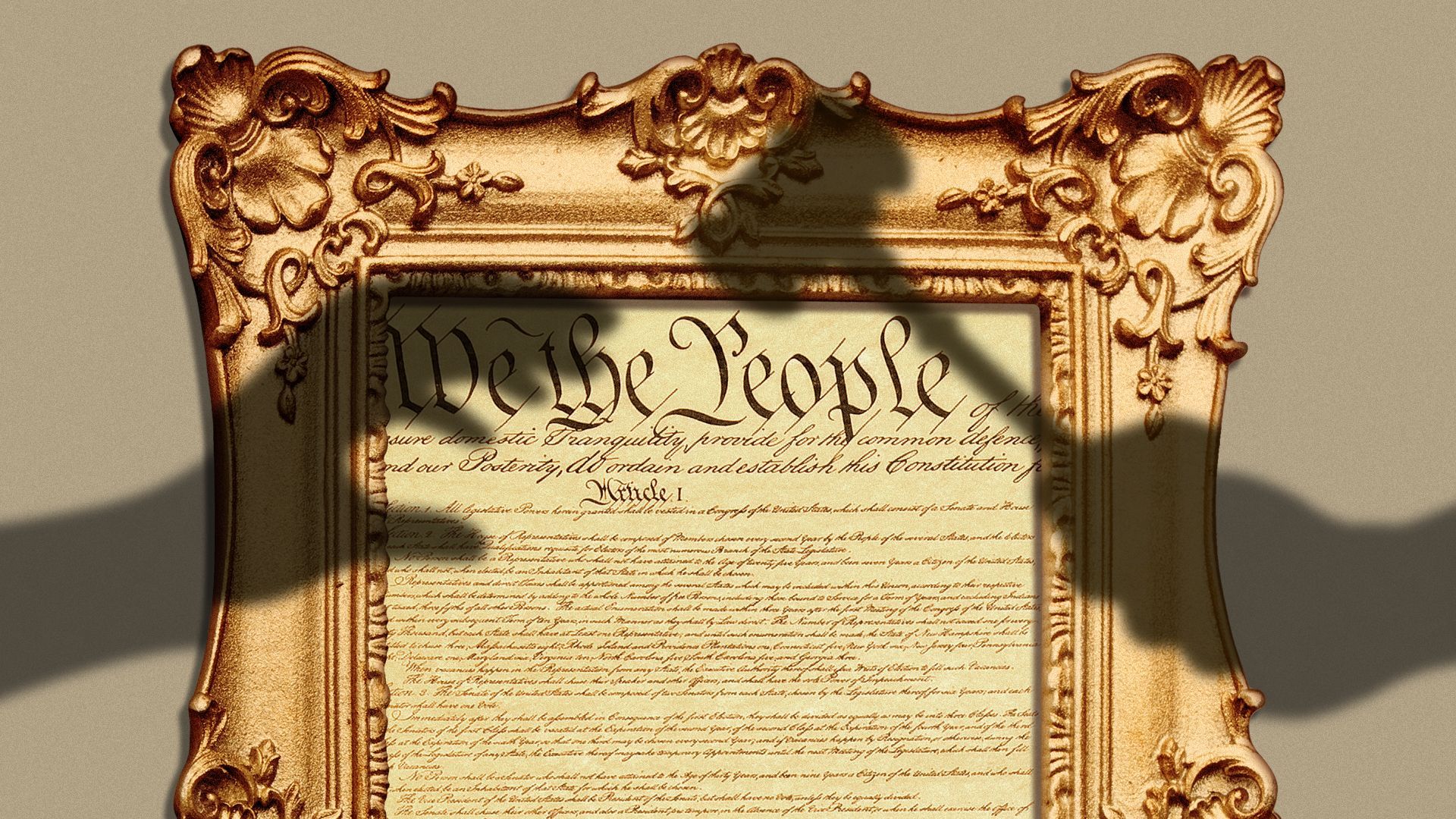
A panel of judges on a U.S. federal appeals court on Friday said parts of the White House's ban on the Associated Press could remain, dealing a devastating blow to AP.
📣 Why it matters: Press freedom advocates are closely watching AP's case, which could set precedents around free speech protections for journalists.
How it works: The decision allows most of the White House's ban to go back into effect while the case is litigated.
- The White House barred AP reporters from presidential spaces like the Oval Office and Air Force One.
- The panel of three judges — two of whom were Trump appointees — ruled that those spaces aren't subject to First Amendment protections, but allowed a lower court ruling that said the White House must allow access to larger spaces, like the East Room, to AP.
📜 The big picture: AP sued three Trump administration officials in late February for blocking its reporters, citing First Amendment rights.
- The White House said it barred AP for refusing to change the term "Gulf of Mexico" to "Gulf of America" in its journalism. AP said it didn't make the change so as not to confuse its global readership.
- In April, a federal judge sided with AP, declaring that under the First Amendment, the government can't bar journalists from certain government events because of their viewpoints. The Trump administration appealed the ruling shortly thereafter.
What they're saying: In a statement, AP said, "We are disappointed in the court's decision and are reviewing our options."
- White House press secretary Karoline Leavitt called the ruling a victory in a post on X.
- "As we've said all along, the Associated Press is not guaranteed special access to cover President Trump in the Oval Office, aboard Air Force One, and in other sensitive locations," she wrote.
8. 🎭 1 fun thing: Tony's traction
CBS' broadcast of the 78th Annual Tony Awards on Sunday drew 4.3 million viewers, per Nielsen, marking its largest TV audience since before the pandemic.
🍿 Why it matters: The ceremony, hosted by "Wicked" star Cynthia Erivo, featured several buzzy moments that helped keep viewers locked in.
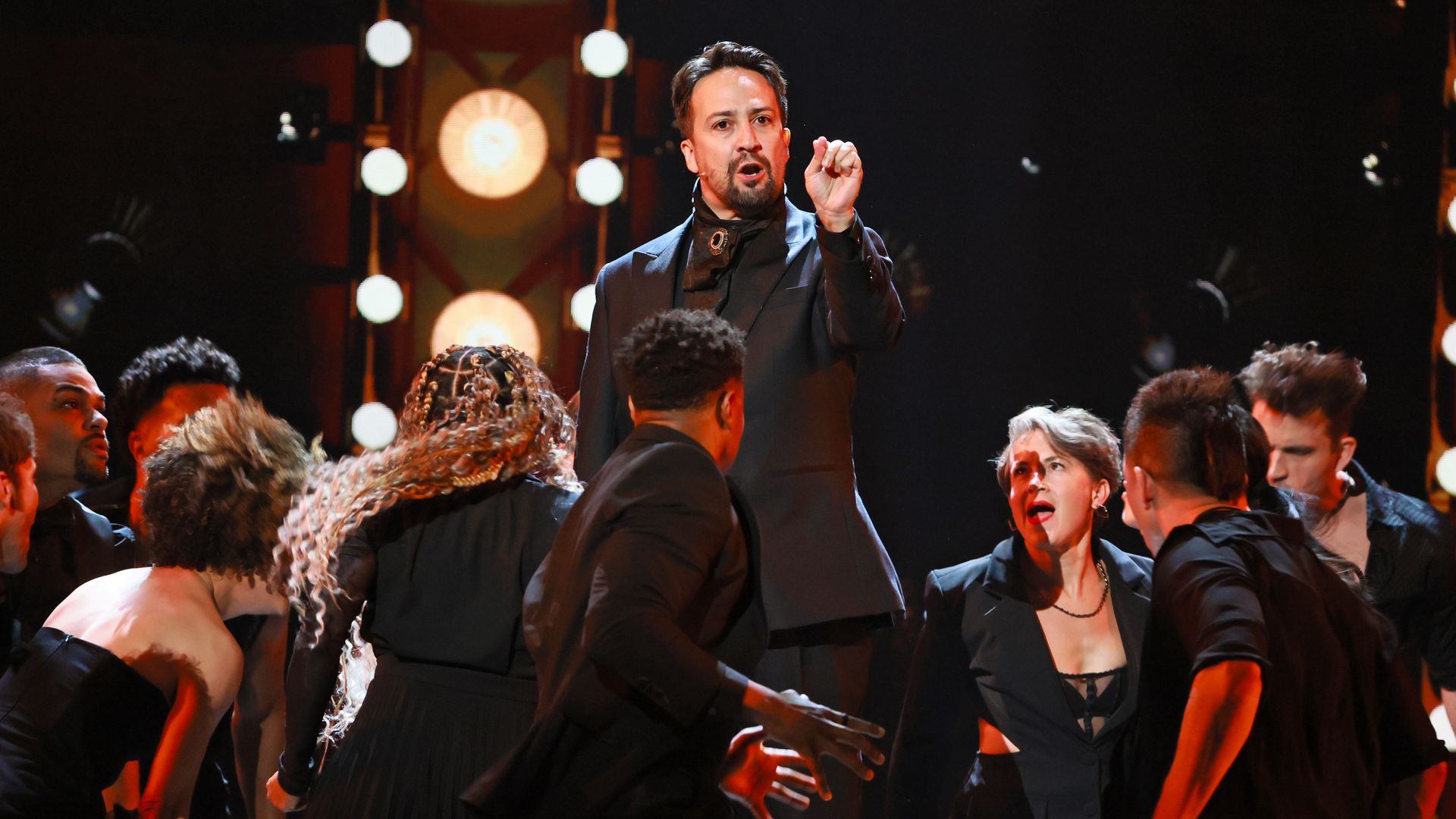
- Most notably, the original cast of the Broadway sensation "Hamilton," including creator Lin-Manuel Miranda, reunited for a performance during the show to celebrate its 10th anniversary.
🏆 Several surprise wins also kept viewers on their toes.
- "Oh, Mary!" star Cole Escola beat George Clooney, Daniel Dae Kim and others for the Best Leading Actor award, becoming the first openly nonbinary winner in the category.
- "Sunset Boulevard's" Nicole Scherzinger was named Best Leading Actress over "Gypsy's" Audra McDonald.
The big picture: Award show audiences have recovered since the pandemic, but are still down significantly from the pre-streaming era.
Today's newsletter was edited by Christine Wang and copy edited by Sheryl Miller.
Sign up for Axios Media Trends