CNN parent Warner Bros. Discovery to split into two companies


Add Axios as your preferred source to
see more of our stories on Google.
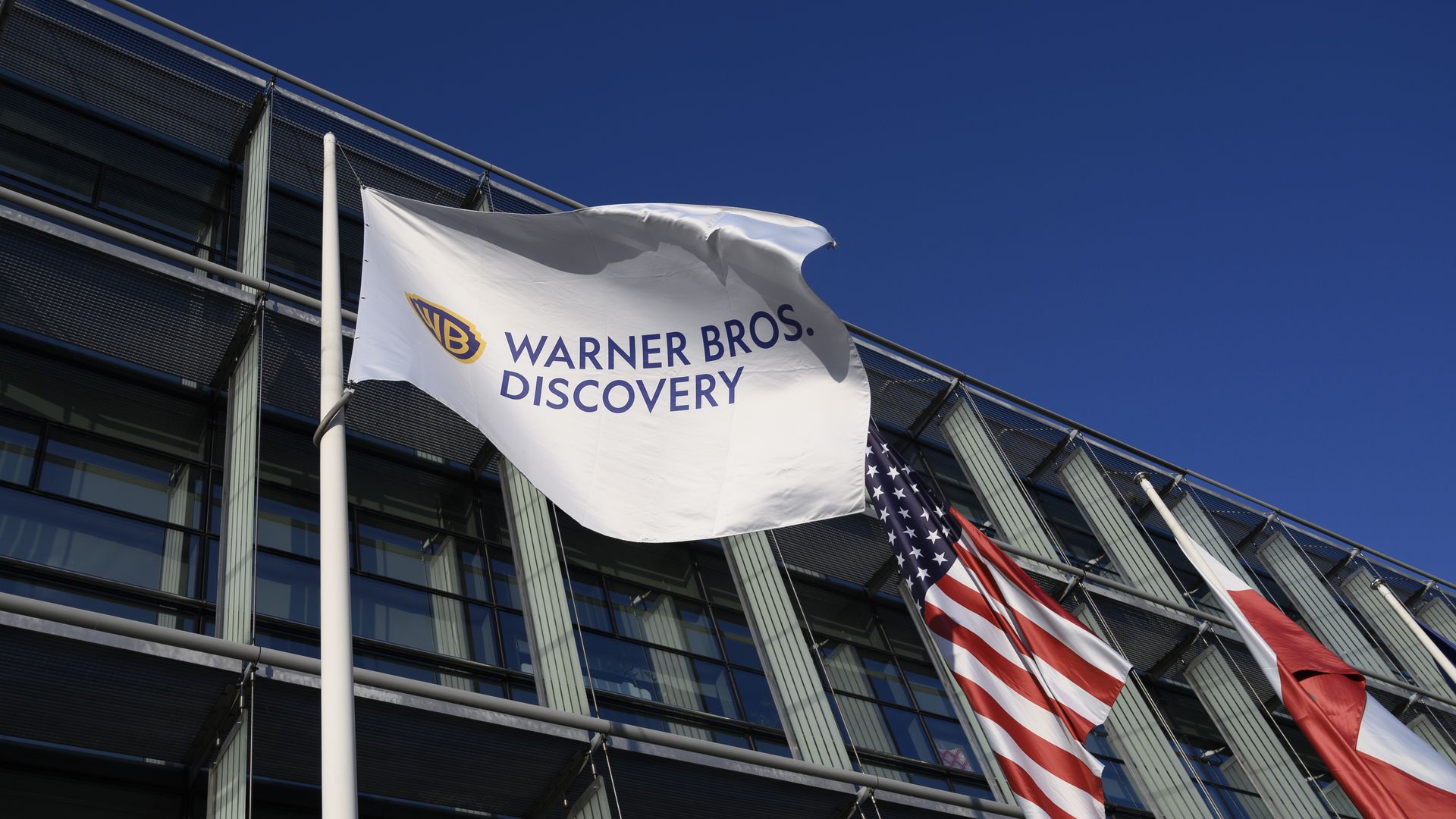
Photo by Aleksander Kalka/NurPhoto via Getty Images
Warner Bros. Discovery, the parent company to cable channels such as CNN, TBS and TNT and the streaming service HBO Max, announced Monday that it plans split into two publicly traded companies, parting its television networks from its streaming business.
Why it matters: The split gives the company's businesses more flexibility to compete while better positioning WBD to manage its debt following the $43 billion merger of Discovery and WarnerMedia in 2022.
- "By operating as two distinct and optimized companies in the future, we are empowering these iconic brands with the sharper focus and strategic flexibility they need to compete most effectively in today's evolving media landscape," WBD CEO David Zaslav said in a statement.
Zoom in: WBD Streaming & Studios will include HBO, Warner Bros. Pictures and DC Studios, while WBD Global Networks will include CNN, TNT Sports U.S. and Discovery.
- Global Networks will also include WBD's top free-to-air channels across Europe, and digital products such as the Discovery+ streaming service and Bleacher Report (B/R).
- Zaslav will become president and CEO of WBD Streaming & Studios. WBD CFO Gunnar Wiedenfels will become president and CEO of WBD Global Networks.
- The company expects the separation to be completed by the middle of next year.
How it works: Global Networks will take on most of the company's debt, but will retain an up to 20% stake in WBD's stand-alone streaming and studios business, helping to "enhance the deleveraging path for global networks," Wiedenfels said on an investor call.
- The tax-free transaction allows each business to pursue bigger deals immediately following the close of the deal, executives told investors, but Wiedenfels emphasized that currently there is "no such plan" to pursue further deals.
Catch up quick: WBD was formed in 2022 when Zaslav's Discovery, which was made up mostly of cable networks and some smaller streaming services, merged with WarnerMedia, which housed the Warner Bros. Pictures movie studio, a general entertainment streaming service and several cable networks.
- The merger created more than $50 billion in debt, of which nearly $20 billion has already been paid off.
Of note: WBD has been exploring a spinoff for some time. Last December, it announced a new corporate structure that divided its linear television business from its streaming and studio businesses.
- The move, the company said at the time, would "enhance its strategic flexibility and create potential opportunities to unlock additional shareholder value."
- It had also explored mergers with cable companies like Paramount Global, but talks never materialized.
Zoom out: Amid cord-cutting, more entertainment giants are eyeing ways to offload their legacy TV assets to focus on streaming.
- Comcast said last year it plans to spin off NBCUniversal's cable networks into a separate, publicly traded company. That collection of assets, which includes USA Network, CNBC, MSNBC, Oxygen, E!, SYFY, Golf Channel and others, will be part of a corporate parent called Versant.
- Disney CEO Bob Iger in 2023 teased the possible sale of the firm's linear TV assets, including its broadcast network ABC, but later suggested interest in that idea had cooled.
What to watch: The fate of TNT's live sports rights in the U.S., which currently stream on HBO Max.
- While Wiedenfels team will decide where to license those rights down the road, Zaslav said "sports have been less critical" for driving streaming subscriptions in the U.S.
- Those rights include NCAA March Madness, Nascar, NHL and MLB.
Editor's note: This story has been updated with more details on the separation.
Disclosure: Sara Fischer is a paid contributor for CNN.
