Axios Markets

March 07, 2023

1 big thing: China's underwhelming growth target
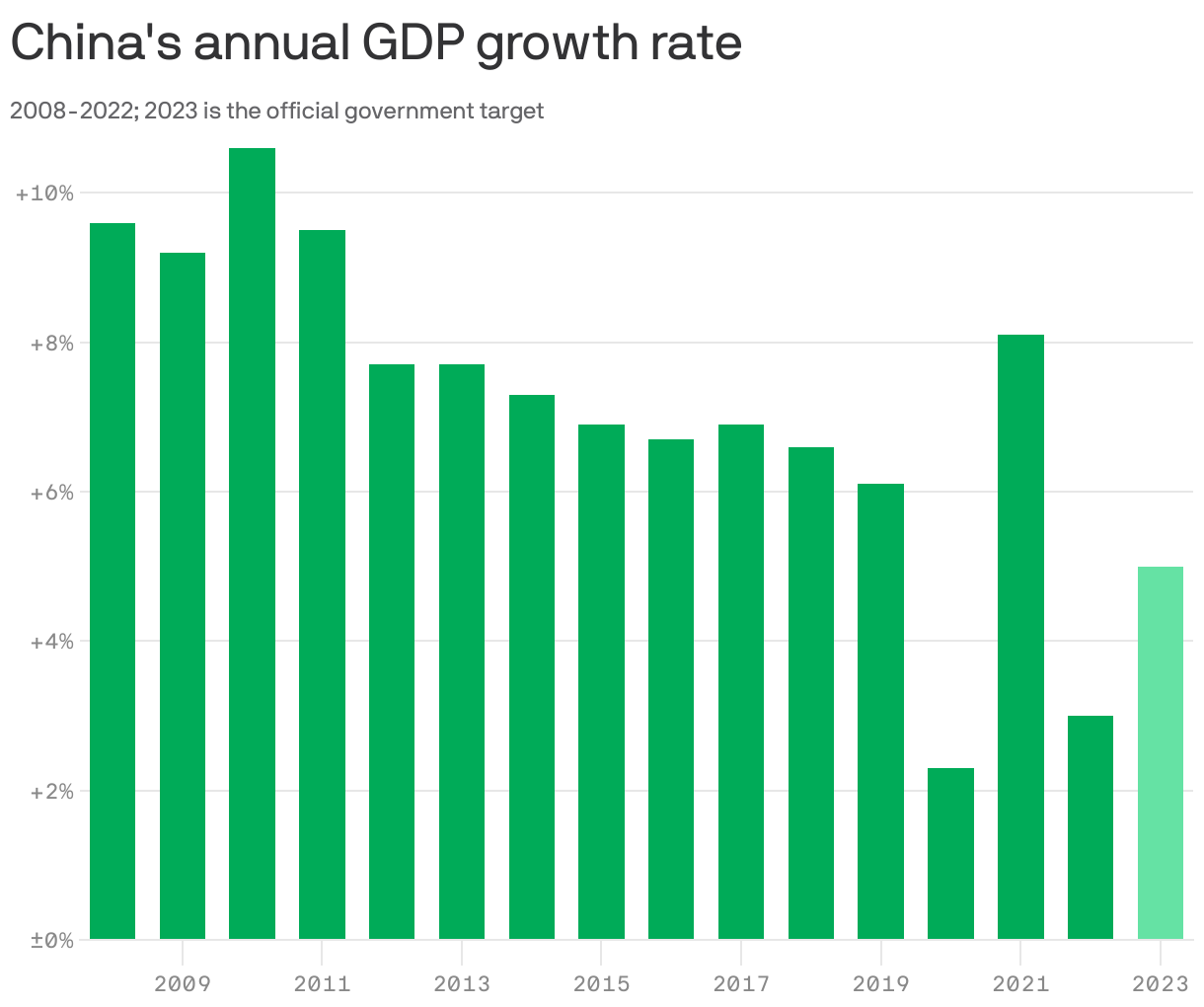
China's growth target for 2023 underwhelmed investors, economists and analysts looking for clues about how President Xi Jinping's officials will run the world's second-largest economy, Matt writes.
Why it matters: The modest growth goals suggest China's economy may continue to weigh on global GDP this year, as the nation tries to put its COVID-related slowdown behind it.
Driving the news: During the weekend's opening of the largely ceremonial annual session of the National People's Congress — China's legislature — party officials set their target for 2023 GDP growth at "around 5%," and failed to introduce large stimulus plans as some had expected.
Background: In 2022, China fell far short of its target of 5.5% economic growth.
- Hampered by the impact of the government's strict zero-COVID policies, its economy expanded by just 3% in 2022, its slowest rate of growth since 1976.
Between the lines: The news set off a slump in some China-sensitive commodities, suggesting investors had expected a stronger commitment from policymakers to use traditional tools like big spending on infrastructure projects to boost growth.
What they're saying: "The fact that policymakers missed the 'around 5.5%' growth target in 2022 might be one consideration behind the relatively unambitious growth target this year," Goldman Sachs analysts wrote.
- "Non-boom China growth won’t be enough to keep the global economy from sliding into recession this year," Piper Sandler analysts wrote.
- "The growth target suggests the authorities will not go hell-for-leather to boost the economy after a long period of weakness during the zero-COVID policy era," Capital Economics analysts wrote.
The big picture: How much China’s growth will slow in the coming years is a key question related to the direction of the country under the increasingly centralized leadership of President Xi — whose precedent-shattering tenure has been marked by a focus on restoring China to so-called great power status in the face of persistent economic headwinds.
- This week's National People's Congress marks the departure of Premier Li Keqiang, a pro-market technocrat who was China's top economic official for the last decade.
- Li Qiang, the former Communist party secretary of Shanghai best known for his close ties to Xi, is expected to succeed him. He's just one of a number of new faces Xi has put in charge of the economy.
The bottom line: China is in a period of flux, as geopolitical tensions with the West, domestic economic issues — like the struggling housing market — and declining demographics act as stiff headwinds to its economic recovery.
2. Catch up quick
3. The U.S. vs. the world, manufacturing edition
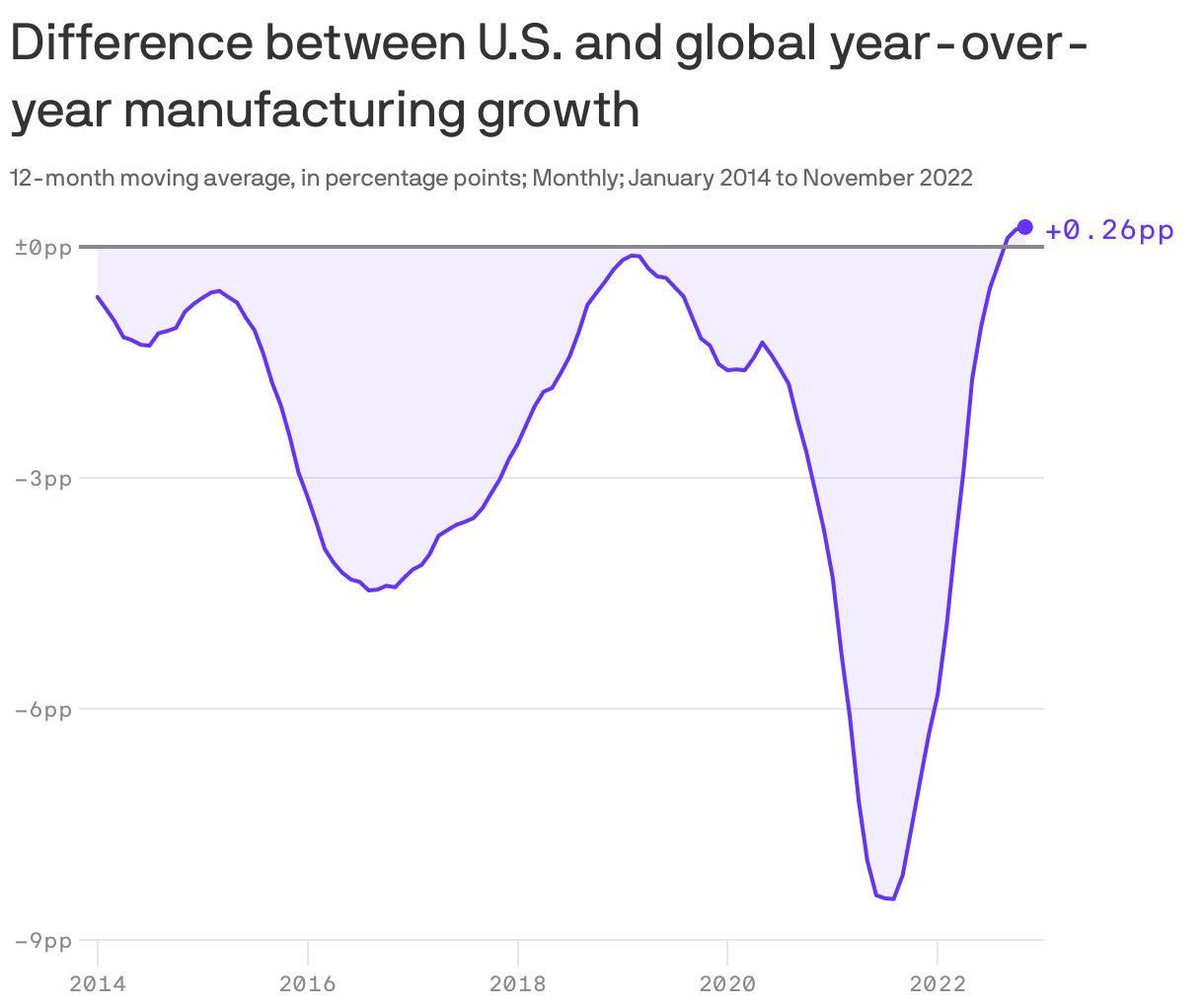
American manufacturing growth started outpacing the rest of the world's growth at the end of last year — for the first time in recent memory, Axios’ Kate Marino writes.
The big picture: The reasons for the surprising flip-flop are primarily energy and COVID-related, according to the Atlantic Council GeoEconomics Center.
- Production of renewable energy equipment saw a big uptick in the U.S. last year, and oil exports soared, too.
- Also: Domestic production of medical equipment like masks, gloves and pharmaceuticals grew.
Meanwhile, China’s manufacturing growth was muted because of its zero-COVID policies, while the eurozone’s production has been impacted by higher energy prices.
- “While the rest of the world grew a little, the US surged,” the Atlantic Council wrote.
Details: The chart shows the difference between the U.S. and the world's (excluding the U.S.) industrial production year-over-year percent change. The Atlantic Council calculations are based on data from the Federal Reserve Bank of Dallas.
What’s next: The Fed's rate-hiking campaign could still slow down manufacturing, as the WSJ reports.
- But, but, but: One potential tailwind is the Inflation Reduction Act's massive incentives for clean energy production — which haven’t even kicked in yet.
4. Case study: D.C.'s push to convert empty offices
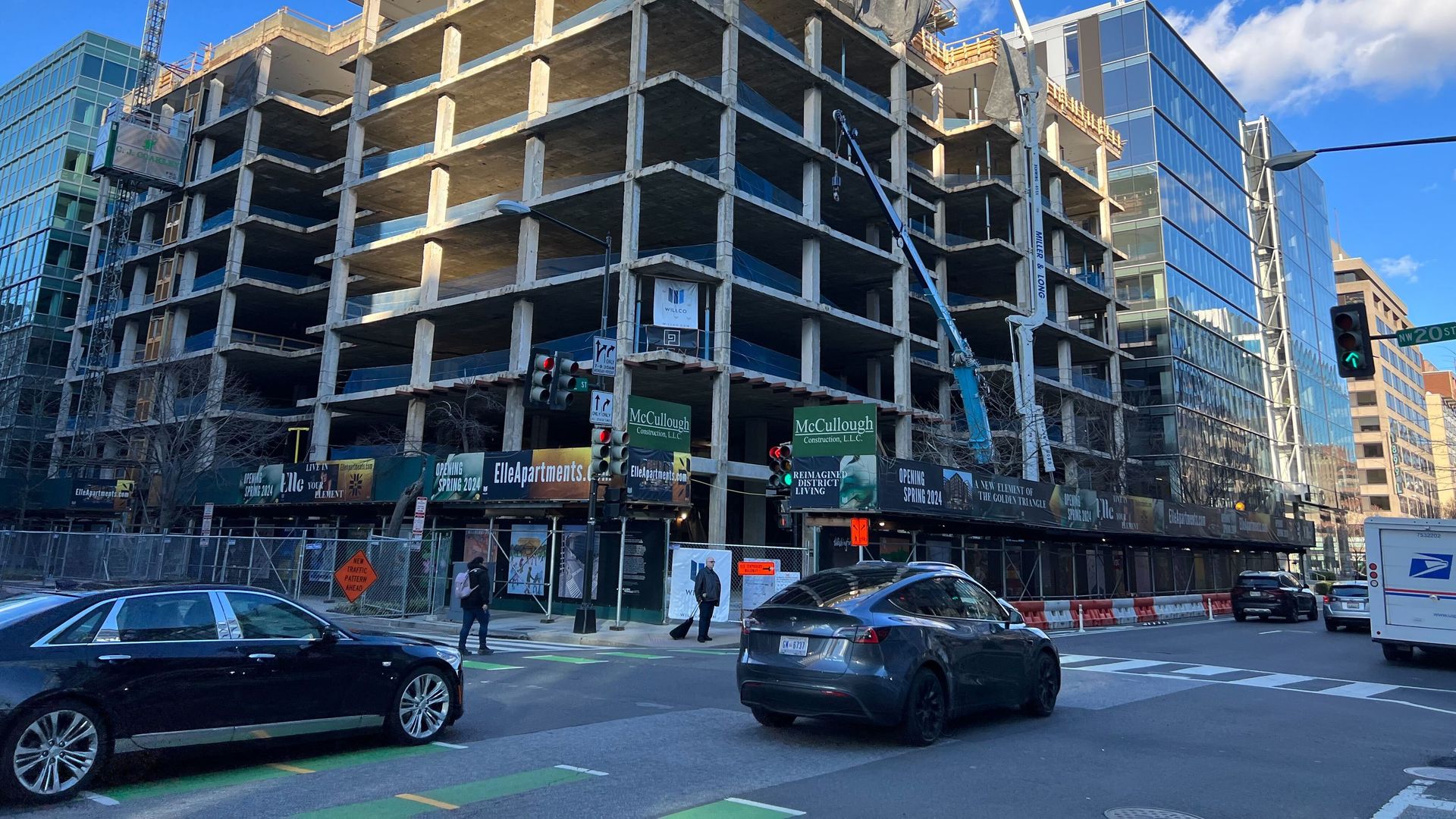
Converting the former Peace Corps offices into apartments is slated to finish early next year. Photo: Paige Hopkins/Axios
Axios Markets

Stay on top of the latest market trends and economic insights