Axios Markets

November 19, 2024

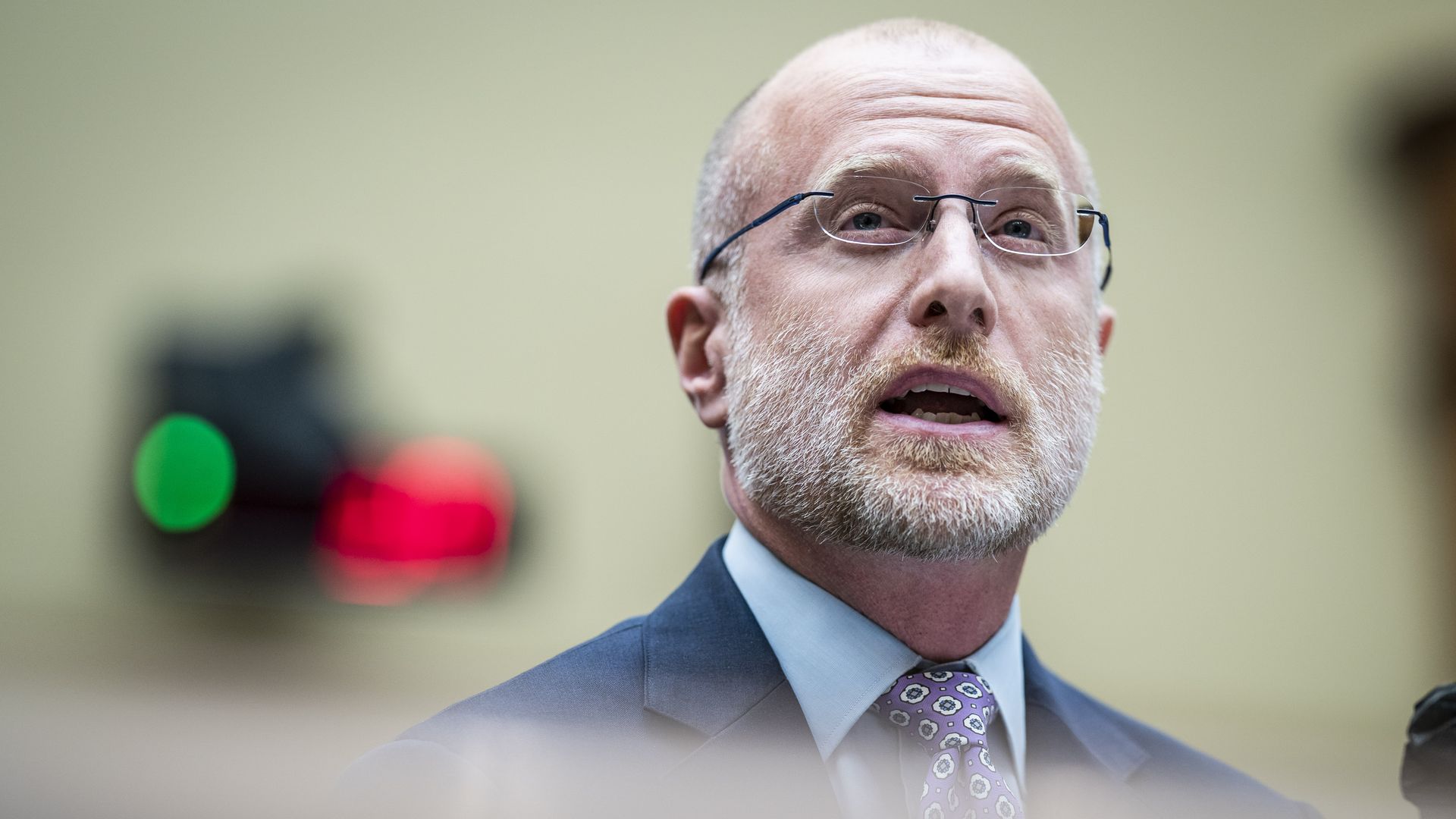
🤷‍♂️ Good morning. It's International Men's Day. Today we're looking at one of the men nominated to Trump's administration, Brendan Carr, who is set to shake up the landscape for local television.
- Plus, some good news in banking and, for a treat, a chart on what stock returns might look like when the GOP holds the Oval Office and both houses of Congress.
- All in 964 words, a 4-minute read.
1 big thing: The future of local TV
Incoming FCC chairman Brendan Carr is a big proponent of deregulation, and one of his first targets may be sweeping changes in local TV ownership and the makeup of local news.
Why it matters: Local TV station owners have long argued that consolidation is needed to compete against Big Tech, despite concerns that fewer owners could hurt competition and diverse voices in local news reporting.
The big picture: Carr's FCC may revisit rules that restrict how many Americans any one local TV station owner can reach, and how many stations in a given market they can own.
- The industry is eager to consolidate amid declining ad revenue.
Zoom out: Republicans as well as the National Association of Broadcasters, the top trade group for local TV and radio stations, have pushed the FCC for years to change its rules regarding ownership limits.
- During Donald Trump's first term in the White House, the FCC moved to roll back some ownership rules, but its progress was halted when President Biden and the Democrats took over.
- Loosening of ownership rules figures to benefit the large publicly traded station groups like Sinclair, Nexstar and Tegna (whose purchase by Standard General was blocked by the FCC).
Zoom in: Under Carr and a Republican-controlled FCC, the agency is expected to end, or at least relax, some of its strictest rules on ownership limits that have been in place for decades.
- Those include: No one company is allowed to own stations that would collectively reach more than 39% of U.S. households. Additionally, no single entity can own more than one of the four largest stations in any single market.
- "It is past time for the FCC to confront the harms that its own media ownership policies have caused," Carr wrote last year.
Between the lines: Congress requires the FCC to reconsider the ownership rules every four years in what's called the Quadrennial Review.
- Sometimes these reviews can take years; for example, the 2018 review wasn't completed until last December. In that review, the FCC decided against relaxing the ownership caps.
- The 2022 review is ongoing, and the next one will start in 2026, midway through Trump's second term.
What they're saying: Station groups are as optimistic as they've ever been about the possibility of reduced ownership caps.
- "We're very excited about the upcoming regulatory environment," Sinclair CEO Chris Ripley told analysts during the company's earnings call the day after the election. "It does feel like a cloud over the industry is lifting here."
The other side: The Internet and Television Association, a trade group representing broadband and cable TV companies, wants the FCC to tighten its ownership rules.
- This group is concerned that allowing one company to own multiple stations in a single market could give them too much leverage to drive up retransmission fees. (Cable companies pay those fees to local station owners for the rights to carry their signals. The fees are a major source of profits for station owners.)
- Antitrust and other advocacy groups are also worried that consolidation would push out minority voices.
- Research, like a 2019 Stanford review, has also found that consolidation tends to crowd out some local coverage in favor of national coverage, along with introducing shifts in ideology.
2. Share of unbanked Americans at a record low


The share of unbanked Americans is at a record low, per a new survey from the FDIC.
Why it matters: It's a positive economic sign and a signal of a strong labor market.
The big picture: Lack of access to a checking or savings account is a big financial burden.
- Without access to a bank account, simple activities like paying a bill, cashing a paycheck or even paying for everyday goods become a lot harder, and often more expensive.
- Plus, keeping your money outside the FDIC-protected banking system means there's a higher chance it isn't safe.
Catch up fast: The share of unbanked Americans has been steadily falling since the financial crisis, as more folks started working again. (If you have a job, you more likely need someplace to stash your pay.)
- The number took another leg down during the pandemic, as more Americans opened accounts to have easier access to direct deposit stimulus and unemployment checks.
- The ranks of the unbanked are also falling as the population gets older, and becomes generally more educated — older folks and those with more education are more likely to be banked.
Zoom in: Unbanked rates are higher for lower-income households and for Black, Hispanic and Native American people.
- 42% of those surveyed who didn't have a bank account said they don't have enough money to meet the minimum balance requirements.
- Nearly 16% of those without an account said they don't trust banks.
3. How the stock market could perform under a unified GOP government


A unified government under GOP control may signal better returns for investors than a divided Congress would have, according to an analysis by WT Wealth Management.
Why it matters: With the GOP narrowly retaining control of the House, Republicans now have a clearer pathway to pursue the business-friendly agenda that President-elect Trump promised during the campaign.
By the numbers: Over about a century, the S&P 500 and its predecessors had roughly double the returns during period of unified GOP control, compared to periods with a Republican president and Democrats leading at least one house of Congress, per the WT Wealth Management data.
- A unified GOP government averaged annual returns of 14.5%, while a divided government with a Republican president averaged returns of 7.3%.
Yes, but: Performance in the last unified GOP government, during Trump's first term in the White House, was more mixed.
- In 2017, the S&P 500 rose about 19%, but in 2018 it fell about 6%.
The bottom line: As any savvy investor will tell you, past performance is no guarantee of future results.
Go deeper: What markets are signaling about the Trump economy
Thanks to Ben Berkowitz for editing and Anjelica Tan for copy editing.
Editor's note: This newsletter has been corrected to note Brendan Carr's nomination as FCC chair is an administration (not Cabinet) position.
Sign up for Axios Markets