What markets are signaling about the Trump economy

Add Axios as your preferred source to
see more of our stories on Google.
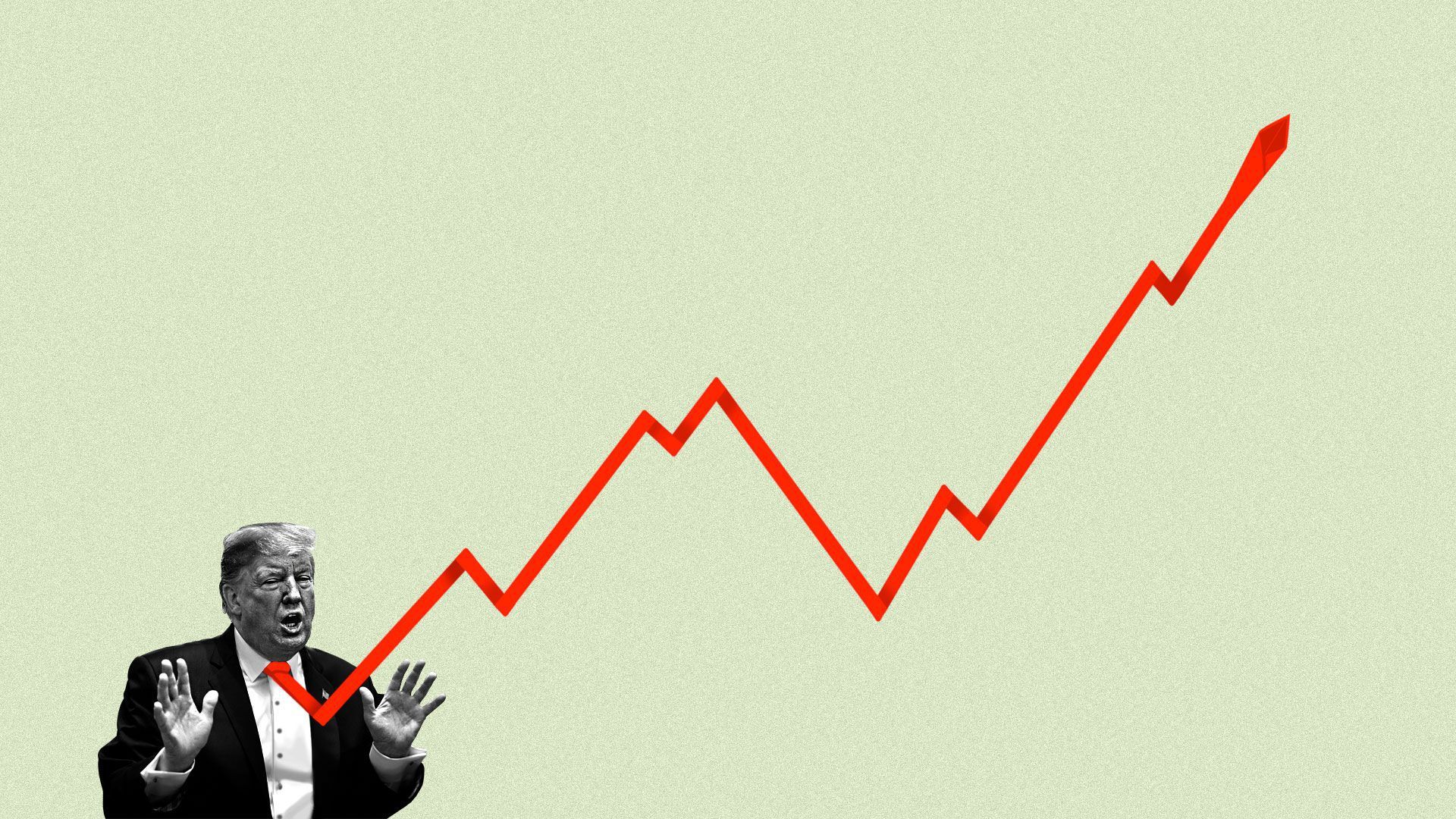
Illustration: Lazaro Gamio/Axios
Markets are betting that the second Trump administration will bring robust growth, an unshackled corporate sector, and only modest downside from some of the president-elect's more disruptive plans.
Why it matters: Policy will be volatile in the years ahead, and risks abound. But the wisdom of the investing crowds — for the moment — holds that it will net a more conducive environment for business and that any uptick in inflation will be temporary.
- It is, in effect, a bet that Trump 2.0 will fire up America's competitive juices and that policies around tariffs and mass deportations will be carried out in ways that don't do excessive damage to business.
By the numbers: The S&P 500 is up about 3.5% since Election Day as of midday Tuesday, and the Russell 2000 index of small-cap companies is up by about 7%.
- Longer-term bond yields are up, which may reflect both expectations of higher fiscal deficits and more rapid growth.
- Bond market pricing of annual inflation over the next five years is up by about 0.1 percentage point from pre-election levels, but is stable for the period five to 10 years from now.
What they're saying: "The combination of the steepening yield curve, stable inflation expectations and the rise in stocks indicates that markets expect the Trump agenda to foster noninflationary growth that will drive private investment," wrote hedge fund manager, Trump adviser and leading Treasury contender Scott Bessent in a new essay.
Yes, but: In the first Trump term, markets were ebullient at first as they priced in the benefits of lower taxes and deregulation, with a hit from trade barriers showing up later.
- The S&P 500 was up 19% in 2017, his first year in office, as Republicans coalesced around a big cut in corporate taxes. But the index fell 6% in 2018 as tariffs were implemented.
Of note: Bessent's piece, published Monday in the Wall Street Journal, is a window into how a potential Trump Treasury secretary is thinking about the policy roadmap ahead.
- We were particularly interested to see his focus on the Treasury Department's recent practice of issuing a higher share of short-term debt than is the historical norm.
- Bessent and others have argued that this is a backdoor form of monetary stimulus, whereas the Biden administration says it is driven by apolitical technical factors.
- But if the Trump Treasury attempts to reverse it, it will push long-term interest rates higher and act as monetary tightening, as Bessent acknowledges, writing that it "will need to be deftly handled."
