Axios Login

December 14, 2020

Here's a little present courtesy of NASA: 30 new images from the Hubble Space Telescope, as the galactic observation tool celebrates 30 years in service.
Today's Login is 1,370 words, a 5-minute read.
1 big thing: Tech "exodus" isn't scaring Silicon Valley

Illustration: Eniola Odetunde/Axios
Silicon Valley's powerhouses aren't putting out the "moving sale" signs, even as a handful of high-profile departures raises questions about the region's status, Axios' Scott Rosenberg writes.
Driving the news: Oracle's Friday announcement that it's shifting its headquarters to Austin, Texas follows a previous move by Hewlett Packard Enterprise to Houston.
Reality check: These companies aren't shutting down their California offices. They've changed their legal addresses in part to flee the state's taxes and regulations.
- Tesla founder Elon Musk, who has sparred with California over labor issues amid pandemic restrictions, recently announced he would move from Los Angeles to Texas, which is likely to save him a fortune in personal taxes.
Between the lines: The companies leading this wave of departures from Silicon Valley represent the industry's more conservative wing.
- Surveillance-focused Palantir has moved from Palo Alto to Denver.
- Oracle was the tech industry's biggest supporter of President Trump.
Think of their moves as a part of the country's ongoing "big sort," where businesses and individuals increasingly choose where to live based on their political and cultural affiliations to the "blue" or "red" tribes.
Context: Oracle is a venerable database powerhouse, but it has never vaulted into the front rank of tech industry giants. HPE is a shard of the once-mighty Hewlett-Packard focused on corporate hardware and services. (The rest of the old Hewlett-Packard remains in the Valley.)
- You won't find anyone on Sand Hill Road who believes these firms' departures say anything about Silicon Valley's capacity to keep innovating.
The big picture: The "tech exodus" from the San Francisco Bay Area is a permanent feature of the Silicon Valley ecosystem. Every turn of the tech business cycle brings new waves of engineers, entrepreneurs and startups to the housing-starved region — and others regularly leave to make room.
- Tech growth and startup innovation have been steadily spreading beyond Silicon Valley for decades, and plenty of other U.S. regions have tried to become silicon prairies/alleys/coasts/deserts.
- As Axios' Jim VandeHei and Mike Allen argue, America's dispersed urban centers will be the laboratories for many of tech's most world-changing new industries, including 5G, autonomous vehicles, and "smart cities" systems.
- Other burgeoning waves of tech, from AI to the cloud industry to quantum computing, are more likely to advance inside tech-giant campuses.
Yes, but: Tech growth has actually become more concentrated in five leading coastal metropolises (San Francisco, Seattle, San Diego, San Jose and Boston) over the past two decades, as Axios' Kim Hart reported a year ago.
The catch: New firms bubbling up in places like Austin, Boulder and other regions rarely have plans or hopes to become the next tech giant.
- For most, the game plan is still: Get an idea, get growth, and get bought — usually by a much larger West Coast firm.
The pandemic-driven shift to remote tech work could give other regions an opportunity to shift the industry's power imbalance. But the way many Silicon Valley CEOs see it, the change means their companies can now have the best of both worlds — in-person hubs rooted in the Bay Area's culture drawing on global networks of talent.
- Even before the pandemic, Silicon Valley's giants were looking outside of the region for growth.
- Apple, for example, recently opened major centers in Los Angeles and expanded operations in Austin.
The bottom line: Neither Google nor Facebook has shown the slightest public interest in moving their home bases, and Apple's $5 billion UFO-style headquarters can't exactly take flight.
2. Recreating racism in VR to fight real racism

An image for the VR film "I Am A Man." Photo: Courtesy of Derek Ham
New virtual and augmented reality technology is allowing users to experience 1960s civil rights marches, the agony of segregation for Black Americans, or life in a Japanese American internment camp, as Axios' Russell Contreras reports.
Why it matters: For now, this is largely a tool for educators seeking new ways to teach young Americans about the legacy of slavery and racism. But there's growing commercial potential as more people become comfortable using technology to expand their horizons.
- Shipments of VR headsets are expected to grow at a compound annual growth rate of 48% from 2020 to 2024, the International Data Corporation reports.
- The augmented reality market is estimated to jump from $10.7 billion in 2019 to $72.7 billion by 2024, according to ReportLinker.
Details: Projects created in universities and private labs allow users to walk in the shoes of people who faced (and still face) discrimination by recreating historic events.
- I Am A Man VR Experience places participants at the 1968 Memphis Sanitation Worker’s Strike and events leading to the assassination of Martin Luther King.
- Traveling While Black takes users to Ben's Chili Bowl in Washington, D.C., as travelers show the difficulties African Americans experienced in the U.S. during Jim Crow.
- Mapping Amache allows users to visit virtual recreations of Camp Amache in Granada, Colorado, that detained Japanese Americans during WWII. The models were created by drones and VR technology.
How it works: Projects can be downloaded or watched via 360° video on VR headsets.
- Those without pricey VR headsets can experience most projects by using 360° videos on laptops or phones.
What's next: Other efforts under development include a VR project from "I Am a Man" creator Derek Ham based on the Negro Baseball Leagues, a digital map of forgotten Mexican Americans lynched in Texas and a VR project to help companies fight discrimination from start-up Vantage Point.
3. Study: Smart ring could help spot COVID infections
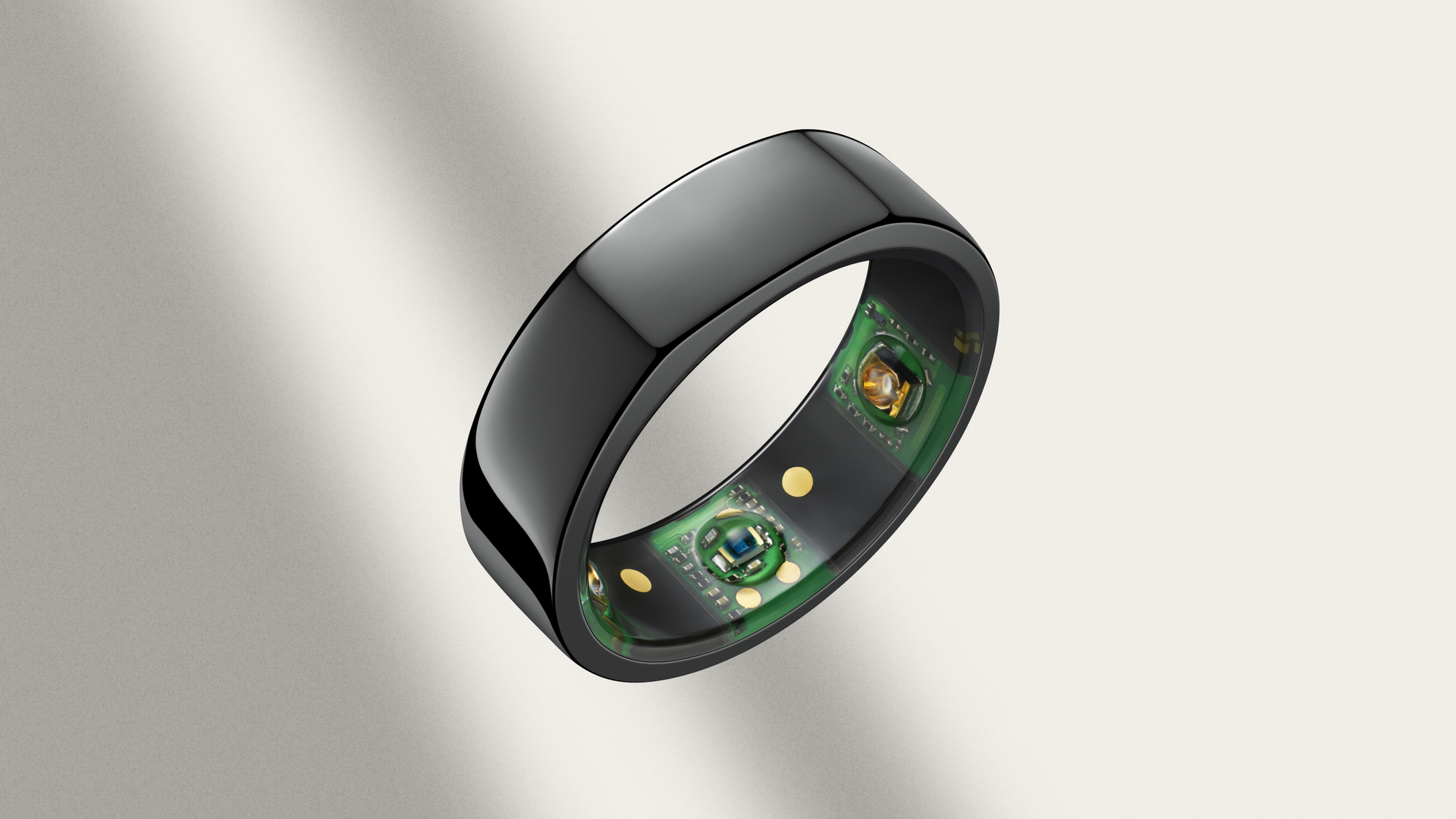
Photo: Oura
Oura's smart ring could help detect COVID-19 infections before noticeable symptoms show up — and earlier than other methods — thanks to its ability to continuously monitor body temperature, according to a University of California, San Francisco study.
Why it matters: Earlier detection, especially of those without symptoms, could spur people who may be infected to get tested and self-isolate, crucial steps in slowing the coronavirus' spread as the pandemic worsens in the U.S.
Between the lines: Because the smart ring continuously monitors vitals, researchers found, it can spot when someone's temperature is running higher than the normal range of fluctuations around their personal baseline, even if they're not running an objectively high fever.
Driving the news: An analysis of data from 50 COVID-19 infected patients that were part of a larger UCSF study is being published today in the peer-reviewed journal Scientific Reports.
- Of the 50, 38 reported a fever, and showed an elevated temperature in their smart ring data.
What they're saying: Ashley Mason, principal investigator for the project, said the study showed that those who later tested positive for COVID-19 often showed a "mini-storm" of physiological changes before a bigger, more easily detectable set of symptoms.
What's next: The researchers are looking to test an algorithm that could prompt wearers to get a COVID-19 test when data that the ring collects, including temperature, suggest a possible infection.
4. Battery with more nickel could be a breakthrough
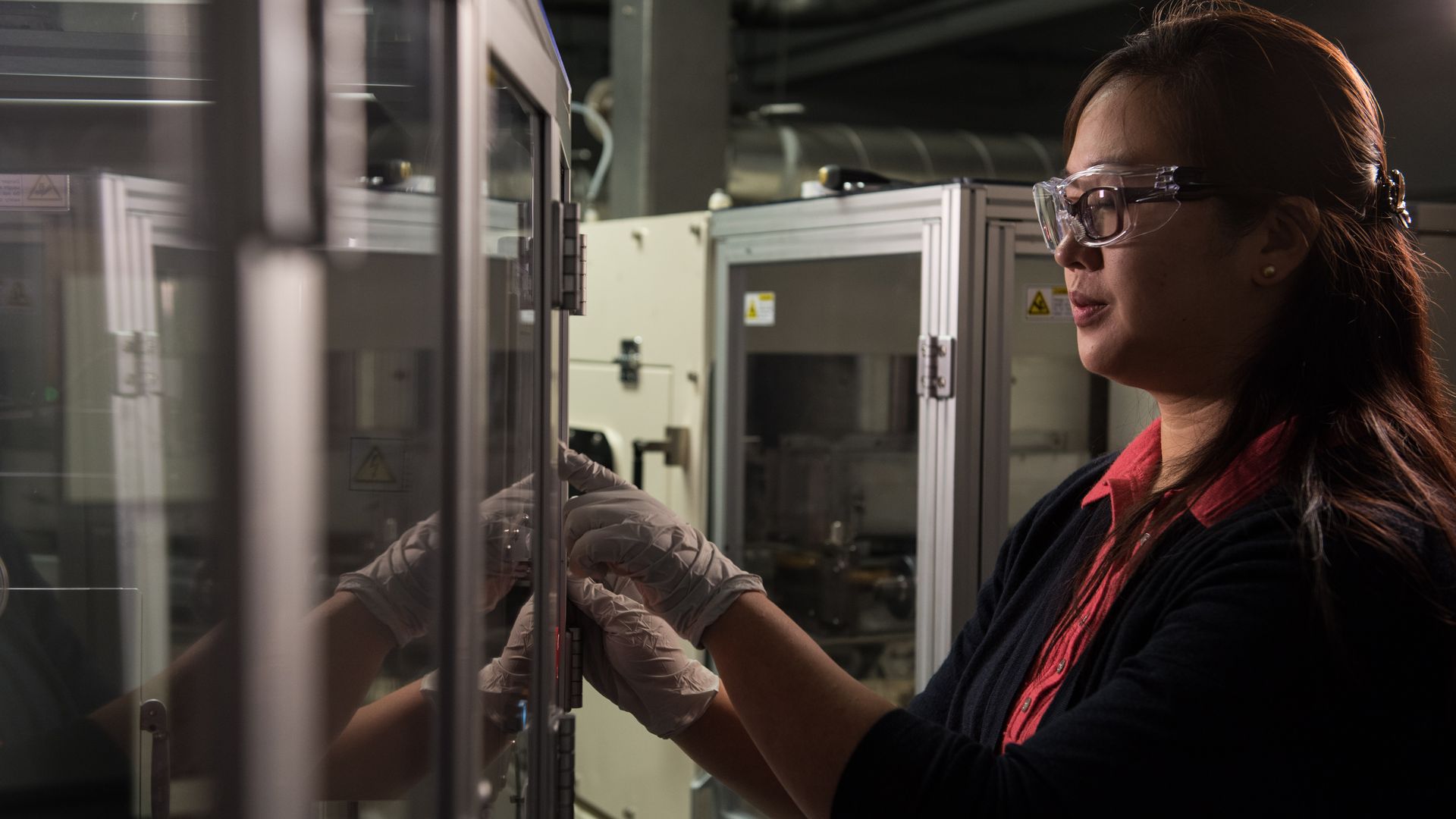
Battery researcher Jie Xiao. Photo: Andrea Starr/Pacific Northwest National Laboratory
A new battery material design relying on more nickel could lead to electric vehicle power systems that are cheaper and offer greater range.
Why it matters: Today's batteries are often bulky and expensive, provide limited range and rely on rare materials that are often sourced from conflict-torn regions.
Details:
- The new design, developed by researchers at the Energy Department's Pacific Northwest National Laboratory in Richland, Washington, improves on current lithium-ion batteries through the use of a single crystal, nickel-rich cathode.
- The researchers estimate that the single-crystal, nickel-rich cathode packs at least 25% more energy than the lithium-ion batteries used in today’s electric vehicles.
- The findings were published on Friday in the journal Science.
What's next: Battery researcher Jie Xiao said it’ll likely take around five years for the tech to come to market.
5. Take Note
On Tap
- The official tech calendar is largely empty this week, with conferences basically done for the year, earnings reports complete and most products either introduced or awaiting a January debut around CES.
- Yes, but: This is 2020, so, not banking on a slow news week.
Trading Places
- "The Office" is moving from Netflix to Peacock at the beginning of next year, providing a key test as to whether NBC's streaming service can gain momentum.
ICYMI
- Reddit is acquiring would-be TikTok competitor Dubsmash. (Axios)
- A Russian hacking group broke into Treasury and Commerce Department email communications in what officials fear was a serious compromise, prompting a Sunday-night CISA directive telling agencies to disconnect the tools thought to have been used in the attack. (Reuters, Axios)
- Affirm and Roblox, which had been expected to go public this year, are now seen delaying their stock market debuts until 2021. (WSJ)
- The Nintendo Switch was the top-selling game console last month despite the debut of Sony's PlayStation 5 and Microsoft's Xbox Series X. (GeekWire)
- Apple CEO Tim Cook called for tougher corporate and national environmental goals at a UN climate conference on Saturday. (Reuters)
- Gmail, Google Docs, YouTube and other Google services went down in a major (albeit short-lived) outage spanning multiple countries Monday morning. (Axios)
6. After you Login
Given the pandemic, I can't watch my beloved Stanford women's basketball team in person. But I'm glad I got to see this dunk from Fran Belibi, even if it was only on TV.
Sign up for Axios Login

Taking you inside the AI revolution, and delivering scoops and insights on the technologies reshaping our lives.