Axios Latino

đđœ It's almost the end of the short week, and we're glad you're joining us.
- It's the last call for graduate nominations. This is a sweet way to honor someone you're proud of, and you only have to send us a sentence or two, plus their picture. Reply to this email or send to [email protected]
- Puede leer la versiĂłn en español aquĂ.
This newsletter, edited by Astrid GalvĂĄn, is 1,467 words, a 5.5-minute read.
1 big thing: Bickering ahead of Americas summit

Illustration: Sarah Grillo/Axios
Leaders from across the Americas are set to land in Los Angeles next week for a major summit already tainted with controversy, Marina writes.
Why it matters: The Summit of the Americas will return to the U.S. for the first time since it launched in 1994. Washington sees the summit, which starts Monday, as a chance to strengthen ties to Latin America and the Caribbean, which have become more closely tied to China in recent years.
- But international squabbles over the guest list have overshadowed the purpose of the summit, which is to foster collaboration among countries in the hemisphere.
- So far, 12 countries, including Brazil, Colombia, Chile and Canada, have agreed to attend. Mexican president Andrés Manuel López Obrador, as of Thursday morning, had not said whether he would attend in person or send his foreign affairs minister.
Details: Discussions will center on the transition to green energies, migration, and recovering from the economic effects of the pandemic and the war in Ukraine.
Between the lines: Some observers warn that recent U.S. policy towards Latin America treats the region as if it were still just the nation's backyard instead of a partner.
- âItâs a mistake when [Washington] isnât offering a penny or specific initiatives as counterweight to what China offers while demanding the region not look to China. It shows a lack of acknowledgment of Latin American countriesâ needs and dynamics,â Wilson Center distinguished fellow Cynthia J. Arnson says.
What theyâre saying: Juan Gabriel Tokatlian, a political analyst and professor of international politics at Torcuato di Tella University in Argentina, says the summit has âlittle specificity to the agenda, and a dearth of legwork."
- âItâs a shame because there are so many shared issues primed for there to be dialogue,â he adds, noting that the ârelationship decline canât be fixed by a summit alone.â
2. After Uvalde, a battle of messages
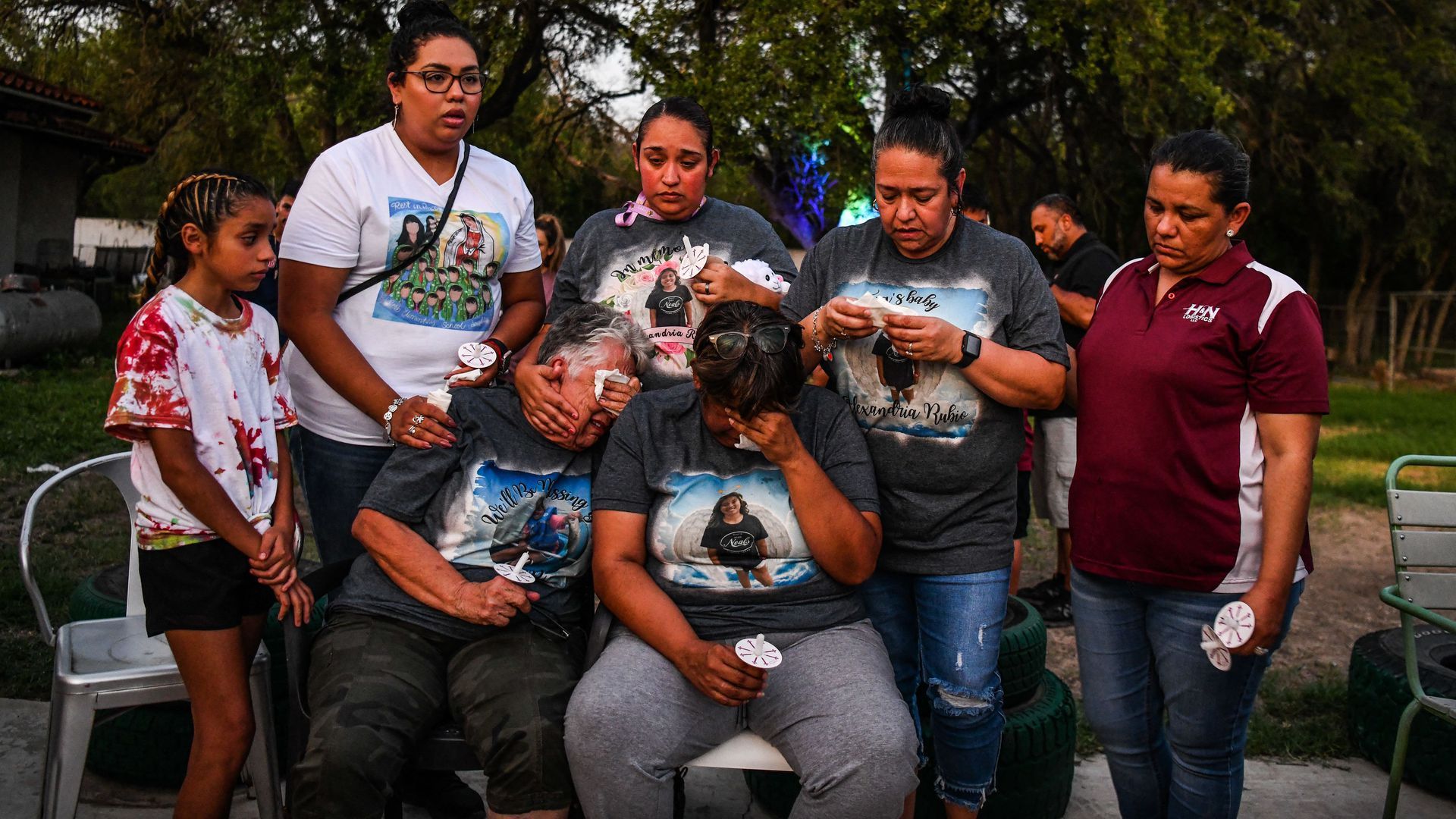
A family mourns in Uvalde. Photo: Chandan Khanna/AFP via Getty Images
Some Latino Democrats say their party needs a Spanish-language campaign to counter GOP messaging and misinformation around guns, mass shootings and other threats to democracy, Russell writes.
Driving the news: The killing last week of 19 children and two teachers in Uvalde, Texas, renewed calls for gun control measures.
- Meanwhile, right-wing conspiracy theories about the shooting immediately spread from the online fringes to the mainstream.
The intrigue: Rep. Norma Torres (D-Calif.) told Axios that Democrats should "absolutely" develop Spanish-language outreach countering anti-gun-control messaging.
- Torres also said the campaign needs to highlight how Republicans in power often refuse to give voice to Mexican Americans and Central Americans who are victims of violence.
- "At that (Uvalde) press conference, I didn't see myself, I didn't see the faces of those parents. The majority of them were Latinos," Torres said, referring to a press conference held by Texas Gov. Greg Abbott with predominantly white male speakers.
- Other authorities dealing with the shooting have provided public updates only in English, prompting criticism that the many Spanish speakers are being excluded.
What they're saying: Democratic strategist Kristian Ramos questioned whether Democrats are telling "a clear story to voters that highlights what we've done for Latinos contrasted with the extremism of the Republican Party."
- "If Republicans can go on WhatsApp and call us socialists for the last three years in Spanish, we can certainly go on WhatsApp, we can certainly go on Spanish language radio, and just tell the truth."
The other side: âDemocrats should focus on addressing the problems they created. Latino voters know (President) Biden and Democrats are responsible for historic inflation, record-high gas prices, surging crime, and a raging border crisis," Republican National Committee spokesperson Danielle Alvarez told Axios.
- A recent Axios-Ipsos Latino Poll found inflation and crime were the top concerns for Latinos.
3. Bullfighting's big test
A bullfighter in Mexico. Photo: Sye Williams/Getty Images.
A judge today is expected to decide whether bullfighting in Mexico City should remain suspended while a lawsuit challenging its legality moves forward, Marina writes.
Why it matters: Mexico City is the location of the worldâs largest bullfighting arena, Plaza MĂ©xico, which fits 50,000 people.
Driving the news: On May 28, the judge paused all bullfights for the month of June at Plaza México after the organization Justicia Junta sued, arguing bullfighting violates local animal protection laws.
- The judge is scheduled to decide later today whether the suspension should continue while the lawsuit moves forward.
Supporters say banning the tradition would be a âviolation of and a unilateral assault against the human right to enjoy culture.â
- They say it threatens the socioeconomic apparatus built around bullfighting, from breeders to vendors near Plaza México.
Flashback: Spaniards introduced bullfighting in Mexico around 1562, and it has been a tradition since then.
- But five Latin American countries have outlawed it as concerns over animal rights grow.
- Five Mexican states have already banned bullfighting: Sonora, Coahuila, Guerrero, Quintana Roo and Sinaloa.
- A bill to permanently outlaw bullfighting passed out of committee in February in Mexico City. A full vote hasnât been scheduled yet.
4. How cities can keep us safe from heat

Illustration: Sarah Grillo/Axios
As summer kicks off, a small but growing number of cities are getting serious about heat mitigation â but experts say too many leaders are still ignoring the problem, Axios' What's Next writer Jennifer A. Kingson reports.
Why it matters: Latino, Black and Asian residents are likelier to live in "urban heat islands," or areas in which buildings and pavement (and a lack of trees) trap heat, making it hotter.
- Urban heat islands are particularly dangerous during heat waves, which are becoming more common because of climate change.
- Scientific studies have documented a dramatic rise in heat-related deaths.
- But most cities are only at the planning stages or conducting small-scale pilots â if they're addressing the issue at all.
Where it stands: Many cities lack the budget or political support to meaningfully tackle the problem.
- Only three major U.S. metro areas â Phoenix, Los Angeles and Miami/Dade County â have established "chief heat officers."
Driving the news: Cities have been gearing up for this summer's heat, trying in particular to use cooling methods other than air conditioning, which is energy- and emissions-intensive.
- They're installing cooling and misting centers and hydration stations, and planting trees for extra shade.
- They're experimenting with high-tech solutions like sealants and reflective coatings for sidewalks, streets and rooftops.
- They're updating their building codes with green criteria and issuing "cool roof" mandates.
Details: Phoenix â one of the hottest U.S. cities â has been particularly active in tackling the problem.
- Its "Cool Pavement Program," which involved painting a gray coating on streets, reduced roadway temperatures by 10.5 to 12 degrees, per Scientific American.
- The city aims to build 100 "Cool Corridors" by 2030 "in shade-starved zones with high pedestrian traffic," the Arizona Republic reports.
5. Stories we're watching
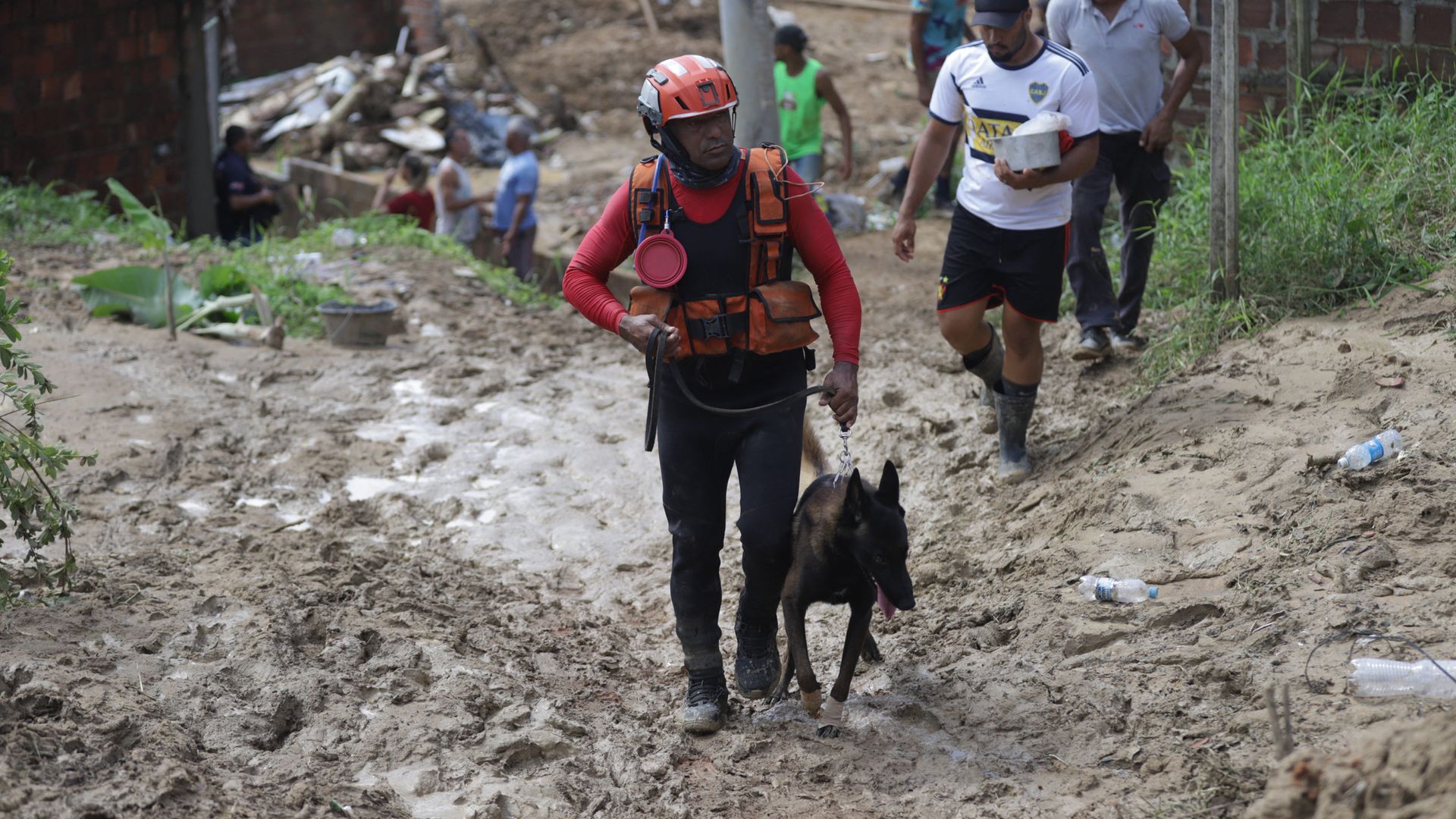
A firefighter with a search dog looks for landslide victims in Brazil. Photo: Sérgio Maranhão/AFP via Getty Images.
1. Over 100 people in Brazil have died in the past week due to landslides and flooding in mostly low-income neighborhoods.
- In Mexico, heavy rains from a hurricane killed 11 people.
2. Nicaraguaâs government outlawed 83 non-governmental organizations this week.
- President Daniel Ortegaâs government accuses the groups of being âforeign government agentsâ looking to overthrow him because they get partial funding from international organizations.
- NGOs have to suspend operations or register as foreign agents, as there are few avenues to fight the ban.
- The Ortega government has already forced out 300 groups since 2018.
6. 1 smile to go: â°ïž Peak serenade

Two Latin Americans recently made history above the worldâs highest peak, Marina writes.
Details: Salvadoran Alfa Karina ArruĂ© became the first person from her country to summit Everest on May 12. A few days after, Mexican teen Juan Diego MartĂnez broke a record with his ascent, and even played piano up top.
- When MartĂnez, 19, climbed Everest and Lhotse mountains (first and fourth highest peaks in the world) he became the youngest person to summit both, as well as to do it within 27 hours.
What theyâre saying: âI felt awful up there. But one of the sherpas said, âItâs a few hours of suffering against almost an eternity of glory,â and then I figured, 'Why not do something cool and go for another record, then?'â MartĂnez said to Noticias Telemundo .
7. đȘ Pachanga: Grace Nystrum
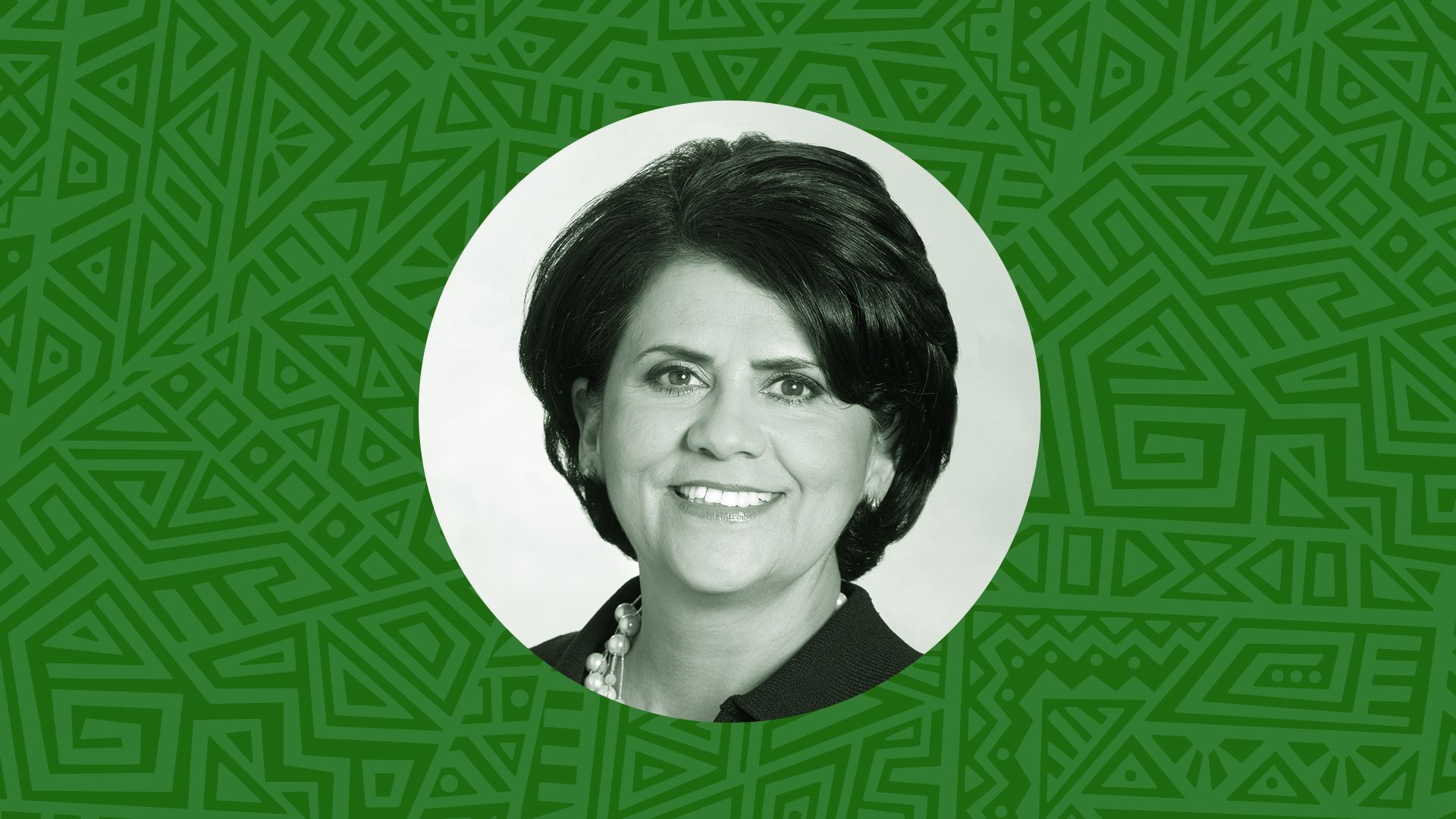
Today we're celebrating Grace Nystrum of Charlotte, North Carolina. Grace is a community leader who supports many local nonprofits and is in the Cesar Chavez Hall of Fame. She's also the chairwoman of the Latin American Chamber of Commerce of Charlotte.
Congrats on your many achievements, Grace!
Thanks for joining us, we'll see you next week! Remember to tell your friends to sign up here.
Sign up for Axios Latino

Keep tabs on the stories that most affect the U.S. Latino community on both sides of the border, a collaboration with Noticias Telemundo.