Axios Future of Defense
October 27, 2026

Hello from Little Rock, Arkansas. Love an airport that's near downtown.
- I'm headed to Davos in January for Axios House. Details here.
- Are you going? Is this the perfect excuse to buy more Arc'teryx?
🤠 Situational awareness: Cowboy Space, founded by Robinhood co-founder Baiju Bhatt, unveiled its "Big Iron" rocket last night. Its upper stage is designed to stay in orbit.
- My boy Thomas Novelly has more, here.
Further afield: North Korea's field notes, Warhound's valuation and Denmark's missile spree.
Today's newsletter is 1,582 words, a 6-minute read.
1 big thing: A nuke nexus

President Trump is hinting at an overseas "denuclearization" summit with Russia's Vladimir Putin and China's Xi Jinping — but don't expect major arms control breakthroughs at the sit-down, if it even happens, national security experts told me.
The big picture: Such a meeting would be unprecedented and would require significant amounts of behind-the-scenes hustle to secure consensus that could later be touted.
- It would also come as Washington overhauls its triad, as Moscow rattles its saber over Ukraine, as Beijing undertakes a historic buildout in pursuit of some sort of arsenal parity, and as all three jockey for geopolitical prominence.
What they're saying: "The nuclear danger is getting worse; all of the countries are either building up or modernizing their nuclear weapons," Jon Wolfsthal, a nuclear policy fellow at Pax Sapiens, told me.
- "There's a great need for this, but the Trump administration's track record is quite poor," he said.
- "The prospects that they could get from what is a whim, 'Hey, let's meet and denuclearize,' to some sort of comprehensive or verifiable agreement? The odds on that are extremely low."
By the numbers: Nine countries, including France, India and the U.K., possess a total of 12,100 nuclear warheads, according to the Arms Control Association.
- The vast majority of them, though, are held by the U.S. and Russia. China ranks a far but not inconsequential third.
Friction point: The summit Trump floated "could be the start of a longer conversation," and diplomatic effort is a "positive," Andrea Stricker, the nonproliferation program deputy director at the Foundation for Defense of Democracies, told me.
- But it'll be an uphill climb.
- "I'd be really surprised — and think it's unlikely that China would agree to nuclear arms control at this point in time," she said. "It's not even clear that Russia and the United States really seek a new agreement."
- The New START treaty, agreed to by the Cold War rivals, expired months ago. Such pacts are predicated on plenty of familiarization and negotiation.
Between the lines: What also cannot be ignored here are other geopolitical issues: grinding war in Eastern Europe and a potential bloodbath in the Taiwan Strait.
Zoom in: The White House did not respond to a request for comment.
- Trump is expected to travel to China next month to participate in the Asia-Pacific Economic Cooperation leaders' meeting.
The bottom line: "The only thing less likely than a trilateral summit on nuclear issues would be concrete outcomes that matter more than the optics," Chris Estep, an Indo-Pacific security expert with the Foreign Policy Research Institute, told me.
- "Sometimes when something has never happened before, there's a pretty good reason why."
2. Exclusive: Murdock makin' moves
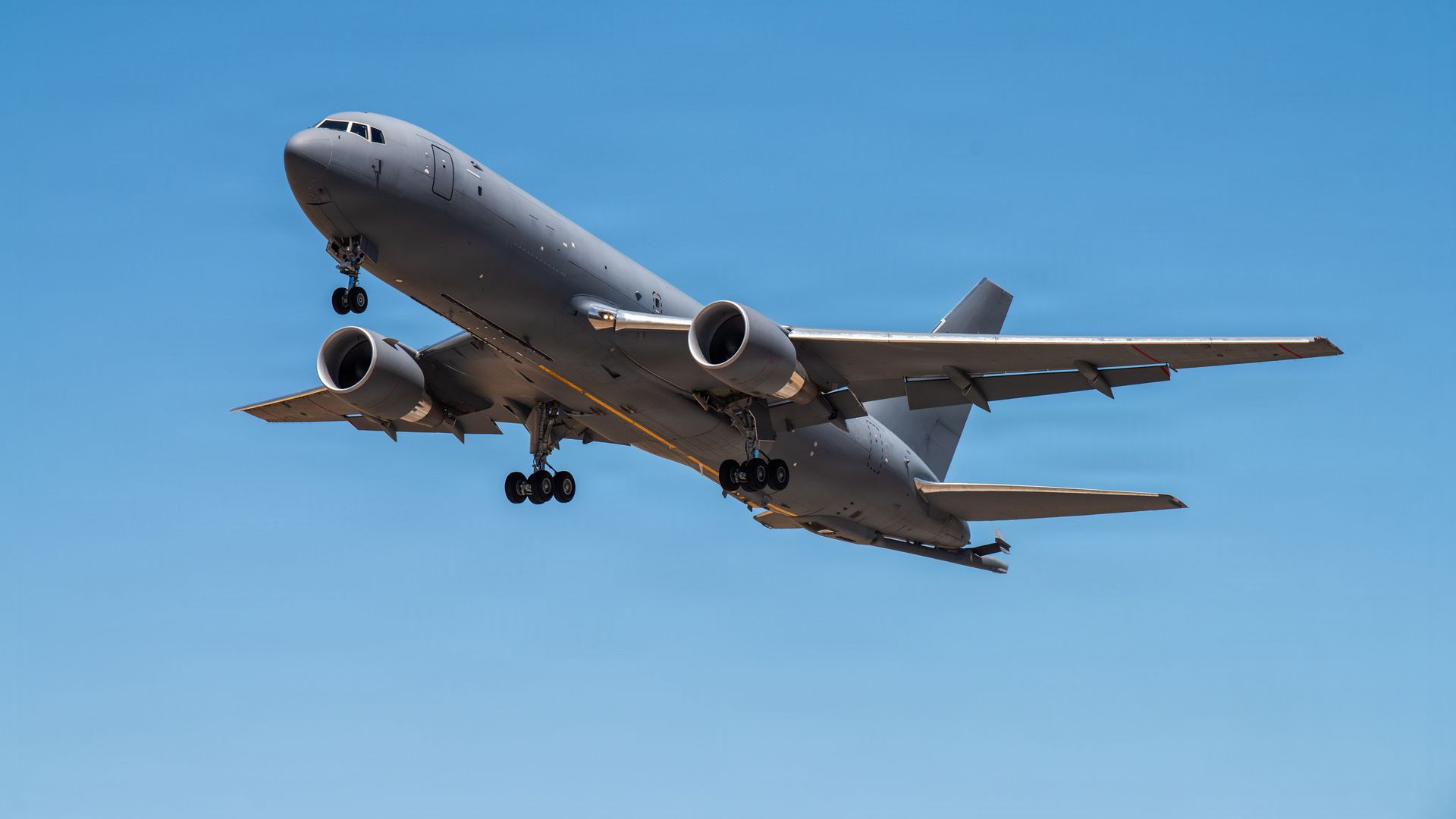
Murdock, a portable pilot assistant made by Beacon AI, has flown on three U.S. Air Force refueler-and-transporter aircraft — advising flight crews and racking up hours and hours of real-world experience.
Why it matters: The California startup is building "R2-D2 for pilots," according to co-founder Matt Cox, a former Navy fighter pilot, and this is a significant step in that direction.
- "These planes are very instrumented. There are thousands and thousands of parameters. We consume it," he told me.
Driving the news: Murdock was used aboard five KC-46A flights, beginning with the Emerald Flag drills at Eglin Air Force Base, Florida.
- The work was conducted under a contract with Air Mobility Command and followed an earlier deal with Special Operations Command.
- "Our system is similar to what Tesla Autopilot would be," Cox said, "if it was its own company."
How it works: Murdock pulls data from avionics buses and presents information that helps crews complete checklists and procedures, like taxiing and taking off; plan routes; and keep tabs on personal readiness, including fatigue levels.
- It can be carried onto an aircraft in a Pelican case and operates without modifying flight-critical systems.
- "Our company is very aimed at supporting pilot monitoring," Cox said.
- "The feedback has been, 'Good job. Keep going, go do more,'" he added. "AMC is really leaning in on these connectivity efforts."
Zoom out: The U.S. military has for years sought to augment troops with smart machinery and to predict when, where and how things will break.
Follow the money: Beacon raised $15 million in late 2024. The Series A was led by Costanoa Ventures.
- OpenAI's Sam Altman is among the startup's earliest backers.
What's next: Murdock is expected to fly aboard two additional aircraft: another "big one," Cox said, and one that is "smaller."
- "We want exposure to lots of different things," he said. "In aviation, some stuff happens every 100,000 hours — or every 1,000,000 hours."
Go deeper: Inside Red Flag: U.S. and allies train for future air combat
3. Everyone's learning
North Korean troops are "bringing experience back" from the Russia-Ukraine war, where drones and robotics are reshaping warfare, according to the commander of the U.S. Eighth Army.
Why it matters: Frontline lessons are invaluable — especially for such a sealed-off regime.
- Continued exposure could spell trouble for South Korea and the U.S.
What they're saying: "As we all are observing and watching how war is changing in Ukraine and in the Middle East, the North Koreans are, absolutely, doing that too," Lt. Gen. Joseph Hilbert told reporters in Washington this month.
- "I won't get into the specifics of what the relationship looks like between Russia and the DPRK," he said. "But there's obvious cooperation there."
Threat level: North Korea has sent more than 16,000 personnel to Russia since October 2024, according to South Korean intelligence. Ukrainian President Volodymyr Zelensky this summer said tens of thousands more could be deployed.
Context: The Eighth Army is headquartered at Camp Humphreys, south of Seoul.
Go deeper: "Cannon-fodder mercenaries" in Russia highlight global nature of war
4. ICYMI: Bark or bite

Colossal Biosciences CEO Ben Lamm and Anduril Industries founder Palmer Luckey have a new gig: Warhound, valued at $1.2 billion.
Why it matters: We're talking genetically modified and cybernetic-enhanced military working dogs here.
Catch up quick: My colleagues Lucinda Shen and Dan Primack covered this late last week.
My thought bubble: There was once a time when defense and national security were dirty words. Then it became OK to invest in weapons — but only the defensive ones. Now, people are advertising anything-as-a-service.
- Will man's best friend be a step too far?
What's next: Lamm joins us Nov. 19 onstage at the Future of Defense Summit. Request an invite to attend ASAP!
5. Quick hits
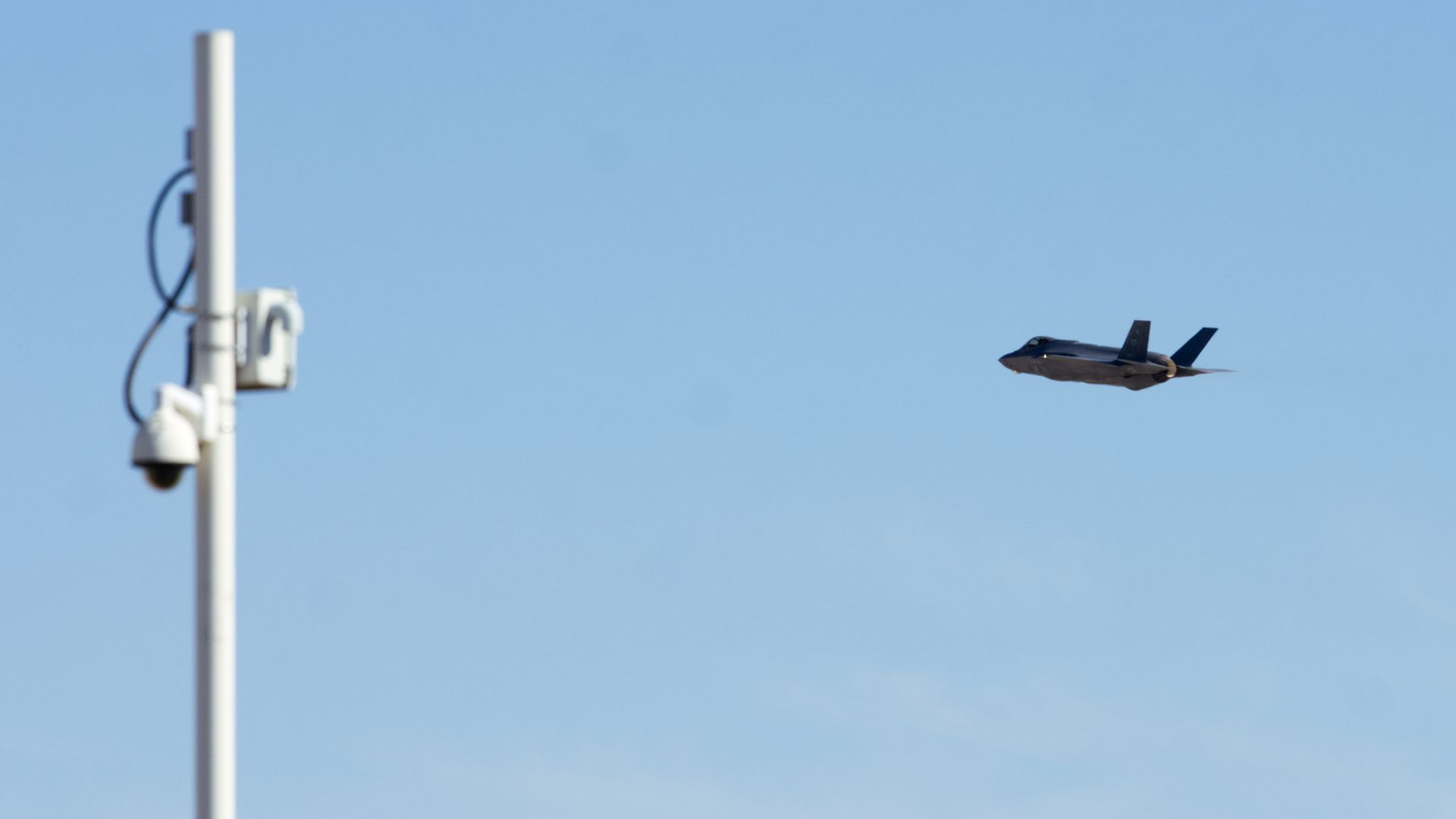
📈 The Pentagon and Lockheed Martin struck a deal funding a decade of F-35 production and upkeep, with the world's largest defense contractor by revenue covering some $7 billion in supporting "initiatives."
- Why it matters: It's a massive, massive commitment. (Do you know what you'll be up to in two years, let alone 10?)
- 💭 My thought bubble: Neither the Defense Department nor Lockheed laid out a "total value or per-jet price," as Defense News noted.
💥 Denmark is buying Kongsberg's Joint Strike Missile and Covenant's Anthem, a much newer munition the startup has described as a Tomahawk alternative.
- Why it matters: "The acquisitions are a significant step toward making Denmark better able to defend itself, strengthening NATO and increasing our ability to strike back," Danish Defense Minister Jeppe Bruus said in a translated statement.
- 💭 My thought bubble: This is a big win for Covenant, which emerged from stealth in September.
🤖 Applied Intuition is furnishing for the U.S. Navy its Data Engine and Intelligent Perception System, which together collate data from disparate sensors and lay out information for users. The multimillion-dollar deal begins with five Arleigh Burke-class destroyers.
- Why it matters: "Today's surface warfare picture depends on brittle manual processes, and data is siloed across networks and paper logs," co-founder Peter Ludwig said in a statement.
- 💭 My thought bubble: Applied was valued at $15 billion last summer.
🔋 Radiant will deploy its Kaleidos microreactor at Naval Weapons Station Crane in Indiana, in conjunction with its Janus work for the U.S. Army. Final environmental reviews, local site design and more are to come.
- Why it matters: The Pentagon is "actively breaking down the barriers that have prevented deployment of nuclear reactors," Mike Dodd, assistant secretary of defense for critical tech, said in a statement.
- 💭 My thought bubble: My colleague Esteban Hernandez wrote about Radiant's plans for Buckley Space Force Base, Colorado, earlier this year. Give it a read!
6. Check this out
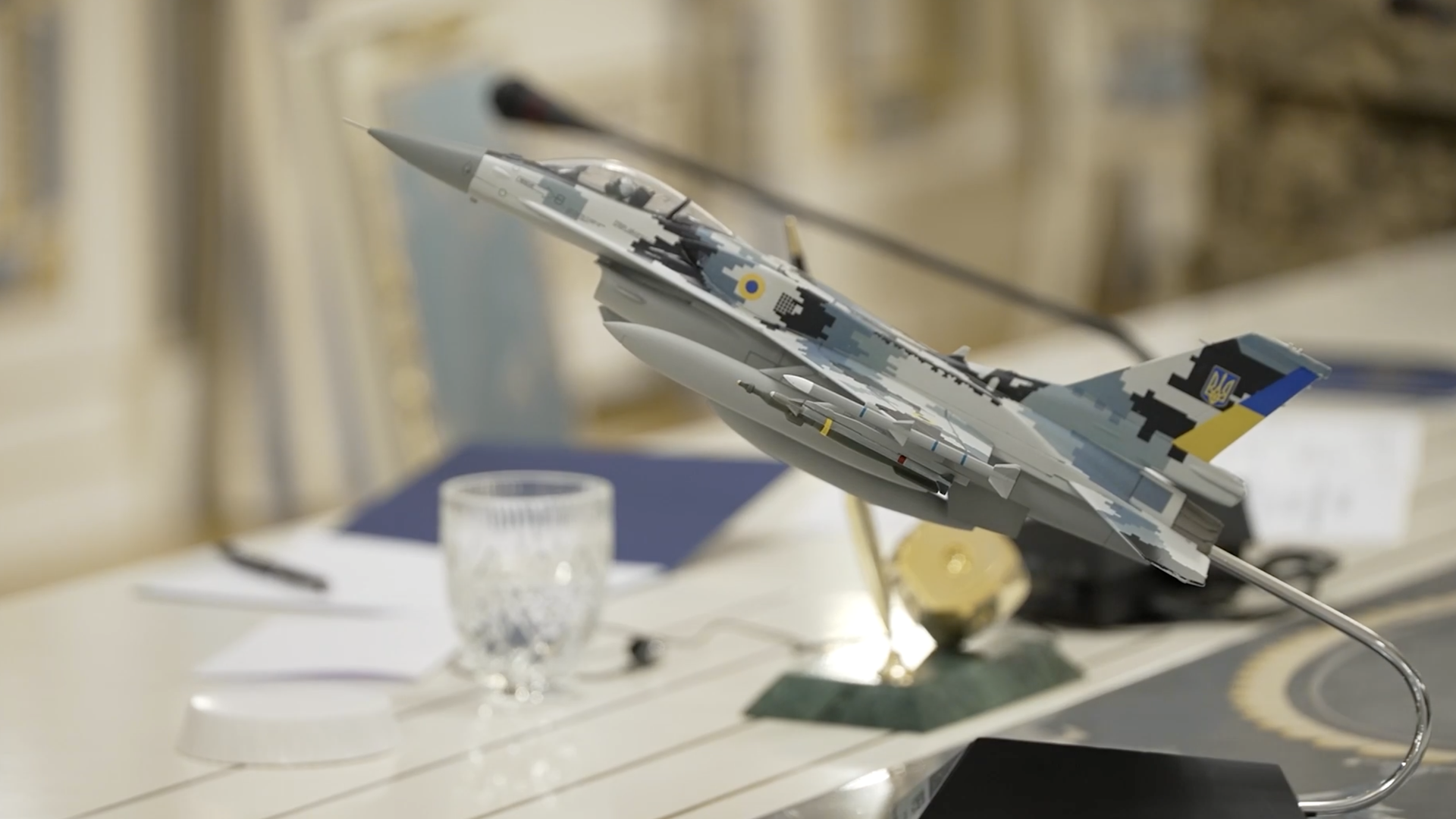
This model was handed to Ukrainian President Volodymyr Zelensky by Lockheed Martin's aeronautics president, OJ Sanchez.
- Watch the exchange here.
Why it matters: A Lockheed spokesperson told me "several topics" were discussed during their Kyiv meeting, including "the world's most advanced fourth-generation fighter, the F-16 Block 70/72."
- Questions "about specific capabilities," the spokesperson added, "are best directed to the U.S. and Ukrainian governments."
More from Axios:
Northrop upgrading "the critical eyes" of F-16
Russia taking "heavy losses" with little gain, says Denmark
Ukraine lobbies weapons suppliers to "lift all bans"
Shoutout to Jeffrey Cane for editing and Matt Piper for copy editing.
👋🏼 Thanks, as always, for reading and sharing. Tell your friends to subscribe here.
Sign up for Axios Future of Defense