State Department approves potential F-35 sales to Saudi Arabia


Add Axios as your preferred source to
see more of our stories on Google.
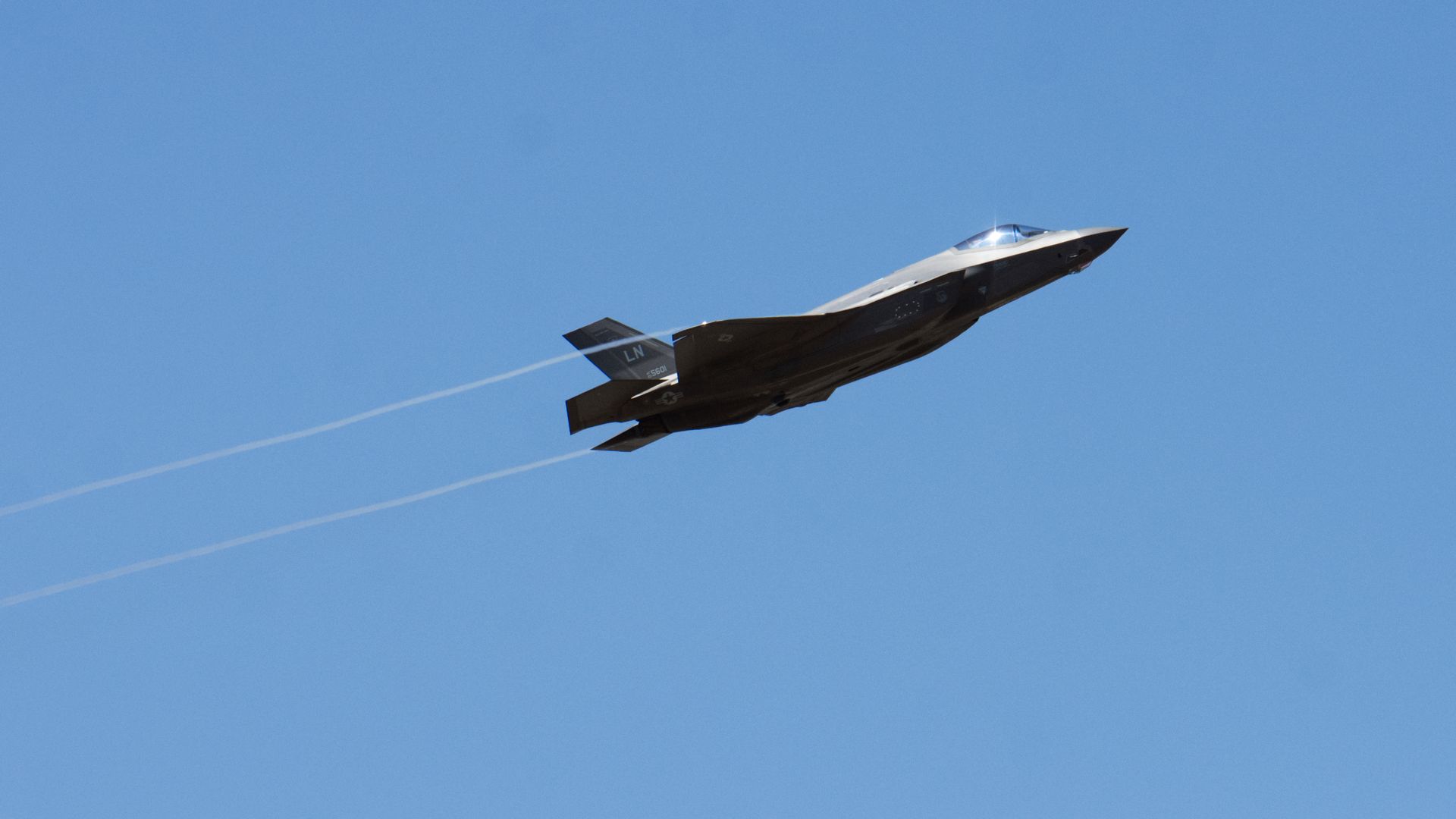
A U.S. Air Force F-35A catches the sun over Farnborough Airport. Photo: Colin Demarest/Axios
The State Department announced Thursday it has approved the possible sale of 48 F-35 fighter jets to Saudi Arabia at an estimated cost of $24.3 billion.
Why it matters: The major arms deal has been in the works for more than a year. If it goes through, Saudi Arabia would be the only Arab country that uses F-35s.
- The F-35 would be a major technological upgrade for the Saudi Air Force and raise questions about Israel's longstanding military advantage in the region.
- The deal must go through a review by Congress and could still get stuck. Even if it's approved, it would take several years before the first jets were supplied to the Saudis.
Driving the news: President Trump said before Saudi Crown Prince Mohammed bin Salman's visit to the White House in November that he would approve the sale of Lockheed Martin-made F-35s to Saudi Arabia.
- Since then, the State Department has reviewed and negotiated the proposal.
What they are saying: "This proposed sale will support the foreign policy and national security objectives of the United States by improving the security of a major non-NATO ally that is a force for political stability and economic progress in the Gulf region," the State Department said in a statement.
- The department said the proposed sale would improve Saudi Arabia's capability to deter current and future threats, and enable it to work better with U.S. forces "and other regional and NATO forces."
The big picture: "The proposed sale of this equipment and support will not alter the military balance in the region," it said.
- The Israeli government, which has a longstanding agreement with the U.S. about preserving its military advantage in the Middle East, did not strongly object to a F-35 deal with Saudi Arabia — unlike its efforts to stop a similar deal with Turkey.
- But the Israelis wanted Trump to condition the deal on Saudi Arabia normalizing relations with the Jewish state. While Trump urged Saudi Crown Prince to move towards a peace deal with Israel, he didn't tie it to the F-35 deal.
- It is unclear whether the U.S. consulted with Israel about the F-35 deal or attempted to reach understandings to preserve the Israeli Defense Forces' military superiority.
The intrigue: A similar deal with the UAE during Trump's first term never materialized.
- The Biden administration raised concerns about Chinese spying on the sophisticated fighter jets in the UAE and demanded a set of assurances from the Emiratis. As a result, the UAE decided not to move forward.
Friction point: Similar concerns have been raised about the F-35 deal with Saudi Arabia. The Kingdom has grown closer to China, and they have conducted joint military exercises, such as the Blue Sword naval drills.
- Chinese spies and hackers regularly target U.S. defense contractors and make off with intellectual property.
What they're saying: "It's a categorically bad idea, until and unless the U.S. and [Saudi Arabia] agree to some concrete guardrails on Riyadh's defense and technological cooperation with China more generally — the F-35 is a microcosm of a much larger problem in the relationship," Jonathan Ruhe, a fellow at the Jewish Institute for National Security of America, told Axios.
- The Saudi embassy declined to comment.
- "The F‑35's unrivaled capabilities directly support the Kingdom's [strategic] goals for defense and sovereign safety," a Lockheed spokesperson told Axios. "Lockheed Martin looks forward to continued collaboration as the U.S. congressional review process advances."
- The company referred questions about the foreign military sales process to the two governments.
