Inside Red Flag: U.S. and allies train for future air combat

Add Axios as your preferred source to
see more of our stories on Google.
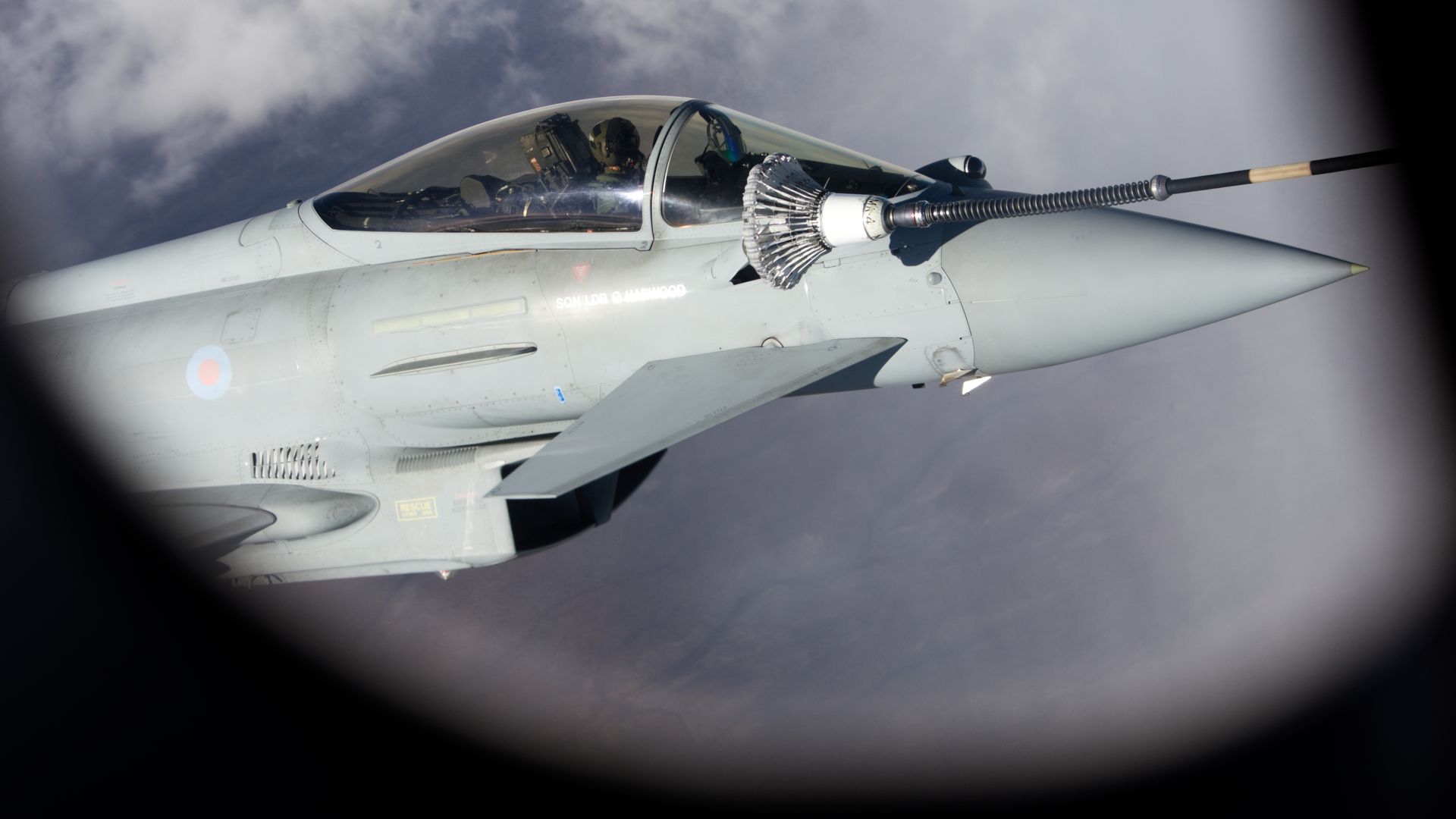
A Royal Air Force Typhoon refuels during Red Flag 26-1 in Nevada. Photo: Colin Demarest/Axios
23,000 FEET ABOVE THE DESERT — The British Voyager had some 70 metric tons of fuel aboard as it began circling the Nevada Test and Training Range. Over the course of a few hours, it topped off Royal Air Force Typhoons and U.S. Marine Corps F-35s. An American KC-135 lingered nearby.
- "We can talk to them," Master Aircrew Andy Welham-Jones said to the small group of reporters on board.
- It felt no different in the cockpit, he added, to restock the different warplanes from different countries.
Why it matters: The Voyager, part transporter and part refueling tanker, and its crew were fighting in Red Flag 26-1. The exercise embroils British, Australian and American forces — including aviators, cyber and space specialists, and logisticians — in realistic but less-than-lethal combat.
- "We've all been shot down at Red Flag before," Welham-Jones said.
Driving the news: Axios spent nearly 13 hours at Nellis Air Force Base, Nevada, on Feb. 6, getting an intimate look at operations on the ground and in the air.
- This latest rendition of Red Flag emphasized coordination between London, Canberra and Washington, which are parties to the AUKUS agreement and regularly share intelligence.
- "This is not a mission rehearsal," said Col. Tony May, the exercise director and commander of the 414th Combat Training Squadron.
Zoom out: The U.S. has for years pursued the battlefield communications nirvana known as Combined Joint All-Domain Command and Control. At its simplest, CJADC2 envisions a state in which the right information gets to the right people at the right time no matter the geographical or technical boundaries.
- "We may have similar airplanes. You brought F-35s. We're flying F-35s. This is our chance to make sure they talk together — the data links work, the communications work," May said.
- "Tactically, are we integrated?"
How it works: Red Flag has a decades-long lineage, born from the airpower lessons of the Vietnam War.
- Today's drills consider adversaries ranging from China to Russia to "some made-up country in the middle," according to May.
- "It's continually evolving. I took command in June, and we have overhauled everything about Red Flag," he said. "Every internal process, every product we produce, every scenario that we develop has been totally looked at."
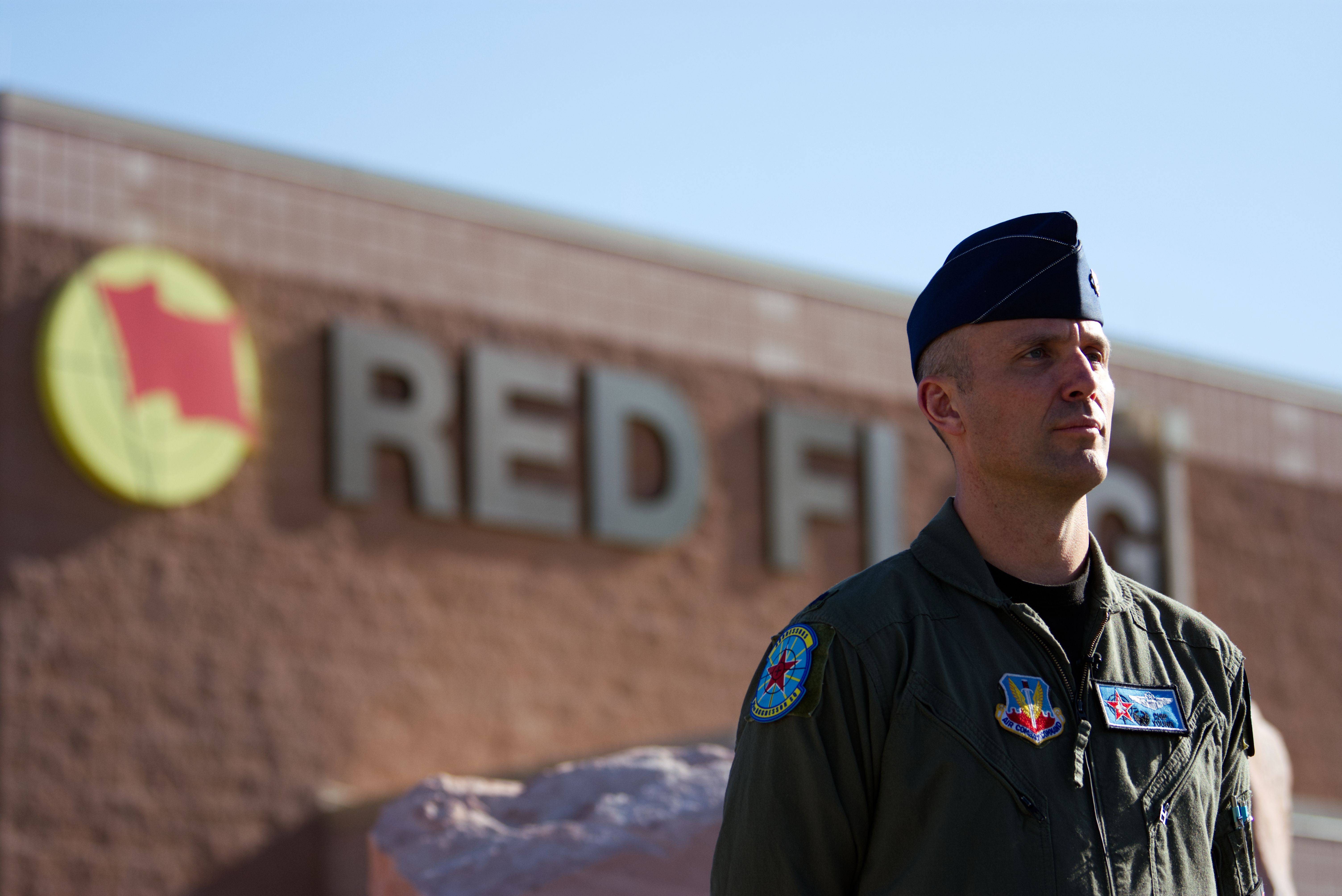
The intrigue: A trademark of the Red Flag sandbox is the so-called red air. For the first time, these frenemies are flying mostly fifth-generation aircraft. That greatly raises the stakes.
- "It's hard to hide from an advanced radar," Lt. Col. Ryan "Chip" Young, the commander of the 65th Aggressors, told Axios. "We're doing significant damage."
- The aggressors train on the tactics of adversaries and mimic them during exercises like this one. Asked if they were specifically modeling fights that could break out in Europe or the Indo-Pacific, Young said: "It's a mixed bag."
- "We want to make sure we get all the looks."
Threat level: The latest National Defense Strategy, published in January, references a "simultaneity problem," or the possibility of militaries coordinating across multiple theaters against the U.S. and its allies.
- National security analysts have for years warned of the threat posed by a loose-knit, anti-West coalition headed up by Moscow and Beijing.
The bottom line: Flight Lt. Matt Winwood, the Voyager pilot, praised the practice regimen once back on the ground. It was his first Red Flag.
- "It's really good to come out here and tank with some other countries we don't normally tank with," he said.
- It provides "a good idea of their procedures, and makes sure that we're ready for operations elsewhere."
More from Axios:
Air Force wants industry ideas for $500,000 missile
U.K. picks Anduril, Lockheed, 5 others for Apache drone project
Ditching AUKUS will "cause grave damage" in Indo-Pacific, says McCaul
