Axios Communicators

August 03, 2023

👋🏻 Welcome back and thanks for all of the kind words following last week's Axios-versary.
- 🤿 We're diving into year two with a hot take on Twitter's rebrand ... and before you roll your eyes, hear me out!
- 🚨But first: Last call for job updates. Monthly Moves hits inboxes tomorrow.
Today's newsletter is 1,642 words, a 6-minute read.
1 big thing: X rebrand explained

Illustration: Allie Carl/Axios
Elon Musk is singing "Bye Bye Birdie" with the chaotic rebrand of Twitter.
Why it matters: At the heart of every rebrand is a shift in corporate strategy — and Twitter has seen drastic change since Musk took over in October 2022.
- Yes, but: Just because the act of rebranding makes sense, doesn't mean the rollout of X was a success.
🧠 Be smart: Rebrands are ultimately an exercise in change management.
- Musk changed the structure of the organization with mass layoffs, upended corporate culture, altered its revenue model and has plans to change the function of the platform by transforming the virtual town square into a super app.
- If he's going to change all of that, he's right to change the name too, says Kumar Sarangee, professor of marketing at Santa Clara University.
- "If you're rebranding, it is because you're undergoing a massive change and that has to be reflected in your vision, culture, personal [performance indicators] and processes."
What they're saying: "In the months to come, we will add comprehensive communications and the ability to conduct your entire financial world. The Twitter name does not make sense in that context, so we must bid adieu to the bird," Musk wrote in a ... err ... tweet.
The big picture: The rebrand could have been a chance for Musk to introduce the world to his version of a smart, streamlined super app — but the disjointed rollout and lack of clear messaging is just another reminder of the chaos felt across the platform.
- "Rebranding allows you to completely rethink your marketing strategy, and your most important intent is to forge a completely new identity that is differentiated from the previous brand, and there should be a renewed positioning in the minds of your consumers," Sarangee says.
- To that end, X does signal the old days of Twitter are over — for employees and users — and allows for those who long for the Twitter of years past to dissociate.
What to watch: This creates an opening for other social platforms like Threads and TikTok to capture disgruntled Twitter users by re-creating what X is leaving behind.
2. Where X went wrong
Photo: Donato Fasano/Getty Images
Branding should be cohesive with a new mission statement, value proposition, product features and assets — and those are typically in place before the new brand is revealed.
What they're saying: For this reason, hasty rebrands often fail, says marketing specialist and founder of SW Projects, Sara Wilson.
- "There is no longer a sense for what Twitter stands for as a brand," Wilson told Axios. "X feels odd and out of place, and as a consumer, I don't know how this new name reflects what the product is. X feels like it's been plucked from a name box and put on a branding document."
State of play: The piecemeal rollout of X caught many users by surprise and variations of "What is X" and "X-it" were trending on the platform.
- Plus, the current press mailbox — which is still a Twitter.com email address — didn't reply when asked how the new brand was being communicated to ad partners.
🥊 Reality check: The platform formerly known as Twitter has been underperforming since Musk took the helm, with a projected loss of roughly $2 billion in ad revenue this year.
- There's also been an ongoing sense of confusion, skepticism and distrust among the platform's most active users.
Yes, but: While its brand equity has suffered, Twitter remained one of the few brands used as both a noun and verb in cultural vernacular.
- "The fact that people use the term 'tweeting' and there's a general sense of familiarity is incredibly hard to achieve," says Wilson. "Very few companies get to that level of brand recognition, and it's actually a huge advantage that X is now throwing out. How are you actually supposed to say 'I tweeted' now?"
3. Make emails cool again

Illustration: Aïda Amer/Axios
Email remains the most used channel for reaching employees, but roughly one-third of corporate memos are left unread, according to an Axios HQ report and "Smart Brevity" research.
- That's because these communications are often boring, long or irrelevant.
Why it matters: If businesses hope to grab the attention of busy employees, they must market to them in the same way they market to consumers: with entertaining and personalized content.
Driving the news: Accenture pivoted away from the mass email model — it was sending 40,000 bespoke employee communications each year — opting instead for a personalized, reader-driven digest called "Good Morning Accenture."
How it works: It is sent three days a week and tailored to each individual employee based on their location, department, function and interests.
- Under the new approach, engagement rates — clicking through to staff intranets and resources — skyrocketed from 6% to 80%, says Jill Kramer, Accenture's chief marketing and communications officer.
What they're saying: These curated communications provide important company-wide updates in an entertaining way, according to Kramer.
- "You hear people talking about the proliferation and personalization of content, but they're always talking about it externally. ... You can customize for internal audiences too."
- "We thought what if all 700,000 people at Accenture opened the same door every morning and they were greeted in the same way, which was a simple 'Good morning. How are you? Let me help you today. Here's what you need to know and here's what you need to do based on who you are, your role and other kinds of personalization elements about your profile,' that then determines how we customize the content."
Between the lines: A small team of five Accenture employees oversee the day-to-day compilation and distribution of the newsletter, though it's unclear how much they rely on auto-generation and AI for help.
What's next: Kramer's team is looking for ways to customize corporate meetings.
- "People get invited to more meetings than they could possibly attend — so the idea is, employees set their own meeting agenda and choose the ones that they will commit to attending live. Everything else will be offered on an on-demand learning platform, which would be available in the format of their choice, like audio, video or transcript."
4. Cisco's army of employee influencers

Illustration: Aïda Amer/Axios
Tech giant Cisco has been training its employees to act as social media influencers to attract top-tier talent in this tight labor market.
Why it matters: Talent begets talent and employees can make for the most authentic, influential brand ambassadors in a social media driven world.
Details: Cisco recently introduced a series of training sessions for employees on how to serve as talent influencers for the company by using their own social media pages — specifically LinkedIn.
- By the numbers: To date, over 900 Cisco employees have participated in the training and the company has hired over 4,000 candidates through LinkedIn alone.
Why they're saying: "This focus on evangelizing our brand and our culture is what allows Cisco to continue attracting top talent on social media and through more formal channels — our employees are always our best brand ambassadors, because they are the culture," says Aleta Howell, Cisco's global director of DEI business & recruiting strategy.
5. Communicator Spotlight: American Express' Jennifer Skyler and Elizabeth Rutledge
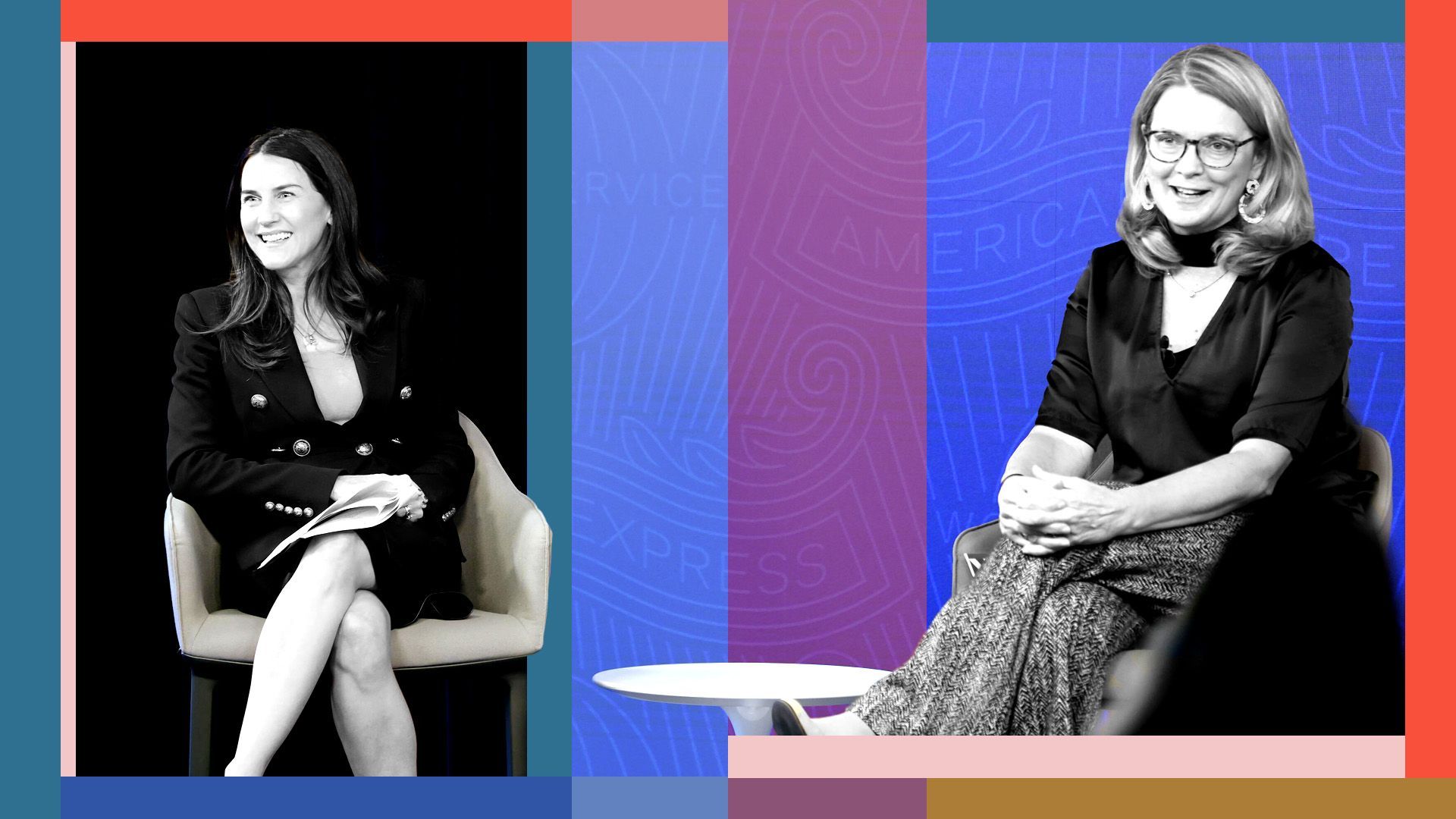
Photo illustration: Sarah Grillo/Axios. Photo courtesy of American Express
Warren Buffet gave American Express CEO Stephen Squeri some advice in the lead-up to the COVID-19 pandemic: “Protect two things— protect your customers and protect your brand.”
Why it matters: Jennifer Skyler and Elizabeth Rutledge are tasked with doing just that.
- As the chief corporate affairs officer and chief marketing officer respectively, it's the brand that binds them together.
🏗 How it's structured: Skyler oversees a corporate affairs team of roughly 190 people who manage public affairs and media relations, social media, internal communications, reputational risk management and corporate social responsibility.
- Rutledge's marketing team of 300 oversee global media, sponsorships, experiences, strategic brand planning and customer insights.
🗣 What they're saying: "We're constantly connecting the dots across our company — and in order to do that, we have to have a really close link between communications and marketing," Rutledge told Axios.
- Corporate Affairs acts as the narrative thread, says Skyler. "We think about weaving a holistic story across all channels, for all of our constituents — our colleagues, customers and communities — and we work in lockstep with marketing to enhance and protect the American Express brand."
👯 Recent collaborations: Together, their teams make sure consumers and employees are involved in initiatives like Small Business Saturday, foundation endeavors like Leadership Academy and partnerships like the sponsorship of the Premier League's Brighton & Hove Albion football club.
- Rutledge's team oversees the partnership with Brighton by creating experiences and access for card members to enjoy, while Skyler's team augments those partnerships through media coverage and owned content.
- "We have a TikTok correspondent traveling with the team, creating content for our social channels, and we're reaching a whole new fan base in the United States by ginning up this interest," says Skyler.
- "And what [Skyler's] team also did is partner closely with my team to create a football club fan experience for our 77,000 employees and get them involved as well," added Rutledge.
🔎 Most overlooked aspect of the job: The importance of reaching new audiences through strategic partnerships, says Rutledge — like American Express' work with the NBA, Coachella and Wimbledon.
- Skyler emphasizes that corporate affairs is uniquely positioned to see across an entire organization and keep everyone aligned.
📈 Trend spot: How artificial intelligence will disrupt content creation and the addition of new social media channels.
☮️ De-stress routine: Rutledge requires gummy bears and long walks to unwind, and Skyler regroups by cheering on her 9-year-old daughter's soccer team.
The bottom line: "At the center of our partnership is the brand," says Rutledge. "We both feel like we're protectors, defenders and innovators of American Express' very special, 173-year-old brand."
Go deeper ... read the entire spotlight
6. 1 timely ad to-go
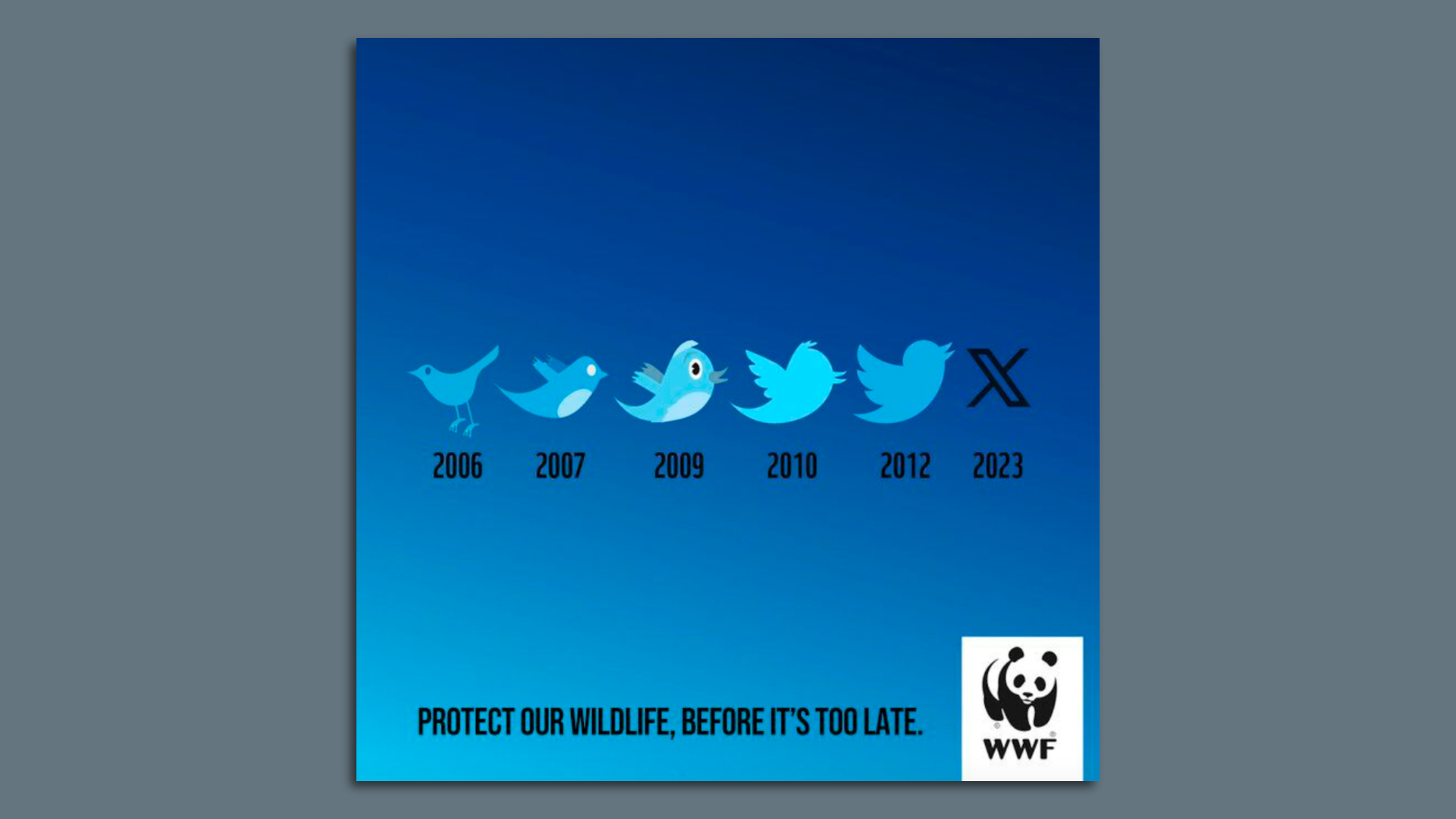
Credit: McCann Germany/ WWF
✅ Thanks for reading! And thanks to editors Nicholas Johnston and Kathie Bozanich.
Continue to spread the word. Invite your network to subscribe and complete our events survey.
Sign up for Axios Communicators

Unpacking the topics and trends driving Communications.